
Follow Me On Social Media!

Winter Harvest Bowl with Roasted Root Vegetables and Zesty Maple Tahini.

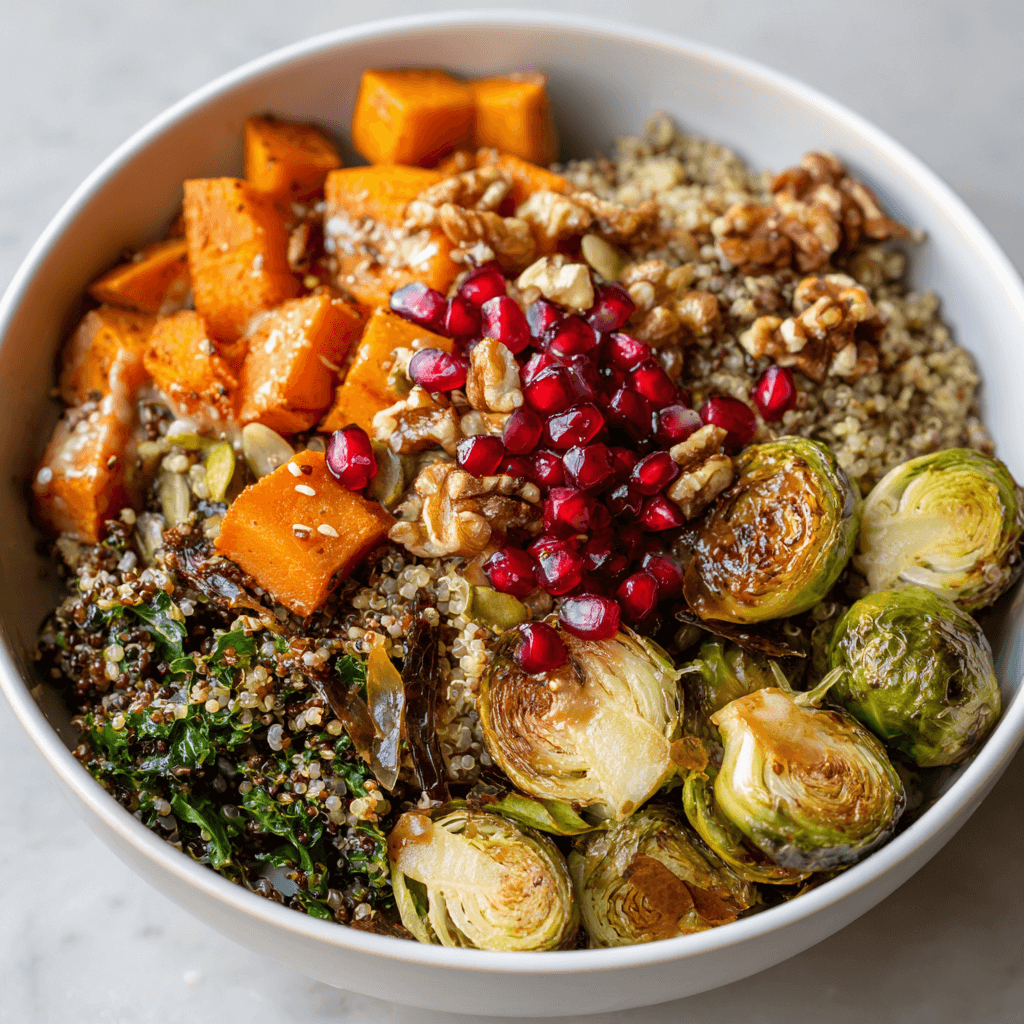
When the days grow shorter and the air takes on a permanent chill, my appetite undergoes a predictable shift. The crisp, cold salads of July no longer feel quite right. Instead, I find myself craving meals that offer weight and warmth, yet still provide that hit of fresh, vibrant energy that only vegetables can deliver. This Winter Harvest Bowl is the result of years of tinkering with seasonal produce to find the perfect balance between a hearty dinner and a nourishing, light-feeling meal.
The beauty of a harvest bowl lies in its architecture. It isn’t just a pile of ingredients; it is a thoughtful composition of textures and temperatures. You have the chew of ancient grains, the caramelized edges of roasted squash, the snap of fresh pomegranate, and a dressing that ties every component together with a bright, acidic finish. It is the kind of food that makes you feel good from the inside out—steady, satisfied, and fueled for the colder months ahead.
In my kitchen, this has become the ultimate “reset” meal. After a weekend of heavy holiday eating or a long week of quick sandwiches, sitting down to a bowl filled with every color of the winter spectrum feels like a quiet act of self-care. It’s also a champion for meal prep, as most of these ingredients hold up remarkably well in the fridge, making your Tuesday lunch feel just as special as a Sunday dinner.
Ingredients for the Winter Harvest Bowl
To get the best flavor, try to source your vegetables from a local market if possible. Winter produce—like squash and brassicas—actually tastes better after the first frost, as the plants convert their starches into sugars to survive the cold.
The Roasted Base
- 1 medium butternut squash (about 2 lbs), peeled and cubed into 1-inch pieces
- 1 lb Brussels sprouts, trimmed and halved
- 1 large red onion, cut into thick wedges
- 2 tablespoons extra virgin olive oil
- 1 teaspoon smoked paprika
- 1 teaspoon garlic powder
- 1/2 teaspoon fine sea salt
- 1/4 teaspoon cracked black pepper
The Grains and Greens
- 1 cup pearled farro (or quinoa for a gluten-free option)
- 2 cups vegetable broth (for cooking the grains)
- 1 large bunch of lacinato kale (also known as dinosaur kale), stems removed and finely shredded
- 1 teaspoon olive oil and a pinch of salt (for massaging the kale)
The Texture Additions
- 1/2 cup pomegranate arils (the “jewels” of the bowl)
- 1/4 cup toasted pepitas (pumpkin seeds) or sunflower seeds
- 1 large Honeycrisp or Granny Smith apple, thinly sliced just before serving
- 2 tablespoons hemp seeds (optional, for extra protein)
Zesty Maple Tahini Dressing
- 1/3 cup runny tahini (ensure it is well-stirred)
- 1 large lemon, juiced
- 1 tablespoon pure maple syrup
- 1 tablespoon apple cider vinegar
- 1 clove garlic, finely grated or minced
- 2–3 tablespoons warm water (to thin to your desired consistency)
- A pinch of salt and cayenne pepper
Step-by-Step Instructions
Roast the Vegetables
Start by preheating your oven to 400°F (200°C). On a large, rimmed baking sheet, toss the cubed butternut squash, halved Brussels sprouts, and red onion wedges with two tablespoons of olive oil, smoked paprika, garlic powder, salt, and pepper.
Spread the vegetables out in a single layer. A common mistake here is crowding the pan; if the vegetables are too close together, they will steam instead of roast. If necessary, use two baking sheets. Roast for 25 to 30 minutes, tossing halfway through, until the squash is tender and the Brussels sprouts have developed deep brown, crispy edges.
Cook the Grains
While the vegetables are in the oven, prepare your farro. Rinse the grains under cold water, then combine them in a medium pot with the vegetable broth. Bring to a boil, then reduce the heat to low, cover, and simmer. For pearled farro, this usually takes about 20 minutes. You want the grain to be tender but still have a distinct, nutty “pop” when you bite into it. Once cooked, drain any excess liquid and fluff with a fork.
Massage the Kale
This is a vital step for any raw kale salad. Place the shredded kale in a large bowl and drizzle with a teaspoon of olive oil and a tiny pinch of salt. Using your hands, literally massage the leaves for about 2 to 3 minutes. You will feel the texture change from tough and fibrous to soft and silky. The leaves will also turn a darker, more vibrant green. This makes the kale much easier to digest and far more pleasant to eat.
Whisk the Dressing
In a small bowl or a glass jar, combine the tahini, lemon juice, maple syrup, apple cider vinegar, garlic, and spices. Whisk vigorously. The tahini may “seize” and become thick at first—this is normal. Gradually add warm water, one tablespoon at a time, whisking until the dressing is smooth and pourable. It should be creamy enough to coat a spoon but thin enough to drizzle.
Assemble the Bowls
To build your harvest bowls, start with a generous base of massaged kale. Top with a large scoop of warm farro, then pile on the roasted vegetables. Just before serving, tuck in the fresh apple slices and scatter the pomegranate arils and toasted pepitas over the top. Drizzle generously with the maple tahini dressing.
Flavor and Texture Notes
The first thing you’ll notice about this bowl is the interplay of temperatures. The warmth of the roasted squash and farro slightly wilts the kale, while the cold apple and pomegranate provide a refreshing snap.
Flavor-wise, it is a journey through the best of winter. The squash and maple syrup provide a natural sweetness that is immediately balanced by the bitter edge of the kale and the sharp, zesty acidity of the lemon and vinegar. The tahini adds a background of toasted nuttiness and a creamy mouthfeel that makes the meal feel substantial without the need for heavy dairy or fats. Every bite is different—sometimes you get the crunch of a pepita, other times the juicy burst of a pomegranate seed.
Tips and Variations
- The Protein Boost: While the farro and pepitas provide plant-based protein, you can easily add more. Roasted chickpeas, a soft-boiled egg, or even some shredded leftover turkey or chicken work beautifully here.
- The Grain Swap: If you are following a gluten-free diet, swap the farro for quinoa, wild rice, or even roasted sweet potato rounds.
- Different Squash: If you can’t find butternut, honeynut or acorn squash are excellent substitutes. You can even leave the skin on delicate squashes like Delicata for extra color and fiber.
- Cheese Addition: If you aren’t avoiding dairy, a sprinkle of crumbled goat cheese or sharp feta adds a salty, creamy dimension that complements the fruit and nuts.
Storage and Make-Ahead Guidance
This recipe is a meal prepper’s dream. The roasted vegetables and farro can be cooked up to 4 days in advance and stored in airtight containers in the refrigerator.
Surprisingly, massaged kale actually improves after a day in the fridge, as it continues to soften in the oil. I recommend keeping the dressing, apple slices, and seeds separate until you are ready to eat. When you’re heading out the door for work, you can assemble the bowl in a container; it’s delicious both cold and at room temperature. If you prefer it warm, simply heat the grains and roasted veggies in the microwave for 60 seconds before adding the fresh toppings and dressing.
Serving Suggestions
If you are serving this for a casual dinner with friends, I like to present it “deconstructed” on a large platter. Place the kale in the center and arrange the various roasted components and toppings in clusters around the edge. This allows everyone to build their own bowl according to their preferences—perfect for picky eaters or those with specific dietary needs.
A crisp sparkling water with a squeeze of lime or a light, chilled kombucha provides a nice effervescence that cleanses the palate between bites of the rich tahini dressing. For a cozy evening, a mug of warm ginger tea is the perfect accompaniment.
FAQ
Can I use frozen vegetables?
While you can use frozen squash, it won’t get the same caramelized, crispy edges as fresh squash because of the higher moisture content. Frozen Brussels sprouts tend to become quite soft when roasted. For the best results in a bowl where texture is king, fresh is definitely the way to go.
My dressing is too bitter. How can I fix it?
Tahini can sometimes have a bitter finish depending on the brand. If your dressing tastes too sharp, add another half-teaspoon of maple syrup or a tiny pinch of salt. Salt is excellent at neutralizing bitterness.
How do I get the pomegranate seeds out easily?
The easiest way is to cut the pomegranate in half, hold it cut-side down over a bowl, and whack the back of it with a heavy wooden spoon. The seeds should pop right out. Alternatively, you can buy pre-packaged arils to save time.
Is farro better than rice?
Farro is an ancient grain that is higher in fiber and protein than many types of rice. It has a much firmer, chewier texture that holds up better against heavy dressings and roasting juices, making it ideal for “bowl” style meals.
Conclusion
Creating a meal that feels both indulgent and virtuous is a rare win, and this Winter Harvest Bowl achieves exactly that. It celebrates the quiet beauty of winter produce, proving that healthy eating doesn’t have to mean compromising on flavor or feeling unsatisfied. By taking the time to roast your vegetables properly and massage your greens, you turn simple pantry staples into a meal that feels like a genuine event.