
Follow Me On Social Media!

Traditional Greek Moussaka: The Ultimate Comfort Food Casserole That’s Worth Every Step.

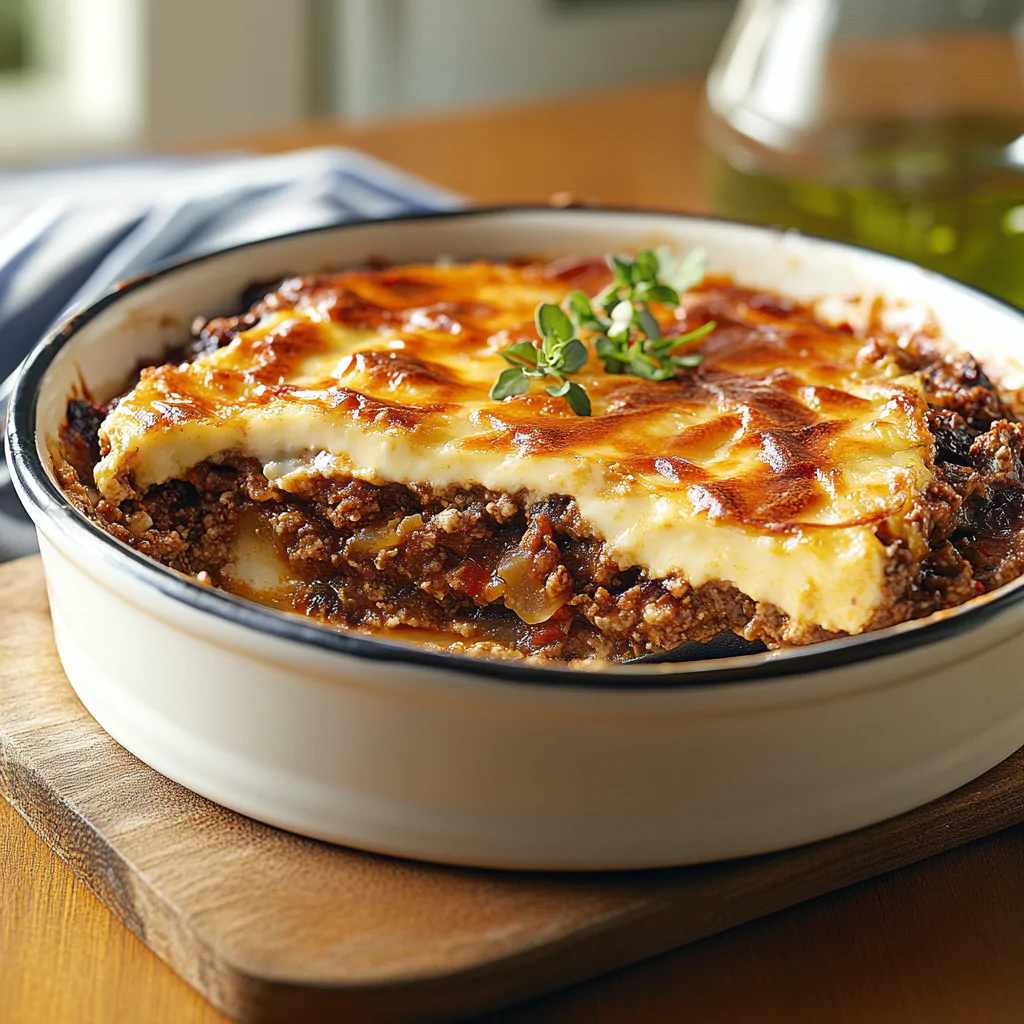
I’ll never forget my first real moussaka. It wasn’t from a restaurant or a cookbook—it was in the kitchen of my friend Sophia’s grandmother in Athens, watching her layer silky eggplant, rich meat sauce, and creamy béchamel with the confidence that comes from making the same dish for sixty years. She didn’t measure anything, just tasted and adjusted, but every layer was perfect. That’s when I realized moussaka isn’t just a casserole—it’s an architecture of flavors that requires patience, technique, and a little bit of love.
This traditional Greek moussaka recipe breaks down what might seem like a complicated dish into manageable steps that any home cook can master. Yes, it takes time—there’s no getting around that. But most of the work can be done ahead, and the payoff is enormous. You’re creating something that’s simultaneously rustic and elegant, with layers of tender eggplant, aromatic spiced meat, and a golden béchamel top that’s crispy outside and creamy within.
What sets authentic moussaka apart from its many imitators is the careful balance of textures and the depth of flavor in each component. The eggplant isn’t just a vessel—it’s properly salted and either grilled or roasted to concentrate its flavor and eliminate any bitterness. The meat sauce simmers long enough to develop complexity, while the béchamel is enriched with cheese and just enough spice to complement rather than compete with the other layers.
This recipe serves 8-10 people generously, making it perfect for Sunday dinners, potluck gatherings, or when you want to have spectacular leftovers for days. Don’t let the multiple steps intimidate you—each one builds toward something truly special that will transport anyone who tastes it straight to a Greek taverna overlooking the Mediterranean.
Ingredients
For the Eggplant Layer:
- 2 large eggplants (about 2 pounds), sliced lengthwise into 1/2-inch thick pieces
- 2 tablespoons kosher salt
- 1/4 cup olive oil
For the Meat Sauce:
- 2 tablespoons olive oil
- 1 large onion, finely diced
- 4 cloves garlic, minced
- 1 1/2 pounds ground lamb (or half lamb, half beef)
- 1/2 cup dry red wine
- 1 can (14 ounces) crushed tomatoes
- 2 tablespoons tomato paste
- 1 teaspoon dried oregano
- 1/2 teaspoon ground cinnamon
- 1/4 teaspoon ground allspice
- 1 bay leaf
- Salt and freshly ground black pepper to taste
- 2 tablespoons fresh parsley, chopped
For the Béchamel Sauce:
- 4 tablespoons butter
- 1/4 cup all-purpose flour
- 2 cups whole milk, warmed
- 1/4 teaspoon nutmeg
- 1/2 cup grated Parmesan cheese
- 1/2 cup grated Gruyère or kasseri cheese
- 2 large egg yolks
- Salt and white pepper to taste
For Assembly:
- 1/2 cup breadcrumbs
- 2 tablespoons grated Parmesan cheese
- 2 tablespoons olive oil
Instructions
Start by preparing the eggplant, which is crucial for the dish’s success. Slice the eggplants lengthwise into 1/2-inch thick pieces—you want them substantial enough to hold their shape but thin enough to cook through evenly. Arrange the slices on clean kitchen towels or paper towels and sprinkle both sides generously with kosher salt. Let them sit for 30-45 minutes to draw out any bitterness and excess moisture.
While the eggplant drains, make the meat sauce. Heat 2 tablespoons of olive oil in a large, heavy-bottomed pan over medium heat. Add the diced onion and cook for 5-7 minutes until softened and lightly golden. Add the minced garlic and cook for another minute until fragrant.
Increase the heat to medium-high and add the ground lamb, breaking it up with a wooden spoon. Cook until the meat is well browned, about 8-10 minutes. This browning step is essential—don’t rush it. The fond that develops on the bottom of the pan will add depth to your sauce.
Pour in the red wine and scrape up any browned bits from the bottom of the pan. Let the wine simmer for 2-3 minutes to cook off the harsh alcohol. Add the crushed tomatoes, tomato paste, oregano, cinnamon, allspice, and bay leaf. The warm spices are what give moussaka its distinctive character—they complement the lamb without overwhelming it.
Reduce the heat to low and let the sauce simmer, partially covered, for 45 minutes to an hour. Stir occasionally and add a splash of water if it gets too thick. The finished sauce should be rich and thick but not dry. Season with salt and pepper, then stir in the fresh parsley and remove the bay leaf.
After the eggplant has drained, pat the slices completely dry with paper towels. Preheat your oven to 425°F. Brush the eggplant slices lightly with olive oil on both sides and arrange them on baking sheets in a single layer. Roast for 20-25 minutes, flipping once halfway through, until they’re golden brown and tender. This method gives you perfectly cooked eggplant without the mess and oil absorption of frying.
While the eggplant roasts, make the béchamel sauce. In a medium saucepan, melt the butter over medium heat. Whisk in the flour and cook for 2-3 minutes, stirring constantly, to create a light roux. This step cooks out the raw flour taste and prevents lumps.
Gradually whisk in the warm milk, adding it slowly at first to prevent lumps. Continue whisking constantly until the sauce thickens enough to coat the back of a spoon, about 8-10 minutes. Remove from heat and whisk in the nutmeg, both cheeses, and the egg yolks one at a time. Season with salt and white pepper. The sauce should be creamy and smooth, thick enough to spread but not stiff.
Now comes the assembly, which is like building a delicious architectural masterpiece. Reduce your oven temperature to 350°F. Lightly oil a 9×13-inch baking dish. Layer half the roasted eggplant slices in the bottom of the dish, overlapping slightly if necessary. Spread all of the meat sauce evenly over the eggplant, then layer the remaining eggplant on top.
Pour the béchamel sauce over the final eggplant layer, spreading it evenly to the edges with an offset spatula. The surface should be completely covered—this creates that beautiful golden top that’s so characteristic of great moussaka.
In a small bowl, mix the breadcrumbs with 2 tablespoons of Parmesan cheese and drizzle with olive oil. Sprinkle this mixture evenly over the béchamel. This adds textural interest and helps achieve that perfect golden-brown finish.
Flavor & Texture Notes
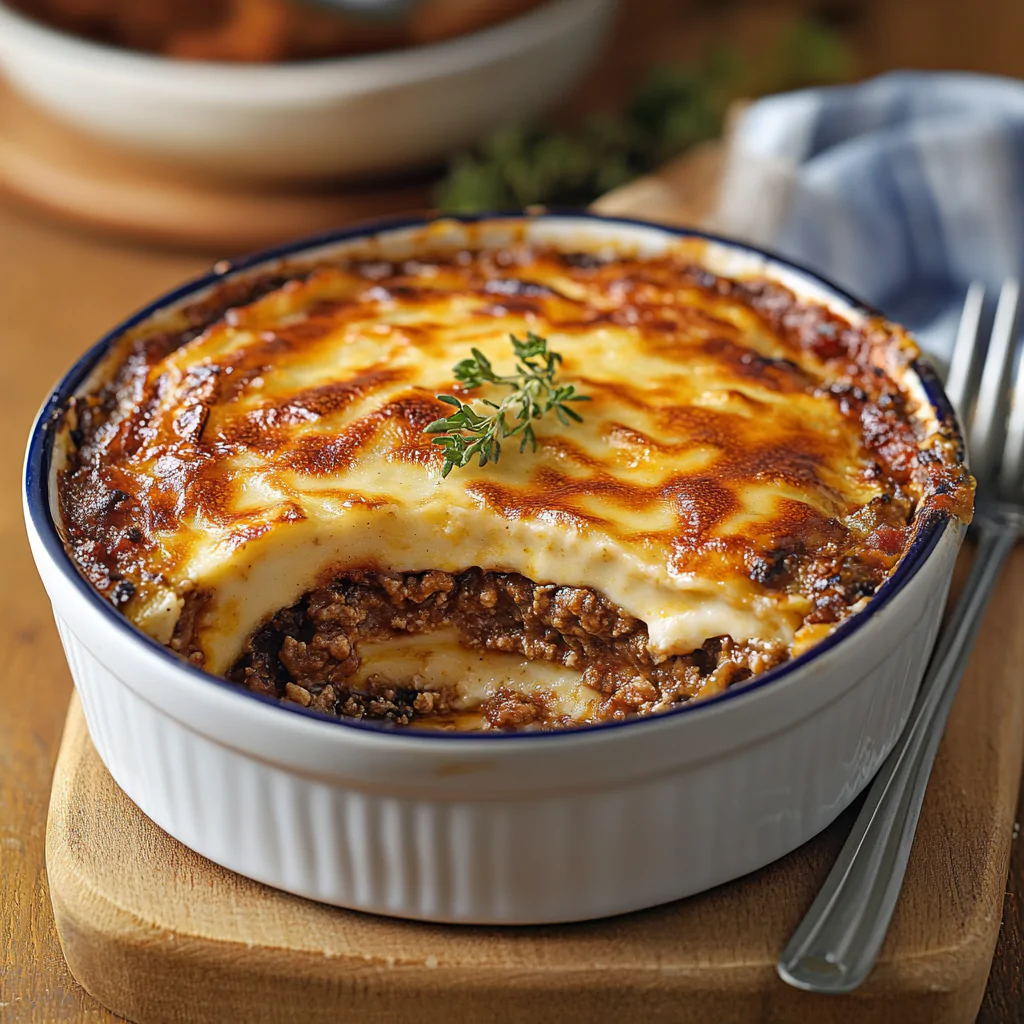
A properly made moussaka is a study in textural contrast and flavor harmony. The bottom layer of eggplant becomes silky and almost melting, having absorbed some of the rich meat juices while maintaining just enough structure to provide substance. Each slice should be tender enough to cut with a fork but not mushy.
The meat sauce provides the dish’s savory backbone, with the lamb offering a slightly gamey richness that’s balanced by the warm spices. The cinnamon and allspice don’t make the dish taste like dessert—instead, they add a subtle warmth and complexity that’s distinctly Mediterranean. The long simmering creates a sauce that’s concentrated and deeply flavorful without being heavy.
The béchamel layer is perhaps the most crucial element—it should be creamy and rich but not overwhelmingly thick. When properly made, it forms a golden, slightly puffed top that’s crispy on the surface and creamy underneath. The combination of Parmesan and Gruyère adds nutty depth while the nutmeg provides a subtle warmth that ties all the flavors together.
Each forkful should deliver all three components in harmony: the meaty richness, the tender eggplant, and the creamy sauce. The overall effect is both comforting and sophisticated, with enough complexity to keep your palate interested through multiple bites.
Tips & Variations
Eggplant Preparation: Some cooks swear by salting eggplant, others skip it. For moussaka, I recommend salting because it removes bitterness and prevents the eggplant from absorbing too much oil. If your eggplants are very fresh and you’re short on time, you can skip this step, but the results may vary.
Meat Options: Traditional moussaka uses lamb, but a combination of half lamb and half ground beef creates a more approachable flavor for those new to lamb. Ground turkey can work as a lighter option, though you’ll need to add extra olive oil to prevent dryness.
Make-Ahead Strategy: This dish actually improves when made ahead. You can assemble the entire casserole up to 24 hours before baking, or make the components separately and store them for up to 2 days. The flavors meld beautifully overnight.
Vegetarian Version: Replace the meat layer with a mixture of lentils, mushrooms, and walnuts cooked with the same aromatics and spices. Green or brown lentils work best as they hold their shape well.
Cheese Variations: While Gruyère and Parmesan are excellent, you can substitute kasseri (traditional Greek cheese), aged cheddar, or even a good-quality Swiss cheese. Each will contribute slightly different flavors to the final dish.
Portion Control: This recipe makes a large casserole perfect for entertaining. For smaller households, you can halve the recipe and use an 8×8-inch pan, reducing the baking time to about 35-40 minutes.
Storage & Make-Ahead
Moussaka is one of those dishes that actually improves with time. The assembled casserole can be covered and refrigerated for up to 2 days before baking, allowing the flavors to meld beautifully. If baking straight from the refrigerator, add an extra 10-15 minutes to the cooking time and cover with foil if the top browns too quickly.
Leftover moussaka keeps in the refrigerator for up to 5 days and reheats beautifully. Cover individual portions with foil and warm in a 350°F oven for 15-20 minutes, or microwave on reduced power to prevent the béchamel from separating.
For longer storage, the entire casserole or individual portions can be frozen for up to 3 months. Thaw completely in the refrigerator before reheating. The texture will be slightly different after freezing—the eggplant may be a bit softer—but the flavors remain excellent.
You can also prep the components separately: the meat sauce freezes wonderfully for up to 3 months, and the roasted eggplant can be refrigerated for 2-3 days. Only the béchamel needs to be made fresh, as cream sauces don’t freeze well.
Serving Suggestions
Moussaka is rich and substantial enough to be the centerpiece of your meal, but it benefits from fresh, bright accompaniments. A simple Greek village salad with tomatoes, cucumbers, red onion, and feta provides a refreshing contrast to the warm, creamy casserole. The acidity from a red wine vinaigrette helps cut through the richness.
Warm pita bread or crusty country bread is perfect for sopping up any extra sauce, and a small dish of good olive oil with herbs for dipping adds an authentic touch. Roasted vegetables like zucchini, bell peppers, or green beans complement the Mediterranean flavors without competing with the main dish.
For wine pairings, choose something with enough body to stand up to the rich flavors. A medium-bodied red wine like a Greek Agiorgitiko or a French Côtes du Rhône works beautifully. If you prefer white wine, try a full-bodied Assyrtiko or even a rich Chardonnay.
Present the moussaka in squares cut from the baking dish, making sure each portion shows off the beautiful layers. A sprinkle of fresh herbs like parsley or oregano adds color and freshness to the golden-brown top.
FAQ
How do I prevent my béchamel from becoming lumpy? The key is to add the milk gradually while whisking constantly, and make sure your milk is warm before adding it to the roux. If you do get lumps, strain the sauce through a fine-mesh sieve or blend it briefly with an immersion blender before adding the cheese and eggs.
Can I assemble moussaka the night before? Yes, this is actually ideal. Assemble the entire casserole, cover tightly with plastic wrap, and refrigerate overnight. The flavors will meld beautifully, and you’ll just need to bring it to room temperature for 30 minutes before baking. Add 10-15 minutes to the cooking time if baking straight from cold.
Why is my moussaka watery? This usually happens when the eggplant releases too much moisture during baking. Make sure to salt the eggplant properly and pat it completely dry before roasting. Also, let the meat sauce simmer long enough to reduce and thicken—it should be thick enough that no liquid pools when you spread it.
How do I know when the moussaka is done? The top should be golden brown and set, and a knife inserted in the center should come out clean. If you have a thermometer, the internal temperature should reach 160°F. Let it rest for at least 15 minutes before cutting—this helps the layers set up properly.
Can I make moussaka without eggs in the béchamel? The eggs help the béchamel set up and create that beautiful golden top, but you can omit them if necessary. The sauce will be slightly less firm but still delicious. You might want to use a bit more cheese to help with binding.
There’s something deeply satisfying about creating a dish with such rich history and complex flavors. This moussaka recipe might require a bit of time and patience, but every layer builds toward something truly special—a dish that’s worthy of the most important occasions yet comforting enough for a family Sunday dinner. The beauty of moussaka lies not just in its flavors, but in the process itself: the careful layering, the patience required, and the anticipation as it bakes to golden perfection. Give yourself the time this dish deserves, and you’ll be rewarded with something extraordinary.