
Follow Me On Social Media!

Steak Queso Rice Bowl: The Ultimate Savory and Comfort-Loaded Dinner.

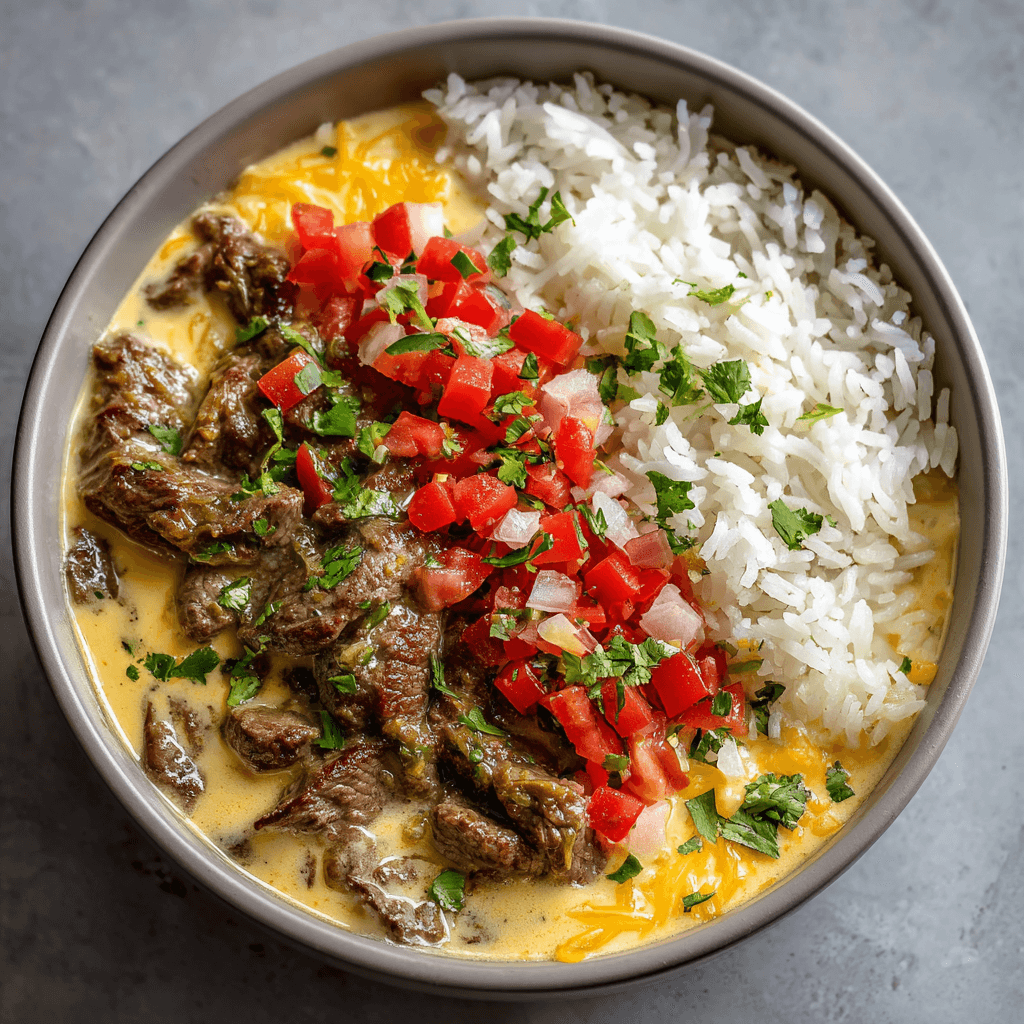
As we reach the winter solstice on this Sunday, December 21, 2025, there is a natural inclination to seek out meals that do more than just provide sustenance. We are looking for warmth, a sense of grounding, and textures that feel like a reward for navigating the darkest day of the year. While salads and light broths have their place in the spring, the arrival of winter calls for something with a bit more gravity. This Steak Queso Rice Bowl is exactly that—a combination of high-quality protein, perfectly seasoned grains, and a velvet-smooth cheese sauce that elevates the entire experience from a simple weeknight meal to something that feels truly special.
The inspiration for this bowl comes from the intersection of a classic steakhouse dinner and the vibrant, bold flavors of a street-style burrito bowl. Often, when we think of “comfort food,” we think of dishes that take hours to braise or bake. However, this recipe proves that you can achieve a deep, complex flavor profile in under forty minutes. The star of the show is the contrast between the charred, savory exterior of the steak and the liquid gold of the homemade queso. Unlike the processed versions you might find in a jar, this queso is built on a foundation of real cheddar and aromatics, ensuring the flavor is sharp, creamy, and clean.
What makes the Steak Queso Rice Bowl a standout choice for meal planners and home cooks alike is its versatility. It is a complete meal in a single vessel, making it easy to serve and even easier to enjoy. It’s the kind of dinner that makes the house smell incredible, drawing everyone to the kitchen before the steak has even finished resting. If you’ve been looking for a way to upgrade your usual rice-and-protein routine, this bowl is the answer.
Ingredients for a High-Quality Steak Bowl
To get a result that mimics a professional kitchen, the quality of your ingredients is the most important factor. Since this dish has relatively few components, each one needs to stand on its own.
The Steak and Marinade
- 1.5 lbs Flank Steak or Sirloin Tip: These cuts are lean but offer a robust beefy flavor that stands up well to searing.
- 2 tablespoons olive oil: For the marinade and the pan.
- 3 cloves garlic, minced: Fresh garlic provides a much sharper hit than the powdered version.
- 1 tablespoon Worcestershire sauce: For that essential umami depth.
- 1 teaspoon smoked paprika: To add a hint of campfire earthiness.
- 1/2 teaspoon cumin: For a warm, subtle spice.
- 1 teaspoon coarse sea salt and 1/2 teaspoon cracked black pepper.
The Velvet Queso Sauce
- 2 tablespoons unsalted butter: The base for our roux.
- 2 tablespoons all-purpose flour: To thicken the sauce into a coat-the-spoon consistency.
- 1.5 cups whole milk: Room temperature is best to avoid clumps.
- 8 oz Sharp White Cheddar: Freshly grated from a block (pre-shredded cheese is coated in starch and won’t melt smoothly).
- 4 oz Monterey Jack: For that iconic “cheese pull” and mild creaminess.
- 1 small can (4 oz) diced green chiles: For a gentle, tangy heat.
- A pinch of cayenne pepper: Entirely optional, but highly recommended for balance.
The Rice Base and Toppings
- 2 cups long-grain white rice or Basmati: Cooked according to package instructions (ideally with chicken broth instead of water for extra flavor).
- 1 tablespoon fresh lime juice: To brighten the rice after cooking.
- 1/2 cup fresh cilantro, chopped.
- 1 large bell pepper and 1 red onion: Sliced thin and sautéed until charred.
- Optional garnishes: Sliced jalapeños, pickled red onions, or a scoop of fresh pico de gallo.
Instructions: Building the Perfect Bowl
The secret to a great steak bowl isn’t just the seasoning; it’s the timing. You want your rice to be hot, your veggies to be crisp, and your steak to be rested just as the queso finishes thickening.
1. Marinate the Steak
Begin by slicing your steak into thin strips, cutting against the grain. This shortens the muscle fibers and ensures every bite is tender rather than chewy. In a medium bowl, toss the steak strips with the olive oil, minced garlic, Worcestershire sauce, paprika, cumin, salt, and pepper. Let this sit at room temperature for at least 20 minutes. This allows the seasoning to penetrate the meat and brings the steak to a temperature that facilitates a better sear.
2. Cook the Rice
While the steak is marinating, get your rice started. If you want to take the flavor up a notch, sauté the dry rice in a teaspoon of oil for two minutes before adding your liquid. Use chicken or vegetable broth for a more savory base. Once the rice is fluffy and cooked, stir in the lime juice and half of the chopped cilantro. Cover and keep warm.
3. Sauté the Vegetables
In a large heavy-bottomed skillet or a cast-iron pan, heat a drizzle of oil over medium-high heat. Add the sliced bell peppers and onions. Cook them for about 6 to 8 minutes, stirring only occasionally. You want them to develop those dark, caramelized “char” marks that provide a smoky contrast to the creamy cheese. Once tender-crisp, remove them from the pan and set aside.
4. Sear the Steak
In the same skillet (don’t wash it—those brown bits are pure flavor), turn the heat up to high. Once the pan is shimmering, add the steak in a single layer. Do not crowd the pan; if necessary, cook in two batches. Let the steak sit undisturbed for two minutes to develop a crust, then toss and cook for another two minutes. Remove the steak from the pan and let it rest on a plate for five minutes. This resting period allows the juices to redistribute, ensuring the meat stays succulent.
5. Craft the Queso Sauce
While the steak rests, lower the heat to medium. Melt the butter in a small saucepan. Whisk in the flour and cook for about one minute—just enough to lose the “raw flour” taste, but don’t let it brown. Slowly pour in the milk, whisking constantly to ensure no lumps form. Once the mixture starts to simmer and thicken, turn the heat to low. Add the grated cheddar and Monterey Jack one handful at a time, whisking until smooth. Stir in the green chiles and cayenne. If the sauce feels too thick, add a tablespoon of milk to thin it out.
6. Assemble the Bowls
To build your bowl, start with a generous base of the lime-cilantro rice. Add a heap of the charred peppers and onions to one side, followed by a portion of the seared steak. Finally, pour a ladle of the warm queso over the center of the bowl. Garnish with the remaining cilantro and any extra toppings you enjoy.
Flavor and Texture Notes
This bowl is designed to hit several sensory notes at once. The steak is the primary savory element, offering a deep, roasted flavor and a satisfying chew. The marinade provides a hit of acid and spice that prevents the red meat from feeling too heavy.
The queso acts as the unifying force. Because we used sharp cheddar, there is a distinct tanginess that cuts through the richness of the whole milk and butter. The texture of the sauce is heavy and velvet-like, coating the grains of rice so that every forkful feels luxurious. The peppers and onions add a necessary “snap” and a bit of sweetness from the caramelization, while the lime-infused rice provides a bright, citrusy finish that cleanses the palate between bites. It is a meal that feels complete—balancing salt, fat, acid, and heat in a single dish.
Tips and Variations for Every Cook
The Steak Queso Rice Bowl is an excellent canvas for customization depending on what you have in your pantry or your specific dietary preferences.
Choosing Your Steak
While flank steak is the traditional choice for this style of bowl, you can use ribeye for a much richer, fattier experience. If you are on a budget, top sirloin or even “stew meat” can work, provided you sear it quickly over high heat so it doesn’t become overcooked and tough.
Making it Spicier
If you prefer a dinner with more of a kick, stir a tablespoon of chopped canned chipotle peppers in adobo sauce into the queso. This will turn the sauce a beautiful orange-red and add a significant level of smokiness and heat.
Low-Carb Substitutions
For those looking to lower the carbohydrate count, swap the white rice for cauliflower rice. Simply sauté the cauliflower rice with a little lime juice and cilantro in a pan for 5 minutes before serving. You can also add a base of shredded romaine lettuce to turn this into more of a “queso salad” bowl.
Bean and Corn Additions
To add more fiber and volume to the bowl, stir a can of rinsed black beans or fire-roasted corn into the rice or the sautéed vegetable mix. These additions make the meal even more filling and add great visual color.
Storage and Make-Ahead Guidance
This dish is a fantastic candidate for meal prep, provided you store the components correctly to maintain their textures.
In the Refrigerator: Store the steak, rice, and vegetables together in an airtight container for up to 3 days. However, I highly recommend storing the queso sauce separately. Cheese sauces tend to firm up significantly when cold. By keeping the queso in its own small jar, you can reheat it gently on the stove with a splash of milk to restore its original creaminess without overcooking the steak.
Reheating: For the best results, reheat the rice and steak in a microwave or a skillet until just warm. Heat the queso separately on low heat. Pour the hot cheese over the warm steak right before eating to mimic that “freshly made” experience.
Serving Suggestions
Presentation can turn a simple bowl into a restaurant-quality meal. I like to serve these in wide, shallow pasta bowls rather than deep cereal bowls; this allows all the ingredients to be visible and makes it easier to get a bit of everything on your fork.
If you are serving this for a family dinner, consider putting the components out “taco-bar” style. Place the steak, rice, peppers, and queso in individual serving dishes and let everyone build their own bowl. This is particularly great if you have picky eaters who might want more rice and less pepper, or vice versa. Pair this with a crisp, cold drink like a sparkling lime water or a Mexican lager to balance the warmth of the cheese.
FAQ
Why is my queso sauce grainy? Graininess usually happens for one of two reasons: using pre-shredded cheese or overheating the sauce. Pre-shredded cheese is coated in cellulose to prevent clumping in the bag, which prevents it from melting smoothly. Also, if you boil the cheese sauce, the proteins can clump together. Always melt the cheese on low heat.
Can I make this in a slow cooker? You can slow-cook a tougher cut of beef (like chuck roast) for 8 hours until it shreds, but you shouldn’t make the queso or the rice in the slow cooker. If you go this route, follow the recipe for the queso as written on the stove and serve it over the shredded beef and rice.
Is there a way to make the queso without flour? Yes. You can skip the roux and use a combination of heavy cream and cheese, though it will be much richer. Alternatively, you can use a small amount of “sodium citrate” (a type of salt) which allows cheese and water/milk to emulsify perfectly without the need for flour.
What is the best way to slice steak for this bowl? Always look for the “lines” in the meat (the grain) and cut perpendicular to them. If you cut with the grain, the steak will be very difficult to chew. Slicing the steak while it is slightly frozen can help you get those paper-thin, restaurant-style strips.
A Final Note on Comfort
There is a reason we gravitate toward meals like the Steak Queso Rice Bowl when the weather turns cold. It is a dish that appeals to our most basic cravings for savory, salty, and creamy flavors. By taking the time to sear the meat properly and whisk a real cheese sauce, you are creating a version of comfort food that is as high in quality as it is in satisfaction.
As the sun sets early this evening, take a moment to enjoy the process of cooking—the sound of the steak hitting the hot pan, the sight of the cheese melting into a smooth sauce, and the first bite of a meal made entirely from scratch. It is the perfect way to close out the year and nourish yourself for the days ahead.