
Follow Me On Social Media!

Steak and Mushroom Mini Pies: A Savory Hand Pie Recipe for Any Occasion.

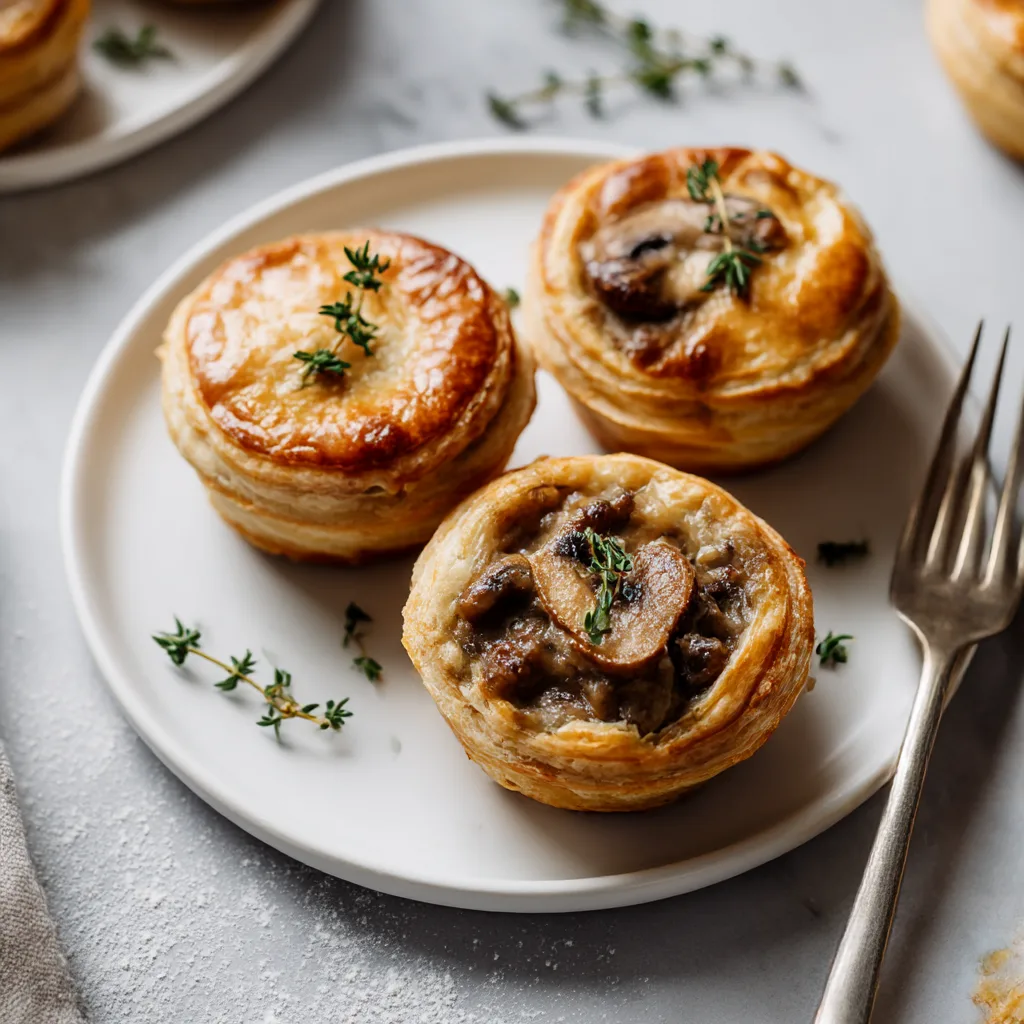
There’s something deeply satisfying about a proper hand pie. Maybe it’s the flaky pastry that shatters at first bite, or the way a rich, meaty filling stays contained until you’re ready for it. Steak and mushroom mini pies hit all those notes—they’re substantial enough to serve as a main course, yet compact enough to pack for lunch or serve at a gathering without needing plates and forks.
I started making these after a trip through northern England, where I encountered my first proper steak pie in a small pub. The combination of tender beef, earthy mushrooms, and buttery pastry stuck with me. Back home, I scaled the concept down into individual portions, which turned out to be a smart move. These mini pies freeze beautifully, reheat without getting soggy, and somehow taste even better the next day when the flavors have had time to settle into each other.
The filling itself is straightforward—chunks of beef that have been seared and braised until they’re fall-apart tender, mixed with mushrooms that have been cooked down until they release their moisture and concentrate their flavor. A simple gravy binds everything together, thick enough to stay put inside the pastry but not so heavy that it overwhelms the other ingredients. The pastry can be homemade or store-bought, depending on your time and ambition. Both work well, though I’ll share what makes the difference if you decide to make your own.
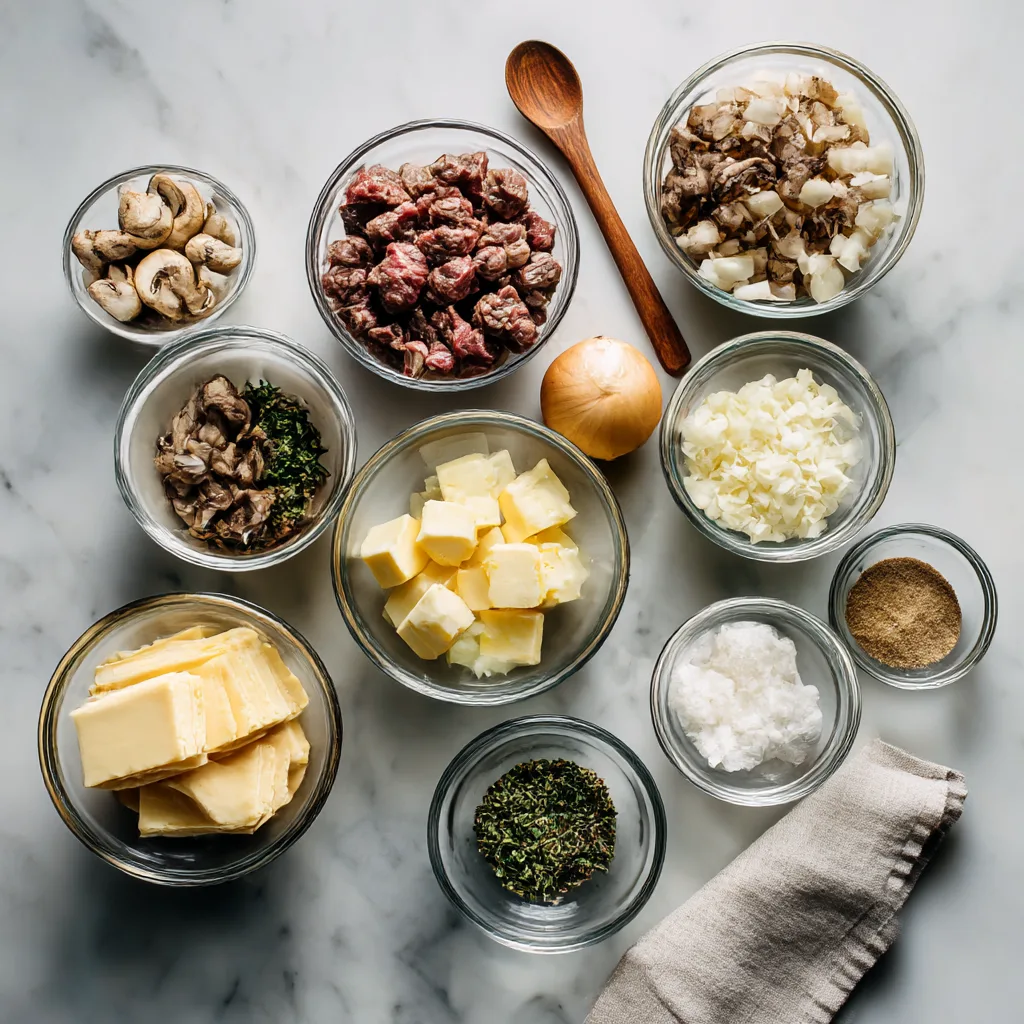
Ingredients
For the filling:
- 1½ pounds beef chuck, cut into ½-inch cubes
- 3 tablespoons vegetable oil, divided
- 1 large onion, finely diced
- 3 cloves garlic, minced
- 12 ounces cremini or button mushrooms, quartered
- 2 tablespoons tomato paste
- 2 tablespoons all-purpose flour
- 1 cup beef stock
- ½ cup red wine (or additional stock)
- 2 teaspoons Worcestershire sauce
- 1 teaspoon fresh thyme leaves (or ½ teaspoon dried)
- 1 bay leaf
- Salt and black pepper to taste
For the pastry:
- 2 packages (14-16 ounces total) store-bought pie dough, or homemade pastry for a double-crust pie
- 1 egg, beaten with 1 tablespoon water (for egg wash)
Instructions
Start with the filling, which needs time to cool completely before it goes into the pastry. Heat a large, heavy-bottomed pot or Dutch oven over medium-high heat. Pat the beef cubes dry with paper towels—this step matters more than you’d think, since wet meat steams instead of browning. Season the beef generously with salt and pepper.
Add 2 tablespoons of oil to the hot pot. Working in batches to avoid crowding, brown the beef on at least two sides. You’re looking for a deep, caramelized crust, which takes about 6-8 minutes total per batch. Don’t rush this. Transfer the browned beef to a plate and set aside.
Lower the heat to medium and add the remaining tablespoon of oil. Add the diced onion and cook, stirring occasionally, until it’s soft and starting to turn golden at the edges—about 6 minutes. The browned bits stuck to the bottom of the pot will start to dissolve into the onions, which is exactly what you want. Add the garlic and cook for another minute until fragrant.
Push the onions to the side and add the mushrooms to the center of the pot. Let them sit undisturbed for 2-3 minutes so they can start to brown, then stir everything together. Cook until the mushrooms have released their liquid and it’s mostly evaporated, another 5-6 minutes.
Stir in the tomato paste and cook for a minute, then sprinkle the flour over everything. Stir well to coat all the vegetables, cooking for another 2 minutes to get rid of the raw flour taste. Pour in the beef stock and wine, scraping up any remaining brown bits from the bottom of the pot. Add the Worcestershire sauce, thyme, and bay leaf.
Return the beef and any accumulated juices to the pot. Bring everything to a simmer, then reduce the heat to low, cover, and cook until the beef is completely tender—this usually takes about 1½ to 2 hours. Check occasionally and add a splash of water if the liquid level drops too much. You want the mixture to be thick and saucy, not dry, but also not swimming in liquid.
Once the beef is tender, remove the bay leaf and taste the filling. Adjust the salt and pepper as needed. Spread the filling in a shallow dish and let it cool to room temperature, then refrigerate until completely cold. This step is non-negotiable—hot filling will melt your pastry and make the pies impossible to work with.
When you’re ready to assemble, preheat your oven to 400°F and line a large baking sheet with parchment paper. Roll out your pastry on a lightly floured surface to about ⅛-inch thickness. Using a bowl or round cutter about 5 inches in diameter, cut out circles. Gather and re-roll the scraps to get as many circles as possible—you should get 10-12 from two packages of store-bought dough.
Place a generous 3 tablespoons of cold filling in the center of each circle. Don’t overfill, or you won’t be able to seal them properly. Brush the edges with a bit of water, then fold the circle in half to create a half-moon shape. Press the edges together firmly, then crimp with a fork to seal. Place each finished pie on the prepared baking sheet.
Once all the pies are assembled, brush the tops with the egg wash. This gives them that glossy, golden finish. Cut a small slit in the top of each pie to allow steam to escape. Bake for 25-30 minutes, until the pastry is deep golden brown and the filling is bubbling at the edges.
Let the pies cool for at least 10 minutes before serving—the filling will be extremely hot straight from the oven.
Flavor & Texture Notes
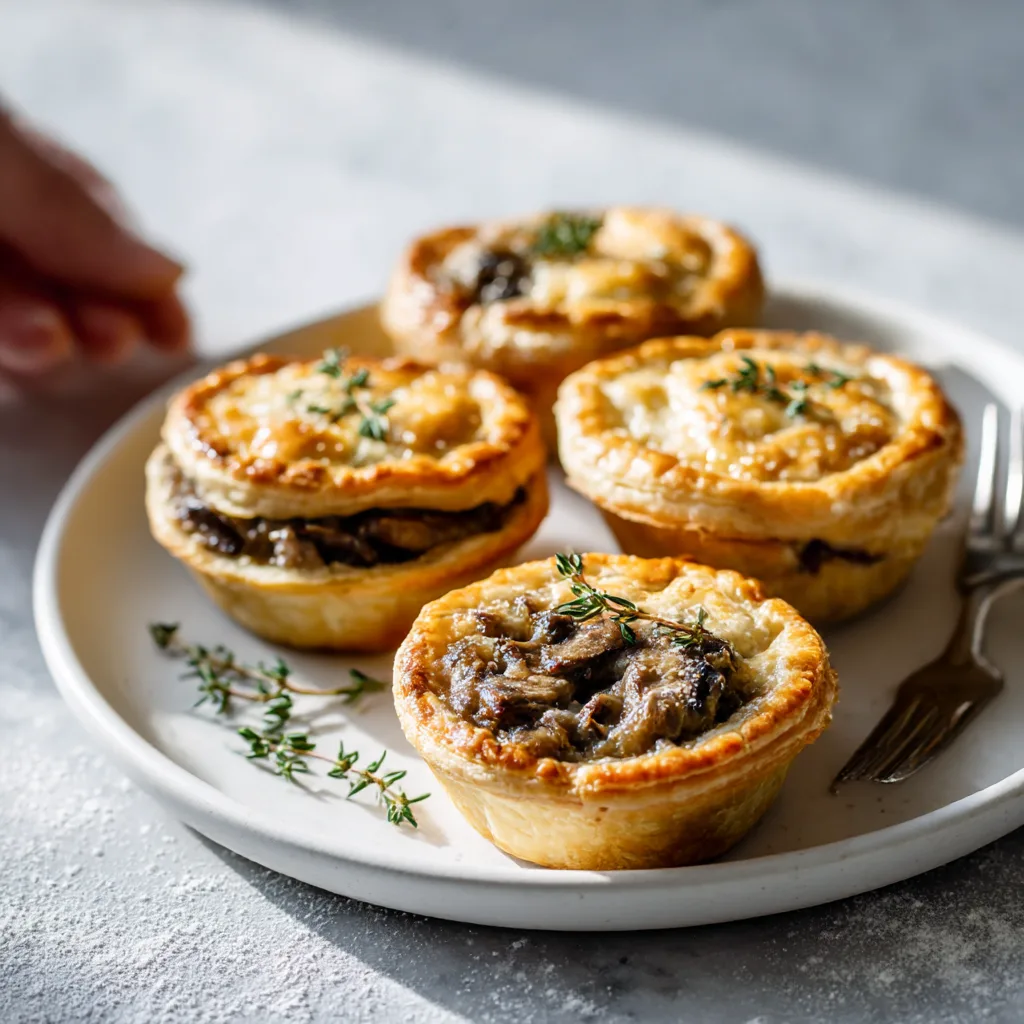
The first thing you notice when you bite into one of these is the contrast between the crisp, flaky pastry and the tender filling. Good pastry should shatter slightly when you bite down, with distinct layers that pull apart rather than forming a solid, dense shell. The filling itself has a deep, savory richness from the long braise. The beef should be soft enough to cut with a fork, while the mushrooms add an earthy note that balances the meatiness.
The gravy brings everything together without being heavy or floury. It should coat the ingredients and have body, but not feel like wallpaper paste. The hint of red wine adds depth without making the pies taste boozy, and the Worcestershire sauce contributes a subtle tang that brightens the whole filling. There’s also a slight sweetness from the caramelized onions that rounds out the savory elements.
Temperature matters with these pies. Served hot from the oven, they’re comforting and substantial. At room temperature, the flavors are a bit more distinct and the filling sets up nicely, making them ideal for picnics or packed lunches.
Tips & Variations
If you’re short on time, you can use pre-cooked roast beef from the deli, though the texture won’t be quite the same. Chop it finely and skip the braising step, just sauté it briefly with the mushroom mixture and add the stock to create a gravy.
For the pastry, rough puff or all-butter pie dough gives the best flavor and texture, but standard pie crust works fine. Some people prefer hot water crust pastry for meat pies, which is sturdier and less likely to leak, though it’s not as flaky.
You can swap the beef for lamb shoulder, which gives the pies a richer, slightly gamier flavor. Adjust the cooking time as needed since different cuts of meat vary in tenderness. For a lighter version, use chicken thighs instead of beef and replace the red wine with white wine or vermouth.
Adding a tablespoon of Dijon mustard to the filling gives it a subtle sharpness that works well if you’re not a fan of the sweetness from the onions. Some people like to include diced carrots or peas in the filling for extra vegetables—add them during the last 30 minutes of braising so they don’t overcook.
If you want to make these vegetarian, replace the beef with a combination of portobello mushrooms and cooked lentils. Use vegetable stock and add a splash of soy sauce for extra umami.
Storage & Make-Ahead
These pies are excellent make-ahead food. You can prepare the filling up to three days in advance and keep it refrigerated, or freeze it for up to three months. Assembled but unbaked pies freeze beautifully—place them on a baking sheet until frozen solid, then transfer to a freezer bag. They’ll keep for up to three months. Bake from frozen, adding about 10 minutes to the cooking time.
Baked pies keep in the refrigerator for up to four days. Reheat them in a 350°F oven for about 15 minutes until warmed through. The microwave works in a pinch, but the pastry won’t be as crisp.
For the best results when freezing, wrap each pie individually in plastic wrap before putting them in a freezer bag. This prevents freezer burn and makes it easy to grab just one or two at a time.
Serving Suggestions
These pies work well with simple sides that don’t compete with the rich filling. A basic green salad with a sharp vinaigrette cuts through the richness nicely. Mashed potatoes or roasted root vegetables make sense if you’re serving these as a main course for dinner.
For a more casual meal, serve them with pickles and a sharp cheddar cheese. The acidity of good pickles is surprisingly good alongside the savory filling. Coleslaw is another solid choice, especially a vinegar-based version rather than a creamy one.
If you’re serving these at a party, they’re substantial enough to be the main attraction rather than just an appetizer. Set out a few different condiments—horseradish cream, whole grain mustard, or a tangy chutney all work well.
For a traditional British approach, serve them with mushy peas and malt vinegar. It sounds odd if you haven’t tried it, but the combination is genuinely good.
FAQ
Can I make these in a muffin tin instead of as hand pies?
Yes, this works well. Press circles of pastry into a muffin tin, fill with the cold filling, then top with smaller pastry circles. Brush with egg wash and bake at 375°F for about 30 minutes. They’ll be more like traditional pot pies this way.
What’s the best way to prevent leaks?
Make sure the filling is completely cold before assembling, don’t overfill the pies, and seal the edges well by pressing firmly and crimping with a fork. The small steam vent on top is also important—it gives the steam somewhere to go rather than forcing its way out through the seams.
Can I use a different cut of beef?
Chuck is ideal because it has enough fat and connective tissue to stay moist during the long braise. Stew meat works fine too. Avoid lean cuts like sirloin or round, which will get tough and dry with extended cooking.
Why did my pastry get soggy on the bottom?
This usually happens when the filling is too wet or still warm when you assemble the pies. Make sure the filling is thick and cold. You can also try baking the pies on a preheated baking sheet, which helps set the bottom crust quickly.
How do I know when they’re done?
The pastry should be deep golden brown all over, not pale or blonde. You should see the filling bubbling slightly at the vents or edges. If you’re unsure, an instant-read thermometer inserted through the vent should read at least 165°F in the center.
Conclusion
Steak and mushroom mini pies are the kind of recipe that rewards a bit of effort. Yes, the filling takes time to braise properly, and yes, you need to let everything cool before assembly. But the payoff is a freezer stocked with substantial, flavorful hand pies that reheat beautifully and work for everything from weeknight dinners to packed lunches to casual entertaining.
The beauty of these pies is their versatility. Make them exactly as written, or treat the recipe as a template and adjust the filling to whatever sounds good to you. Once you’ve made them a few times, the process becomes second nature, and you’ll start finding excuses to make them. Give yourself an afternoon, put on some music, and make a double batch. Your future self will thank you.