
Follow Me On Social Media!

Pistachio Rose Cake.

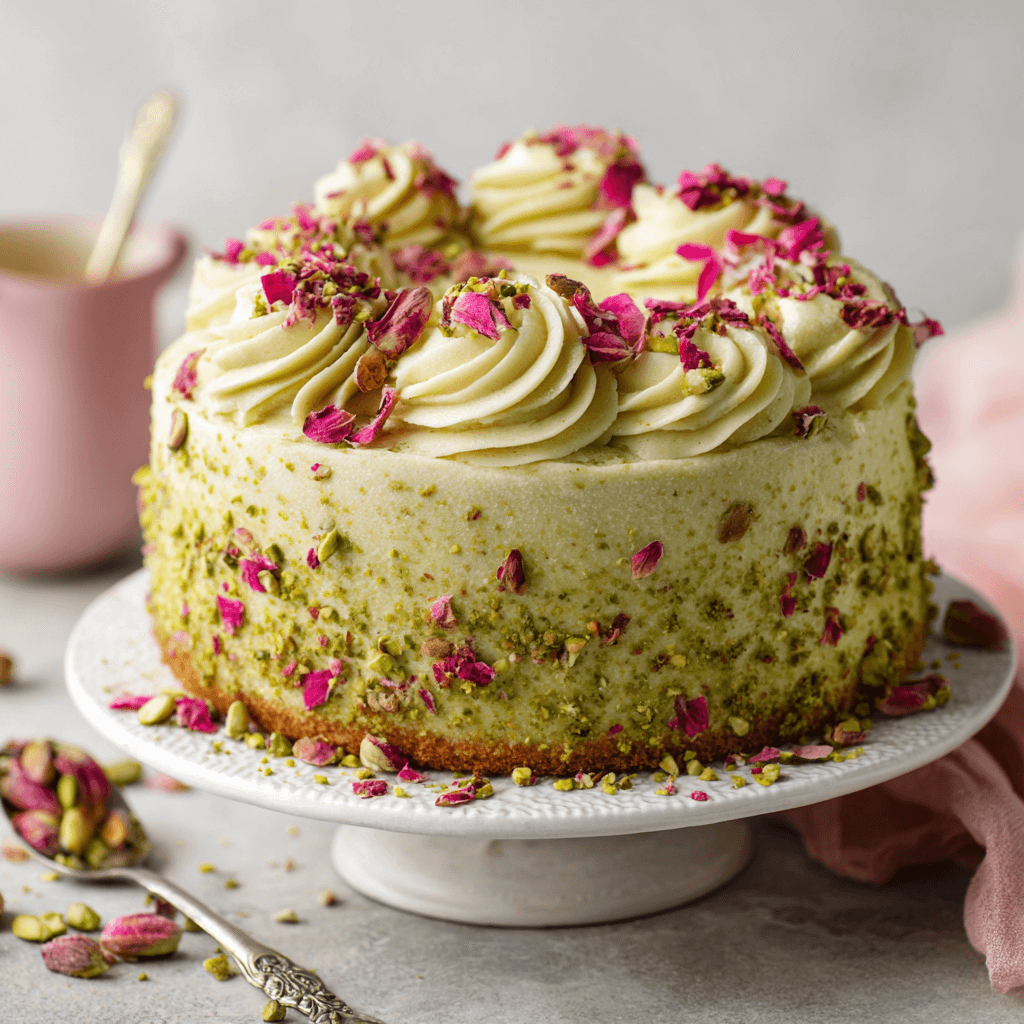
Pistachio rose cake is a fragrant, nut-enriched layer cake that blends buttery pistachio richness with a delicate floral finish from rose water. The technique uses the creaming method for lift, careful alternating of dry ingredients and milk for a smooth batter, and a rose-scented buttercream that turns the cake into a celebration-ready centerpiece.
Why You’ll Love This Recipe
- Elegant flavor profile — Earthy pistachio and subtle rose water create a refined, bakery-style taste.
- Tender, moist crumb — Ground pistachios add fat and fine solids that keep layers soft and flavorful.
- Beautiful natural speckle — Pistachio flecks make each slice visually striking without food coloring.
- Easy-to-work-with frosting — Classic buttercream spreads smoothly and can be piped for simple decoration.
- Perfect for special occasions — Two layers with a floral aroma feel festive and elevated.
- Customizable intensity — Rose water can be adjusted easily for a whisper of floral or a more pronounced scent.
Ingredients You’ll Need
For the Cake
- 1 cup unsalted butter, softened — Provides richness and traps air when creamed for a lighter texture.
- 1 1/2 cups granulated sugar — Sweetens and supports a finer, tender crumb.
- 4 large eggs, room temperature — Emulsify the batter and set the structure for stable layers.
- 1 teaspoon vanilla extract — Adds warmth and balances floral notes.
- 1 teaspoon rose water — Provides delicate floral aroma; a little goes a long way.
- 2 cups all-purpose flour — Gives structure so the cake layers slice cleanly.
- 1 teaspoon baking powder — Primary lift for even rise and a softer crumb.
- 1/2 teaspoon baking soda — Boosts tenderness and supports rise alongside milk and nut solids.
- 1/4 teaspoon salt — Sharpens flavor and prevents the cake from tasting overly sweet.
- 1 cup ground unsalted pistachios — Adds nutty flavor, moisture, and subtle green flecks.
- 1/2 cup milk, room temperature — Moistens the batter and helps it mix smoothly without overworking.
For the Frosting
- 1 cup unsalted butter, softened — Forms a creamy base for stable buttercream.
- 4 cups powdered sugar — Sweetens and thickens for spreadable, pipeable texture.
- 2 tablespoons heavy cream (or milk) — Adjusts consistency and adds a slightly richer mouthfeel.
- 1 teaspoon vanilla extract — Rounds sweetness and enhances pistachio flavor.
- 1 teaspoon rose water — Adds floral aroma to the frosting; adjust to taste.
- Chopped pistachios (for decoration) — Adds crunch, color, and a clear pistachio finish on top.
Step-by-Step Instructions
- Preheat and prep the pans — Heat oven to 350°F (175°C) and grease/flour two 9-inch round pans (parchment circles help with clean release).
- Cream butter and sugar — Beat 3–4 minutes until pale and fluffy; this aeration is key for lighter layers.
- Add eggs and flavorings — Mix eggs in one at a time, then blend in vanilla and rose water to keep the batter emulsified and fragrant.
- Whisk dry ingredients — Combine flour, baking powder, baking soda, salt, and ground pistachios so leaveners distribute evenly.
- Alternate dry and milk — Add dry mixture in 3 additions, alternating with milk in 2 additions, beginning and ending with dry; mix just until combined.
- Divide and level — Split batter evenly between pans and smooth tops for uniform baking.
- Bake until set — Bake 30–35 minutes until a toothpick comes out clean and the tops spring back lightly.
- Cool completely — Cool in pans 10 minutes, then transfer to racks; layers must be fully cool before frosting.
- Beat butter for frosting — Beat butter until creamy and smooth to avoid lumps in the final buttercream.
- Build the buttercream — Add powdered sugar gradually on low speed, then beat in cream, vanilla, and rose water until fluffy.
- Assemble and frost — Frost between layers, stack, then cover top and sides; finish with chopped pistachios (and optional rose petals).
Recipe Notes & Tips
- Rose water strength varies — Start with 1/2 teaspoon if yours is very potent, then adjust after tasting the frosting.
- Grind pistachios finely — Fine texture blends into batter and frosting; coarse pieces can create uneven crumb and rough frosting.
- Avoid overmixing after flour — Overmixing develops gluten and can make the cake tougher; stop as soon as the batter is smooth.
- Scrape the bowl often — Butter-heavy batters can hide streaks; scraping ensures even mixing and consistent rise.
- Chill for cleaner frosting — A 20–30 minute chill after a thin “crumb coat” helps you get a smooth final finish.
- Brighten with citrus (optional) — A small amount of lemon zest pairs beautifully with rose and pistachio and prevents the flavor from feeling heavy.
Nutritional Information
- Prep Time: 20 minutes
- Cooking Time: 30–35 minutes
- Total Time: About 50 minutes (plus cooling time)
- Servings: 12 slices (two-layer 9-inch cake)
- Calories: ~540–780 per slice (estimate; varies by frosting thickness and slice size)
Perfect Pairings
- Earl Grey or black tea — Floral notes complement rose water and balance buttercream sweetness.
- Turkish coffee or espresso — Bitter, concentrated coffee pairs especially well with nutty pistachio.
- Fresh berries — Raspberries or strawberries add acidity that brightens the floral profile.
- Light whipped cream — Adds airy richness without adding much sweetness.
Ideal Occasions
- Weddings and engagement celebrations — Floral, elegant flavors suit formal events beautifully.
- Spring gatherings — Rose and pistachio feel seasonal and fresh.
- Holiday dessert tables — A unique, aromatic option among heavier chocolate desserts.
- Dinner parties — Slices neatly and feels special without requiring complex decoration.
Storage & Serving Tips
- Refrigerate covered — Store up to 4 days; buttercream holds best when chilled and protected from fridge odors.
- Serve slightly tempered — Let slices sit 10–15 minutes at room temperature for the best aroma and soft frosting texture.
- Add decorations last — If using rose petals, add close to serving so they look fresh and don’t wilt.
- Freeze layers for ease — Freeze unfrosted layers up to 2 months; thaw, then frost fresh for best texture.
Creative Variations to Try
- Pistachio-cardamom rose — Add 1/4 teaspoon ground cardamom to the batter for a warm, Middle Eastern-inspired twist.
- Rose jam filling — Spread a thin layer of rose or raspberry jam under the frosting between layers for added moisture and flavor.
- Cream cheese rose frosting — Swap part of the butter for cream cheese for tangier frosting and reduced sweetness.
- White chocolate pistachio finish — Drizzle melted white chocolate over the top and sprinkle extra pistachios for a dessert-table showpiece.
Troubleshooting Common Issues
- Cake is dense — Butter wasn’t creamed long enough or batter was overmixed; cream until fluffy and mix only until combined after adding flour.
- Frosting tastes too floral — Rose water was too strong; add more vanilla, a pinch of salt, or a little extra powdered sugar to rebalance.
- Frosting is too soft — Butter was too warm; chill the bowl 10–15 minutes and beat again, or add more powdered sugar gradually.
- Layers slide — Cake was warm or frosting too loose; cool completely and chill the assembled cake briefly to set.
Why This Recipe Works
Pistachios bring both flavor and functional richness: their natural oils and fine solids help create a moist, tender crumb while adding subtle texture and color. The creaming method aerates butter and sugar, giving the cake enough lift so the nut flour doesn’t weigh it down. Alternating dry ingredients with milk keeps the batter emulsified and prevents overdeveloping gluten, which preserves softness. Rose water, used in small amounts, adds aromatic top notes that make the cake taste more complex without masking pistachio. Buttercream provides structure for a stable layer cake and acts as a flavor carrier for rose and vanilla. With an estimated ~540–780 calories per slice, it’s a rich celebration cake—best balanced with smaller slices, tea, or fresh fruit on the side.
Final Thoughts
Pistachio rose cake is an elegant, aromatic dessert that feels special the moment it’s sliced—nutty, buttery, and delicately floral. Nutritionally it’s an indulgence due to buttercream and nuts, but you can lighten the overall feel by frosting more thinly, using a simple whipped topping, or serving it alongside berries for brightness. Once you find your ideal rose-water intensity, this becomes a truly memorable showpiece cake.