
Follow Me On Social Media!

Pan-Seared Salmon with Roasted Cherry Tomatoes: A 20-Minute Dinner That Feels Fancy.

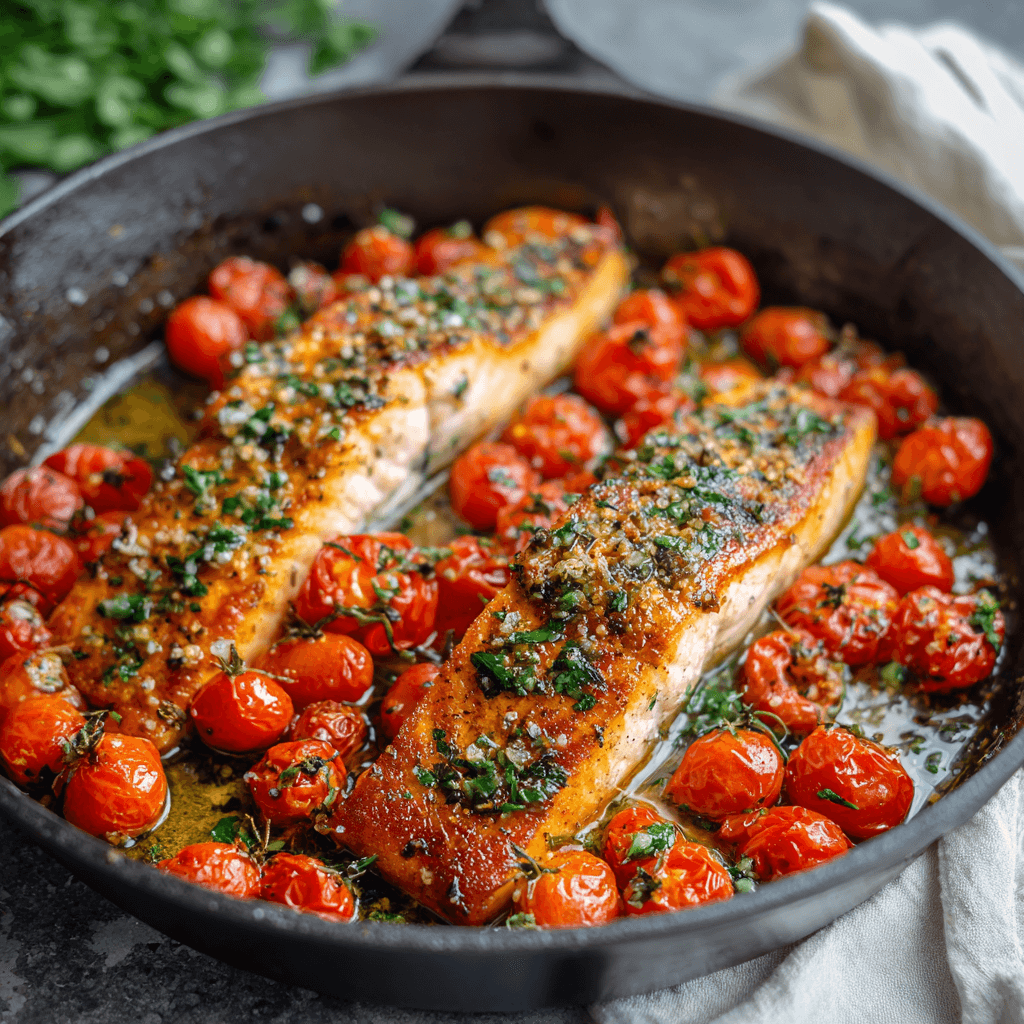
I used to be terrified of cooking salmon at home. Every time I tried, it either stuck to the pan, turned out dry, or looked nothing like the beautiful filets I’d see in restaurants. Then I learned the simple truth: good salmon needs very little interference. This pan-seared salmon with roasted cherry tomatoes recipe taught me that high-quality fish, proper heat, and a few complementary ingredients are all you need for an impressive meal.
What makes this salmon recipe special is the combination of cooking methods happening simultaneously. While the salmon sears in a hot pan until its skin crisps into something almost chip-like, cherry tomatoes roast in the oven until they burst and concentrate into sweet, jammy bites. The two come together on the plate with fresh herbs and a squeeze of lemon, creating a dish that looks and tastes like it required far more effort than it actually did.
This pan-seared salmon comes together in about 20 minutes from start to finish, making it perfect for weeknight dinners when you want something that feels special without spending hours in the kitchen. It’s also a recipe that scales beautifully—just as easy to make for two as it is for a dinner party of eight. The technique works whether you’re using wild-caught or farmed salmon, though I’ll share tips for getting the best results with whatever you can find.
The roasted cherry tomatoes aren’t just a side component—they become a sauce in their own right, their juices mingling with garlic and olive oil to create something you’ll want to sop up with crusty bread. Combined with the rich, flaky salmon, this meal delivers on both nutrition and satisfaction.
Ingredients
For the Salmon:
- 4 salmon filets (6 ounces each), skin-on
- 2 tablespoons olive oil
- 1 teaspoon salt
- 1/2 teaspoon black pepper
- 1 teaspoon garlic powder
- 1/2 teaspoon smoked paprika (optional)
For the Roasted Cherry Tomatoes:
- 2 pints cherry or grape tomatoes
- 3 tablespoons olive oil
- 4 cloves garlic, thinly sliced
- 1/2 teaspoon salt
- 1/4 teaspoon red pepper flakes
- 1/4 teaspoon sugar (optional, if tomatoes are very acidic)
- 2 tablespoons fresh basil leaves, torn
- 1 tablespoon fresh parsley, chopped
For Finishing:
- 1 lemon, cut into wedges
- Extra olive oil for drizzling
- Flaky sea salt for garnish
- Additional fresh herbs
Instructions
Start by preheating your oven to 425°F and positioning a rack in the upper third. The tomatoes need to go in first since they take slightly longer than the salmon. While the oven heats, prepare the tomatoes by spreading them on a rimmed baking sheet. Add the sliced garlic, drizzle with olive oil, and season with salt and red pepper flakes. Toss everything together so the tomatoes are well coated. Spread them in a single layer—overcrowding will cause them to steam rather than roast.
Place the tomatoes in the oven and roast for 15-18 minutes. You want them to blister, burst, and release their juices, creating a saucy consistency. The garlic should turn golden and fragrant but not burnt. If some tomatoes burst earlier than others, that’s perfect—the variety in texture makes the final dish more interesting.
While the tomatoes roast, prepare the salmon. Remove it from the refrigerator about 10 minutes before cooking to take the chill off, which helps it cook more evenly. Pat each filet completely dry with paper towels—this is crucial for getting crispy skin. Any moisture on the surface will create steam instead of a sear.
Season the salmon generously on both sides with salt, pepper, garlic powder, and smoked paprika if using. Don’t be shy with the seasoning—salmon can handle bold flavors, and some of it will stay in the pan.
Heat a large skillet over medium-high heat and add the olive oil. The pan needs to be hot before the salmon goes in—the oil should shimmer but not smoke. To test if it’s ready, flick a tiny drop of water into the pan; it should sizzle immediately.
Place the salmon filets in the pan skin-side down, pressing gently with a spatula for the first 30 seconds to ensure full contact with the pan. This prevents the skin from curling and ensures even crisping. You should hear an immediate, satisfying sizzle. Let the salmon cook undisturbed for 4-5 minutes. Resist the urge to move it or check underneath—moving it will prevent the skin from crisping properly.
The salmon will gradually change color from the bottom up. When you can see the color has changed about two-thirds of the way up the side of the filet, it’s time to flip. Use a thin spatula to carefully flip each piece. The skin should release easily when it’s ready—if it’s sticking, give it another 30 seconds.
Cook the salmon on the flesh side for another 2-3 minutes for medium doneness, which keeps the center slightly translucent and very moist. If you prefer your salmon more well-done, cook for an additional minute or two. The internal temperature should read 125°F for medium or 135°F for medium-well.
Remove the salmon from the pan and let it rest on a plate while you finish the tomatoes. By now, they should be bursting and saucy. Remove them from the oven and immediately add the torn basil and chopped parsley, stirring gently to wilt the herbs in the residual heat.
Flavor & Texture Notes
This pan-seared salmon achieves that restaurant-quality contrast between crispy, almost crackling skin and tender, flaky flesh. The exterior has a light crust from the seasoning while the interior remains moist and rich with salmon’s natural oils. When cooked to medium, the center has a silky, almost buttery texture that melts on your tongue.
The roasted cherry tomatoes transform completely from their raw state. They become sweet, concentrated, and jammy, with their skins slightly caramelized and their juices creating a light sauce that pools around them. The garlic softens and mellows, adding a sweet, savory depth without being sharp or overwhelming.
Fresh herbs added at the end provide bright, green notes that cut through the richness of the salmon. The basil adds a sweet, peppery quality while the parsley brings freshness. A squeeze of lemon over everything brightens all the flavors and adds the acidity that makes the dish feel balanced rather than heavy.
The combination creates multiple texture experiences in each bite—crispy skin giving way to tender fish, soft burst tomatoes providing little pockets of sweetness, and the occasional piece of golden garlic adding savory intensity. It’s the kind of meal that feels elegant and well-thought-out despite its simplicity.
Tips & Variations
Salmon Selection: Look for salmon filets that are firm, glossy, and smell like the ocean but not fishy. The skin should be shiny and intact. Wild-caught salmon tends to be leaner with a more pronounced flavor, while farmed salmon is fattier and milder. Both work beautifully with this preparation.
Skin Concerns: If you’re not a fan of salmon skin, you can still use skin-on filets and cook them the same way—the skin protects the flesh during cooking and keeps it moist. Simply don’t eat the skin after cooking, though crispy salmon skin is honestly a treat worth trying.
Pan Alternatives: A cast-iron skillet is ideal for achieving maximum crispiness, but any heavy-bottomed pan works. Avoid nonstick pans if possible—you won’t get the same crispy skin. If you only have nonstick, it will still work, just expect less crunch.
Tomato Variations: When cherry tomatoes aren’t in season, this recipe works with regular tomatoes cut into wedges, though the cooking time increases to 25-30 minutes. Sun-dried tomatoes packed in oil, roughly chopped, can also be warmed with fresh garlic for a different but equally good accompaniment.
Herb Substitutions: Try fresh dill or tarragon instead of basil for a different flavor profile. Thyme or oregano work well too, though use them more sparingly as they’re more potent. Add woody herbs like thyme to the tomatoes at the beginning of roasting.
Add Vegetables: Asparagus, green beans, or snap peas can roast alongside the tomatoes. Add them at the same time and they’ll be perfectly tender when the tomatoes are done. Lemon slices roasted with the tomatoes add extra brightness and look beautiful.
Make It Spicier: Increase the red pepper flakes in the tomatoes or add a pinch of cayenne to the salmon seasoning. A drizzle of chili oil over the finished dish adds heat and richness.
Storage & Make-Ahead
Salmon is best enjoyed fresh, but leftover cooked salmon keeps well in the refrigerator for up to 2 days. Store it in an airtight container and enjoy it cold on salads, in grain bowls, or gently rewarmed. Note that reheating will cook the salmon further and change its texture—it’s often better to use leftovers cold.
The roasted tomatoes can be made up to 3 days ahead and stored in the refrigerator. They’re excellent at room temperature or gently rewarmed. In fact, the flavors improve as they sit, making them perfect for meal prep. You can reheat them in a skillet while cooking fresh salmon, or serve them cold over the warm fish.
For meal planning, you can season the salmon and have it ready in the refrigerator for up to 24 hours before cooking. The tomatoes can also be prepped—simply toss them with oil, garlic, and seasonings, then cover and refrigerate until you’re ready to roast.
Cooked salmon doesn’t freeze particularly well due to its delicate texture, but the roasted tomatoes freeze beautifully for up to 3 months. Thaw them overnight in the refrigerator and use as you would fresh.
Serving Suggestions
This pan-seared salmon pairs beautifully with simple sides that don’t compete for attention. Serve it over a bed of arugula or baby spinach—the warmth of the salmon and tomatoes will slightly wilt the greens, creating a built-in salad. Roasted baby potatoes, rice pilaf, or creamy polenta all make excellent bases that soak up the tomato juices.
For a lighter meal, serve the salmon alongside a quinoa or farro salad with cucumber, red onion, and a lemon vinaigrette. Steamed green beans or roasted asparagus provide a simple vegetable side that doesn’t require much attention while you’re cooking the salmon.
The dish looks elegant when plated on warmed dishes with the salmon placed over or beside a pile of the roasted tomatoes, allowing their juices to pool around the fish. A drizzle of good olive oil, a sprinkle of flaky sea salt, and a lemon wedge on the side complete the presentation.
For entertaining, this recipe scales easily. You can roast tomatoes on multiple baking sheets and cook salmon in batches or in multiple pans simultaneously. Serve family-style on a large platter with the salmon arranged on a bed of the roasted tomatoes and plenty of fresh herbs scattered over everything.
FAQ
How do I know when the salmon is done? Salmon is done when it flakes easily with a fork and reaches an internal temperature of 125°F for medium (slightly translucent in the center) or 135°F for medium-well (opaque throughout). The flesh should look opaque and separate into flakes when gently pressed. Remember that salmon continues cooking after you remove it from the heat, so err on the side of slightly underdone.
Why does my salmon stick to the pan? Salmon sticks for a few reasons: the pan isn’t hot enough, the fish is too wet, or you’re moving it too soon. Make sure the pan and oil are properly heated before adding the fish, pat the salmon completely dry, and don’t try to flip it until it naturally releases. When properly seared, the salmon will release easily from the pan.
Can I cook salmon without the skin? Yes, but skinless salmon requires more attention. Reduce the cooking time to 3-4 minutes per side and be very gentle when flipping. The skin acts as a protective barrier during cooking, so skinless filets are more likely to overcook or fall apart. If using skinless salmon, consider using a nonstick pan to prevent sticking.
What if my cherry tomatoes aren’t very sweet? Add a pinch of sugar to the tomatoes before roasting—it helps balance acidity and encourages caramelization. You can also add a splash of balsamic vinegar during the last few minutes of roasting for extra sweetness and depth. Roasting itself concentrates the natural sugars in tomatoes, so even mediocre tomatoes improve significantly with this method.
Can I use frozen salmon for this recipe? You can, but thaw it completely in the refrigerator overnight first. Never cook salmon from frozen for this recipe—it won’t sear properly and will release too much moisture. Once thawed, pat it very dry and proceed with the recipe as written. Fresh salmon will give you better results, but properly thawed frozen salmon works in a pinch.
Learning to cook salmon well is one of those skills that makes you feel like a more confident cook. This recipe removes the mystery and gives you a reliable method that works every time. The combination of crispy-skinned salmon and those sweet, jammy tomatoes creates something that feels restaurant-worthy but is totally achievable on a weeknight. Once you master this technique, you’ll find yourself coming back to it again and again—it’s that good, and that easy.