
Follow Me On Social Media!

Oven-Baked Beef Lasagna – Hearty & Classic.

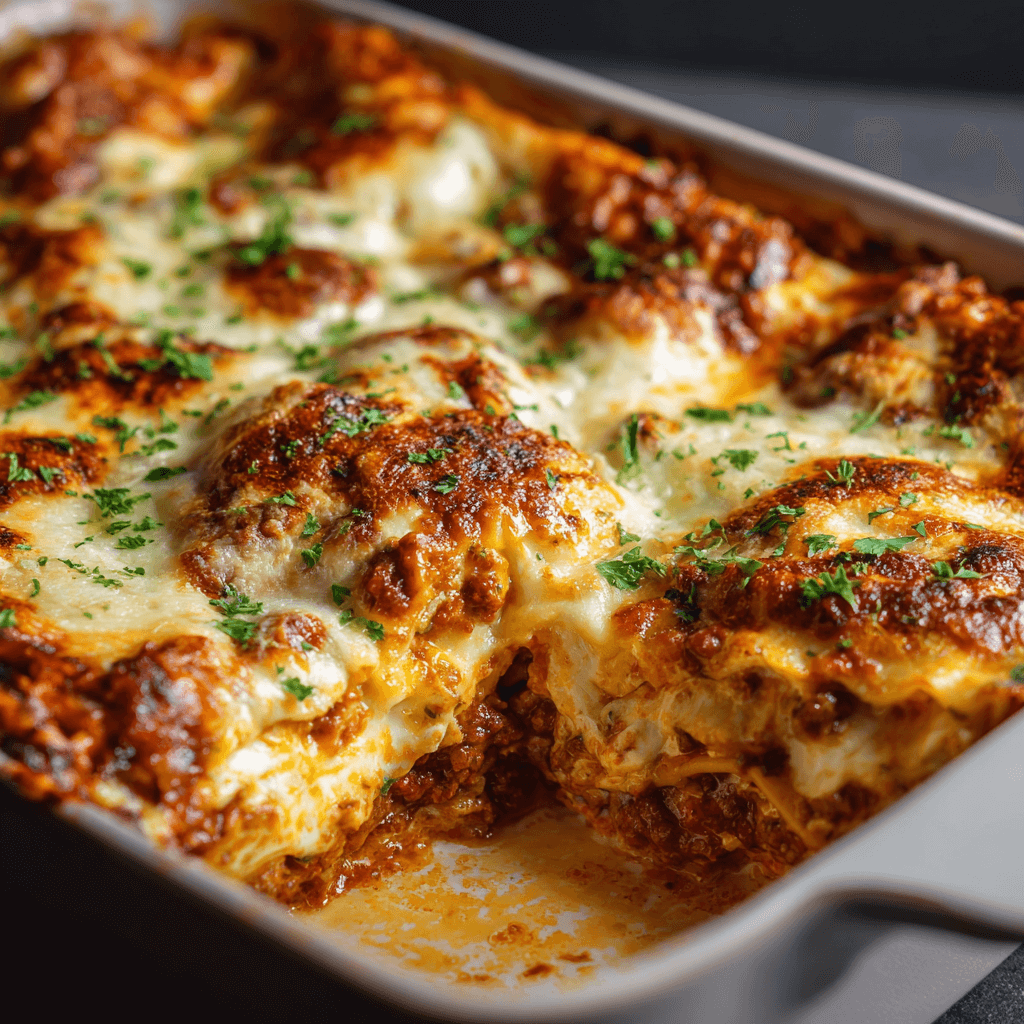
A truly classic beef lasagna is a masterpiece of architectural cooking. It’s not just about the ingredients, but the structural integrity of the layers. A “hearty” lasagna relies on a thick, slow-simmered meat sauce (ragù) and a creamy cheese binder that holds everything together when sliced.
This recipe follows the beloved Italian-American tradition, using a rich ricotta blend for maximum comfort and height.1
The Anatomy of a Perfect Slice
Success depends on balancing moisture. Too much sauce makes it soupy; too little makes it dry and tough.
| Layer | Component | Function |
| The Foundation | Meat Sauce | Provides savory depth and moisture for the noodles. |
| The Structure | Lasagna Noodles | The “skeleton” that holds the weight of the cheese. |
| The Binder | Ricotta Mixture | Creamy contrast that “glues” the pasta layers. |
| The Cap | Mozzarella & Parm | The protective, bubbly, golden-brown seal. |
Ingredients
The Slow-Simmered Meat Sauce
- 1 lb Ground Beef (80/20): Fat equals flavor and moisture.
- 1/2 lb Italian Sausage: (Optional, but adds incredible spice and depth).
- 1 medium Onion & 3 cloves Garlic: Finely minced.
- 2 cans (28 oz total) Crushed Tomatoes.
- 2 tbsp Tomato Paste: For that “all-day” cooked flavor.
- 1 tsp each: Dried Oregano, Dried Basil, and Sugar (to balance acidity).
The Cheese “Glue”
- 15 oz Ricotta Cheese: Full-fat provides the best texture.
- 1 Large Egg: Essential for “setting” the cheese so it doesn’t leak out.
- 1/4 cup Fresh Parsley: Chopped.
- 1/2 cup Grated Parmesan.2
The Assembly
- 12–15 Lasagna Noodles: (Boiled al dente or high-quality no-boil).
- 1 lb Shredded Mozzarella: Low-moisture is best to avoid a watery lasagna.3
Instructions
1. The “Sunday” Sauce
In a large pot, brown the beef and sausage over medium-high heat. Drain the excess fat.
- Add the onion and garlic, sautéing until soft.
- Stir in the tomato paste, crushed tomatoes, and spices.
- The Simmer: Cover and let it bubble on low for at least 30–45 minutes. A thickened sauce is the secret to a lasagna that stays upright on the plate.
2. The Ricotta Blend
In a medium bowl, whisk the egg first, then fold in the ricotta, Parmesan, and parsley.
The Pro Tip: Season this mixture with a pinch of salt and nutmeg. Nutmeg is the “hidden” ingredient in classic Italian cheese fillings that makes the flavor pop.
3. The Architecture (Layering)
Preheat your oven to $375^\circ\text{F}$ ($190^\circ\text{C}$). Lightly grease a 9×13 inch baking dish.
- Bottom: Spread 1 cup of meat sauce (prevents sticking).
- Pasta: A layer of noodles (slightly overlapping).4
- Cheese: Spread 1/3 of the ricotta mixture.
- Mozzarella: A handful of shredded cheese.
- Repeat: Sauce, Noodles, Ricotta, Mozzarella. Aim for at least 3 or 4 full layers.
- The Cap: The final layer should be Noodles, a thick coating of Sauce, and a generous “carpet” of Mozzarella and Parmesan.
4. The “Foil Shield” Bake
Cover the dish tightly with aluminum foil.
- Bake for 25 minutes covered. This steams the pasta and melts the interior cheese.
- Remove the foil and bake for another 20–25 minutes. This is when the top becomes bubbly, golden, and slightly charred at the edges.
5. The “Patience” Rule (The Rest)
Do not cut the lasagna immediately. * Let it sit on the counter for 15–20 minutes.
- As it cools slightly, the cheese proteins “set” and the pasta absorbs the remaining sauce. If you cut it hot, the layers will slide apart.
Culinary Tips for Success
- Noodle Hack: If using no-boil noodles, ensure they are completely covered by sauce. Any exposed corner of a no-boil noodle will stay hard and crunchy.
- Manage Moisture: If your sauce looks too watery after simmering, keep the lid off for the last 10 minutes to reduce it.
- The “Clean” Slice: Use a serrated knife to saw through the top layer of pasta and cheese first, then switch to a spatula to lift from the bottom.
FAQ
Can I make this ahead of time?
Lasagna is arguably the best “make-ahead” meal. You can assemble the whole thing, keep it in the fridge for 24 hours, and bake it when ready. Just add 10 minutes to the covered baking time.
Ricotta vs. Béchamel?
Traditional Northern Italian lasagna uses Béchamel (a white flour-and-butter sauce) instead of ricotta.5 It results in a silkier, more elegant texture. The ricotta version used here is the “Hearty & Classic” Italian-American style, which is much more substantial.
Can I freeze it?
Yes. You can freeze it baked or unbaked. If unbaked, thaw in the fridge for 24 hours before cooking. It will stay good for up to 3 months.
Would you like me to find a recipe for a “Classic Caesar Salad with Homemade Croutons” to serve as a crisp, fresh side to this lasagna?