
Follow Me On Social Media!

Mediterranean Baked Feta Eggs: The 15-Minute Breakfast That Works for Any Meal.

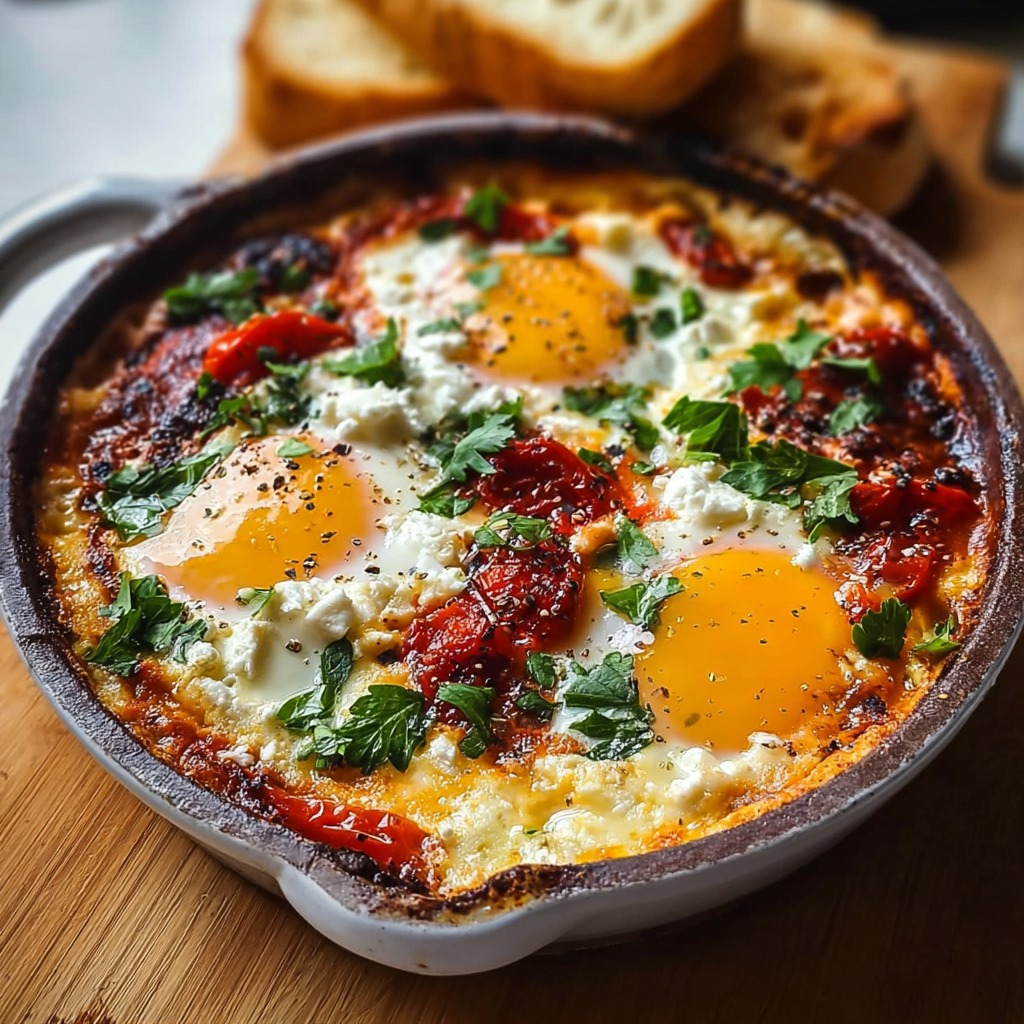
Some of my favorite culinary discoveries happen completely by accident. I was rifling through my refrigerator one Sunday morning, faced with a block of feta that needed using and a carton of eggs that were approaching their expiration date. What emerged from that impromptu cooking session was this Mediterranean baked feta eggs recipe—a dish so simple yet satisfying that it’s become my go-to solution for everything from lazy weekend breakfasts to impressive dinner party starters.
The magic happens when creamy feta cheese melts slightly in the oven, creating pockets of tangy richness that pair beautifully with perfectly baked eggs. Add some cherry tomatoes, fresh herbs, and a drizzle of good olive oil, and you have a dish that captures the essence of Mediterranean cooking: simple ingredients transformed into something greater than their parts.
What sets these baked feta eggs apart from other egg dishes is how the feta acts as both a flavor enhancer and a natural sauce. As it warms, it softens and creates a creamy base that the egg yolks mingle with when you break them open. The result is a protein-rich meal that feels luxurious but comes together in about 15 minutes.
This recipe works beautifully for breakfast, brunch, lunch, or even a light dinner. It’s naturally vegetarian and gluten-free, and the individual serving size makes it perfect for meal prep or entertaining. Whether you’re cooking for one or feeding a crowd, these Mediterranean eggs deliver bold flavors with minimal effort—exactly the kind of cooking I gravitate toward when I want something special without the stress.
Ingredients
For the Base:
- 4 ounces feta cheese, crumbled into large chunks
- 1 pint cherry tomatoes, halved
- 3 tablespoons extra virgin olive oil, divided
- 2 cloves garlic, thinly sliced
- 1/2 small red onion, thinly sliced
- 1/4 teaspoon dried oregano
- 1/4 teaspoon red pepper flakes (optional)
- Freshly ground black pepper to taste
For the Eggs:
- 4-6 large eggs (depending on serving size preference)
- Salt to taste
- 2 tablespoons fresh herbs (parsley, dill, or basil), chopped
For Serving:
- Crusty bread, pita, or naan
- Lemon wedges
- Extra olive oil for drizzling
- Flaky sea salt
Instructions
Preheat your oven to 400°F and lightly grease a 9×13-inch baking dish or individual ramekins with olive oil. The choice between one large dish or individual portions depends on your preference—individual ramekins make for prettier presentation, while a large dish is easier for family-style serving.
Spread the crumbled feta cheese evenly across the bottom of your prepared baking dish. Don’t worry about making it perfectly uniform—irregular chunks of feta will create interesting pockets of creaminess throughout the dish. The feta acts as a flavorful foundation that will partially melt and create a sauce-like base for the eggs.
Scatter the halved cherry tomatoes around and over the feta, cut side up when possible. This positioning helps the tomatoes caramelize slightly while releasing their juices into the dish. Add the sliced garlic and red onion, distributing them evenly throughout the dish. These aromatics will soften and sweeten as they bake, adding depth to the overall flavor.
Drizzle 2 tablespoons of the olive oil over the vegetables and cheese, then sprinkle with oregano, red pepper flakes (if using), and several grinds of black pepper. Don’t add salt at this point—the feta will provide plenty of saltiness, and you can always adjust at the end.
Place the dish in the preheated oven and bake for 10-12 minutes, until the tomatoes start to soften and release their juices, and the feta begins to warm and soften around the edges. You want the vegetables to get a head start on cooking before adding the eggs.
Remove the dish from the oven and use a spoon to create small wells in the vegetable and feta mixture—these will cradle the eggs and help them stay in place. Crack the eggs one at a time into a small bowl, then gently pour each egg into one of the wells you’ve created. This method gives you more control and prevents broken yolks.
Return the dish to the oven and bake for another 8-12 minutes, depending on how you like your eggs cooked. For runny yolks (which I highly recommend), start checking at 8 minutes. The whites should be just set while the yolks remain golden and jiggly. For firmer yolks, bake for a few minutes longer.
Remove from the oven and immediately sprinkle with the fresh herbs and a pinch of salt. Drizzle with the remaining tablespoon of olive oil and add a few more grinds of black pepper. Let the dish rest for 2-3 minutes before serving—this brief resting period allows the flavors to settle and prevents anyone from burning their tongue on the molten feta.
Flavor & Texture Notes
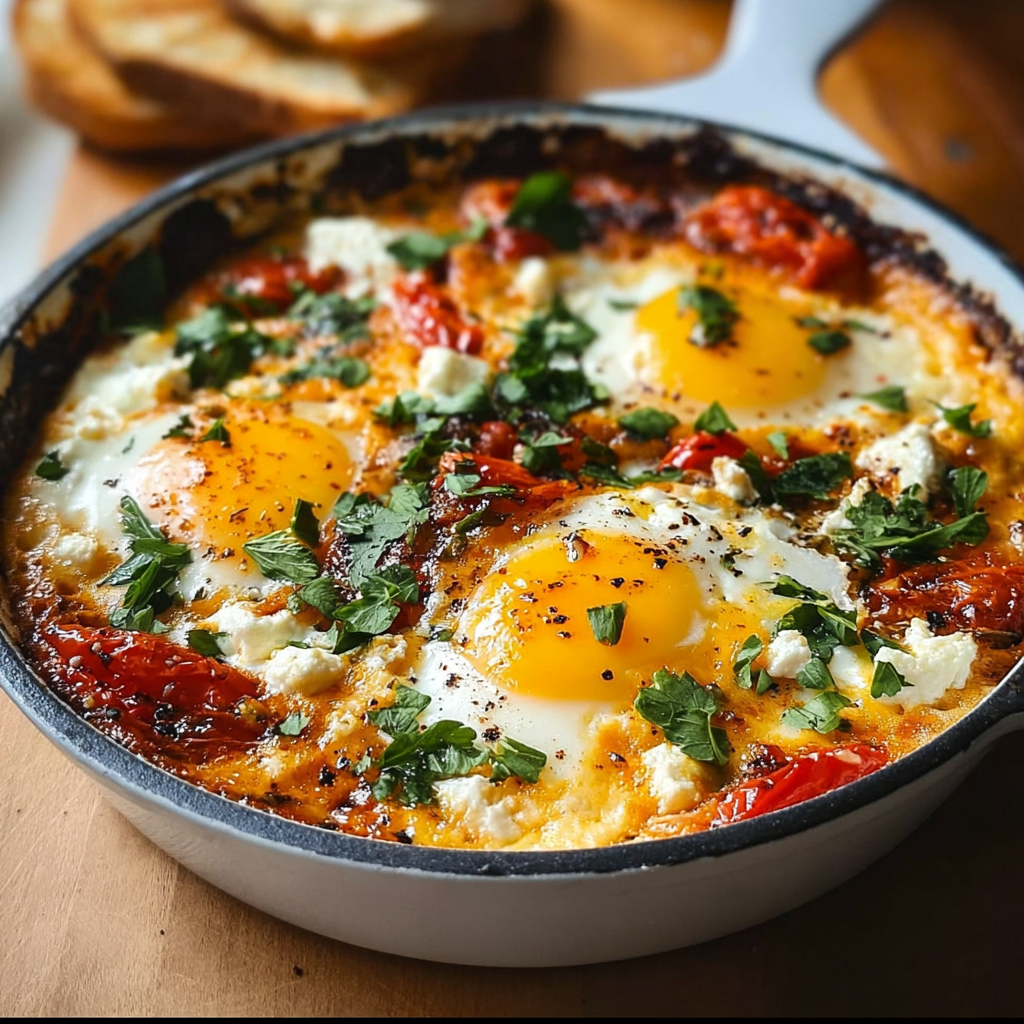
This Mediterranean baked feta eggs dish delivers a beautiful harmony of textures and flavors that makes each bite interesting. The feta provides a creamy, tangy base that’s intensely flavorful without being overwhelming. As it warms in the oven, it softens just enough to become spreadable while maintaining its characteristic crumbly texture in places.
The cherry tomatoes transform during baking, becoming sweet and slightly caramelized while releasing their juices to mingle with the melting feta. This creates a natural sauce that’s both bright and rich. The garlic and onion soften completely, adding sweet, mellow notes that balance the sharpness of the cheese.
When you break into the eggs, the golden yolks flow out and combine with the warm feta and tomato juices to create an instant sauce that coats everything beautifully. The contrast between the rich, runny yolk and the tangy feta is what makes this dish so satisfying—it’s like having a built-in hollandaise that’s much easier to achieve.
Fresh herbs added at the end provide bright, grassy notes that lift the entire dish and add a pop of color. The olive oil brings everything together with its fruity richness, while the optional red pepper flakes add a gentle heat that doesn’t overpower the other flavors.
The overall experience is comforting yet sophisticated—familiar flavors presented in a way that feels special enough for company but easy enough for a Tuesday morning.
Tips & Variations
Cheese Alternatives: While feta is traditional and provides the best flavor profile, you can substitute with goat cheese for a milder tang, or ricotta mixed with a bit of Parmesan for a creamier texture. Crumbled fresh mozzarella works too, though you’ll lose some of the characteristic Mediterranean sharpness.
Vegetable Additions: This recipe is incredibly flexible when it comes to vegetables. Try adding sliced bell peppers, zucchini rounds, or chunks of eggplant. Leafy greens like spinach or arugula can be stirred in during the last few minutes of baking. Sun-dried tomatoes offer intense flavor, while roasted red peppers add sweetness.
Protein Boost: For a heartier meal, add crumbled cooked bacon, diced ham, or cooked chorizo before baking. These proteins pair beautifully with the Mediterranean flavors and make the dish more substantial.
Herb Variations: Different herbs completely change the character of the dish. Dill and parsley are classic with feta, but try fresh mint for a Lebanese twist, or basil for an Italian influence. Dried herbs like za’atar or herbes de Provence can be added before baking for deeper flavor.
Heat Level: Control the spiciness by adjusting the red pepper flakes, or try adding a few slices of fresh jalapeño before baking. For a smoky element, use smoked paprika instead of red pepper flakes.
Serving Size Flexibility: This recipe easily scales up or down. For individual portions, use 4-inch ramekins with about 1 ounce of feta and 1-2 eggs per serving. For a crowd, double the recipe in a large roasting pan.
Storage & Make-Ahead
While these baked feta eggs are best enjoyed fresh from the oven, you can prepare components ahead of time for quicker assembly. The vegetable and cheese mixture can be assembled in the baking dish up to a day in advance and stored covered in the refrigerator. When ready to serve, let it come to room temperature for about 15 minutes, then proceed with the pre-baking and egg-adding steps.
Leftover baked feta eggs can be stored in the refrigerator for up to 2 days, though the egg texture won’t be quite the same upon reheating. To reheat, warm gently in a 300°F oven until heated through, about 8-10 minutes. The runny yolks will be set after reheating, but the dish is still delicious.
For meal prep purposes, you can bake the vegetable and feta mixture without the eggs, then store it in portions. When ready to eat, reheat a portion in a small baking dish, crack fresh eggs on top, and bake just until the eggs are set.
The dish doesn’t freeze well due to the egg and cheese content, so it’s best enjoyed fresh or within a few days of making.
Serving Suggestions
These Mediterranean baked feta eggs shine when served with good bread for scooping up every bit of the creamy, tomatoey goodness. Warm pita bread, crusty sourdough, or even toasted baguette slices work beautifully. For a gluten-free option, serve with crispy roasted potatoes or polenta rounds.
The dish makes an elegant brunch centerpiece when served family-style with a simple green salad dressed in lemon vinaigrette. The acidity of the salad provides a nice contrast to the rich eggs and cheese. A few lemon wedges on the side allow diners to add brightness as desired.
For a more substantial meal, serve alongside roasted vegetables like asparagus or Brussels sprouts, or with a grain salad made with farro or quinoa. The protein-rich eggs and cheese make this satisfying enough to be the main event.
Wine pairing opportunities abound—a crisp Sauvignon Blanc or Pinot Grigio complements the Mediterranean flavors beautifully, while a light red like Côtes du Rhône works if you prefer red wine with eggs. For non-alcoholic options, try sparkling water with lemon or a strong cup of Greek coffee.
The dish photographs beautifully, making it perfect for entertaining when you want something that looks impressive but doesn’t require last-minute fussing.
FAQ
How do I prevent the eggs from overcooking? Start checking the eggs at 8 minutes—they cook quickly once added to the hot dish. The whites should be just set but still slightly jiggly, and the yolks should be golden and runny. Remember that the dish will continue cooking slightly even after you remove it from the oven, so err on the side of underdone.
Can I make this dairy-free? While feta is integral to the traditional flavor profile, you can substitute with a dairy-free feta alternative or nutritional yeast for a cheesy flavor. The texture won’t be quite the same, but the dish will still be delicious. Adding extra olive oil helps compensate for the richness you lose without the cheese.
My feta is getting too brown on top. What should I do? If the feta is browning too quickly during the initial baking phase, cover the dish loosely with foil. Some browning is fine and adds flavor, but you don’t want it to become bitter. Using a lower rack position in your oven can also help prevent over-browning.
Can I use different types of tomatoes? Cherry tomatoes work best because they hold their shape and don’t release too much liquid. If using larger tomatoes, dice them and pat dry with paper towels before adding to remove excess moisture. Roma tomatoes work well diced, while beefsteak tomatoes might make the dish too watery.
How do I know when the eggs are perfectly cooked? The whites should be completely opaque and set but not rubbery, while the yolks should still jiggle slightly when you gently shake the dish. If you prefer firmer yolks, bake for an additional 2-3 minutes, checking frequently. The eggs will continue to cook slightly from residual heat even after removing from the oven.
There’s something magical about a dish that transforms simple pantry staples into something that feels both rustic and refined. These Mediterranean baked feta eggs prove that you don’t need complicated techniques or exotic ingredients to create memorable meals—just good ingredients treated with care and attention. Whether you’re looking for a new breakfast favorite or an easy entertaining dish that always impresses, this recipe delivers on both flavor and simplicity. The best part is how forgiving and adaptable it is, so don’t be afraid to make it your own with whatever vegetables and herbs you have on hand.