
Follow Me On Social Media!

Loaded Baked Potato Casserole Recipe.

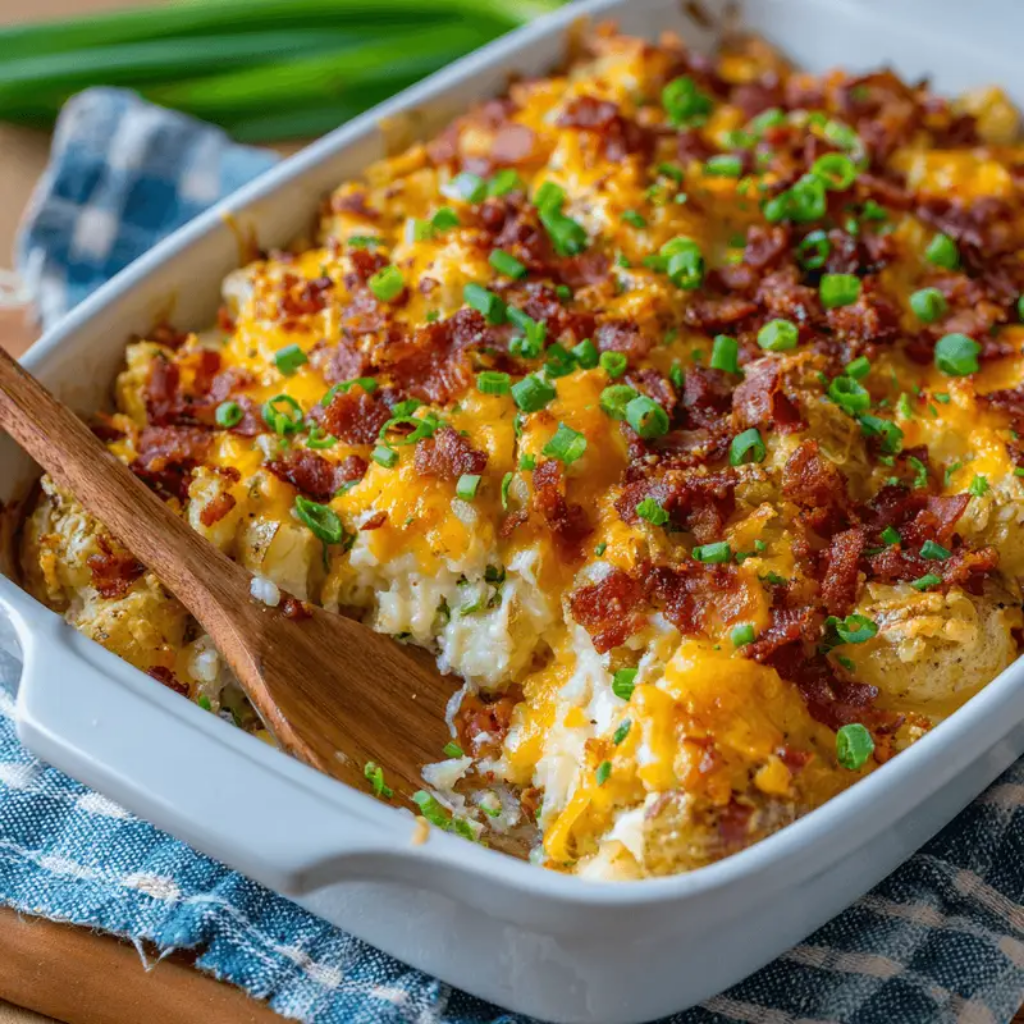
The inspiration for this casserole came from a Thanksgiving when I was tasked with bringing a potato dish to feed 20 people. Individual baked potatoes seemed impractical, mashed potatoes felt boring, and then it hit me – what if I took everything people love about loaded baked potatoes and turned it into a shareable casserole? That first attempt disappeared so quickly that I barely got a serving for myself, and it’s been requested at every family gathering since.
This loaded baked potato casserole captures all the flavors of a classic loaded baked potato – crispy bacon, sharp cheddar cheese, sour cream, chives, and fluffy potatoes – in an easy-to-serve format that feeds a crowd. The potatoes get tender and creamy, the cheese melts throughout, the bacon adds smoky crunch, and everything bakes together into pure comfort food. It’s the kind of side dish that often outshines the main course.
What makes this easy potato casserole recipe so appealing is how it delivers maximum flavor with straightforward preparation. There’s no complicated technique, just good ingredients layered together and baked until golden and bubbly. It’s equally at home at holiday dinners, potlucks, or weeknight family meals when you want something more special than ordinary potatoes.
Ingredients
For the Potato Base:
- 3 pounds russet potatoes (about 6 medium), peeled and diced into 3/4-inch cubes
- 1/4 cup unsalted butter, melted
- 1 cup sour cream
- 1/2 cup whole milk or heavy cream
- 1 teaspoon salt
- 1/2 teaspoon black pepper
- 1/2 teaspoon garlic powder
- 1/4 teaspoon onion powder
For the Loaded Toppings:
- 12 slices bacon, cooked until crispy and crumbled
- 2.5 cups shredded sharp cheddar cheese, divided
- 4 green onions, sliced (white and green parts)
- Additional sour cream for serving
- Extra sliced green onions for garnish
Optional Add-ins:
- 1/2 cup shredded Parmesan cheese
- 1 cup frozen broccoli florets, thawed (for loaded broccoli version)
- 1/4 teaspoon cayenne pepper for heat
Instructions
Preheat your oven to 350°F and grease a 9×13-inch baking dish with butter or cooking spray. Set it aside while you prepare the potatoes.
Start by peeling the potatoes and cutting them into 3/4-inch cubes. Try to keep them relatively uniform in size so they cook evenly. Smaller pieces will get mushy while larger pieces stay undercooked if there’s too much variation.
Bring a large pot of salted water to a boil over high heat. The water should taste salty like the sea – this is your only chance to season the potatoes from the inside. Add the diced potatoes and boil for 12-15 minutes until they’re fork-tender but not falling apart. You want them cooked through but still holding their shape. They should offer slight resistance when pierced with a fork.
While the potatoes cook, prepare your bacon if you haven’t already. Cook the bacon in a large skillet over medium heat until crispy, about 8-10 minutes. Transfer to paper towels to drain, then crumble or chop into small pieces. Reserve about 2 tablespoons of crumbled bacon for topping at the end.
Drain the potatoes thoroughly in a colander and let them sit for a minute to release steam. Excess moisture will make your casserole watery, so this step matters. You can even give the colander a gentle shake to help evaporate more moisture.
Transfer the drained potatoes to a large mixing bowl. While they’re still hot, add the melted butter and gently stir to coat. The hot potatoes will absorb the butter beautifully. Add the sour cream, milk, salt, black pepper, garlic powder, and onion powder. Stir gently to combine – you want the potatoes coated in the creamy mixture, but try not to mash them. Some potatoes will break down slightly, which is fine and actually helps create creaminess, but you want to maintain chunks for texture.
Fold in about three-quarters of the crumbled bacon, 2 cups of the shredded cheddar cheese, and most of the sliced green onions (reserve some for garnish). Stir gently until everything is evenly distributed throughout the potato mixture.
Transfer the potato mixture to your prepared baking dish, spreading it out evenly. The surface doesn’t need to be perfectly smooth – a bit of texture is actually good because it creates crispy bits during baking.
Sprinkle the remaining 1/2 cup of cheddar cheese evenly over the top. The cheese will melt and create a golden, bubbly layer. If you’re using Parmesan, mix it with the cheddar for the topping – the Parmesan adds extra crispy, salty bits.
Cover the baking dish with aluminum foil and bake for 30 minutes. This covered baking time allows the flavors to meld and the potatoes to heat through evenly without the top browning too quickly.
After 30 minutes, remove the foil and continue baking for an additional 15-20 minutes until the cheese on top is melted, bubbly, and starting to turn golden brown in spots. If you want an extra crispy, golden top, turn on the broiler for the last 2-3 minutes, watching carefully to prevent burning.
Remove from the oven and let the casserole rest for about 5 minutes before serving. This allows the cheese to set slightly and makes serving easier. Garnish with the reserved crumbled bacon and sliced green onions. Serve with a dollop of sour cream on each portion.
Flavor & Texture Notes
This loaded baked potato casserole delivers everything you love about a perfectly prepared baked potato in convenient, shareable form. The potatoes themselves are tender and creamy, with some pieces maintaining their shape to provide satisfying chunks while others break down to create a cohesive, creamy base. The butter and sour cream make them rich and tangy, while the milk keeps everything moist without being soupy.
The sharp cheddar cheese provides that essential tanginess and saltiness that defines a loaded baked potato. It melts throughout the casserole, creating pockets of gooey cheese, and the layer on top becomes golden and slightly crispy in spots where it caramelizes. Each bite includes melted cheese that stretches when you scoop it.
Bacon is the star add-in, providing smoky, salty, crispy contrast to the soft potatoes and melted cheese. The pieces mixed throughout ensure bacon flavor in every bite, while the crispy bits on top add textural interest. The bacon fat that renders during cooking infuses the potatoes with extra flavor.
Green onions add fresh, sharp notes that cut through the richness and provide color contrast. They’re milder than regular onions, offering gentle onion flavor without overwhelming the dish. The slight crunch of fresh green onions on top provides textural contrast to the creamy interior.
The overall effect is pure comfort – rich, creamy, cheesy, smoky, and satisfying. It tastes like the best baked potato you’ve ever had, but even better because the flavors are distributed throughout rather than concentrated on top.
Tips & Variations
Russet potatoes are ideal for this recipe because of their high starch content, which creates a fluffy, creamy texture. Yukon Gold potatoes can work too and will create a slightly denser, butterier casserole. Avoid waxy potatoes like red potatoes, which don’t absorb the dairy ingredients as well.
For ultra-creamy potatoes, use heavy cream instead of milk and increase the sour cream to 1.5 cups. This makes the casserole richer and more luxurious, perfect for special occasions.
To make this casserole ahead, prepare it completely but don’t bake it. Cover tightly and refrigerate for up to 24 hours. Let it sit at room temperature for 30 minutes before baking, then add 10-15 extra minutes to the covered baking time since it’s starting cold.
For a healthier version, use Greek yogurt instead of sour cream, low-fat milk, and reduced-fat cheese. Turkey bacon can replace regular bacon. The casserole won’t be quite as rich but will still be good.
Ranch seasoning makes an excellent addition. Mix 2 tablespoons of ranch seasoning mix into the potato mixture for extra flavor. This creates a ranch-style loaded potato casserole that’s particularly popular with kids.
For loaded broccoli and potato casserole, add 1-2 cups of small broccoli florets to the mixture. Make sure they’re thawed if using frozen, and pat them dry to remove excess moisture.
Jalapeños add nice heat. Mix in 1/4 cup diced pickled jalapeños or fresh seeded jalapeños for a spicy kick. Pepper jack cheese can replace some of the cheddar for extra spice.
Different cheeses create different flavors. Try a combination of cheddar, Monterey Jack, and Gruyere for complexity. Smoked gouda adds extra smoky depth that complements the bacon.
Storage & Make-Ahead
This casserole stores very well and reheats beautifully, making it excellent for meal prep or using up leftovers. Let it cool completely, cover tightly with plastic wrap and aluminum foil, and refrigerate for up to 4 days.
To reheat, individual portions microwave well – cover loosely and heat in 1-minute intervals until hot. For reheating the whole casserole, cover with foil and bake at 350°F for 25-30 minutes until heated through. Remove the foil for the last 5 minutes to re-crisp the top.
This casserole freezes reasonably well for up to 2 months, though the texture of the potatoes may change slightly upon thawing – they can become slightly grainy. To freeze, let it cool completely, wrap tightly in plastic wrap and two layers of foil, and freeze. Thaw overnight in the refrigerator before reheating.
For best results when freezing, slightly undercook the potatoes during the initial boiling so they don’t become mushy when reheated. Freeze before the final baking step, then bake from frozen by adding 30-40 minutes to the covered baking time.
You can prep components ahead separately. Cook and crumble the bacon up to 3 days ahead, shred the cheese, and slice the green onions. Store everything separately in the refrigerator. Boil and season the potatoes the night before, refrigerate, then assemble and bake the next day.
Serving Suggestions
This loaded potato casserole is versatile enough to pair with almost any main course. It’s perfect alongside grilled steaks, roasted chicken, pork chops, or glazed ham. The rich, cheesy potatoes complement both simple and elaborate main dishes.
For holiday meals, this casserole fits right in with Thanksgiving turkey, Christmas ham, or Easter dinner. It’s easier to serve than individual baked potatoes and looks beautiful on a buffet table.
The casserole is substantial enough to work as a main course for a light dinner when paired with a large salad or roasted vegetables. Add extra protein like shredded rotisserie chicken mixed into the potatoes for a complete meal.
For potlucks and covered dish dinners, this travels well and stays hot for a reasonable amount of time. Transport it in the baking dish wrapped in towels, and it will still be warm when you arrive.
Garnish options elevate the presentation. Beyond the classic bacon and green onions, try adding a drizzle of ranch dressing, a sprinkle of fresh chives, crumbled blue cheese for the adventurous, or even crispy fried onions for extra crunch.
This casserole works beautifully for brunch alongside eggs, breakfast sausage, and fresh fruit. The potato-cheese-bacon combination fits perfectly into a breakfast spread.
For casual entertaining, serve it directly from the baking dish at the table. For more formal dinners, portion individual servings onto plates and garnish each one with a small dollop of sour cream, a sprinkle of green onions, and a few bacon bits.
FAQ
Can I leave the potato skins on? You can, especially if using Yukon Gold potatoes with thin skins. The skins add nutrition, color, and texture. Just scrub them well before dicing. Russet potato skins are thicker and tougher, so those are better peeled for a smoother, creamier casserole.
My casserole turned out watery. What went wrong? This usually happens when the potatoes aren’t drained well enough after boiling, or if too much milk/cream is added. Make sure to drain the potatoes thoroughly and let them steam dry for a minute. Also, don’t add extra liquid beyond what the recipe calls for – the potatoes release moisture as they bake.
Can I use instant mashed potatoes? While fresh potatoes taste much better, you can use instant in a pinch. Prepare 3 pounds worth of instant mashed potatoes according to package directions, then mix in the butter, sour cream, and seasonings. The texture will be smoother and less chunky than using fresh potatoes.
How do I know when it’s done baking? The casserole is done when it’s hot throughout and the cheese on top is melted and golden. You can insert a knife or fork into the center – it should come out hot. The edges should be bubbling, and the top should have golden-brown spots.
Can I double this recipe? Yes, this doubles easily for a crowd. Use two 9×13-inch baking dishes or one very large roasting pan. The baking time may need to increase by 10-15 minutes, so check for doneness and adjust accordingly. Make sure the casserole isn’t too deep, or the center won’t heat through properly.
This loaded baked potato casserole has earned permanent status on my holiday and potluck menu rotation. It’s the kind of side dish that generates compliments and recipe requests every single time, yet it’s simple enough to make on a regular weeknight when you want something more special than basic potatoes. The combination of creamy potatoes, melted cheese, crispy bacon, and fresh green onions creates comfort food at its finest – familiar, satisfying, and always welcome. Make it once, and you’ll understand why this casserole has become a modern classic.