
Follow Me On Social Media!

Greek Cottage Cheese Salad: Fresh, Tangy & Protein-Rich.

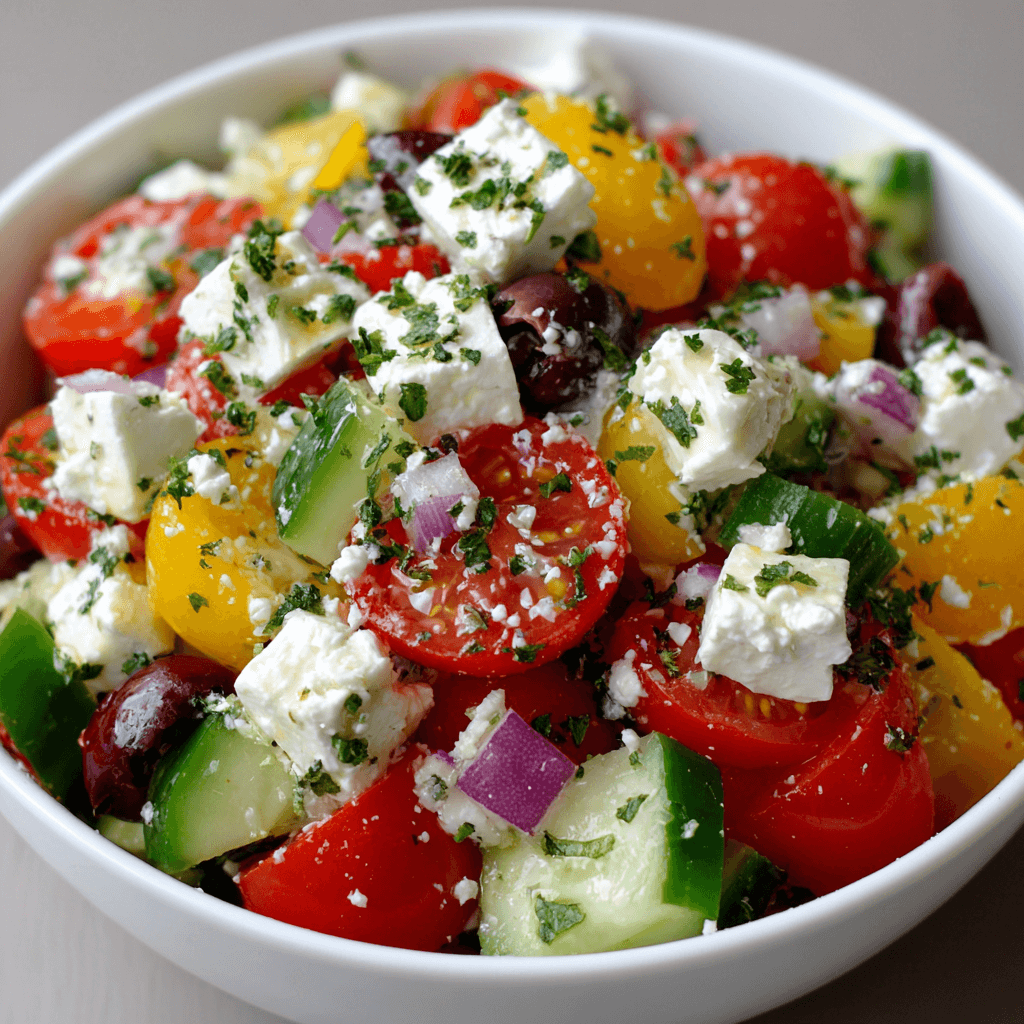
If you love the bright, Mediterranean flavors of a classic Greek salad but find yourself hungry an hour later, this Greek Cottage Cheese Salad is the perfect solution. This recipe is a modern, high-protein reimagining of the traditional Horiatiki. By swapping or supplementing feta with creamy cottage cheese, you transform a light side dish into a substantial, muscle-fueling meal.
The magic is in the contrast: the crisp, hydrating crunch of cucumbers and peppers meets the velvety, cooling texture of the cottage cheese. The tangy dressing and salty olives cut through the creaminess, creating a bowl that is incredibly refreshing. It’s the ultimate 5-minute lunch for busy workdays or a vibrant post-workout recovery meal.
Ingredients
This recipe serves 1 large meal or 2 side portions.
The Fresh Base
- 1 cup low-fat or full-fat cottage cheese (small curd works best for mixing)
- 1 cup English cucumber, diced (skin on for extra fiber)
- 1 cup cherry tomatoes, halved1
- 1/4 cup red onion, thinly sliced or diced2
- 1/4 cup green bell pepper, diced
- 2 tbsp Kalamata olives, sliced
The Zesty Dressing
- 1 tbsp extra virgin olive oil3
- 1 tsp red wine vinegar (or fresh lemon juice)
- 1 tsp dried oregano
- Salt and black pepper to taste
For Garnish
- Fresh parsley or dill, chopped
- Optional: A sprinkle of feta crumbles (if you want that extra salty bite)
Instructions: The 5-Minute Toss
1. Prep the Veggies
- Dice: Chop the cucumber, tomatoes, onions, and peppers into uniform, bite-sized pieces.
- Drain: If your tomatoes or cucumbers are particularly juicy, pat them with a paper towel. This prevents the cottage cheese from becoming “soupy.”
2. Assemble the Bowl
- The Base: Spoon the cottage cheese into a wide bowl.
- The Mix: Add the cucumbers, tomatoes, onions, peppers, and olives on top.
3. Dress and Season
- Drizzle the olive oil and red wine vinegar directly over the salad.
- Sprinkle the oregano, salt, and pepper.
- Gently fold everything together until the veggies are coated in the creamy cottage cheese.
4. Finish
- Garnish with fresh herbs and an extra pinch of oregano. Serve immediately.
Flavor & Texture Notes
| Component | Sensation | Flavor Profile |
| Cottage Cheese | Creamy & Soft | Mild, Tangy, Buttery |
| Cucumber/Pepper | Crisp & Refreshing | Clean, Grassy, Fresh |
| Olives/Vinegar | Sharp & Salty | Briny, Acidic, Pungent |
| Dried Oregano | Earthy | Floral & Aromatic |
Tips & Variations
Tip 1: Preventing a “Watery” Salad
Cottage cheese has a high moisture content, as do cucumbers and tomatoes.4 For the best experience, eat this salad immediately after mixing. If you need to meal prep it, keep the cottage cheese and the chopped veggies in separate containers and mix right before eating.
Tip 2: Use “Small Curd”
Small curd cottage cheese blends more seamlessly with the chopped vegetables, creating a more uniform “dip-like” texture that is easier to eat with a fork or scoop with pita chips.
Peer Insight: If you find the flavor of cottage cheese a bit too mild, stir in 1/2 teaspoon of Dijon mustard or a splash of brine from the olive jar. It adds a layer of depth that mimics the sharpness of aged feta.
Variation: The “Greek Power Bowl”
Add 1/2 cup of cooked quinoa or chickpeas to the mix. The grains absorb some of the cottage cheese creaminess and add complex carbohydrates for sustained energy.
Variation: Avocado-Greek Mix
Top the salad with half a diced avocado. The healthy fats make the salad even more satiating and add a “buttery” finish that pairs beautifully with the lemon and oregano.
Storage & Serving
- Storage: This salad is best enjoyed fresh. If stored, the veggies will release water and the cottage cheese will thin out. If you must store it, do so for no more than 4–6 hours in the fridge.
- Serving Suggestion: Serve with warm whole-wheat pita bread or use it as a high-protein dip for bell pepper scoops.
FAQ
Q: Is cottage cheese better than feta?
A: “Better” depends on your goals! Cottage cheese is much lower in calories and fat while being significantly higher in protein. However, it is less salty than feta, which is why we add olives and extra seasoning.
Q: Can I use fat-free cottage cheese?
A: Yes, but it will be less creamy and more “watery.” I recommend 2% or 4% fat for the best flavor balance and mouthfeel.
Q: I hate olives; what can I substitute?
A: Try capers or chopped pickles! You just want something briny and acidic to cut through the richness of the cheese.