
Follow Me On Social Media!

Easy Bread Dipping Oil Recipe (Ready in 10 Minutes).

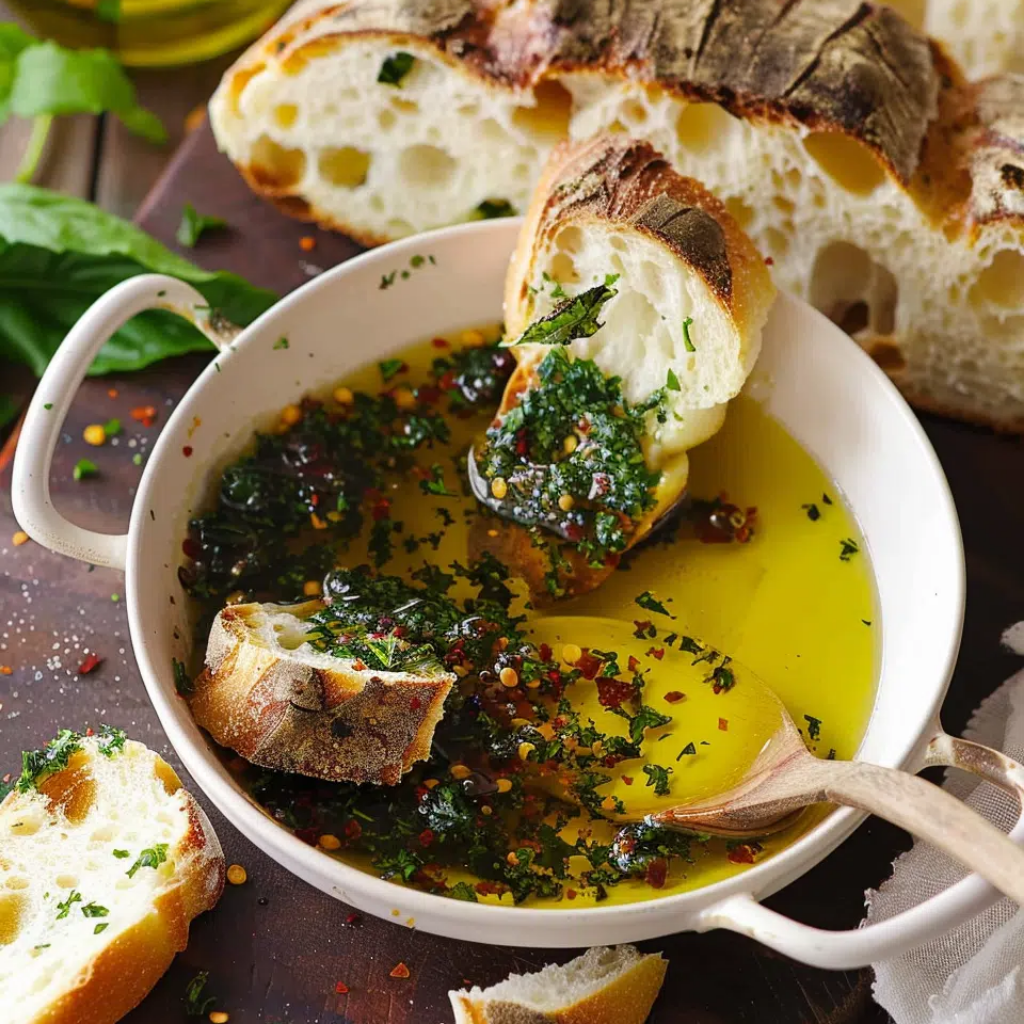
There’s something magical about that moment when warm, crusty bread meets perfectly seasoned olive oil. I discovered this simple pleasure during a family dinner at a small Italian restaurant years ago, where the server placed a shallow dish of golden oil dotted with herbs and spices alongside our bread basket. That first dip was a revelation—the way the oil clung to the bread, how each bite delivered layers of flavor from garlic, herbs, and a hint of heat.
What makes this bread dipping oil so special is its versatility and speed. Unlike complicated appetizers that require advance planning, this recipe comes together in just 10 minutes using pantry staples you likely already have. The beauty lies in the balance: fruity olive oil as the base, aromatic garlic and herbs for depth, a touch of acid from balsamic vinegar, and just enough red pepper flakes to wake up your taste buds without overwhelming them.
This isn’t just an appetizer—it’s an experience that transforms ordinary bread into something memorable. Whether you’re hosting friends, need a quick starter for dinner, or want to elevate a simple meal, this bread dipping oil delivers restaurant-quality results at home.
Ingredients
For the Base Oil:
- 1/2 cup extra virgin olive oil (use good quality for best flavor)
- 2 tablespoons balsamic vinegar
- 3 garlic cloves, minced finely
- 1 teaspoon dried oregano
- 1 teaspoon dried basil
- 1/2 teaspoon dried rosemary, crushed
- 1/2 teaspoon kosher salt
- 1/4 teaspoon black pepper, freshly ground
- 1/4 teaspoon red pepper flakes (adjust to taste)
- 2 tablespoons grated Parmesan cheese
Optional Additions:
- 1 tablespoon sun-dried tomatoes, chopped finely
- 1 teaspoon fresh lemon zest
- 1 tablespoon pine nuts, toasted and chopped
- 1 teaspoon capers, drained and chopped
For Serving:
- Fresh Italian bread, French baguette, or focaccia, sliced
- Additional Parmesan cheese for sprinkling
Instructions
Start by selecting a shallow serving bowl or small plate—something wide enough for easy dipping but not too deep. Pour the olive oil into your chosen dish, creating an even layer across the bottom.
Add the minced garlic directly to the oil. Fresh garlic works best here because it infuses the oil with a sharp, clean flavor that mellows slightly as it sits. If you’re sensitive to raw garlic, you can use less or substitute with garlic powder, though the flavor won’t be quite as bright.
Sprinkle in the dried oregano, basil, and crushed rosemary. These herbs form the aromatic backbone of your dipping oil. Crushing the rosemary between your fingers releases more of its piney fragrance. Don’t skip this step—it makes a noticeable difference in the final flavor.
Season with kosher salt and freshly ground black pepper. The salt helps draw out the flavors from the herbs while the pepper adds a subtle warmth. Fresh cracked pepper works better than pre-ground because it has more punch and complexity.
Add the red pepper flakes gradually. Start with less if you prefer milder heat—you can always add more, but you can’t take it away. The flakes will continue to release heat as the oil sits, so taste as you go.
Drizzle the balsamic vinegar over the oil mixture in a decorative pattern if you like. The vinegar adds acidity that brightens all the other flavors and creates beautiful swirls in the oil. Use a good quality balsamic for the best results.
Sprinkle the grated Parmesan cheese over the surface. The cheese adds a nutty, salty element that complements the herbs beautifully. It also helps thicken the oil slightly so it clings better to bread.
Give everything a gentle stir with a small spoon, just enough to distribute the ingredients without completely mixing them. You want some areas to be more herb-heavy and others more garlicky—this creates interesting flavor variations with each dip.
Let the mixture sit for at least 5 minutes before serving. This resting time allows the flavors to meld and the herbs to soften slightly in the oil. The longer it sits, the more intense the flavors become.
Flavor & Texture Notes
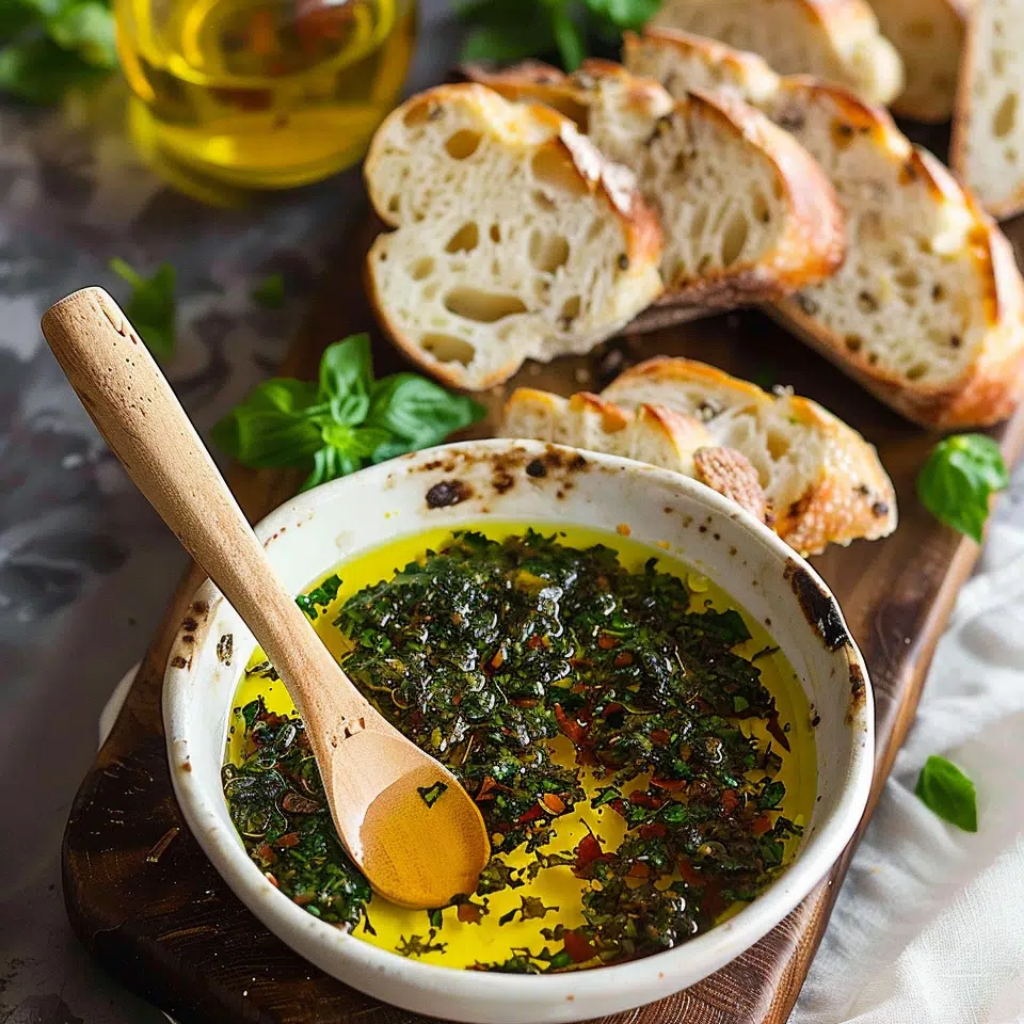
This bread dipping oil strikes a perfect balance between rich and bright. The olive oil provides a smooth, fruity base that coats your palate, while the herbs add earthy complexity. The garlic brings sharpness that’s tempered by the oil’s richness, and the balsamic vinegar cuts through with a tangy sweetness that prevents the mixture from feeling too heavy.
The texture is luxurious but not thick—it should flow easily and cling to bread without being greasy. The Parmesan adds tiny granules that provide textural interest, while the herbs create little pockets of concentrated flavor. Each bite offers something slightly different depending on which part of the oil your bread picks up.
The heat from the red pepper flakes builds gradually, starting as a gentle warmth that blooms across your tongue. It’s not overwhelming but adds enough kick to keep things interesting. The overall effect is sophisticated yet approachable—familiar flavors combined in a way that feels both rustic and refined.
Tips & Variations
For the best results, use extra virgin olive oil with good flavor. You don’t need the most expensive bottle, but avoid bland, overly processed oils. A medium-bodied oil works well—fruity but not so intense that it overwhelms the other ingredients.
If you’re making this ahead, prepare everything except the balsamic vinegar, which can make the oil look cloudy if added too early. Drizzle it on just before serving for the best visual appeal.
Fresh herbs can substitute for dried, but use three times the amount since fresh herbs are less concentrated. Chop them finely and add them just before serving to prevent wilting.
For a Mediterranean twist, add chopped Kalamata olives and a sprinkle of dried thyme. Greek-style variation works wonderfully with warm pita bread.
Create an Italian herb version by increasing the basil and oregano, adding fresh minced parsley, and including a pinch of fennel seeds.
For those who enjoy more heat, try adding a minced jalapeño or a dash of hot sauce alongside the red pepper flakes.
Dairy-free versions work perfectly by simply omitting the Parmesan cheese. The oil will be slightly thinner but equally flavorful.
Toast pine nuts or chopped walnuts in a dry pan for 2-3 minutes until fragrant, then sprinkle them over the oil for added texture and nutty flavor.
Storage & Make-Ahead
This bread dipping oil is best enjoyed fresh, but you can prepare it up to 2 hours ahead of serving. Store it covered at room temperature, giving it a quick stir before serving since ingredients may separate slightly.
For longer storage, refrigerate the mixture for up to 3 days. The olive oil will solidify when cold, so bring it back to room temperature before serving. The flavors actually improve after a day as everything melds together.
Don’t leave garlic-infused oil at room temperature for extended periods due to food safety concerns. If you want to make a larger batch for future use, consider preparing herb and spice blends separately and adding fresh garlic each time you serve.
The dry herb mixture (without oil, vinegar, or garlic) can be prepared in larger quantities and stored in an airtight container for up to 6 months. This makes it easy to whip up fresh dipping oil whenever you need it.
Serving Suggestions
Serve this oil with warm, crusty bread that has good texture for dipping. Italian bread, French baguettes, and focaccia all work beautifully. Lightly toast or warm the bread in the oven for the best experience—the contrast between warm bread and room-temperature oil is perfect.
Present the oil in a shallow bowl or small plate that allows easy access for multiple people. Provide small spoons for stirring and individual small plates if desired, though many people prefer to dip directly.
This dipping oil pairs wonderfully with antipasto platters, cheese boards, or simple salads. It also makes an excellent accompaniment to pasta dinners or pizza nights.
For entertaining, consider preparing several small bowls with different variations—one classic, one with sun-dried tomatoes, and perhaps one with extra heat. This gives guests options and creates visual interest on your table.
The oil also works as a finishing drizzle for soups, salads, or grilled vegetables, making it a versatile addition beyond just bread dipping.
FAQ
Can I use dried garlic instead of fresh? Yes, but use garlic powder rather than granulated garlic for better distribution. Start with 1/2 teaspoon and adjust to taste. The flavor won’t be as bright as fresh garlic, but it still works well.
How do I know if my olive oil is good quality? Good extra virgin olive oil should smell fruity and fresh, not rancid or musty. It should have some peppery bite when tasted alone. Check the harvest date if available—fresher is better.
Can I make this without balsamic vinegar? Absolutely. Try lemon juice for brightness, or omit the acid entirely for a pure herb oil. Red wine vinegar also works as a substitute, though it provides a different flavor profile.
Why does my oil separate? Oil and vinegar naturally separate—this is normal. Simply give it a gentle stir before serving. The separation actually creates beautiful visual layers that look intentional.
How spicy will this be with the red pepper flakes? With 1/4 teaspoon, you’ll get a gentle warmth that most people find pleasant. If you’re heat-sensitive, start with just a pinch. The spice level builds slightly as the oil sits, so taste and adjust accordingly.
This simple bread dipping oil proves that some of the best flavors come from combining quality ingredients in thoughtful ways. There’s no need for complicated techniques or exotic ingredients—just good olive oil, aromatic herbs, and a few minutes of your time. The next time you want to add something special to your table, remember that sometimes the most memorable moments come from the simplest pleasures. Grab some good bread, gather your favorite people, and let this fragrant oil work its magic.