
Follow Me On Social Media!

Crunchy Asian Chicken Salad – Fresh, Vibrant, and Packed with Texture.

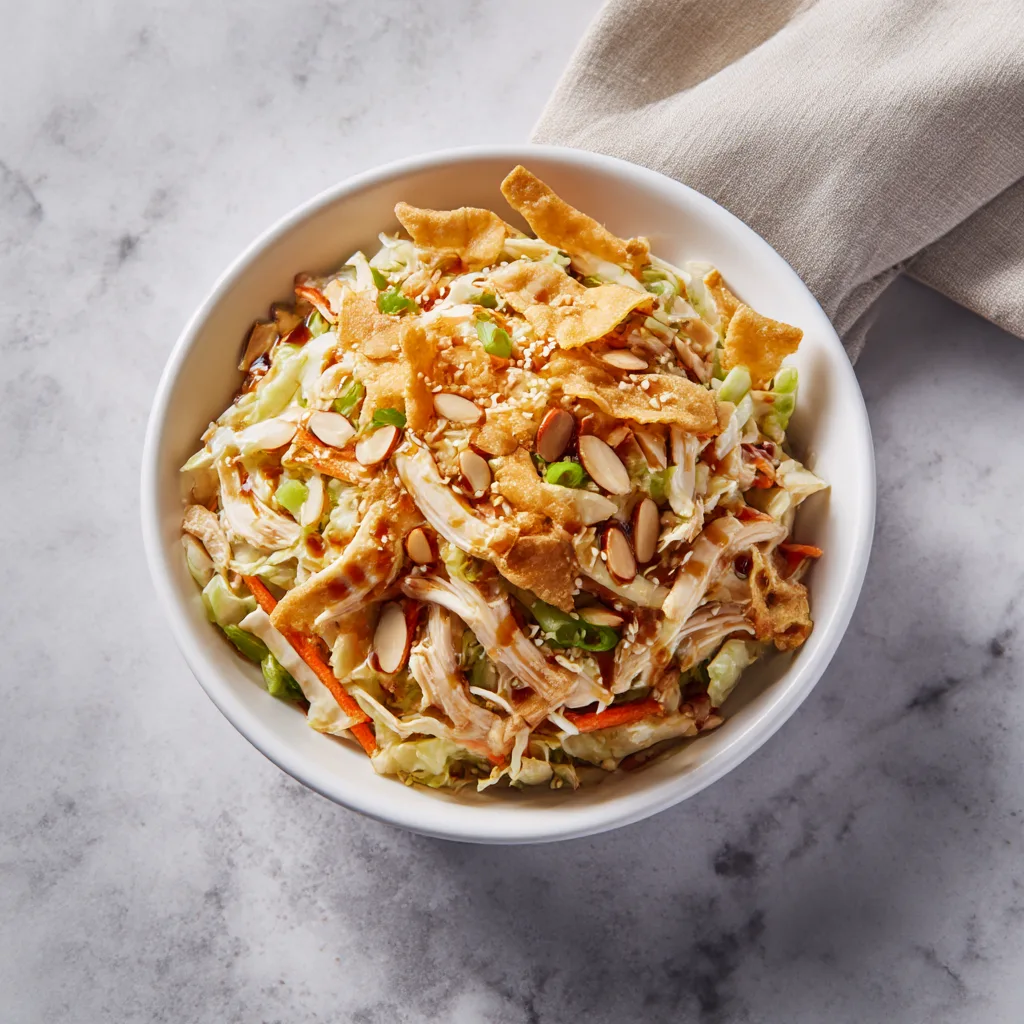
I’ve been making this salad for years, and it’s one of those recipes that never gets old. It started as something I’d throw together on busy weeknights when I wanted something satisfying but didn’t feel like cooking anything heavy. Over time, it became the dish I’d bring to potlucks, serve at casual gatherings, and crave on hot summer evenings when a bowl of something crisp and cold just hits differently.
What makes this crunchy Asian chicken salad so good is the contrast. You’ve got tender chicken, crisp cabbage and bell peppers, crunchy almonds or peanuts, and fresh herbs all tossed in a tangy, slightly sweet dressing that ties everything together. It’s substantial enough to feel like a real meal, but light enough that you don’t feel weighed down afterward. The best part? You can prep most of it ahead, which makes it perfect for meal prep or last-minute dinner solutions.
This isn’t one of those salads that wilts into sad, soggy greens after an hour. The base is mostly cabbage and sturdy vegetables, so it holds up beautifully. Whether you’re looking for a healthy lunch option, a crowd-pleasing side dish, or just something different from your usual dinner rotation, this Asian chicken salad delivers on flavor, texture, and ease.
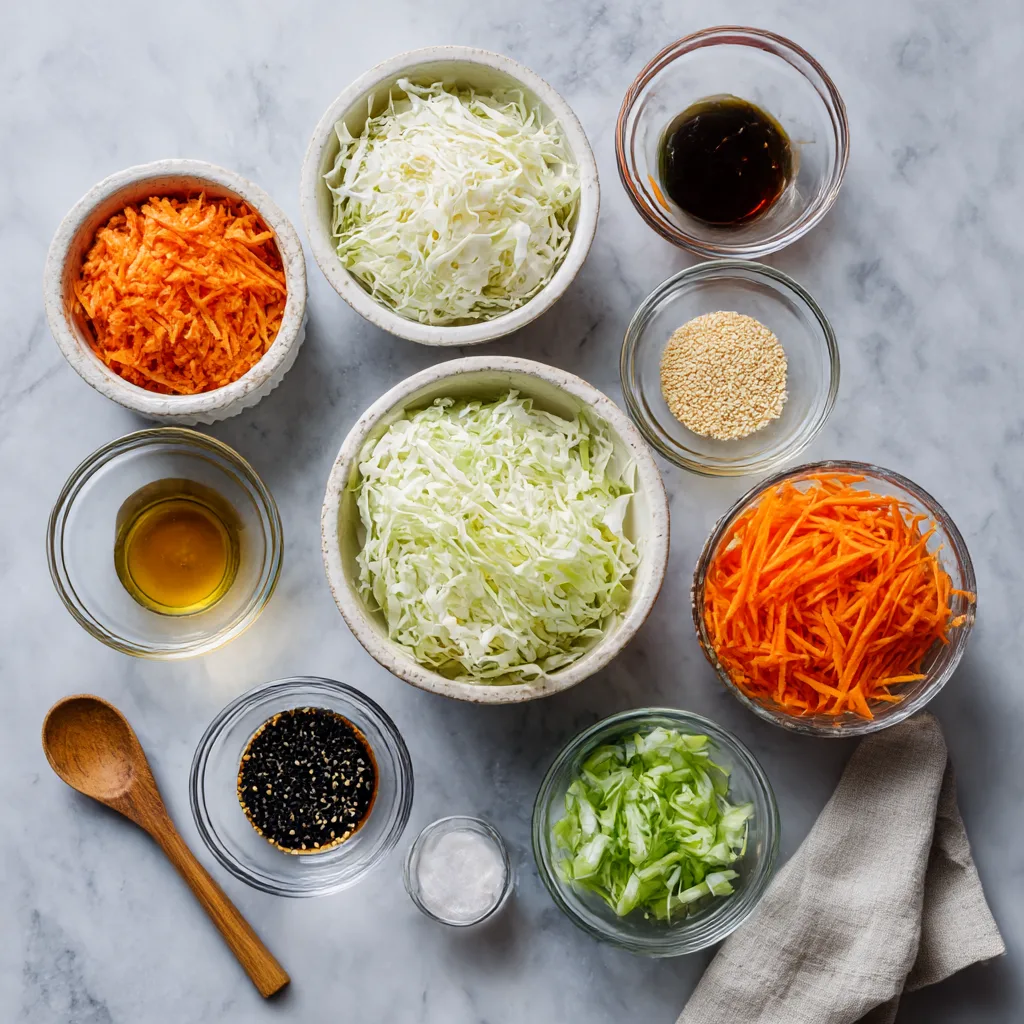
Ingredients
For the Salad:
- 3 cups cooked chicken breast, shredded or diced (about 1 pound)
- 4 cups Napa cabbage, thinly sliced
- 2 cups red cabbage, thinly sliced
- 1 large carrot, julienned or shredded
- 1 red bell pepper, thinly sliced
- 1 cup edamame, shelled (fresh or frozen and thawed)
- 3 green onions, sliced
- 1/2 cup fresh cilantro, roughly chopped
- 1/2 cup roasted peanuts or sliced almonds
- 1/2 cup crispy wonton strips or chow mein noodles
- 1 tablespoon sesame seeds (white or black)
For the Dressing:
- 1/4 cup rice vinegar
- 3 tablespoons soy sauce (or tamari for gluten-free)
- 2 tablespoons honey
- 2 tablespoons sesame oil
- 1 tablespoon fresh lime juice
- 1 tablespoon fresh ginger, grated
- 2 cloves garlic, minced
- 1 teaspoon sriracha or chili garlic sauce (adjust to taste)
- 2 tablespoons neutral oil (like avocado or grapeseed)
Instructions
Start by preparing your chicken if you haven’t already. The easiest method is to poach it: place chicken breasts in a pot, cover with water, add a pinch of salt, and simmer for about 15 minutes until cooked through. Let it cool, then shred or dice it into bite-sized pieces. Rotisserie chicken works great here too and saves you time.
While the chicken cools, prep your vegetables. Slice the Napa and red cabbage as thinly as you can—this creates that signature crunch and makes the salad easier to eat. I like using a sharp knife and working in batches, but a mandoline speeds things up if you have one. Julienne the carrot and slice the bell pepper into thin strips. The thinner everything is, the better it mingles with the dressing.
For the dressing, combine the rice vinegar, soy sauce, honey, sesame oil, lime juice, grated ginger, minced garlic, and sriracha in a bowl or jar. Whisk it together, then slowly drizzle in the neutral oil while whisking to help everything emulsify. Taste it—if you like it sweeter, add a bit more honey. If you want more tang, squeeze in extra lime juice. The dressing should taste bold because it’s coating a lot of vegetables.
In a large mixing bowl, combine the sliced cabbages, carrot, bell pepper, edamame, green onions, and cilantro. Add the chicken on top. Pour about three-quarters of the dressing over everything and toss well with tongs or clean hands. You want every piece coated but not swimming in dressing. Let it sit for about 10 minutes so the flavors start to blend.
Right before serving, add the peanuts or almonds, crispy wonton strips, and sesame seeds. Toss gently—you want these toppings to stay crunchy, so don’t add them too early. If you’re meal prepping, keep the crunchy elements separate and add them just before eating. Drizzle the remaining dressing over individual portions as needed.
Flavor & Texture Notes
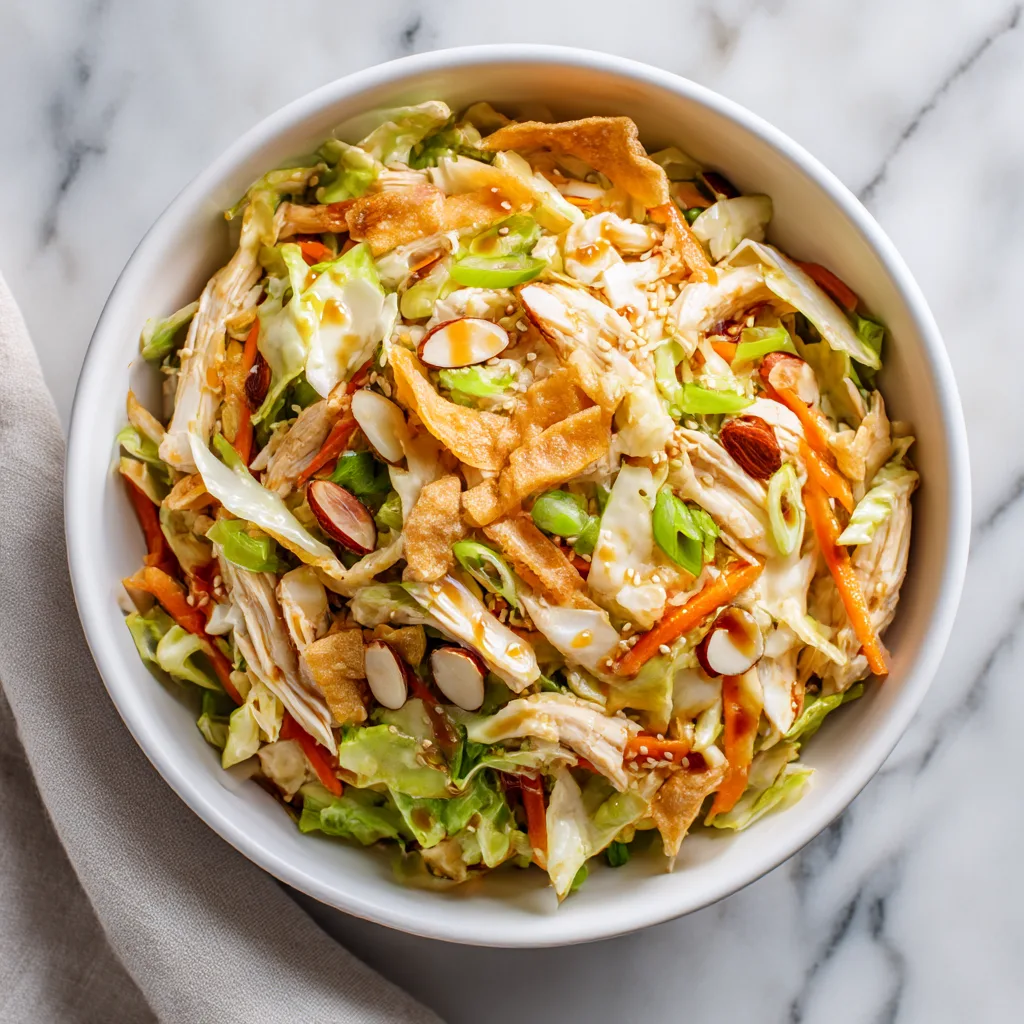
This salad is all about layers. The dressing brings a balance of sweet, salty, tangy, and just a little heat from the sriracha. It’s not overwhelmingly spicy, but there’s enough of a kick to keep things interesting. The sesame oil adds a nutty richness that makes the whole thing feel more substantial than your average salad.
The vegetables stay crisp even after being dressed, especially the cabbage, which has a natural resilience. You get that satisfying crunch with every bite, complemented by the softer texture of the chicken and the slight creaminess of the edamame. The peanuts or almonds add another dimension of crunch, and the wonton strips bring a light, airy crispness that contrasts beautifully with everything else.
Fresh cilantro and green onions give it brightness, while the ginger and garlic in the dressing provide depth. It’s a well-rounded dish that doesn’t rely on one dominant flavor. Instead, everything works together—each ingredient has a purpose, and nothing feels out of place.
Tips & Variations
If you’re not a fan of cilantro, swap it out for fresh mint or basil. Both work well with the Asian-inspired flavors. You can also leave it out entirely and add more green onions for a milder herb presence.
For the protein, grilled chicken thighs offer more flavor and stay juicier than breasts. You could also use shrimp, tofu, or even leftover pork tenderloin. If you’re vegetarian, double up on the edamame and add some cubed avocado for richness.
Don’t have Napa cabbage? Regular green cabbage works fine, though it’s a bit tougher. Shredding it finely helps. You can also mix in some shredded kale or romaine if you want to add greens with a different texture.
The dressing is flexible. If you prefer a creamier version, whisk in a tablespoon of peanut butter or tahini. For a lighter, more citrus-forward dressing, use less sesame oil and add more lime juice or even a splash of orange juice.
Nuts can be swapped based on what you have—cashews, sunflower seeds, or even toasted pecans all work. If you’re nut-free, just use extra seeds or skip them and lean into the wonton strips for crunch.
Make it spicier by adding more sriracha or a drizzle of chili oil. For a milder version, skip the spice altogether and let the ginger and garlic carry the flavor.
Storage & Make-Ahead
This salad keeps well for up to three days in the refrigerator. Store the dressed salad in an airtight container, but keep the crunchy toppings (nuts, wonton strips, sesame seeds) separate in a small bag or container. Add them just before eating to maintain their texture.
If you’re prepping for the week, portion everything into individual containers with the dressing on the side. This way, you can control how much dressing each serving gets and keep the vegetables from getting soggy.
The dressing itself lasts about a week in the fridge. Make a double batch if you like—it’s great on other salads, grain bowls, or as a marinade for grilled vegetables.
Cooked chicken can be prepped up to four days ahead. Store it separately from the vegetables until you’re ready to assemble the salad.
Serving Suggestions
This salad works as a standalone meal, but it also pairs beautifully with simple sides. Serve it alongside steamed jasmine rice or brown rice if you want something more filling. Spring rolls or dumplings make great appetizers before diving into the salad.
For a lighter pairing, serve it with miso soup or a clear broth-based soup. The contrast between the warm, savory soup and the cold, crunchy salad is really satisfying.
If you’re serving this at a gathering, set out the dressing, crunchy toppings, and fresh herbs in separate bowls so people can customize their portions. It makes the presentation more interactive and ensures everyone gets the textures they prefer.
This salad also works well as part of a larger spread. Pair it with grilled teriyaki chicken skewers, Asian-style slaw, or a platter of fresh fruit for a casual, crowd-friendly meal.
FAQ
Can I use a store-bought dressing instead of making my own?
You can, but homemade dressing really makes a difference here. It takes just a few minutes to whisk together and tastes fresher. If you’re in a pinch, look for a sesame ginger or Asian-style vinaigrette and adjust the sweetness or spice to your liking.
How do I keep the wonton strips from getting soggy?
Add them right before serving. If you’re prepping the salad ahead, store them separately in a sealed bag or container. They’ll stay crisp for days if kept away from moisture.
Can I make this salad without chicken?
Absolutely. It’s just as good with tofu, tempeh, shrimp, or even hard-boiled eggs. You can also skip the protein entirely and bulk it up with more edamame, chickpeas, or avocado.
What’s the best way to shred chicken for this salad?
Let the chicken cool slightly after cooking, then use two forks to pull it apart. You can also dice it with a knife if you prefer a cleaner, more uniform look. For the easiest option, use rotisserie chicken and shred it by hand.
Can I make this salad ahead for meal prep?
Yes, it’s perfect for meal prep. Assemble the salad and dress it, but keep the crunchy toppings separate. Portion it into containers and add the nuts, wonton strips, and seeds just before eating. It stays fresh and crisp for several days.
Final Thoughts
This crunchy Asian chicken salad has earned its place in my regular rotation, and I think it’ll do the same for you. It’s one of those recipes that looks impressive but comes together quickly, tastes fresh and vibrant, and actually keeps well—a rare combination. Whether you’re feeding yourself for the week or bringing something to share, it’s a solid choice that people genuinely enjoy.
The beauty of this recipe is in its flexibility. You can tweak the vegetables based on what’s in your fridge, adjust the dressing to match your taste, and swap the protein without losing what makes it work. It’s a template more than a strict formula, which means you can make it your own over time.
Give it a try this week. I think you’ll find yourself coming back to it more often than you’d expect.
Sonnet 4.5
Claude est une IA et peut faire des erreurs. Veuillez vérifier le