
Follow Me On Social Media!

Crispy Roasted Cabbage Wedges with Spicy Dip – The Ultimate Flavor-Packed Vegetable Appetizer.

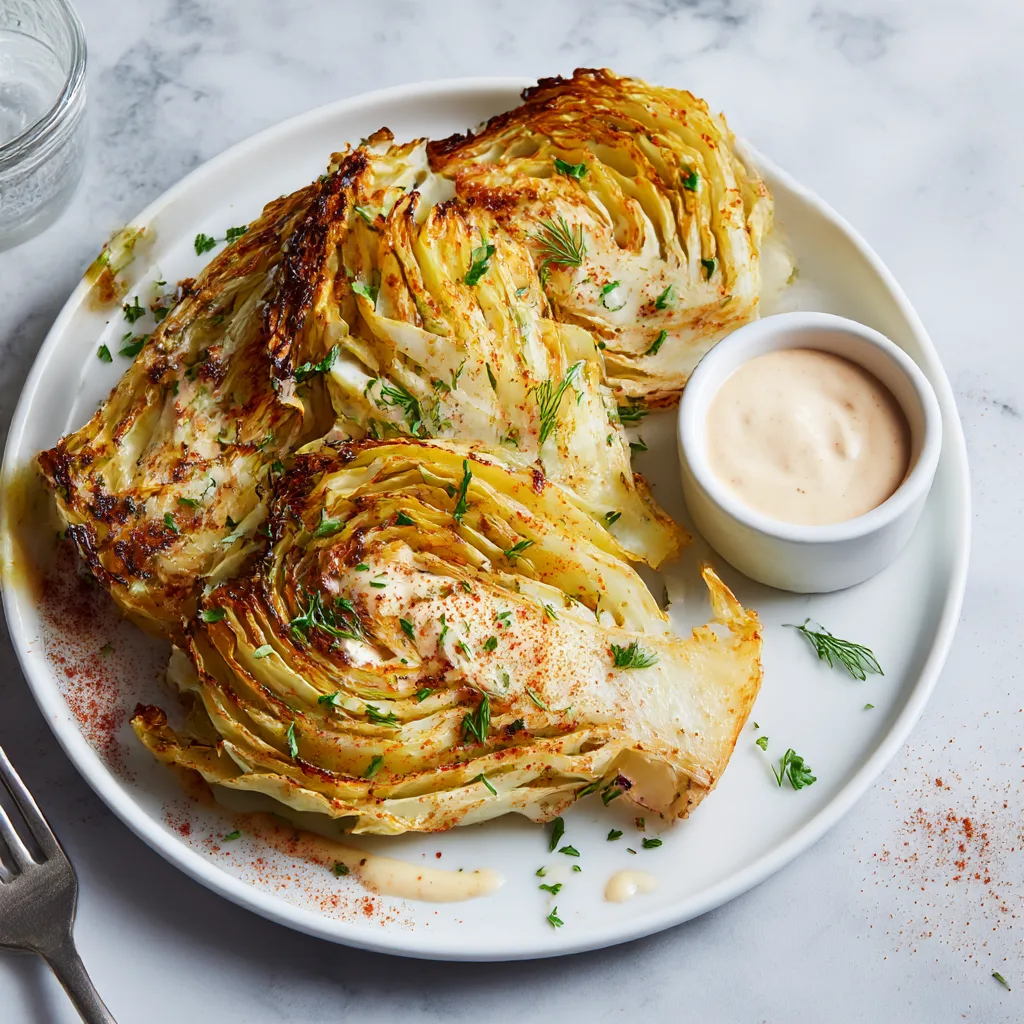
There’s something deeply satisfying about transforming humble cabbage into something people actually get excited about. I first made these roasted cabbage wedges on a Tuesday night when I was tired of the same rotation of side dishes and wanted something different—something that felt special without requiring a grocery store trip. What came out of the oven that night surprised me: edges charred and crispy like potato chips, centers tender and almost buttery, with a spicy dip that made me go back for thirds.
Roasted cabbage wedges have quietly become one of those recipes that home cooks share in hushed, enthusiastic tones. They’re cheap, they look impressive on a plate, and they deliver flavor that makes you wonder why cabbage doesn’t get more attention. This recipe works as an appetizer before dinner, a side dish alongside grilled meat, or even as a light vegetarian main course when you pair it with grains and beans. The key is high heat, minimal fussing, and a dip that brings some heat and tanginess to balance the natural sweetness that develops when cabbage caramelizes.
If you’ve only ever had boiled or stir-fried cabbage, this preparation will change how you think about this underrated vegetable. The roasting process concentrates the flavors, creates textural contrast, and turns something ordinary into something you’ll want to make again next week.
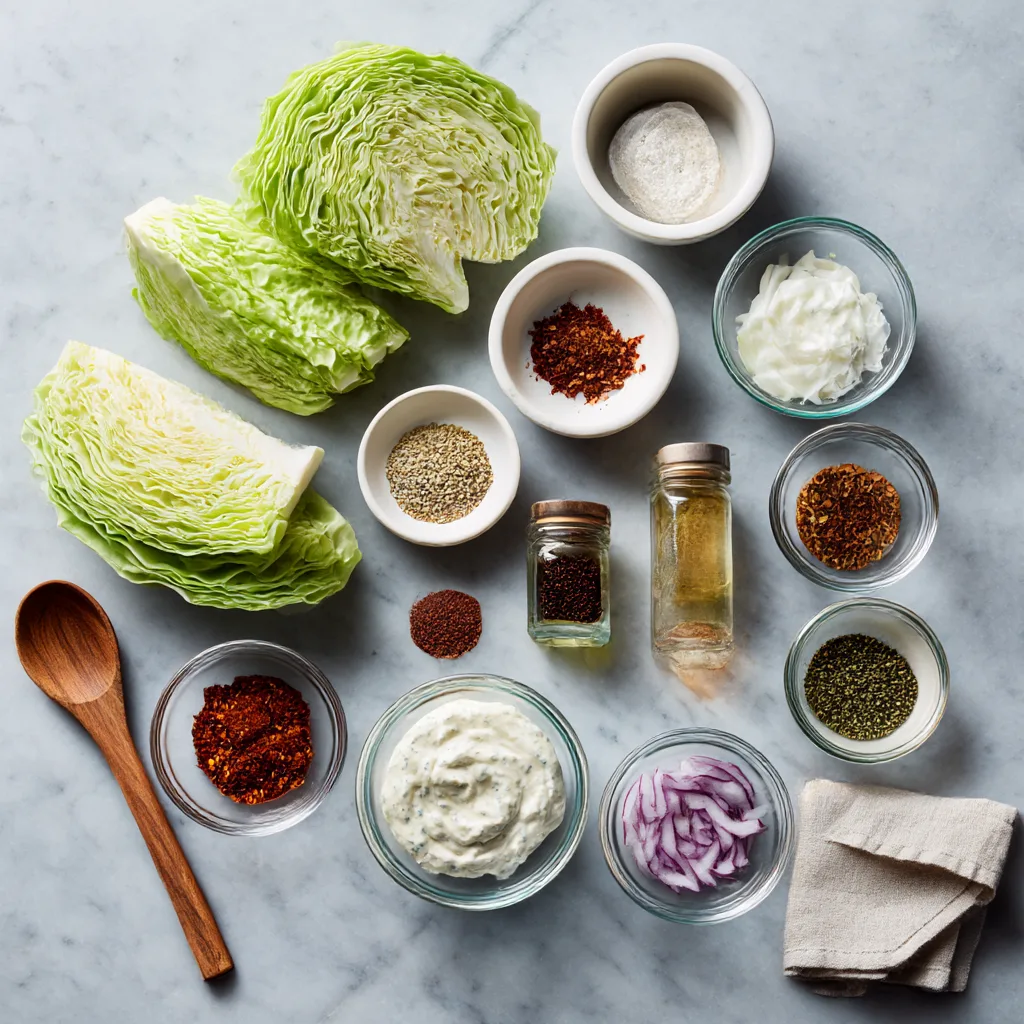
Ingredients
For the Cabbage Wedges:
- 1 large head of green cabbage (about 2 to 2.5 pounds)
- 3 tablespoons olive oil
- 1 teaspoon garlic powder
- 1 teaspoon smoked paprika
- ½ teaspoon ground cumin
- ¾ teaspoon salt
- ½ teaspoon black pepper
- ¼ teaspoon cayenne pepper (optional, for extra heat)
For the Spicy Dip:
- ¾ cup Greek yogurt (full-fat works best)
- 2 tablespoons mayonnaise
- 1 tablespoon sriracha (adjust to taste)
- 1 tablespoon fresh lime juice
- 1 clove garlic, finely minced
- ½ teaspoon honey
- ¼ teaspoon salt
- 2 tablespoons fresh cilantro, chopped (optional)
- 1 teaspoon sesame oil (adds depth)
Instructions
Prepare the Cabbage:
Start by preheating your oven to 425°F (220°C). Line a large baking sheet with parchment paper or lightly grease it—this prevents sticking and makes cleanup easier.
Remove any damaged outer leaves from the cabbage head, but leave the core intact. This is important because the core holds the wedges together during roasting. Place the cabbage on a cutting board with the core facing down, then slice it in half through the core. Cut each half into 3 or 4 wedges, depending on the size of your cabbage. You want pieces that are about 1.5 to 2 inches thick at the widest part. Thinner wedges get crispier, thicker ones stay more tender inside.
Season and Oil:
Arrange the cabbage wedges on your prepared baking sheet in a single layer, keeping some space between them for air circulation. In a small bowl, mix the olive oil with garlic powder, smoked paprika, cumin, salt, black pepper, and cayenne if using. Use a brush or your hands to coat both sides of each wedge with this seasoned oil mixture. Don’t be shy—make sure every surface gets covered, especially the cut sides where most of the browning happens.
Roast:
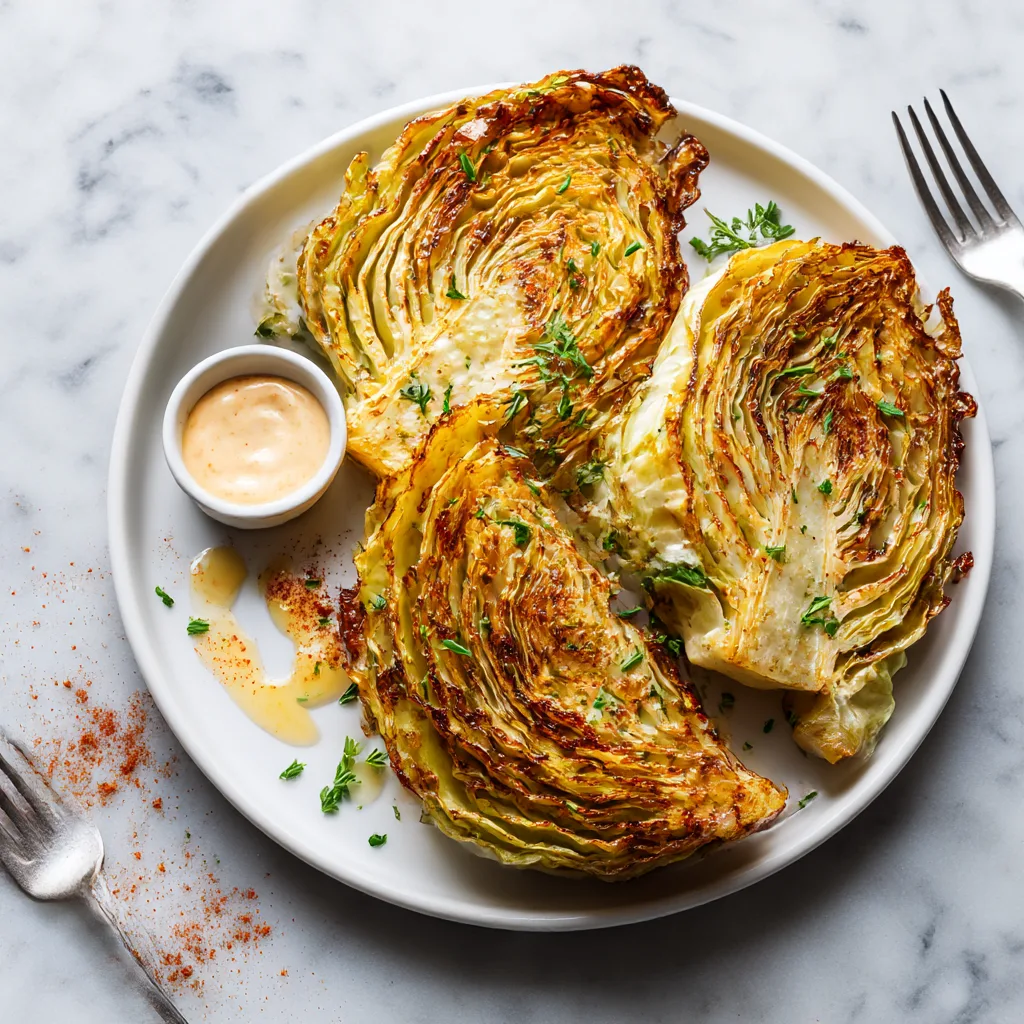
Place the baking sheet in the preheated oven on the middle rack. Roast for 25 to 30 minutes, then carefully flip each wedge using a spatula or tongs. Return to the oven and roast for another 20 to 25 minutes. You’re looking for deep golden-brown edges with some charred bits and a tender center that’s easy to pierce with a fork. Total roasting time usually runs 45 to 55 minutes depending on your oven and the thickness of your wedges.
Make the Dip:
While the cabbage roasts, prepare the spicy dip. Combine the Greek yogurt, mayonnaise, sriracha, lime juice, minced garlic, honey, and salt in a medium bowl. Whisk everything together until smooth and well blended. Taste and adjust the heat level—add more sriracha if you like things spicy, or dial it back if you’re serving this to people with milder palates. Stir in the chopped cilantro and sesame oil just before serving. The dip can be made up to two days ahead and stored in the refrigerator, which actually helps the flavors meld together nicely.
Serve:
Transfer the roasted cabbage wedges to a serving platter while they’re still hot. Serve the spicy dip alongside in a small bowl, or drizzle it over the top if you prefer. Garnish with extra cilantro, a sprinkle of sesame seeds, or a squeeze of fresh lime juice.
Flavor & Texture Notes
The magic of roasted cabbage wedges lies in the contrast. The outer leaves turn crispy, almost like kale chips, with charred edges that carry a slight bitterness that’s actually pleasant. The inner layers soften and sweeten as the natural sugars in the cabbage caramelize under high heat. You get this wonderful interplay between crisp and tender, sweet and savory, mild and smoky.
The seasoning blend creates layers of flavor—smoked paprika brings a gentle smokiness without overwhelming the vegetable, while cumin adds earthiness and warmth. Garlic powder provides savory depth that feels familiar and comforting. The cabbage itself has a mild, slightly sweet flavor that becomes more pronounced as it cooks, similar to how roasting brings out the sweetness in Brussels sprouts or cauliflower.
The spicy dip is creamy with a tangy kick from the lime juice and yogurt, balanced by the richness of mayonnaise. Sriracha adds heat along with a hint of garlic and fermented complexity. The honey softens the edges and brings everything together, while sesame oil contributes a nutty undertone that makes the dip feel more sophisticated than the simple ingredient list suggests. When you dip a crispy cabbage edge into this sauce, you get cooling creaminess against caramelized vegetable—it’s the kind of combination that makes you reach for another piece.
Tips & Variations
Different Cabbages: While green cabbage is the standard choice, purple cabbage works beautifully and adds visual interest to your plate. Savoy cabbage, with its crinkled leaves, gets extra crispy and has a more delicate texture. Napa cabbage roasts faster and has a milder flavor—reduce cooking time by about 10 minutes.
Seasoning Swaps: Try za’atar seasoning for a Middle Eastern twist, or use curry powder and garam masala for Indian-inspired flavors. Nutritional yeast mixed with the oil creates a cheesy, umami-rich coating that vegans especially appreciate. For a simpler approach, just use salt, pepper, and good olive oil—sometimes less is more.
Make It Vegan: Replace the yogurt-based dip with a cashew cream version. Soak raw cashews in hot water for 30 minutes, then blend with the same seasonings, adding water to reach your desired consistency. Tahini-based dips also work wonderfully with roasted cabbage.
Add Crunch: Sprinkle toasted panko breadcrumbs mixed with parmesan over the wedges during the last 10 minutes of roasting. Crushed pistachios, almonds, or walnuts scattered on top before serving add texture and richness.
Heat Adjustments: For a milder version, skip the cayenne and use a sweet chili sauce in the dip instead of sriracha. For extra heat, add fresh minced jalapeño to the dip or brush the cabbage with chili oil before roasting.
Grilling Option: These wedges also work on a grill. Brush with the seasoned oil and cook over medium-high heat, turning occasionally, until charred and tender—usually 15 to 20 minutes total.
Storage & Make-Ahead
Roasted cabbage wedges are best eaten fresh from the oven while the edges are still crispy, but they keep reasonably well in the refrigerator for up to three days in an airtight container. The texture changes as they cool—the crispy bits soften, though reheating in a hot oven (400°F for about 10 minutes) brings back some of that crunch.
The spicy dip actually improves after a day in the fridge as the flavors develop and meld together. Store it separately from the cabbage wedges in a sealed container for up to five days.
If you want to prep ahead, you can cut the cabbage wedges and brush them with the seasoned oil several hours before roasting. Keep them covered in the refrigerator and bring to room temperature for about 20 minutes before putting them in the oven. The dip can be made up to two days ahead.
Freezing isn’t recommended for either component—the cabbage becomes mushy when thawed, and the yogurt-based dip separates and loses its creamy texture.
Serving Suggestions
These crispy cabbage wedges work in more contexts than you might expect. Serve them as an appetizer before a casual dinner party with the dip on the side and some crusty bread. They make an excellent side dish alongside grilled chicken, steak, or fish—the lightness of the vegetable balances richer proteins nicely.
For a vegetarian main course, pair the wedges with quinoa or rice, roasted chickpeas, and a simple cucumber salad. The combination creates a complete meal that’s satisfying without feeling heavy.
They’re also great for meal prep. Pack them in lunch containers with the dip in a small separate container, along with hummus, cherry tomatoes, and pita chips for a filling work lunch.
Consider serving them tapas-style with other small plates like stuffed mushrooms, marinated olives, Spanish tortilla, and grilled peppers. The cabbage wedges hold their own in that kind of spread.
For presentation, arrange the wedges on a wooden board or large platter, drizzle with the spicy dip in artistic lines, and garnish with fresh herbs, lemon wedges, and a sprinkle of flaky sea salt.
FAQ
Can I use pre-cut cabbage instead of a whole head?
Pre-cut cabbage won’t work well for this recipe because you need intact wedges that hold together during roasting. Shredded or chopped cabbage will fall apart and won’t develop the same crispy edges and tender centers. Using a whole cabbage head ensures the core keeps everything connected while cooking.
Why is my cabbage burning before it gets tender?
This usually happens when wedges are cut too thin or the oven runs hot. Make sure your wedges are at least 1.5 inches thick at the widest part, and consider dropping the temperature to 400°F if your oven tends to run hot. You can also tent the cabbage loosely with foil during the first half of roasting, then remove it to allow browning.
Can I make this without the dip?
Absolutely. The roasted cabbage wedges are fantastic on their own, especially if you increase the seasoning slightly. You could also serve them with other dips like hummus, baba ganoush, ranch dressing, or a simple lemon-tahini sauce. Some people just squeeze fresh lemon over the hot wedges and call it done.
How do I know when the cabbage is properly cooked?
The wedges should be easy to pierce with a fork or knife through the thickest part, and the edges should be deeply browned with some charred bits. If the edges are browning too fast but the center is still tough, reduce the heat and extend the cooking time. Every oven is different, so use visual cues and tenderness as your guide rather than strictly following the timer.
What’s the best way to reheat leftovers?
Reheating in the oven gives the best results. Spread the wedges on a baking sheet and warm them at 400°F for about 10 minutes until heated through and the edges crisp up again. Microwave reheating works in a pinch but won’t restore the crispy texture—the cabbage will be soft throughout, which is still tasty but different from the original.
Conclusion
Roasted cabbage wedges prove that simple vegetables can be just as exciting as any elaborate dish when you treat them right. The combination of high heat, smart seasoning, and a well-balanced dip turns affordable cabbage into something that feels special enough for company but easy enough for a weeknight. Whether you’re looking for a new vegetable side dish, a creative appetizer, or just want to use up that head of cabbage sitting in your fridge, this recipe delivers big flavor without complicated techniques or hard-to-find ingredients.
Give these crispy roasted cabbage wedges a try this week. I think you’ll be surprised at how something so straightforward can taste this good—and how quickly they disappear from the plate.