
Follow Me On Social Media!

Creamy Mushroom-Spinach Scrambled Eggs Recipe.

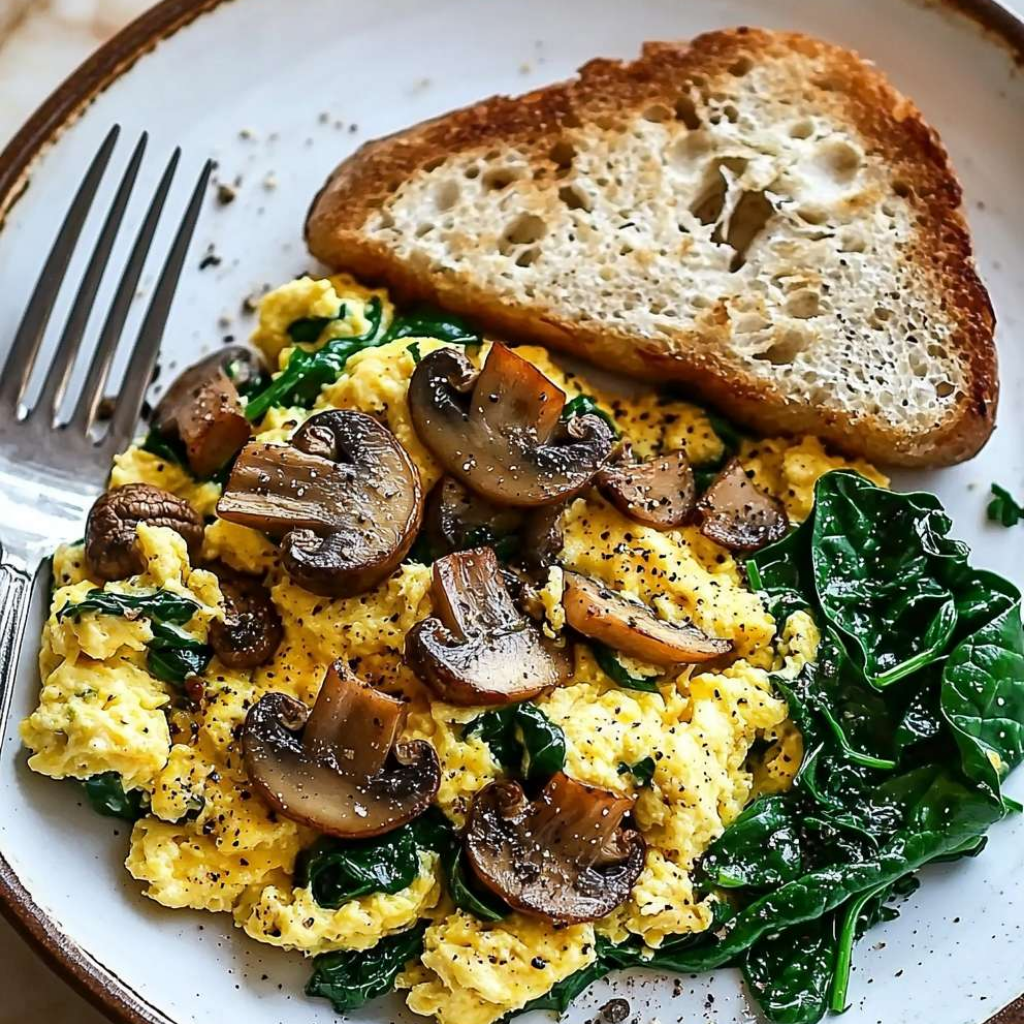
There’s something special about a breakfast that feels both comforting and nutritious at the same time. I started making these mushroom-spinach scrambled eggs about three years ago when I was trying to find ways to pack more vegetables into my morning routine without feeling like I was eating a salad at 7 AM. What began as a simple experiment turned into my most-made breakfast recipe.
These scrambled eggs combine earthy mushrooms, tender spinach, and fluffy eggs into a protein-rich meal that keeps you satisfied for hours. The mushrooms add a meaty texture and umami depth, while the spinach brings color, nutrients, and a subtle earthiness that complements the eggs perfectly. It’s the kind of breakfast that works just as well on a lazy Sunday morning as it does on a busy Tuesday when you need something quick but substantial.
What makes this mushroom and spinach egg scramble stand out is the technique. Rather than rushing the eggs over high heat, we cook them low and slow, creating soft, custardy curds that stay creamy. The vegetables are sautéed first to develop their flavors, then folded into the eggs at just the right moment. The result is a balanced, flavorful breakfast that feels restaurant-quality but comes together in under 15 minutes.
Ingredients
For the Scrambled Eggs:
- 6 large eggs
- 2 tablespoons whole milk or heavy cream
- Salt and black pepper to taste
- 2 tablespoons unsalted butter, divided
For the Vegetables:
- 8 ounces mushrooms (cremini, button, or a mix), sliced
- 3 cups fresh baby spinach, packed
- 2 cloves garlic, minced
- 1 tablespoon olive oil
- 1/4 teaspoon dried thyme (or 1 teaspoon fresh)
- Pinch of red pepper flakes (optional)
Optional Additions:
- 1/4 cup shredded cheese (cheddar, gruyere, or feta)
- Fresh herbs (chives, parsley, or basil) for garnish
- 2 tablespoons diced onion or shallot
Instructions
Start by preparing your ingredients, as scrambled eggs cook quickly once you begin. Crack the eggs into a medium bowl and add the milk or cream, along with a generous pinch of salt and several grinds of black pepper. Whisk thoroughly until the mixture is completely uniform with no streaks of white remaining. The milk or cream helps create a softer, more tender scramble, though you can skip it if you prefer firmer eggs.
Clean your mushrooms by wiping them with a damp paper towel rather than rinsing them under water, which makes them soggy. Slice them about 1/4 inch thick so they cook evenly and develop nice browning. If using larger mushrooms, quarter them first, then slice.
Heat the olive oil in a large nonstick skillet over medium-high heat. Once the oil shimmers, add the sliced mushrooms in a single layer if possible. This is important – resist the urge to stir them immediately. Let them sit undisturbed for 2-3 minutes to develop a golden-brown crust on one side. This caramelization is where the deep, savory flavor comes from.
Once the mushrooms have browned on one side, stir them and continue cooking for another 3-4 minutes until they’ve released their moisture and are tender. You’ll notice the pan looks wet at first as the mushrooms release water, then gradually dries as that moisture evaporates. This is exactly what you want.
Add the minced garlic, thyme, and red pepper flakes if using. Stir for about 30 seconds until fragrant – be careful not to burn the garlic. Add the fresh spinach and toss with tongs until it wilts down, which takes about 1-2 minutes. The spinach will reduce significantly in volume. Season the vegetables with a pinch of salt and pepper, then transfer everything to a plate and set aside.
Wipe out the skillet with a paper towel and reduce the heat to medium-low. This temperature control is crucial for creamy scrambled eggs. Add 1 tablespoon of butter and let it melt, swirling to coat the pan.
Pour in the whisked eggs and let them sit undisturbed for about 20 seconds until you see the edges just beginning to set. Using a rubber spatula, gently push the eggs from the edge toward the center, tilting the pan so the uncooked egg flows to the empty spaces. Continue this process, working slowly and patiently.
When the eggs are about 70% cooked – still quite wet and glossy but starting to form soft curds – add the remaining tablespoon of butter in small pieces across the surface. This extra butter creates an incredibly silky texture. Gently fold it in as it melts.
Now fold in the mushroom-spinach mixture, distributing it evenly throughout the eggs. If you’re using cheese, add it now. Continue cooking for another 30-60 seconds, folding gently, until the eggs are just set but still slightly wet-looking. They’ll continue cooking from residual heat even after you remove them from the stove.
Remove the pan from heat immediately – this is key. Scrambled eggs can go from perfectly creamy to rubbery in seconds if you leave them on the heat too long. The eggs should still look slightly underdone when you plate them.
Flavor & Texture Notes
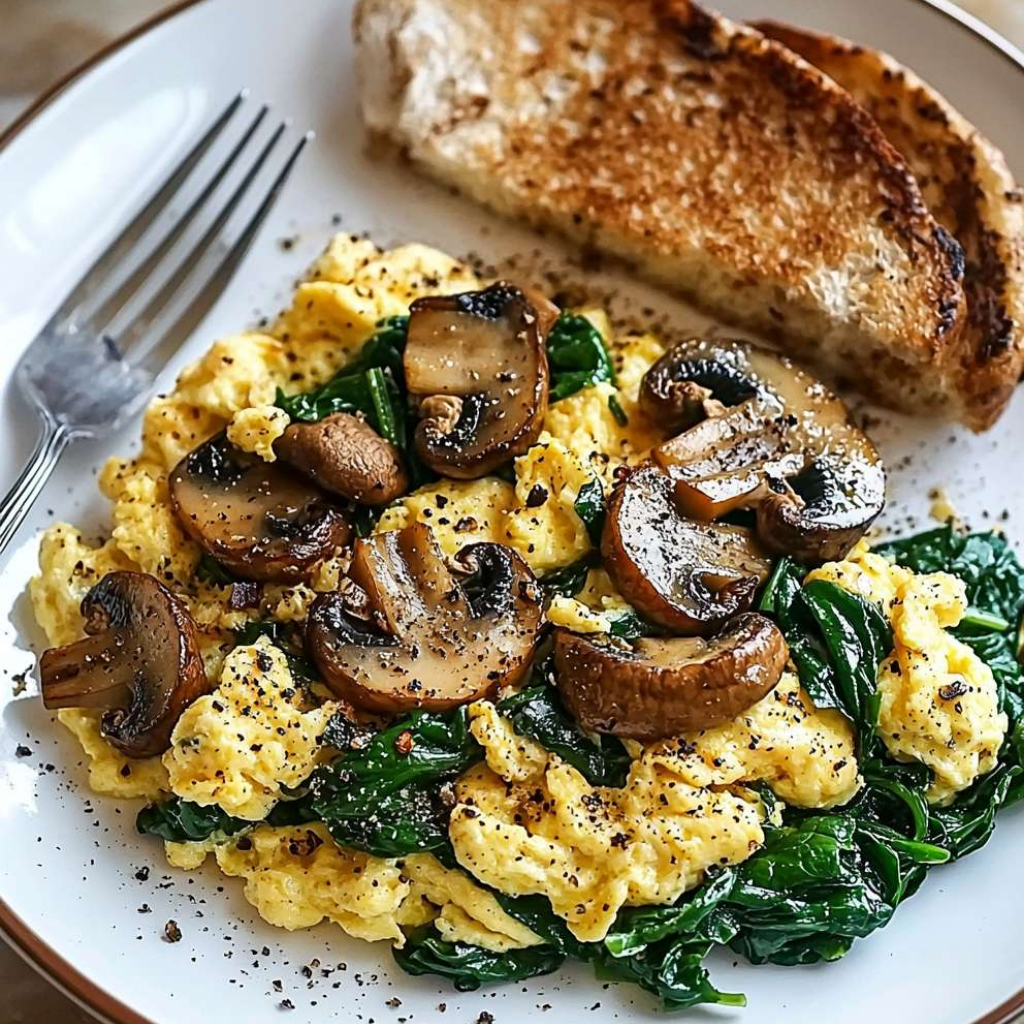
These mushroom-spinach scrambled eggs deliver a satisfying combination of flavors and textures that make breakfast feel special. The eggs themselves are soft and creamy with a rich, buttery finish. When cooked properly using the low-and-slow method, they have an almost custardy quality that melts on your tongue rather than sitting heavily in your mouth.
The mushrooms bring an earthy, umami-rich flavor that adds depth and complexity to the mild eggs. Their texture is tender but meaty, providing satisfying bites that contrast nicely with the softness of the eggs. The caramelization from proper browning adds a subtle sweetness and nutty quality that makes them taste more interesting than plain sautéed mushrooms.
Spinach contributes a gentle earthiness without being bitter or overwhelming. When wilted properly, it integrates seamlessly into the eggs, adding little pockets of green color and a slightly mineral taste that balances the richness of the butter and eggs. The garlic provides aromatic warmth throughout, while the thyme adds an herbal note that ties the vegetables and eggs together.
The overall effect is a harmonious blend where no single ingredient dominates. You get creamy, savory, earthy, and slightly herbaceous notes all in one bite. The texture varies from spoonful to spoonful – sometimes you get a forkful of pure creamy egg, other times a piece of mushroom or a ribbon of spinach adds textural interest.
Tips & Variations
The type of mushroom you choose significantly impacts the final flavor. Cremini mushrooms (baby bellas) offer more flavor than standard white button mushrooms, while shiitake mushrooms add a more intense, almost smoky quality. A mix of varieties creates the most complex flavor profile. If using shiitakes, remove the tough stems before slicing.
For a richer version, substitute heavy cream for the milk and add an extra tablespoon of butter. Some people swear by adding a tablespoon of cream cheese to the eggs before cooking for an ultra-creamy texture. Try it if you’re feeling fancy.
If you’re watching calories or fat intake, you can use just one tablespoon of butter total and substitute low-fat milk for the cream. The eggs won’t be quite as rich, but they’ll still be good. You can also use cooking spray instead of butter, though you’ll sacrifice some flavor.
For extra vegetables, diced bell peppers, cherry tomatoes, or thinly sliced zucchini work well. Add heartier vegetables like peppers along with the mushrooms so they have time to soften. Delicate vegetables like tomatoes should go in with the spinach.
Cheese options are endless here. Sharp cheddar adds tangy flavor, gruyere brings nutty sophistication, feta provides salty creaminess, and goat cheese offers tanginess. Parmesan works too, though use it sparingly as it’s quite strong. Add cheese when the eggs are almost done so it melts into soft pockets rather than becoming stringy.
For meal prep, you can cook these eggs and store them in the refrigerator, though they’re always best fresh. Reheat gently in the microwave at 50% power in short bursts to avoid turning them rubbery.
If you’re feeding a crowd, this recipe doubles easily. Just use a larger skillet and be patient with the cooking process – more eggs take a bit longer to scramble properly.
Storage & Make-Ahead
Scrambled eggs are always best eaten fresh, but you can prepare components ahead to make morning cooking faster. Cook the mushroom-spinach mixture the night before and store it in an airtight container in the refrigerator for up to 3 days. In the morning, simply reheat the vegetables briefly before adding them to your freshly scrambled eggs.
You can also crack and whisk the eggs the night before, storing the mixture in a sealed container in the fridge. Give it a quick whisk before cooking, as the ingredients may separate slightly overnight.
If you have leftover cooked scrambled eggs, store them in an airtight container in the refrigerator for up to 2 days. Reheat them gently in the microwave at reduced power, adding a small pat of butter or splash of milk to help restore moisture. Alternatively, reheat them in a nonstick pan over low heat with a little butter, stirring gently.
For freezing, honestly, scrambled eggs don’t freeze well. The texture becomes watery and rubbery when thawed. If you’re interested in freezer breakfast options, consider making egg muffins or frittatas instead, which handle freezing much better.
The mushroom-spinach mixture can be frozen separately for up to 2 months. Thaw overnight in the refrigerator before using.
Serving Suggestions
These mushroom-spinach scrambled eggs are substantial enough to serve as a complete breakfast, but they also pair beautifully with various sides. A slice of whole-grain toast or a warm croissant is perfect for soaking up any extra butter and egg on your plate. Toasted sourdough with a smear of salted butter is my personal favorite accompaniment.
For a heartier meal, serve alongside breakfast potatoes, roasted sweet potato wedges, or hash browns. The crispy texture of potatoes contrasts nicely with the creamy eggs. Turkey sausage or bacon adds protein and satisfying savory flavor, though the eggs are protein-rich enough to stand alone.
These eggs work wonderfully as a filling for breakfast burritos or wraps. Spoon them onto a warm flour tortilla, add a handful of shredded cheese, maybe some salsa or hot sauce, roll it up, and you have a portable breakfast. They’re also excellent stuffed into pita pockets with a bit of hummus and sliced tomatoes for a Mediterranean-inspired breakfast.
For brunch entertaining, serve these eggs family-style in a warm serving dish alongside a fresh fruit salad, Greek yogurt with granola, and a simple green salad. The combination feels complete without being overly fussy.
Don’t limit these eggs to breakfast – they make an excellent quick dinner too. Pair them with a simple side salad and some crusty bread for a satisfying light meal any time of day.
FAQ
Why are my scrambled eggs always dry and rubbery? The most common mistake is cooking eggs over high heat and cooking them completely through in the pan. Use medium-low heat and remove the eggs from heat while they still look slightly wet and underdone. They’ll continue cooking from residual heat. Also, avoid over-stirring, which breaks down the curds too much.
Can I use frozen spinach instead of fresh? Yes, but squeeze out all the excess water first. Frozen spinach is much wetter than fresh and can make your eggs watery. Thaw it completely, then press it firmly in a clean kitchen towel or squeeze it in your hands over the sink to remove as much liquid as possible.
Do I need to add milk or cream to scrambled eggs? No, it’s optional. Milk or cream creates slightly softer, more tender eggs, but some people prefer eggs made with just eggs and butter. The technique and temperature matter more than the addition of dairy. Try both ways and see which you prefer.
Can I make this recipe dairy-free? Absolutely. Use olive oil or vegan butter instead of regular butter, and skip the milk or use unsweetened plant-based milk like almond or oat milk. The eggs will still be creamy if you cook them properly over low heat.
What’s the best way to reheat leftover scrambled eggs? Microwave them at 50% power in 20-second intervals, stirring between each interval. Add a tiny pat of butter or splash of milk to help restore moisture. You can also reheat them gently in a nonstick pan over low heat, stirring frequently, though the microwave is faster.
These creamy mushroom-spinach scrambled eggs have become a breakfast staple in my kitchen, and I think they’ll become one in yours too. They strike that perfect balance between being healthy and satisfying, simple and special. Whether you’re making them for yourself on a quiet morning or serving them to family or guests at brunch, they deliver consistent results and genuine satisfaction. Give them a try this weekend – your taste buds will thank you.