
Follow Me On Social Media!

Creamy Lemon Butter Salmon: The 15-Minute Restaurant-Quality Fish Dinner.

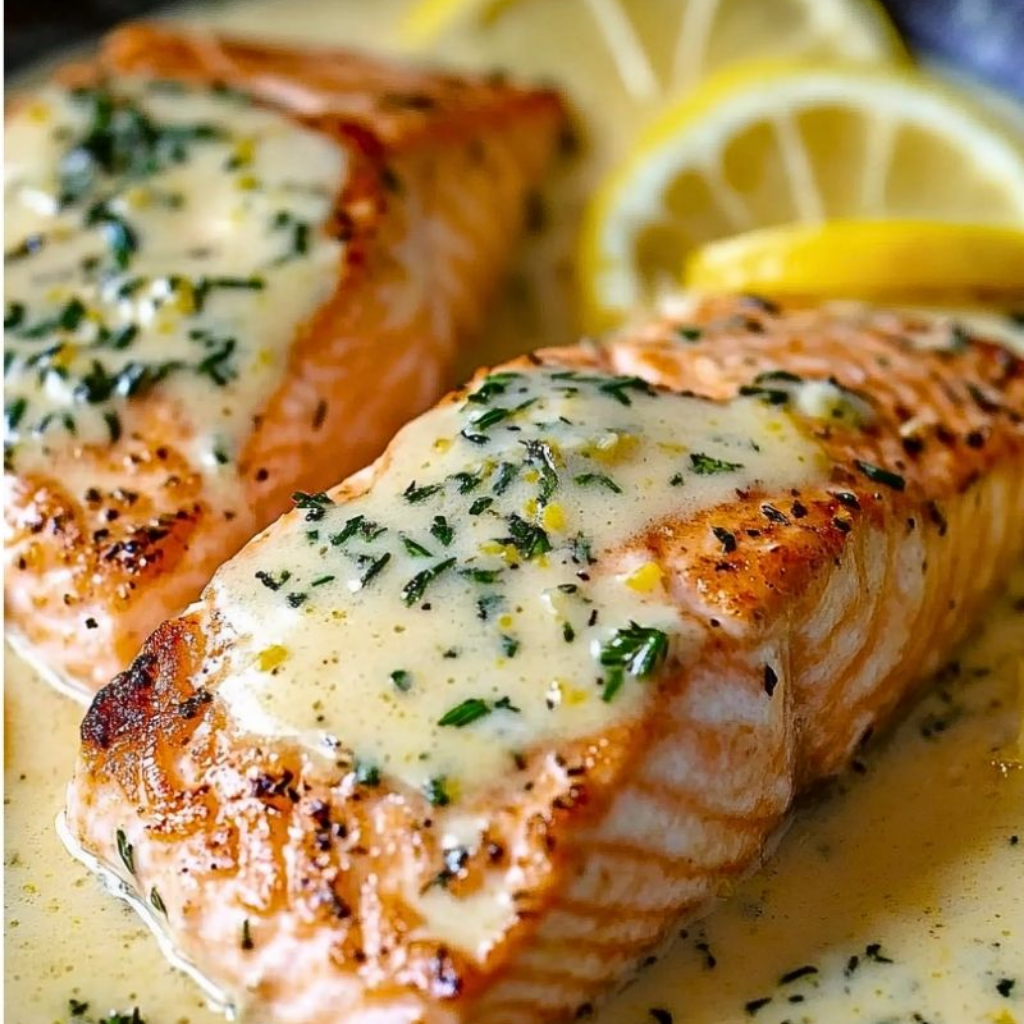
There’s something magical about the combination of butter, lemon, and fresh salmon that transforms a simple weeknight dinner into something that feels like a special occasion. I discovered this technique during a particularly hectic period when I needed meals that could go from refrigerator to table in under twenty minutes but still taste like I’d spent hours in the kitchen. This creamy lemon butter salmon became my secret weapon for impressive dinners that require minimal effort and deliver maximum flavor.
The genius of this recipe lies in building the sauce directly in the same pan used to cook the salmon. As the fish develops a golden crust, it leaves behind those precious browned bits that become the foundation for a silky, restaurant-quality sauce. The combination of butter, cream, and fresh lemon juice creates a luxurious coating that enhances rather than masks the salmon’s natural flavor.
What sets this lemon butter salmon apart from other quick fish recipes is the technique of finishing the sauce off the heat, which prevents the cream from breaking and ensures a velvety texture every time. The result is tender, flaky salmon with a perfectly crispy skin, bathed in a sauce that’s bright enough to cut through the richness but creamy enough to feel indulgent.
This recipe works beautifully whether you’re cooking for a romantic dinner for two or feeding a family on a busy Tuesday night. The timing is forgiving, the ingredients are simple, and the results are consistently impressive enough to earn a permanent spot in your regular rotation.
Ingredients
For the Salmon:
- 4 salmon fillets (6 ounces each), skin-on, pin bones removed
- 2 tablespoons olive oil
- Salt and freshly ground black pepper
- 1 teaspoon garlic powder
- 1/2 teaspoon smoked paprika
For the Creamy Lemon Butter Sauce:
- 3 tablespoons unsalted butter
- 3 cloves garlic, minced
- 1/2 cup dry white wine (or chicken broth)
- 1/2 cup heavy cream
- 3 tablespoons fresh lemon juice
- 1 tablespoon lemon zest
- 1 tablespoon fresh dill, chopped (or 1 teaspoon dried)
- 1/4 teaspoon salt
- 1/8 teaspoon white pepper
- 2 tablespoons fresh parsley, chopped for garnish
Optional Additions:
- 1 tablespoon capers, drained
- 2 tablespoons sun-dried tomatoes, chopped
- 1/4 cup grated Parmesan cheese
Instructions
Start by bringing the salmon to room temperature about 15 minutes before cooking. This ensures even cooking throughout and prevents the outside from overcooking while the center stays cold. Pat each fillet completely dry with paper towels—this is crucial for achieving that golden, crispy skin that makes restaurant-style salmon so appealing.
Season the salmon generously on both sides with salt, black pepper, garlic powder, and smoked paprika. The paprika adds a subtle smokiness and helps create a beautiful color on the fish. Don’t be shy with the seasoning—salmon has a rich flavor that can handle bold spices.
Heat the olive oil in a large, heavy-bottomed skillet (preferably stainless steel or cast iron) over medium-high heat. The pan should be hot enough that a drop of water sizzles immediately when it hits the surface. This high heat is essential for creating that perfect sear that locks in the salmon’s juices.
Place the salmon fillets skin-side up in the hot pan, leaving space between each piece. You should hear an immediate sizzle—if you don’t, the pan isn’t hot enough. Resist the urge to move or flip the salmon for the first 4-5 minutes. This allows a golden crust to form, which not only looks beautiful but also prevents the fish from sticking to the pan.
After 4-5 minutes, the salmon should release easily from the pan when you gently lift a corner with a spatula. Flip the fillets carefully and cook for another 2-3 minutes, depending on thickness. The salmon is done when it flakes easily with a fork but still looks slightly translucent in the center—it will continue cooking from residual heat.
Transfer the cooked salmon to a plate and tent with foil to keep warm. Don’t clean the pan—those golden-brown bits stuck to the bottom are pure flavor that will make your sauce extraordinary.
Reduce the heat to medium and add the butter to the same pan. As it melts, use a wooden spoon to scrape up all those caramelized bits from cooking the salmon. Add the minced garlic and cook for about 30 seconds until fragrant, being careful not to let it burn.
Pour in the white wine and let it simmer for 1-2 minutes to cook off the alcohol and reduce slightly. The liquid should reduce by about half and smell bright and wine-like rather than sharp and alcoholic. If you’re using broth instead of wine, let it simmer for just a minute to concentrate the flavors.
Lower the heat to medium-low and slowly pour in the heavy cream, stirring constantly. The sauce might look separated at first, but keep stirring and it will come together into a smooth, creamy mixture. Let it simmer gently for 2-3 minutes until it thickens enough to coat the back of a spoon.
Remove the pan from heat—this is important to prevent the sauce from breaking. Stir in the lemon juice, lemon zest, dill, salt, and white pepper. Taste and adjust the seasoning, adding more lemon juice for brightness or salt for depth. The sauce should be creamy but not heavy, with a bright acidity that balances the richness.
Return the salmon to the pan briefly, spooning the sauce over each fillet to warm through. Garnish with fresh parsley and serve immediately while the sauce is silky and the salmon is at its peak.
Flavor & Texture Notes
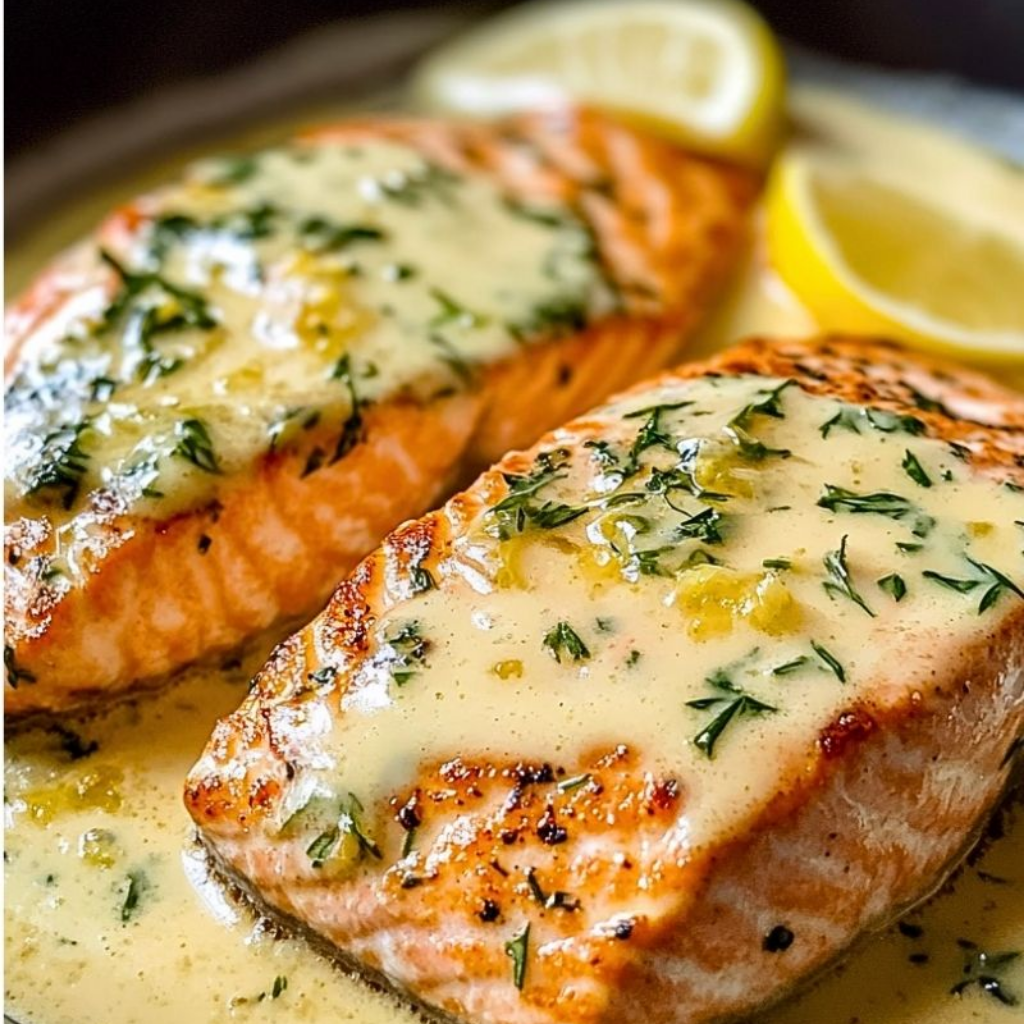
This creamy lemon butter salmon offers a perfect balance of richness and brightness that makes each bite satisfying without feeling heavy. The salmon develops a beautifully caramelized exterior that gives way to tender, flaky flesh that practically melts on your tongue. The skin, when cooked properly, becomes delicately crispy and adds a wonderful textural contrast.
The sauce is where the magic happens—it’s luxuriously creamy but lifted by the bright acidity of fresh lemon juice and zest. The dill adds an herbaceous note that complements the fish beautifully, while the garlic provides a subtle savory foundation. The white wine contributes depth and complexity, though it’s not overtly wine-forward in the finished dish.
Each spoonful combines the rich, buttery salmon with the velvety sauce that clings perfectly to the fish. The lemon brightens every element, preventing the cream and butter from becoming overwhelming. The overall effect is sophisticated and restaurant-like, with clean flavors that enhance rather than mask the salmon’s natural taste.
The texture contrast between the crispy-skinned, tender fish and the smooth, creamy sauce creates an eating experience that feels luxurious but not overly indulgent. It’s the kind of dish that makes you slow down and savor each bite.
Tips & Variations
Salmon Selection: Look for wild-caught salmon when possible—it has better flavor and firmer texture than farmed varieties. The fillets should smell fresh and oceanic, never fishy. If your salmon has pin bones, remove them with tweezers before cooking. Skin-on fillets work best for this recipe as the skin helps hold the fish together and becomes deliciously crispy.
Cooking Temperature: Don’t rush the searing process by using too high heat, which can burn the outside before the inside cooks through. Medium-high heat allows for proper browning while cooking the fish evenly. If your fillets are particularly thick (over 1.5 inches), you can finish them in a 400°F oven for a few minutes after searing.
Sauce Consistency: If your sauce seems too thin, let it simmer a bit longer to reduce. If it’s too thick, whisk in a tablespoon of the pasta cooking water or additional cream. The sauce should coat the salmon nicely without being gloppy or running off immediately.
Wine Alternatives: White wine adds wonderful depth, but you can substitute with chicken or vegetable broth, or even additional cream if you prefer to avoid alcohol. A splash of white wine vinegar can provide the acidity that wine typically contributes.
Herb Variations: While dill is classic with salmon, fresh tarragon, chives, or even basil work beautifully. Dried herbs work in a pinch but use about half the amount since they’re more concentrated. Add fresh herbs at the end to preserve their bright flavor and color.
Make It Lighter: For a lighter version, substitute half-and-half for the heavy cream, though the sauce won’t be quite as rich. You can also reduce the butter and increase the herbs and lemon for a brighter, less heavy preparation.
Storage & Make-Ahead
This salmon is best enjoyed immediately while the skin is crispy and the sauce is at its silkiest. However, leftovers can be stored in the refrigerator for up to 2 days. When reheating, do so gently in a covered pan over low heat with a splash of cream or broth to refresh the sauce. Avoid microwaving if possible, as it can make the fish rubbery and separate the sauce.
The sauce components can be prepped ahead of time—garlic minced, lemon juiced and zested, herbs chopped—but the actual cooking should be done just before serving for the best results. You can season the salmon and let it come to room temperature while you prep your sides.
If you need to hold the finished dish for a short time, keep it covered in a warm oven (200°F) for no more than 15 minutes. The sauce may thicken as it cools, but a gentle stir will usually bring it back together.
For meal prep purposes, this isn’t the ideal recipe since the magic is in the fresh preparation. However, you can cook extra salmon and use it cold in salads or grain bowls the next day, though save the sauce for fresh preparations.
Serving Suggestions
This elegant salmon pairs beautifully with simple sides that won’t compete with its rich, creamy sauce. Roasted asparagus, steamed broccoli, or sautéed green beans provide color and texture contrast. For starches, consider garlic mashed potatoes, rice pilaf, or even buttered egg noodles that can soak up the extra sauce.
A crisp white wine like Sauvignon Blanc or Pinot Grigio complements the lemon and cream beautifully, while a light Chardonnay can echo the buttery richness of the sauce. If you prefer red wine, a light Pinot Noir won’t overpower the delicate fish.
The dish looks stunning when plated individually—place the salmon on warmed plates, spoon the sauce over and around each fillet, and garnish with fresh herbs and a lemon wedge. A simple arugula salad dressed with olive oil and lemon makes an excellent starter or side.
For a more casual presentation, serve family-style in the cooking pan with crusty bread for soaking up every drop of sauce. This approach feels more relaxed while still showcasing the beautiful golden salmon and creamy sauce.
FAQ
How do I know when my salmon is properly cooked? Properly cooked salmon should flake easily when tested with a fork but still look slightly translucent in the very center. The internal temperature should reach 145°F, but many people prefer salmon cooked to 135°F for a more tender texture. The flesh should be opaque and separate into distinct flakes when pressed gently.
Why is my sauce breaking or looking curdled? Sauce separation usually happens when the heat is too high or the cream is added too quickly. Always remove the pan from heat before adding the final lemon juice, and make sure to add cream gradually while stirring constantly. If your sauce does break, try whisking in a tablespoon of cold butter off the heat to bring it back together.
Can I use frozen salmon for this recipe? Fresh salmon works best, but properly thawed frozen salmon can work too. Thaw it completely in the refrigerator overnight and pat it very dry before seasoning. Frozen salmon often releases more moisture during cooking, which can interfere with getting a good sear, so extra drying is crucial.
What if I don’t have heavy cream? You can substitute with half-and-half, though the sauce won’t be as rich and may not thicken as well. Whole milk mixed with a tablespoon of butter can work in a pinch. Greek yogurt stirred in off the heat creates a tangy variation, though the texture will be different from traditional cream sauce.
My salmon skin is sticking to the pan. What went wrong? Sticking usually means the pan wasn’t hot enough, the salmon wasn’t dry enough, or you tried to flip it too early. Make sure your pan is properly preheated, pat the fish completely dry, and wait for a good sear to develop before attempting to flip. A properly seared piece of fish will release easily when it’s ready.
There’s real satisfaction in mastering a restaurant-quality dish that comes together so quickly and easily. This creamy lemon butter salmon proves that impressive doesn’t have to mean complicated—sometimes the best meals come from treating excellent ingredients with simple techniques and perfect timing. The combination of crispy-skinned salmon and silky, bright sauce is one of those magical pairings that never gets old, making this a recipe you’ll find yourself returning to whenever you want to create something special without spending hours in the kitchen.