
Follow Me On Social Media!

Coconut Shrimp Curry.

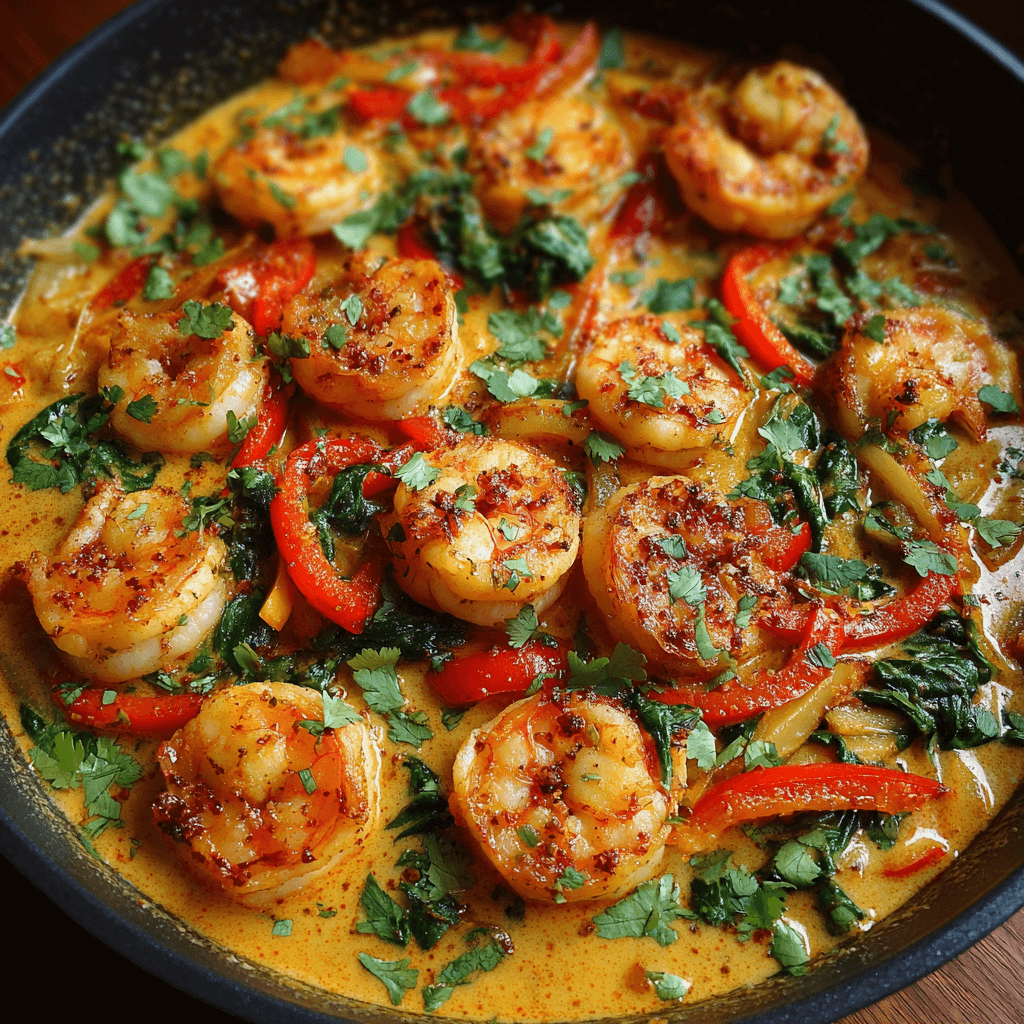
This coconut shrimp curry is a quick, skillet-based curry built on sautéed aromatics, red curry paste, and coconut milk for a silky, fragrant sauce. The shrimp cook directly in the gently simmering curry, staying tender and juicy, while spinach wilts in at the end for freshness and color.
Why You’ll Love This Recipe
- Fast, weeknight-ready curry — Big flavor in about 30 minutes with minimal prep.
- Creamy coconut sauce without heaviness — Coconut milk creates richness while lime keeps the finish bright.
- Tender shrimp, not rubbery — Gentle simmering and short cook time protect delicate seafood texture.
- One-pan simplicity — Sauté, simmer, finish—easy cleanup and straightforward timing.
- Balanced sweet-salty-spicy profile — Fish sauce, brown sugar, and curry paste create depth without complicated spice blending.
- Flexible and customizable — Swap veggies, adjust heat, or switch fish sauce to soy for an easy variation.
Ingredients You’ll Need
- 1 pound large shrimp, peeled and deveined — Quick-cooking protein; large shrimp stay juicier and are harder to overcook.
- Salt and pepper, to taste — Seasons shrimp and sauce; add salt cautiously if using fish sauce.
- 2 tablespoons coconut oil (or vegetable oil) — Cooking fat that carries curry aromas; coconut oil adds extra coconut fragrance.
- 1 onion, finely chopped — Builds sweetness and body for the sauce base.
- 3 cloves garlic, minced — Adds savory depth and aroma; cooks quickly after onion softens.
- 1 tablespoon fresh ginger, grated — Brings warm spice and brightness that complements coconut and lime.
- 1 bell pepper, sliced — Adds color, crunch-tender texture, and sweetness.
- 1 can (14 ounces) coconut milk — Forms the creamy sauce; full-fat gives the best texture and mouthfeel.
- 2 tablespoons red curry paste — Primary seasoning; provides chili heat, lemongrass-like aromatics, and complexity.
- 1 tablespoon fish sauce (or soy sauce) — Adds umami and salt; soy works for a milder, more neutral alternative.
- 1 tablespoon brown sugar — Balances spice and salt, rounding out the curry.
- 1 cup fresh spinach — Wilts quickly for color and a light vegetal note.
- Juice of 1 lime — Added at the end for acidity that brightens and sharpens flavors.
- Fresh cilantro (optional) — Garnish that adds herbal lift and freshness.
Step-by-Step Instructions
- Heat the pan and oil — Warm coconut oil over medium heat in a large skillet or wok so aromatics sauté evenly without scorching.
- Soften the onion — Cook onion 3–4 minutes until translucent; this builds sweetness and a flavorful base.
- Bloom garlic and ginger — Stir in garlic and ginger and cook about 1 minute until fragrant, stirring constantly to prevent burning.
- Cook the bell pepper — Add sliced bell pepper and sauté 3–4 minutes until slightly tender but still vibrant and crisp-tender.
- Create the curry sauce — Pour in coconut milk and whisk in red curry paste, fish sauce, and brown sugar; bring to a gentle simmer (small bubbles, not a rolling boil).
- Taste and adjust — Season with pepper and only a little salt if needed (fish sauce and curry paste already contribute salinity).
- Cook the shrimp gently — Add shrimp and simmer 5–7 minutes until pink and opaque; avoid boiling to keep them tender.
- Wilt the spinach — Stir in spinach and cook 1–2 minutes just until wilted so it stays bright.
- Finish with lime — Remove from heat and stir in lime juice to brighten the sauce and keep the flavor clean.
- Serve and garnish — Spoon over rice (or serve with naan) and finish with cilantro if desired.
Recipe Notes & Tips
- Use full-fat coconut milk for best texture — It thickens naturally and creates a silkier sauce; light coconut milk can taste thinner and less cohesive.
- Cook curry paste in the sauce base — Whisking it thoroughly into coconut milk prevents concentrated spicy pockets and gives a smoother flavor.
- Avoid overcooking shrimp — Shrimp go from tender to rubbery quickly; pull the curry from heat as soon as they turn opaque.
- Control heat level — Curry paste brands vary; start with 1 tablespoon if you’re sensitive to spice, then add more after tasting.
- Don’t add lime too early — Acid can dull aromatics if simmered too long; finishing with lime keeps the flavor bright and fresh.
- Sauce too thin? — Simmer uncovered 2–4 minutes before adding shrimp, or remove shrimp briefly and reduce slightly, then return them to warm through.
Nutritional Information
- Prep Time: 10 minutes
- Cooking Time: 20 minutes
- Total Time: 30 minutes
- Servings: 4 (with rice or naan on the side)
- Calories: ~380–520 per serving (estimate; varies by coconut milk brand and oil amount, not including rice/naan)
Perfect Pairings
- Steamed jasmine rice or basmati rice — Neutral base that soaks up the creamy curry sauce.
- Warm naan or roti — Great for scooping and adding a bready contrast to the sauce.
- Cucumber salad — Cool, crisp, and refreshing against curry heat.
- Mango or pineapple on the side — Sweet fruit balances spice and complements coconut richness.
Ideal Occasions
- Quick weeknight dinners — Minimal cook time with a high flavor-to-effort ratio.
- Casual entertaining — One-pan curry feels special and scales easily for guests.
- Warm-weather meals — Lime and cilantro keep it bright and not overly heavy.
- Meal-prep lunches — Holds well for next-day portions when stored properly.
Storage & Serving Tips
- Refrigerate promptly — Store airtight up to 2–3 days; seafood is best enjoyed sooner rather than later.
- Reheat gently — Warm on low heat until just hot; boiling can overcook shrimp and separate the coconut sauce.
- Add fresh lime after reheating — A small squeeze refreshes flavor and restores brightness.
- Store rice separately — Keeps rice from absorbing sauce and turning mushy.
Creative Variations to Try
- Thai-style veggie boost — Add snap peas, zucchini, or mushrooms; sauté firm veg with peppers and add quick-cooking veg near the end.
- Pineapple coconut curry — Stir in 1/2 cup pineapple chunks for sweet-tart contrast that pairs naturally with shrimp.
- Peanut-lime richness — Whisk in 1–2 tablespoons peanut butter for a satay-like depth (thin with a splash of broth if needed).
- Make it vegetarian — Swap shrimp for tofu or chickpeas and use soy sauce instead of fish sauce for a plant-based version.
Troubleshooting Common Issues
- Shrimp are rubbery — They cooked too long or the sauce boiled; keep to a gentle simmer and stop cooking as soon as shrimp turn opaque.
- Curry tastes too salty — Fish sauce/curry paste may be strong; add a splash more coconut milk or a bit of water, and balance with extra lime or a pinch more sugar.
- Sauce is too thin — Simmer uncovered to reduce before adding shrimp, or stir in a small spoonful of coconut cream if available.
- Flavor feels flat — Add more lime, a pinch of salt, or an extra teaspoon of curry paste; finishing with cilantro also boosts perceived freshness.
Why This Recipe Works
This curry builds complexity quickly by layering aromatics (onion, garlic, ginger) and using red curry paste as a concentrated flavor base—essentially a ready-made blend of chiles, aromatics, and spices. Coconut milk provides fat and body that carry those aromatics and mellow heat, while fish sauce adds glutamates that deepen savoriness without requiring long simmer times. Brown sugar rounds out the spice and salt for balance, and lime juice at the end sharpens the flavors and prevents the sauce from tasting heavy. Shrimp are added late because they cook fast; gentle heat keeps proteins tender and prevents the tight, rubbery texture that comes from boiling. With an estimated ~380–520 calories per serving (before rice/naan), it’s a rich but balanced meal—especially when paired with vegetables or a crisp salad.
Final Thoughts
Coconut shrimp curry is one of the most rewarding quick dinners: creamy, fragrant, and bright, with tender shrimp and vibrant vegetables in every spoonful. Nutritionally, it’s moderately rich thanks to coconut milk, but you can lighten it by using a bit less oil, adding extra vegetables, and serving with a smaller portion of rice. Once you get the gentle-simmer timing down, this becomes an easy, customizable curry you’ll want in regular rotation.