
Follow Me On Social Media!

Chocolate-Dipped Shortbread.

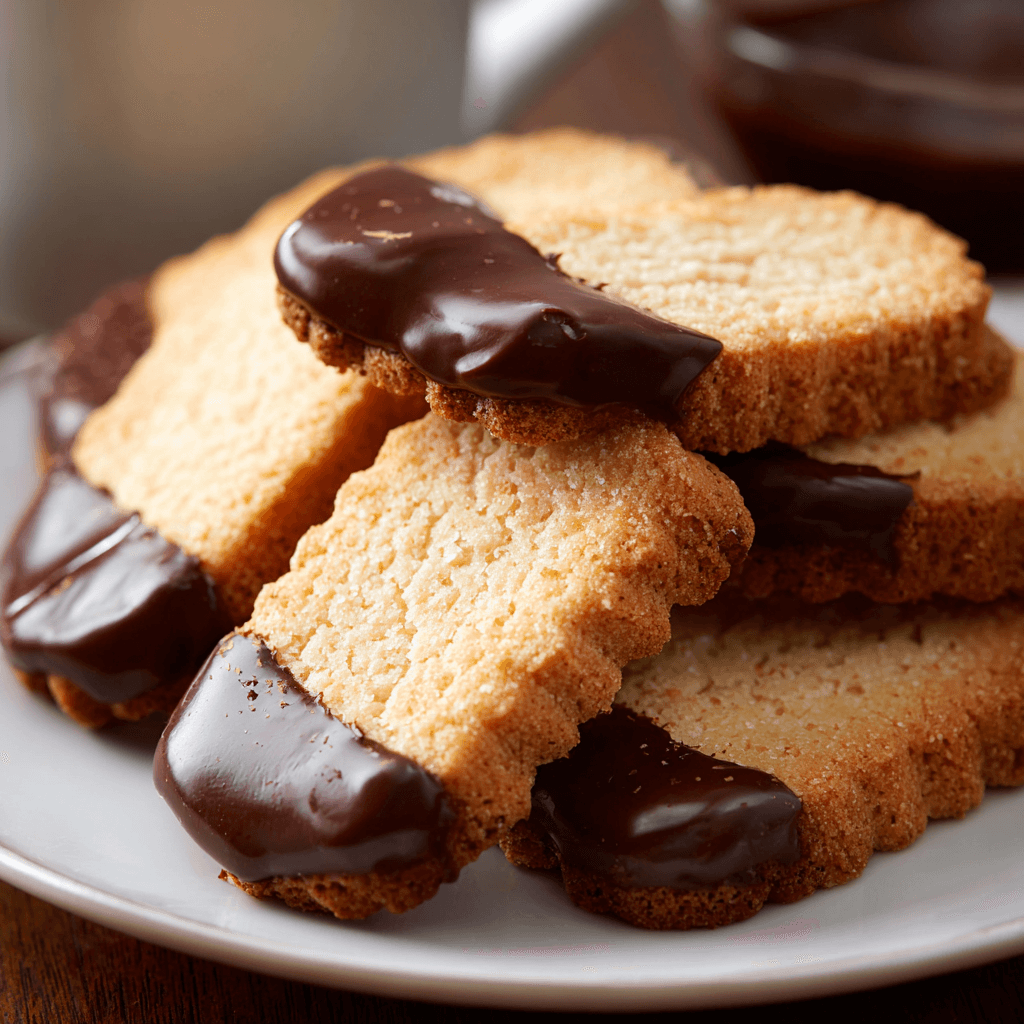
Chocolate-dipped shortbread is a classic buttery cookie with a crisp-tender “snap” and a rich chocolate finish that turns it into a gift-worthy treat. The technique is all about gentle mixing to keep the crumb delicate, baking just until the edges turn pale gold, and dipping fully cooled cookies into smooth, tempered-style melted chocolate for a clean set.
Why You’ll Love This Recipe
- Buttery, melt-in-your-mouth texture — Classic shortbread richness with a tender, delicate crumb.
- Elegant chocolate finish — A simple dip instantly upgrades the cookies for holidays and gifting.
- Easy, no-fuss dough — No chilling required for basic shapes, and the ingredients are pantry staples.
- Perfectly balanced sweetness — Mildly sweet cookie pairs beautifully with semisweet or dark chocolate.
- Make-ahead friendly — Shortbread stores well, and dipped cookies keep their quality for days.
- Endlessly customizable — Change shapes, add citrus zest, or sprinkle toppings while the chocolate is wet.
Ingredients You’ll Need
For the Shortbread
- 1 cup unsalted butter, softened — The foundation of shortbread; provides flavor, tenderness, and that classic sandy crumb.
- 1/2 cup granulated sugar — Sweetens and helps create a crisp bite without making the cookie cakey.
- 1 teaspoon vanilla extract — Adds warm aroma and rounds out butter flavor.
- 2 cups all-purpose flour — Provides structure while keeping the crumb tender when mixed minimally.
- 1/4 teaspoon salt — Balances sweetness and sharpens butter and vanilla notes.
For the Chocolate Dip
- 8 oz semisweet or dark chocolate, chopped — Creates a smooth coating; chopped chocolate melts more evenly than whole pieces.
- 1 tablespoon vegetable oil (optional) — Thins the chocolate for a smoother dip and slightly softer bite once set.
Step-by-Step Instructions
- Preheat and prep the pan — Heat oven to 350°F (175°C) and line a baking sheet with parchment to prevent sticking and promote even browning.
- Cream butter and sugar — Beat softened butter and sugar 2–3 minutes until light and fluffy; this improves texture without making shortbread airy.
- Add vanilla — Stir in vanilla until evenly incorporated for consistent flavor throughout.
- Mix in flour and salt gently — Add flour and salt gradually and mix just until the dough comes together; overmixing develops gluten and toughens shortbread.
- Roll the dough evenly — Roll on a lightly floured surface to 1/4-inch thickness for consistent baking and a clean snap.
- Cut and arrange — Cut shapes or rectangles and place on the sheet with a bit of space; shortbread spreads minimally but needs airflow for even baking.
- Bake until lightly golden — Bake 20–25 minutes until edges are pale gold and centers remain light; this timing preserves tenderness.
- Cool completely — Cool 5 minutes on the tray, then transfer to a rack until fully cooled to prevent breakage and ensure chocolate adheres.
- Melt the chocolate smoothly — Melt chocolate (with optional oil) over a double boiler or microwave in 30-second bursts, stirring until glossy.
- Dip and let excess drip — Dip half of each cookie, let excess chocolate drip off, and gently scrape the bottom edge on the bowl rim for a clean line.
- Set the chocolate — Place cookies on parchment and let set at room temperature, or refrigerate briefly for faster setting.
Recipe Notes & Tips
- Softened butter is key — Butter should be pliable but not melted; melted butter can make cookies greasy and cause excess spread.
- Mix minimally after flour — Shortbread should be tender and “short”; stop mixing as soon as the dough holds together.
- Keep thickness consistent — Uneven rolling causes some cookies to overbrown while others stay underbaked.
- For sharp edges — Chill cut cookies 10 minutes before baking if the dough feels warm; it helps shapes hold cleanly.
- Chocolate texture control — Adding oil makes dipping easier but slightly softens the set; skip oil for a firmer snap.
- Decorate while wet — Sprinkle flaky salt, crushed nuts, or sprinkles on the chocolate before it sets for a professional finish.
Nutritional Information
- Prep Time: 15 minutes
- Cooking Time: 20–25 minutes
- Total Time: About 40 minutes (plus cooling/setting time)
- Servings: About 18–24 cookies (depends on cutter size and thickness)
- Calories: ~140–220 per cookie (estimate; varies by cookie size and amount of chocolate dip)
Perfect Pairings
- Black tea or Earl Grey — Tea tannins and bergamot complement buttery shortbread and dark chocolate.
- Coffee or espresso — Roasty bitterness balances sweet cookie and chocolate richness.
- Hot cocoa — Double-chocolate comfort pairing, especially for winter serving.
- Fresh berries — Tart berries brighten the palate between rich bites.
Ideal Occasions
- Holiday cookie boxes — Dipped shortbread looks festive and travels well.
- Gifting — Durable cookies that package beautifully and stay fresh for days.
- Afternoon tea — Classic pairing with tea and a refined, not-too-sweet profile.
- Party dessert platters — Simple, elegant cookies that appeal to nearly everyone.
Storage & Serving Tips
- Store airtight — Keep at room temperature up to 1 week once chocolate is fully set.
- Layer carefully — Separate layers with parchment to prevent chocolate scuffs.
- Cool, dry storage is best — Warm environments can soften the chocolate; refrigerate if your kitchen is hot.
- Serve at room temperature — For the best butter flavor and clean chocolate snap, let chilled cookies sit 10 minutes before serving.
Creative Variations to Try
- Citrus shortbread — Add 1–2 teaspoons lemon or orange zest to the dough for a bright contrast to chocolate.
- Almond-chocolate version — Replace vanilla with 1/2 teaspoon almond extract and top chocolate with sliced almonds.
- Peppermint dipped — Add crushed peppermint candies to the wet chocolate for a festive finish.
- Two-tone drizzle — Dip in dark chocolate, then drizzle with melted white chocolate for a bakery-style look.
Troubleshooting Common Issues
- Cookies spread too much — Butter was too warm; chill the dough briefly and ensure butter is softened, not melted.
- Cookies are tough — Dough was overmixed; mix only until it comes together and avoid heavy kneading.
- Chocolate looks streaky or dull — Chocolate overheated or cooled unevenly; melt gently and stir often, avoiding water contact.
- Chocolate won’t set firmly — Too much oil added or kitchen is warm; reduce/skip oil and set in a cooler spot or refrigerate briefly.
Why This Recipe Works
Shortbread’s signature texture comes from a high butter-to-flour ratio and minimal mixing: butter coats flour particles, limiting gluten formation and creating a tender, “short” crumb that snaps cleanly once baked. Creaming butter and sugar briefly improves cohesion and texture without making the cookie cakey. Baking to pale-golden edges ensures the cookies are cooked through but not dried out. The chocolate dip adds richness and a contrasting texture—when melted gently and kept smooth, it coats evenly and sets into a clean finish. With an estimated ~140–220 calories per cookie, these are an indulgent treat, but easy to enjoy in smaller portions—especially paired with tea, coffee, or fresh fruit.
Final Thoughts
Chocolate-dipped shortbread is a timeless cookie that feels special with very little extra effort: buttery, crisp-tender, and finished with a glossy chocolate edge. Nutritionally it’s rich by design, but you can keep it lighter by dipping only a corner, using darker chocolate, or making smaller shapes. Once you master gentle mixing and the pale-gold bake cue, this recipe becomes a reliable staple for gifting and gatherings.