
Follow Me On Social Media!

Butter-Basted Steak with Thyme – Juicy & Classic.

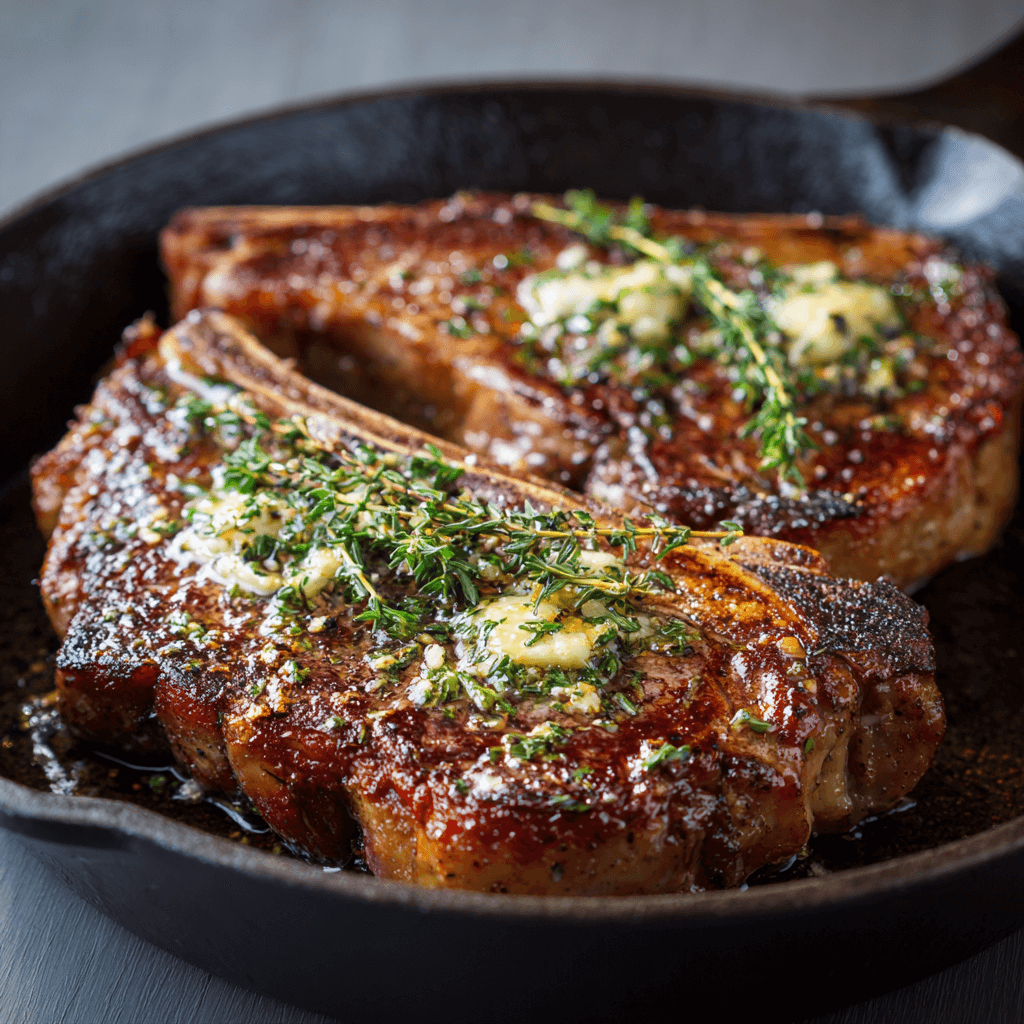
Butter-basting, or arroser in French culinary terms, is the secret behind the world’s most famous steakhouse dinners. While a simple sear provides a crust, basting bathes the meat in a foaming, nutty “liquid gold” infused with thyme and garlic.1 This technique doesn’t just add flavor; it ensures a more even cook and a velvety, mahogany-colored crust.
The Best Cuts for Basting
Not every steak is built for this high-heat, butter-heavy method. You need a cut with enough thickness to survive the sear without overcooking.2
| Cut | Best Thickness | Why it Works |
| Ribeye | 1.5 – 2 inches | High fat content renders into the basting butter for maximum flavor. |
| NY Strip | 1.5 inches | Leaner than ribeye but has a great fat cap that browns beautifully. |
| Filet Mignon | 2+ inches | Extremely tender; the butter adds much-needed richness and a crust. |
| T-Bone | 1.5 – 2 inches | Offers both the strip and filet textures in one pan. |
Ingredients
- 1 Thick-Cut Steak: (Room temperature).
- 2 tbsp High-Smoke Point Oil: (Grapeseed, Avocado, or Canola oil).3
- 3-4 tbsp Unsalted Butter: High-quality European butter is preferred for its lower water content.
- 4-5 Sprigs Fresh Thyme: (Do not use dried).4
- 3-4 Cloves Garlic: Smashed but left in their skins.
- Kosher Salt & Coarse Black Pepper: Be aggressive with the seasoning.5
Instructions
1. The Prep (The “Dry-Sear” Rule)
Remove the steak from the fridge 30–45 minutes before cooking.6
- The Dryness Factor: Use paper towels to pat the steak bone-dry on all sides.7 Moisture is the enemy of a crust; if the steak is wet, it will steam instead of sear.8+1
- Season liberally with Kosher salt and pepper just before it hits the pan.9
2. The Initial Sear
Heat a heavy cast-iron skillet over high heat until it is smoking hot.
- Add the oil. Once it shimmers, lay the steak in carefully (away from you to avoid splashes).
- Sear for 2–3 minutes without moving it until a deep brown crust forms. Flip the steak.
3. The Arroser (Basting)
Once flipped, reduce the heat to medium-high.
- Add the butter, thyme, and smashed garlic to the pan.10
- The Tilt: Tilt the skillet toward you so the butter pools at the bottom.11 As the butter foams and the herbs sizzle, use a large metal spoon to continuously drench the steak in the hot, aromatic fat.12+1
- Continue basting and flipping every minute until you are 5°F away from your target temperature.
4. The Doneness Guide
Pull the steak off the heat based on these internal temperatures (measured in the thickest part):
- Rare: Pull at 120°F (Final: 125°F) — Cool red center.
- Medium-Rare: Pull at 130°F (Final: 135°F)13 — Warm red center.
- Medium: Pull at 140°F (Final: 145°F) — Warm pink center.
5. The “10-Minute” Rest
Transfer the steak to a warm plate or wire rack. Pour the remaining pan butter over it and tent loosely with foil.
- Wait 10 Minutes: This allows the muscle fibers to relax and reabsorb the juices.14 If you cut it now, the juice will end up on the board; if you wait, it stays in the meat.15+1
Culinary Tips for Success
- Smash the Garlic: Don’t mince the garlic. Smashing it with the flat of your knife allows the oils to escape into the butter without the tiny bits burning and turning bitter.16
- The Sizzle Sound: If the butter stops foaming and starts to smoke or turn black, the heat is too high. If it doesn’t sizzle when you spoon it over, the heat is too low. You want a consistent, active bubble.
- Salt Early? For the absolute best results, salt your steak 45 minutes early.17 The salt will draw out moisture, dissolve, and then be reabsorbed into the meat, seasoning it deeply through and through.18+1
FAQ
Why use oil AND butter?
Butter has a low smoke point and will burn quickly on a hot pan. Starting with a high-heat oil allows you to get that initial hard sear; adding butter later provides the flavor and finish without the bitterness of burnt milk solids.
Can I use Rosemary instead of Thyme?
Absolutely. Rosemary provides a more resinous, pine-like flavor that pairs perfectly with beef. Many chefs use a combination of both.
Is cast iron mandatory?
While not mandatory, cast iron is the best tool because it retains heat.19 When you drop a cold steak onto cast iron, the pan temperature doesn’t plummet, ensuring the sear begins instantly.
Would you like me to find a recipe for a “Red Wine Pan Sauce” that uses the browned bits (fond) left in your skillet to create a rich glaze for your steak?