Follow Me On Social Media!

Beef in Creamy Paprika Sauce.

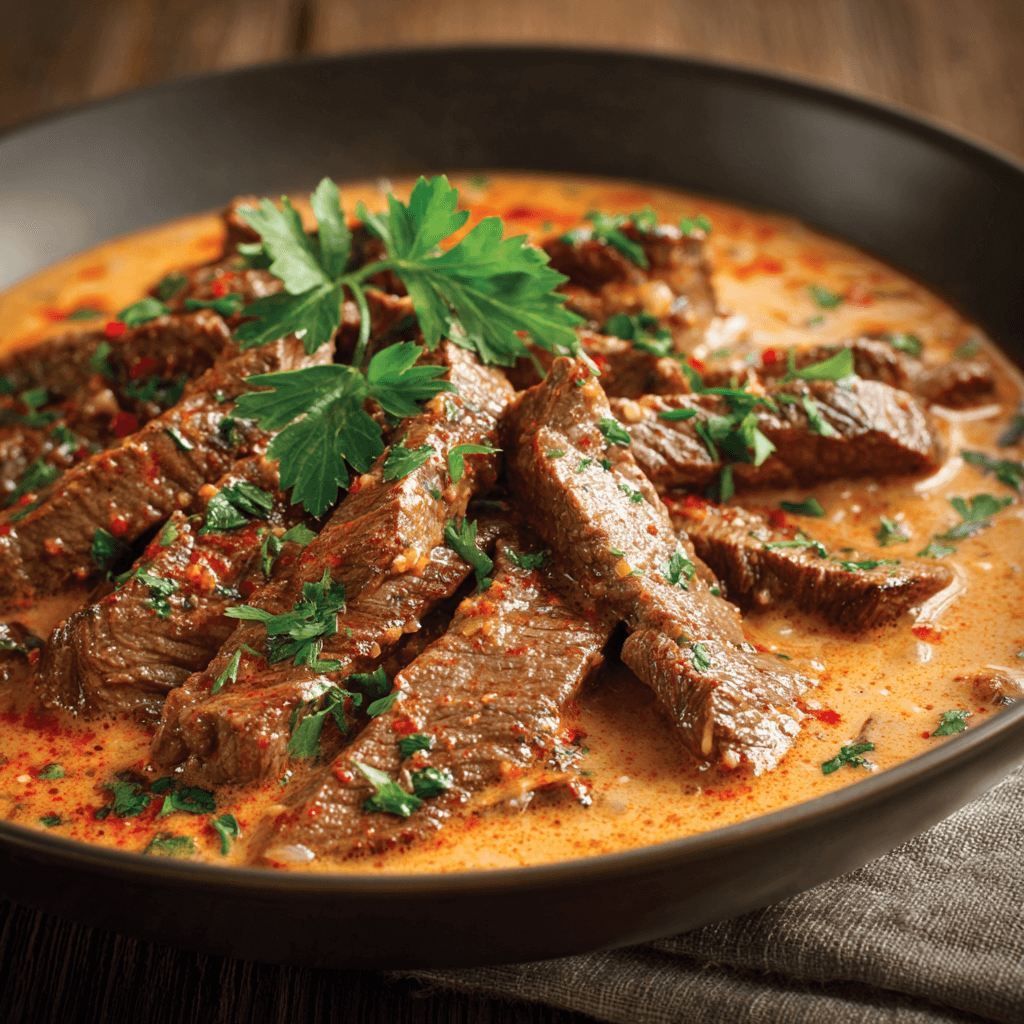
This beef in creamy paprika sauce is a fast, skillet-based dish that combines quick-seared steak strips with a velvety, paprika-scented pan sauce. The technique hinges on building flavor from browned fond, blooming the paprika briefly for aroma, and finishing with cream and mustard for a smooth, tangy, restaurant-style finish.
Why You’ll Love This Recipe
- Quick, weeknight-friendly cooking — Thinly sliced beef sears fast, and the sauce comes together in one pan.
- Big flavor from simple ingredients — Paprika, garlic, mustard, and Worcestershire build depth without complicated steps.
- Creamy, glossy sauce — Heavy cream emulsifies with the pan juices for a rich coating consistency.
- Tender beef results — Brief searing plus a short simmer prevents overcooking and keeps strips juicy.
- Versatile serving options — Equally good over noodles, rice, or mashed potatoes.
- Minimal cleanup — One skillet approach with easy deglazing that lifts all the browned flavor into the sauce.
Ingredients You’ll Need
- 1 pound beef sirloin or flank steak, thinly sliced into strips — Sirloin stays tender; flank has bold flavor and benefits from slicing against the grain.
- Salt and pepper, to taste — Seasons the beef and helps draw out surface moisture for better browning.
- 2 tablespoons olive oil — Provides high-heat fat for searing and prevents sticking.
- 1 medium onion, finely chopped — Adds sweetness and body to the sauce as it softens and releases natural sugars.
- 2 cloves garlic, minced — Brings aromatic savory depth; added after onion to prevent burning.
- 1 tablespoon paprika (smoked or sweet) — The signature flavor; blooming in oil intensifies aroma and color.
- 1 cup beef broth — Deglazes the pan and forms the savory liquid base for the sauce.
- 1 cup heavy cream — Creates richness and thickness; smooths paprika’s warmth into a velvety sauce.
- 1 tablespoon Dijon mustard — Adds tang and helps emulsify the sauce for a cohesive, glossy texture.
- 1 teaspoon Worcestershire sauce — Adds umami and subtle acidity for deeper “slow-cooked” flavor.
- Fresh parsley, chopped (for garnish) — Brightens the dish and cuts through the richness.
Step-by-Step Instructions
- Season the beef — Toss sliced steak with salt and pepper so each strip is evenly seasoned and ready to brown.
- Heat the skillet properly — Warm olive oil over medium-high until shimmering; this ensures rapid searing instead of steaming.
- Sear the beef in a single layer — Cook strips 2–3 minutes per side until browned; work in batches to avoid overcrowding, then remove to a plate.
- Sauté the onion — In the same skillet, cook onion 3–4 minutes until softened and lightly translucent, scraping up browned bits as they loosen.
- Bloom garlic and paprika — Add garlic and paprika and cook about 1 minute, stirring constantly until fragrant; this wakes up paprika’s oils without scorching.
- Deglaze with broth — Pour in beef broth and scrape the bottom to dissolve fond; simmer briefly to concentrate flavor.
- Build the creamy base — Reduce to medium-low, stir in heavy cream, Dijon mustard, and Worcestershire until fully combined and smooth.
- Return beef and finish gently — Add seared beef back and simmer 5–7 minutes until the sauce thickens slightly and beef is just cooked through.
- Serve and garnish — Spoon over noodles, rice, or mashed potatoes and finish with parsley for freshness.
Recipe Notes & Tips
- Slice against the grain — Especially for flank steak, slicing across muscle fibers dramatically improves tenderness.
- Avoid overcrowding the pan — Crowding drops skillet temperature and causes steaming; sear in batches for proper browning and better sauce flavor.
- Don’t burn the paprika — Paprika turns bitter if scorched; keep the heat moderate and stir constantly during the 1-minute bloom.
- Control sauce thickness — Simmer uncovered to reduce, or add a splash more broth if it becomes too thick after cream.
- Keep the simmer gentle — A hard boil can cause cream to reduce too quickly or break; use medium-low heat for a silky texture.
- Taste at the end — Broths and Worcestershire vary in saltiness; adjust salt and pepper only after the sauce has reduced slightly.
Nutritional Information
- Prep Time: 15 minutes
- Cooking Time: 30 minutes
- Total Time: 45 minutes
- Servings: 4 (as a main over a starch)
- Calories: ~520–740 per serving (estimate; varies by cut of beef and how much sauce is served)
Perfect Pairings
- Egg noodles or spaetzle — Classic, sauce-grabbing starch that complements paprika beautifully.
- Buttery mashed potatoes — Smooth texture pairs perfectly with the creamy sauce.
- Steamed green beans or broccoli — Adds freshness and color to balance the rich pan sauce.
- Pickled cucumbers or a tangy side salad — Acidity cuts through cream and enhances paprika’s warmth.
Ideal Occasions
- Weeknight comfort dinners — Fast cook time with a satisfying, cozy flavor profile.
- Cold-weather meals — Creamy paprika dishes feel especially warming and hearty.
- Casual entertaining — One-pan cooking keeps you out of the kitchen while guests are around.
- Family-style serving — Easy to place in the center of the table and spoon over everyone’s starch of choice.
Storage & Serving Tips
- Refrigerate leftovers promptly — Store airtight up to 3 days; cream sauces keep best when cooled quickly.
- Reheat gently — Warm over low heat with a splash of broth or water, stirring to restore the sauce’s silky consistency.
- Avoid boiling when reheating — High heat can cause the sauce to separate and can overcook the beef into toughness.
- Serve with fresh herbs again — Add a fresh sprinkle of parsley after reheating for brightness.
Creative Variations to Try
- Mushroom paprika beef — Sauté 8 oz sliced mushrooms after the onion for extra umami and a heartier sauce.
- Hungarian-style tang — Stir in 2–3 tablespoons sour cream off heat (instead of some cream) for a more classic paprika-sour profile.
- Spicy smoked version — Use smoked paprika plus a pinch of cayenne or crushed chili for a deeper, spicier finish.
- Lighter cream option — Swap half the heavy cream for half-and-half (gentle simmer only) for a lighter sauce with slightly less richness.
Troubleshooting Common Issues
- Beef turns tough — It was simmered too long or sliced with the grain; sear quickly, then simmer only 5–7 minutes and slice against the grain.
- Sauce is too thin — Simmer uncovered a few minutes longer, or reduce the broth slightly before adding cream.
- Sauce separates — Heat was too high; keep a gentle simmer and whisk in a splash of cream off heat to help re-emulsify.
- Paprika tastes bitter — It likely scorched; add paprika over moderate heat for only about a minute and deglaze promptly.
Why This Recipe Works
This dish builds flavor through controlled browning and smart sauce construction. Searing beef creates fond—those browned bits packed with savory compounds—then deglazing with broth dissolves that flavor directly into the sauce. Paprika is briefly bloomed in fat so its aromatic oils become more pronounced, giving the sauce a warm, rounded peppery character without raw spice harshness. Heavy cream provides viscosity and richness, while Dijon mustard and Worcestershire add acidity and umami that keep the sauce from tasting flat and help emulsify fat and liquid into a glossy, cohesive texture. With an estimated ~520–740 calories per serving, it’s a rich, satisfying main that pairs best with lighter vegetables or tangy sides to balance the creaminess.
Final Thoughts
Beef in creamy paprika sauce is the kind of dependable skillet dinner that tastes like it took longer than it did—bold, comforting, and deeply savory. Nutritionally it’s on the richer side thanks to cream and steak, but you can lighten it by using a leaner cut, serving smaller portions over plenty of vegetables, or swapping part of the cream for half-and-half. However you serve it, the quick sear and silky pan sauce make it a repeat-worthy favorite.