Follow Me On Social Media!

Baked Feta Pasta.

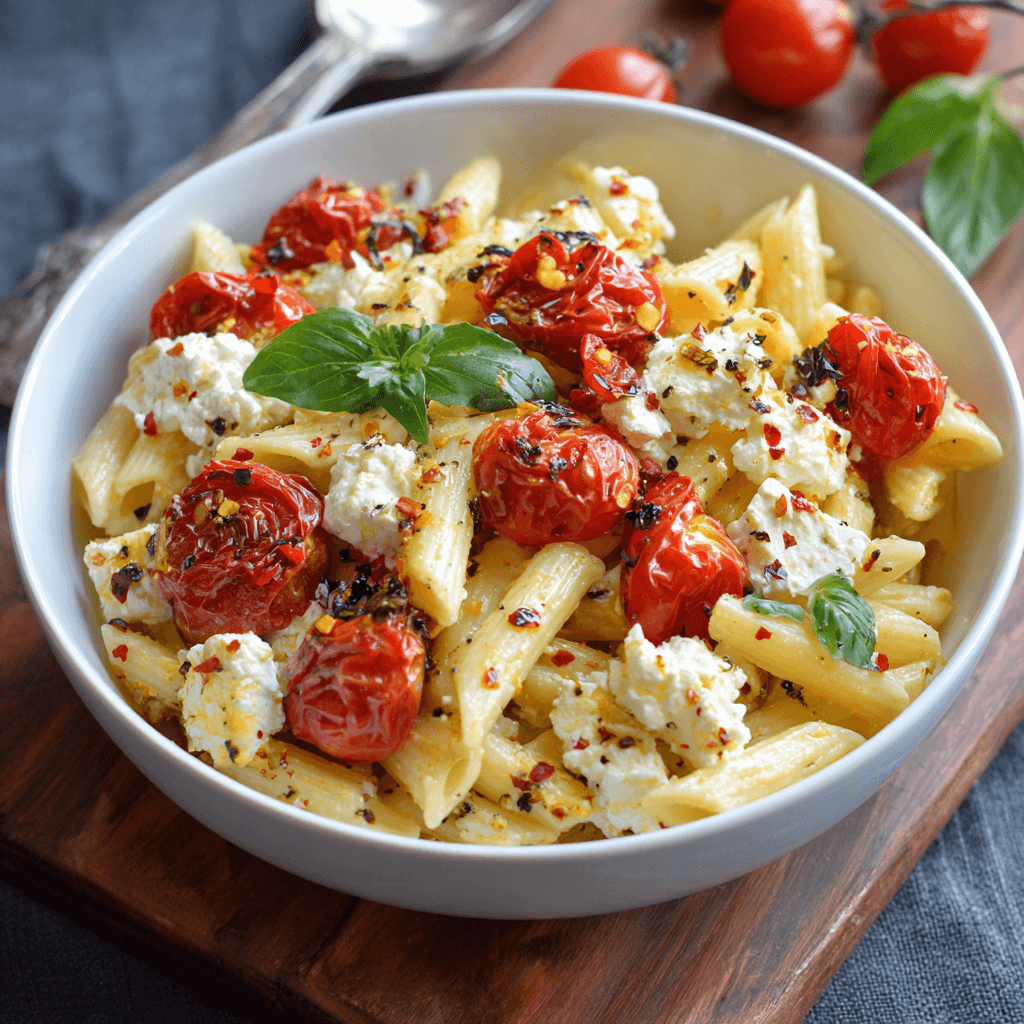
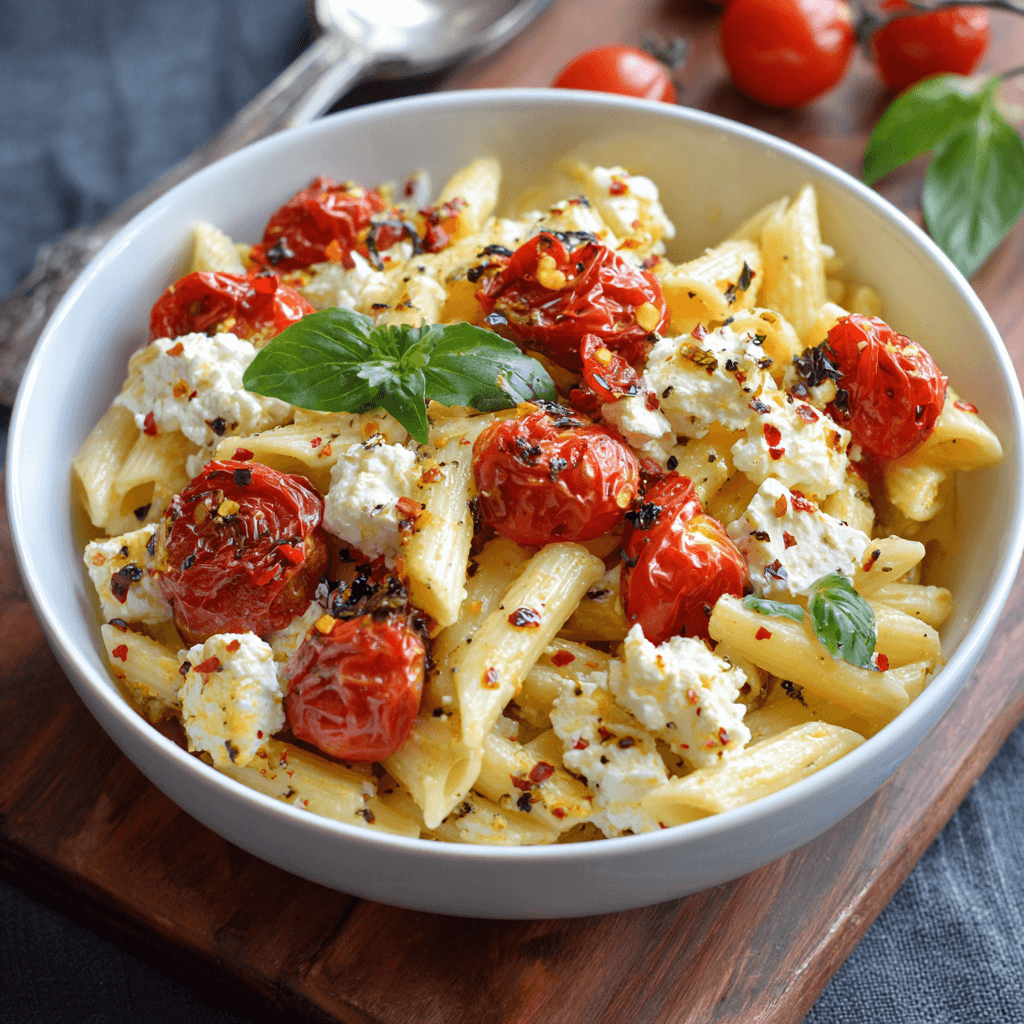
Baked feta pasta is a hands-off, oven-roasted sauce technique where cherry tomatoes blister and concentrate, while a block of feta softens into a creamy, tangy base. Once mashed together and loosened with starchy pasta water, it turns into a glossy, clingy sauce that coats every bite.
Why You’ll Love This Recipe
- Minimal prep, big payoff — The oven does most of the work while you boil pasta.
- Creamy without cream — Warm feta emulsifies with olive oil and tomato juices for a naturally rich sauce.
- Deep roasted tomato flavor — Blistering concentrates sweetness and adds a lightly caramelized edge.
- One-pan sauce — The sauce is made right in the baking dish—less cleanup, more flavor.
- Easily customizable — Add greens, protein, or spice without changing the core method.
- Reliable weeknight comfort — Consistent results with simple timing and pantry seasonings.
Ingredients You’ll Need
- 8 oz pasta (penne, fusilli, or similar) — The shape choice matters: ridges and spirals hold creamy sauce best.
- 1 block (8 oz) feta cheese — Provides tang, salt, and creamy body once baked and mashed.
- 2 cups cherry or grape tomatoes — Burst and release juices that become the sauce’s sweet, acidic backbone.
- 1/4 cup olive oil — Helps the sauce emulsify and carries flavor; also prevents scorching as tomatoes roast.
- 4 cloves garlic, minced — Adds aromatic depth; bakes into mellow, savory sweetness.
- 1 teaspoon dried oregano — Brings a classic Mediterranean herb note that complements feta and tomatoes.
- Salt and pepper, to taste — Enhances tomato sweetness and balances feta’s salinity (salt conservatively at first).
- Fresh basil, to garnish — Adds bright, fresh aroma that lifts the rich sauce.
- Red pepper flakes (optional) — Adds gentle heat and contrast to feta’s tang.
Step-by-Step Instructions
- Preheat the oven — Heat to 400°F (200°C) so tomatoes blister quickly and feta softens without drying out.
- Cook pasta to al dente — Boil in well-salted water until just firm; reserve 1/2 cup pasta water before draining to help emulsify the sauce.
- Assemble the bake — Add tomatoes to a baking dish and place feta in the center so it softens evenly while tomatoes roast around it.
- Season and oil properly — Drizzle olive oil over everything, add garlic, oregano, pepper, and a light touch of salt; toss tomatoes to coat so they roast rather than steam.
- Bake until blistered — Roast 25–30 minutes until tomatoes burst and feta looks soft with light golden spots.
- Mash into a sauce — Use a fork to mash feta and tomatoes together, scraping the dish to incorporate concentrated tomato juices and olive oil.
- Combine with pasta and adjust — Add pasta plus reserved pasta water a little at a time, tossing until the sauce turns creamy and clings to the noodles.
- Finish and serve — Top with torn basil and red pepper flakes; serve immediately while the sauce is glossy and warm.
Recipe Notes & Tips
- Choose the right feta — A full-fat block feta melts creamier than pre-crumbled feta, which is often drier and less smooth.
- Salt carefully — Feta can be very salty; season lightly before baking and adjust after tossing with pasta.
- Use pasta water strategically — Add it gradually; the starch helps emulsify oil + feta into a silky sauce rather than a broken one.
- Prevent garlic scorching — Keep minced garlic nestled in the oil/tomatoes (not piled on the dish edge) so it roasts gently instead of burning.
- Don’t overcook the pasta — Soft pasta plus hot sauce can turn mushy quickly; aim one minute shy of package “done.”
- If the sauce looks oily — Toss vigorously with a splash more pasta water; agitation is what forms the emulsion.
Nutritional Information
- Prep Time: 10 minutes
- Cooking Time: 25–30 minutes
- Total Time: About 40 minutes
- Servings: 4 (as a main) or 6 (as a side)
- Calories: ~430–620 per serving (estimate; varies by pasta shape, olive oil amount, and feta brand)
Perfect Pairings
- Simple arugula salad with lemon — Peppery greens and acidity balance the rich, salty sauce.
- Garlic bread or toasted ciabatta — Ideal for scooping up extra sauce from the dish.
- Roasted broccoli or asparagus — Adds a savory, slightly bitter counterpoint to sweet tomatoes.
- Sparkling water with citrus or a crisp white wine — Refreshing contrast that keeps the meal from feeling heavy.
Ideal Occasions
- Weeknight dinners — Quick prep, predictable cook time, and minimal cleanup.
- Casual hosting — Looks impressive served straight from the baking dish with basil on top.
- Meatless meals — Satisfying vegetarian main that doesn’t feel like a compromise.
- Family-style gatherings — Easy to scale up and keep warm while everyone serves themselves.
Storage & Serving Tips
- Refrigerate leftovers promptly — Store airtight up to 3–4 days; the sauce will thicken as it cools.
- Reheat with moisture — Warm gently on the stove or microwave with a splash of water or milk to loosen the sauce.
- Revive gloss and creaminess — Add a drizzle of olive oil and stir well after reheating to re-emulsify.
- Serve fresh basil last — Add basil after reheating so it stays fragrant and bright.
Creative Variations to Try
- Add greens — Stir in 2–3 cups baby spinach after baking; the residual heat wilts it perfectly.
- Protein boost — Add shredded rotisserie chicken, sautéed shrimp, or chickpeas for a heartier main.
- Lemon-herb finish — Add 1 teaspoon lemon zest and extra basil or parsley for a brighter, fresher profile.
- Spicy roasted version — Add 1–2 teaspoons harissa or increase red pepper flakes for a bolder heat.
Troubleshooting Common Issues
- Sauce is too thick — Add more reserved pasta water (or hot water) a tablespoon at a time and toss until silky.
- Sauce looks separated/oily — Toss more vigorously with a splash of pasta water to re-form the emulsion.
- Tomatoes didn’t burst — They may be larger or your oven runs cool; bake 5–10 minutes longer until blistered and collapsed.
- Dish tastes too salty — Use unsalted pasta water to loosen and dilute, add extra tomatoes, or finish with a squeeze of lemon to balance.
Why This Recipe Works
This method turns a few ingredients into a cohesive sauce by leveraging roasting and emulsion. High heat concentrates tomato sugars and acids as the skins blister and juices reduce, while feta softens and becomes mashable, releasing fat and proteins that help form a creamy base. When you mash everything together, olive oil and tomato juices mix with feta into a rich slurry; the final key is starchy pasta water, which stabilizes the mixture so it clings to noodles instead of separating into oil and solids. Vigorous tossing finishes the emulsion and creates that signature glossy coating. With an estimated ~430–620 calories per serving, it’s a satisfying comfort dish—easily balanced by serving smaller portions with a big salad or extra roasted vegetables.
Final Thoughts
Baked feta pasta is popular for a reason: it’s simple, forgiving, and delivers a creamy, tangy sauce with almost no effort. Nutritionally, it’s moderately rich thanks to feta and olive oil, but you can lighten it by using a bit less oil, adding extra tomatoes and greens, and pairing it with vegetables on the side. Once you master the mash-and-toss technique, it becomes a dependable template you can customize endlessly.