Follow Me On Social Media!

Lemon Meringue Layer Cake – Bright & Cloud-Like.

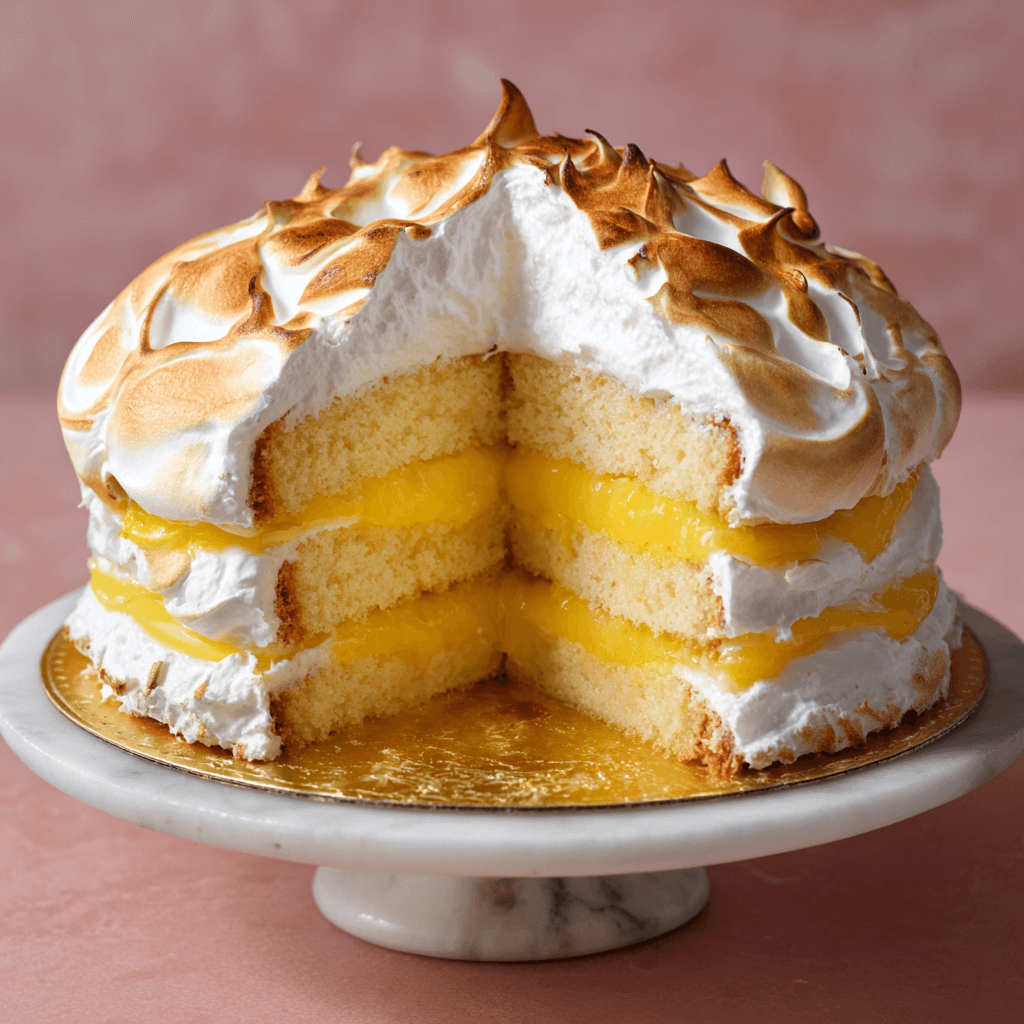
This cake is a celebration of contrast: the sharp, citrusy “zing” of a lemon curd meets the marshmallow-soft sweetness of toasted Italian meringue. To achieve the “Cloud-Like” status, we move away from traditional heavy buttercreams and use an Italian Meringue, which is stable, fat-free, and incredibly light.
The Three Pillars of Texture
A successful Lemon Meringue cake depends on managing moisture so the cake remains fluffy rather than soggy.
| Component | Role | Sensory Experience |
| Chiffon Sponge | The Vessel | Airy, springy, and light as a feather. |
| Lemon Curd | The Soul | Intense, tart, and velvety smooth. |
| Italian Meringue | The Crown | Sweet, glossy, and marshmallowy. |
Ingredients
The Lemon Chiffon Cake
- 2 ¼ cups Cake Flour: (Lower protein ensures a tender crumb).
- 1 ½ cups Granulated Sugar.
- 1 tbsp Baking Powder.
- ½ tsp Salt.
- 5 Large Egg Yolks + 7 Large Egg Whites: (Room temperature).
- ½ cup Neutral Oil: (Provides moisture that lasts longer than butter).
- ¾ cup Fresh Lemon Juice + 2 tbsp Zest.
The Tart Lemon Curd
- 4 Egg Yolks.
- ¾ cup Sugar.
- ½ cup Lemon Juice.
- 4 tbsp Unsalted Butter.
The Toasted Meringue
- 4 Egg Whites.
- 1 cup Sugar + ¼ cup Water.
- ¼ tsp Cream of Tartar.
Instructions
1. The Chiffon Foundation
Preheat oven to 165°C (325°F).
- Whisk the dry ingredients together. Make a well in the center and add the oil, egg yolks, lemon juice, and zest. Whisk until smooth.
- In a separate bowl, beat the 7 egg whites and cream of tartar to stiff, glossy peaks.
- The Fold: Gently fold the whites into the batter in three stages.
- Bake for 45–50 minutes.
The Pro Tip: Cool the cake upside down in the pan (if using a tube pan) or on a wire rack. This prevents the delicate protein structure from collapsing while it cools, keeping it “cloud-like.”
2. The Intense Curd
Whisk yolks, sugar, and lemon juice in a saucepan over medium-low heat.
- Stir constantly until the mixture coats the back of a spoon.
- Remove from heat and whisk in the butter.
- The Chill: Press plastic wrap directly onto the surface and refrigerate. It must be cold and thick before assembly.
3. The Italian Meringue (The Stable Cloud)
This version of meringue is cooked, making it safe to eat and much more stable than French meringue.
- Bring the sugar and water to a boil until it reaches 115°C (240°F) on a candy thermometer.
- Meanwhile, beat egg whites to soft peaks.
- Slowly stream the hot sugar syrup into the whites while whisking on high speed. Continue whisking until the bowl feels cool to the touch and the meringue is stiff and glossy.
4. The Assembly
Place one cake layer down. Pipe a border of meringue around the edge (to act as a dam) and fill the center with a thick layer of lemon curd. Top with the second cake layer.
- Slather the entire cake in the remaining meringue. Use a spatula to create whimsical “swooshes” and peaks.
5. The Torch (The Finish)
Use a kitchen blowtorch to gently toast the edges of the meringue. The caramelization adds a subtle “toasted marshmallow” flavor that balances the tart lemon.
Culinary Tips for Success
- Avoid Over-Mixing: When folding the egg whites into the chiffon batter, go slow. If you lose the air bubbles, you lose the “cloud” texture.
- Grease-Free Zone: When making the meringue, ensure your bowl and whisk are perfectly clean. Even a trace of yolk or oil will prevent the whites from fluffing up.
- The “Zest” Factor: Rub the lemon zest into the sugar with your fingers before starting the cake. This releases the essential oils and permeates the entire cake with citrus aroma.
FAQ
Can I make this ahead of time?
The cake and curd can be made 2 days in advance. However, the meringue should be made and applied on the day of serving for the best texture.
Why is my meringue “weeping”?
“Weeping” (becoming watery) usually happens if the sugar wasn’t fully dissolved or if the cake was refrigerated for too long. Italian meringue is the best at resisting this, but it’s still best served within 6–8 hours.
What if I don’t have a blowtorch?
You can pop the cake under a very hot oven broiler for 30–60 seconds, but watch it constantly! It can go from golden to burnt in a heartbeat.
Would you like me to find a recipe for a “Candied Lemon Peel” garnish to add a professional, jewel-like finish to the top of your cake?