Follow Me On Social Media!

Chocolate Croissants (Pain au Chocolat) – Buttery & Flaky.

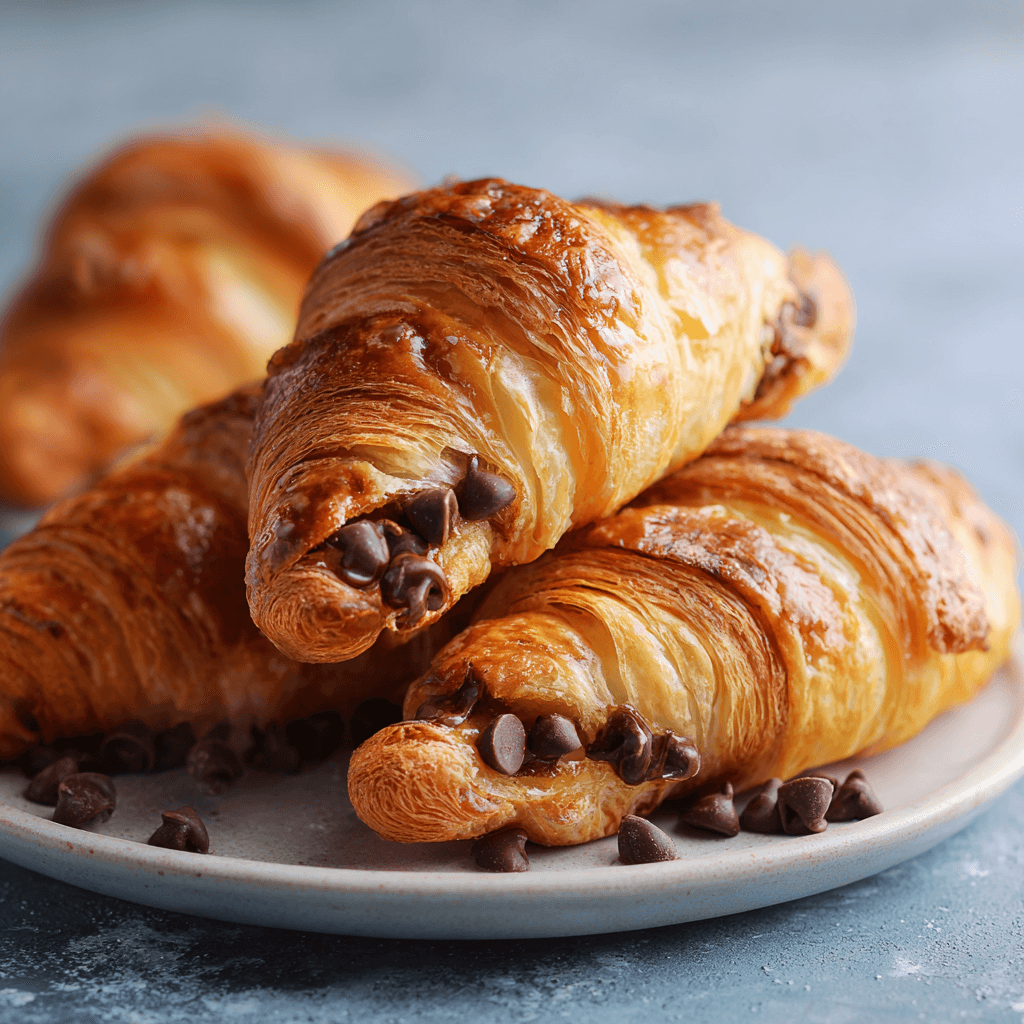
Making authentic Pain au Chocolat at home is widely considered a “culinary rite of passage.” The process relies on lamination—the art of folding a block of butter into dough multiple times to create hundreds of paper-thin layers. When the heat of the oven hits the butter, it creates steam, puffing the layers apart to create that iconic honeycomb interior and shatteringly flaky exterior.
The Anatomy of a Perfect Croissant
A great chocolate croissant isn’t just about the bread; it’s about the architectural balance of fat, flour, and fermentation.
| Feature | Homemade Artisan | Grocery Store / Bulk |
| Butter Type | High-fat (82%+) European style | Standard butter or margarine |
| Texture | Crisp exterior, airy “honeycomb” inside | Soft, bread-like, and dense |
| Aroma | Yeasty and deeply toasted butter | Sweet but one-dimensional |
| Chocolate | Semi-sweet “batons” (high cocoa) | Chocolate chips or syrup |
Ingredients
The Dough (Détrempe)
- 4 cups (500g) Bread Flour: (Higher protein is essential for the structure).
- 1/4 cup Granulated Sugar.
- 2 tsp Salt.
- 1 tbsp Instant Yeast.
- 1 1/4 cups Whole Milk: Cold.
- 4 tbsp Unsalted Butter: Softened.
The Butter Block (Beurrage)
- 1 1/4 cups (280g) High-Quality Unsalted Butter: Cold but pliable.
The Filling & Finish
- 24 Chocolate Batons: (Or high-quality dark chocolate bars cut into strips).
- 1 Egg + 1 tbsp Milk: For the egg wash.
Instructions
1. The Dough Foundation
Mix the flour, sugar, salt, and yeast. Add the cold milk and softened butter. Knead for about 5 minutes until smooth (it should be less elastic than pizza dough).
- The Chill: Wrap the dough in plastic and refrigerate for at least 2 hours (or overnight). Cold dough prevents the butter from melting during the next step.
2. The Butter Block
Place your cold butter between two sheets of parchment paper. Use a rolling pin to pound and roll it into a 7×7 inch square.
- The Goal: The butter needs to be pliable like clay, but still cold. If it snaps, it’s too cold; if it’s greasy, it’s too warm.
3. The Lamination (The “Turns”)
- The Envelop: Roll your dough into an 11×11 inch square. Place the butter block in the center at a 45-degree angle (like a diamond). Fold the corners of the dough over the butter to seal it completely.
- The Fold: Roll the dough into a long rectangle. Fold it like a letter (top third down, bottom third up). This is your first “turn.”
- Repeat: Rotate the dough 90 degrees and repeat the process. Wrap and chill for 30 minutes between every turn. Complete 3 total turns.
4. Shaping the Pain au Chocolat
Roll the final chilled dough into a large rectangle about 1/4 inch thick. Cut into smaller rectangles (roughly 3×6 inches).
- Place a chocolate baton at one end, fold the edge over, place a second baton, and roll it up completely.
5. The Proof (The Final Rise)
Place the croissants on a parchment-lined tray. Let them rise at room temperature (not too warm, or the butter will leak!) for 2 to 2.5 hours.
The Wobble Test: They are ready when they have doubled in size and “jiggle” like Jell-O when you shake the pan gently.
6. The Bake
Preheat oven to 200°C (400°F). Brush the tops gently with egg wash.
- Bake for 15–20 minutes until they are a deep, dark golden brown.
Culinary Tips for Success
- Watch the Temperature: If your kitchen is over 24°C (75°F), the butter will melt into the dough instead of staying in layers. If you see butter leaking on the pan during proofing, move them to a cooler spot immediately.
- The “Windowpane” is Not Needed: Unlike brioche, you don’t want to over-knead the initial dough. You want the lamination process to do the heavy lifting for the structure.
- Use European Butter: Brands like Kerrygold or Plugra have less water and more fat, which makes them much more “plastic” and easier to roll without breaking.
FAQ
Why are my croissants flat?
This usually means they were under-proofed. If they don’t have enough air inside before they hit the oven, they won’t expand correctly. They should look noticeably “puffed” before baking.
Can I use chocolate chips?
You can, but they tend to melt and run. Chocolate batons are designed to hold their shape slightly better under high heat, providing a distinct “core” of chocolate.
Can I freeze them?
Yes! You can freeze them after shaping but before the final proof. To bake, let them thaw and proof in the fridge overnight, then bring to room temperature for 1 hour before baking.
Would you like me to find a recipe for a “15-Minute Shortcut Croissant” using store-bought puff pastry for when you want the flavor without the two-day process?