Follow Me On Social Media!

Lemon & Lime Tart – Bright, Zesty & Refreshing.

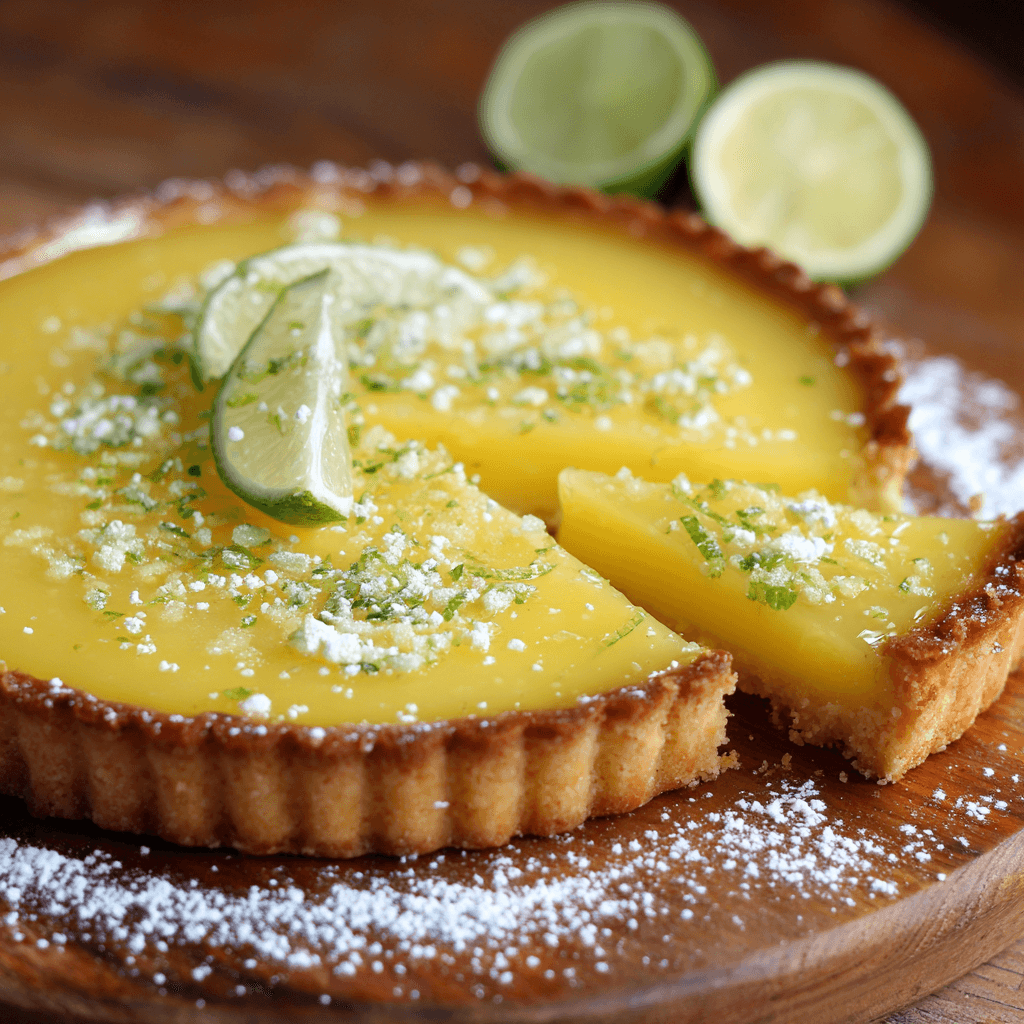
This tart is the ultimate palate cleanser. While a traditional Tarte au Citron relies solely on lemons, the addition of lime introduces a floral, almost tropical complexity that balances the sharp “zing” of the lemon. The result is a vibrant, neon-bright curd encased in a buttery, shortcrust shell.
The Dual-Citrus Profile
Using both fruits creates a more rounded acidic profile than using one alone.
| Component | Flavor Contribution | Culinary Role |
| Lemon | High-pitch acidity; clean “yellow” notes. | Provides the primary structural “bite.” |
| Lime | Floral aroma; deep, slightly bitter “green” notes. | Adds depth and an exotic aromatic finish. |
| Butter | Creamy mouthfeel; dairy sweetness. | Mellows the acid so the tart isn’t overwhelming. |
Ingredients
The Buttery Shortcrust (Pâte Sablée)
- 1 ½ cups All-Purpose Flour.1
- ½ cup Powdered Sugar.
- ½ cup (115g) Cold Unsalted Butter: Cubed.
- 1 Egg Yolk.
- Pinch of Salt.
The Lemon-Lime Curd
- ½ cup Fresh Lemon Juice (approx. 2-3 lemons).
- ¼ cup Fresh Lime Juice (approx. 2-3 limes).
- 1 tbsp Lemon Zest & 1 tbsp Lime Zest.
- ¾ cup Granulated Sugar.
- 3 Large Eggs + 2 Egg Yolks.
- ¾ cup (170g) Unsalted Butter: Cut into small cubes, slightly cool.
Instructions
1. The “Sandy” Crust
In a food processor, pulse the flour, powdered sugar, and salt. Add the cold butter and pulse until it looks like breadcrumbs. Add the egg yolk and pulse until the dough just begins to clump together.
- The Chill: Press the dough into a 9-inch tart pan. Prick the bottom with a fork and freeze for 20 minutes.
- The Bake: Blind bake (with pie weights) at 350°F (175°C) for 15 minutes. Remove weights and bake for another 10 minutes until golden. Let it cool completely.
2. The Citrus Base
In a heatproof bowl set over a pot of simmering water (double boiler), whisk the eggs, yolks, sugar, lemon juice, lime juice, and zest.
- The Stir: Whisk constantly for about 8–10 minutes. The mixture is ready when it thickens enough to coat the back of a spoon (it should reach approximately 170°F or 77°C).
3. The Silky Emulsion
Remove the bowl from the heat. Let it cool for 5 minutes.
- The Secret: Gradually whisk in the cubed butter, one piece at a time, until the curd is glossy and thick.
- The Strain: Pour the curd through a fine-mesh sieve into the cooled tart shell. This removes the zest and any tiny bits of cooked egg, ensuring a professional, mirror-smooth finish.
4. The Final Set
Let the tart sit at room temperature for 30 minutes, then refrigerate for at least 4 hours (overnight is best). The filling will firm up into a sliceable, custardy texture.
Culinary Success Tips
- Fresh is Mandatory: Never use bottled lemon or lime juice for a tart. The bottled versions lack the volatile oils found in fresh zest and fruit, resulting in a “flat” tasting dessert.
- Avoid Aluminum: Always use stainless steel or glass bowls when working with citrus. Aluminum can react with the acid, giving the curd a metallic taste and a dull grayish tint.
- Temperature Control: When adding the butter to the curd, ensure the curd has cooled slightly. If it’s boiling hot, the butter will melt into oil rather than emulsifying into a creamy sauce.
FAQ
Why did my curd not set?
This usually happens if the mixture wasn’t cooked long enough over the double boiler. The egg proteins need enough heat to denature and “trap” the liquid. If it’s still runny after chilling, you can gently scrape it out, reheat it with an extra egg yolk, and try again.
Can I make this as a “No-Bake” version?
You can use a Graham cracker crust, but you must still cook the curd on the stovetop to ensure it thickens.
How do I decorate it?
A simple dusting of powdered sugar or thin wheels of fresh lime look elegant. For a sweeter contrast, top with a Toasted Italian Meringue.
Would you like me to find a recipe for a “Stable Italian Meringue” to pipe on top of this tart for a Lemon-Lime Meringue finish?