Follow Me On Social Media!

Hawaiian Chicken Sheet Pan: Sweet, Savory & Effortless Weeknight Dinner.

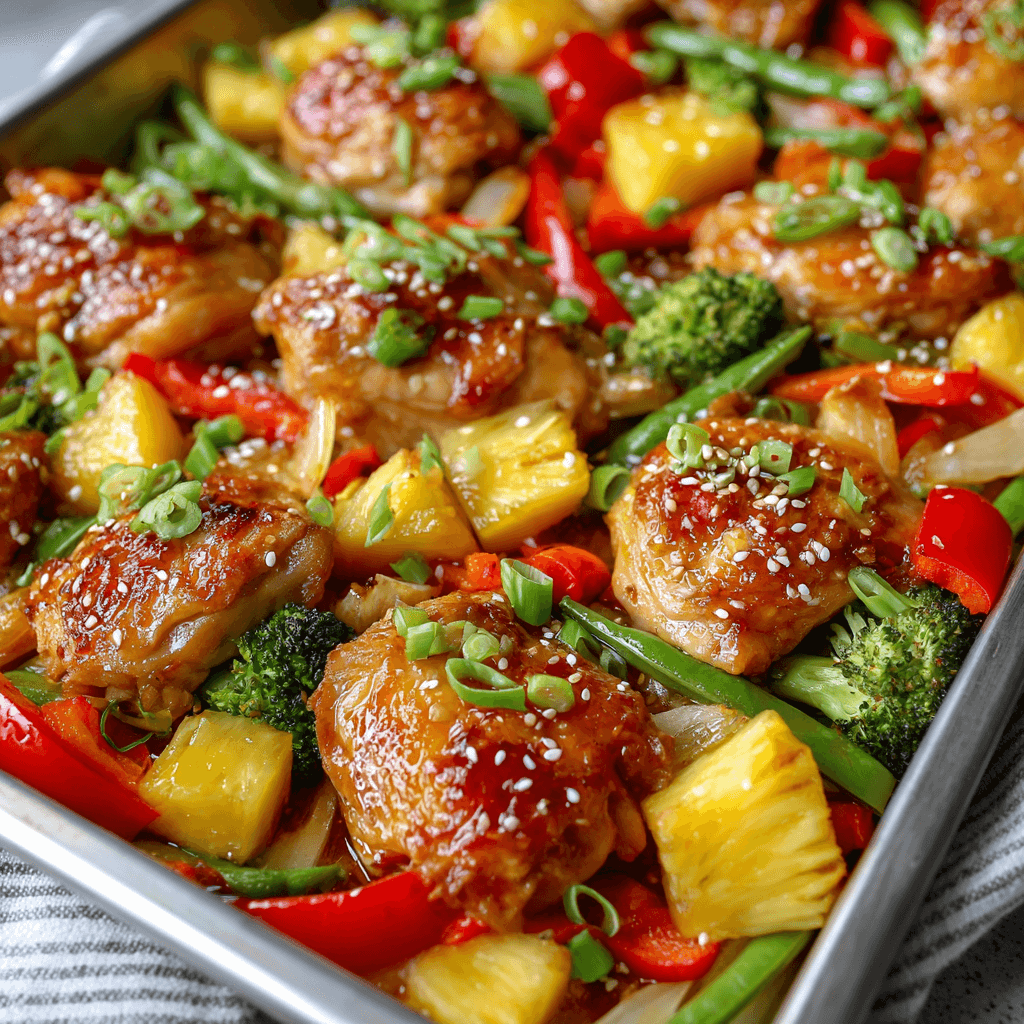
Sheet pan dinners represent the holy grail of weeknight cooking—everything roasts together on one pan, the oven does most of the work, and cleanup takes about thirty seconds. This Hawaiian chicken sheet pan takes that concept and adds the crowd-pleasing flavors of sweet pineapple, savory soy sauce, and tender chicken that caramelizes beautifully in the oven. It’s the kind of dinner that feels special enough for company but easy enough to make on a random Tuesday when you’re too tired to think.
I started making this recipe during a particularly hectic period when I needed dinners that didn’t require much attention or multiple pots and pans. The combination of chicken thighs, fresh pineapple, and bell peppers roasted with a simple teriyaki-style glaze became an instant favorite. The high heat caramelizes the pineapple sugars and creates crispy edges on the chicken while keeping everything juicy inside. The whole thing goes from fridge to table in under an hour, with most of that time being hands-off roasting.
What makes this Hawaiian chicken sheet pan work so well is how the flavors balance each other. The pineapple provides natural sweetness and acidity that tenderizes the chicken while adding those tropical notes. The soy sauce and garlic create savory depth, and the bell peppers add color and a slight bitterness that prevents everything from being too sweet. It’s that perfect sweet-savory combination that keeps you reaching for another bite.
This recipe is endlessly adaptable too—swap vegetables based on what’s in season, adjust the sweetness level, or add heat with red pepper flakes. The basic technique works with whatever you have on hand, making it a true weeknight workhorse that never gets boring.
Ingredients
For the Chicken and Vegetables:
- 2 pounds boneless, skinless chicken thighs (or breasts)
- 1 large fresh pineapple, cut into 1-inch chunks (about 3 cups)
- 2 large bell peppers (red and yellow), cut into 1-inch pieces
- 1 large red onion, cut into wedges
- 2 tablespoons olive oil
- Salt and black pepper to taste
- Sesame seeds for garnish
- Green onions, sliced, for garnish
For the Hawaiian Glaze:
- 1/2 cup soy sauce (or tamari for gluten-free)
- 1/3 cup pineapple juice (from the fresh pineapple or canned)
- 1/4 cup honey
- 2 tablespoons rice vinegar
- 3 cloves garlic, minced
- 1 tablespoon fresh ginger, grated
- 1 teaspoon sesame oil
- 1/4 teaspoon red pepper flakes (optional)
- 1 tablespoon cornstarch mixed with 2 tablespoons water (for thickening)
Optional Add-ins:
- 2 cups snap peas or snow peas (add during last 10 minutes)
- 1 cup cashews or macadamia nuts
- Baby bok choy, halved
- Fresh cilantro for garnish
For Serving:
- Cooked white or brown rice
- Cauliflower rice for low-carb option
- Lime wedges
Instructions
Start by preparing the Hawaiian glaze, which you’ll use both for marinating and as a finishing sauce. In a medium saucepan, combine the soy sauce, pineapple juice, honey, rice vinegar, minced garlic, grated ginger, sesame oil, and red pepper flakes if using. Bring to a simmer over medium heat, stirring occasionally.
Once simmering, whisk in the cornstarch slurry (cornstarch mixed with water). Continue cooking for 2-3 minutes, stirring constantly, until the sauce thickens enough to coat the back of a spoon. It should be glossy and syrupy. Remove from heat and let it cool slightly. Reserve about 1/3 cup of this glaze for serving—set it aside in a small bowl and cover.
Preheat your oven to 425°F and line a large rimmed baking sheet with parchment paper or aluminum foil for easy cleanup. If you have a particularly large amount of ingredients, you might need two sheet pans to avoid overcrowding, which is crucial for proper roasting and caramelization.
Pat the chicken thighs completely dry with paper towels. This is important for getting good color and preventing steaming. Season both sides with salt and pepper. Place the chicken in a large bowl or zip-top bag and pour about half of the cooled glaze over it, tossing to coat every piece. Let it marinate while you prepare the vegetables—even 10 minutes helps, but 30 minutes is better if you have time.
Cut the pineapple into 1-inch chunks, removing the core and tough outer skin. Save any juice that accumulates during cutting—you can add it to the reserved glaze for extra flavor. Cut the bell peppers and red onion into similar-sized pieces so everything cooks evenly.
In a large bowl, toss the pineapple chunks, bell peppers, and onion wedges with the olive oil and a pinch of salt and pepper. Don’t add these to the glaze—they’ll get sauce brushed on during cooking but shouldn’t marinate in it or they’ll become too soggy.
Arrange the marinated chicken thighs on the prepared baking sheet, leaving space between each piece. Scatter the pineapple, peppers, and onions around and between the chicken pieces, spreading everything in a single layer. The vegetables should have room to breathe—overcrowding leads to steaming instead of roasting, which means no caramelization.
Brush the remaining glaze (not the reserved serving portion) over the chicken and vegetables, making sure to get some of that garlicky, gingery goodness on everything.
Roast for 25-30 minutes, until the chicken reaches an internal temperature of 165°F and the vegetables are tender with caramelized edges. About halfway through cooking (around 15 minutes), remove the pan from the oven and give everything a stir or flip. This ensures even cooking and allows all sides to get that beautiful caramelization. Brush with a bit more glaze if you have any remaining.
If adding snap peas or other quick-cooking vegetables, add them during the last 10 minutes of cooking so they stay crisp-tender rather than becoming mushy.
The chicken is done when it’s no longer pink in the center and reaches 165°F on an instant-read thermometer. The vegetables should be tender with slightly charred edges, and the pineapple should be golden and caramelized in spots.
Remove from the oven and let rest for 5 minutes. Drizzle with the reserved glaze, sprinkle with sesame seeds and sliced green onions, and serve immediately over rice or cauliflower rice.
Flavor & Texture Notes
This Hawaiian chicken sheet pan delivers a perfect balance of sweet and savory flavors with satisfying textural contrast. The chicken thighs emerge from the oven with crispy, caramelized edges while remaining incredibly juicy inside. Dark meat chicken is more forgiving than breasts and stays moist even with the high heat required for caramelization.
The pineapple transforms in the oven, becoming sweeter as its natural sugars concentrate and caramelize. The edges turn golden brown with slightly charred spots that add a subtle smokiness. The texture shifts from crisp and juicy to tender and almost jammy in the thickest pieces, while thinner pieces develop more char and concentrated sweetness.
The bell peppers soften and develop sweet, smoky notes as they roast, their natural sugars caramelizing around the edges. The red onions become sweet and tender, losing their sharp bite and developing deep, complex flavor. Together, the vegetables create a colorful, flavorful bed that’s just as appealing as the chicken itself.
The glaze brings everything together with its complex flavor profile. The soy sauce provides umami depth and saltiness, while honey adds sweetness that’s less one-dimensional than plain sugar. Fresh ginger and garlic create aromatic warmth, and the rice vinegar adds brightness that prevents the dish from being cloying. The sesame oil contributes a nutty, toasted note that’s subtle but essential.
The overall experience is satisfying and complete—sweet without being dessert-like, savory enough to feel substantial, and bright enough from the pineapple and vinegar to keep you interested bite after bite.
Tips & Variations
Chicken Options: Boneless, skinless chicken thighs are ideal because they stay moist and develop better flavor than breasts. If using chicken breasts, pound them to even thickness and reduce cooking time by 5 minutes. Bone-in, skin-on thighs work too but need 10-15 extra minutes and provide crispier skin.
Pineapple Prep: Fresh pineapple tastes best and caramelizes beautifully, but canned pineapple chunks (drained well) work in a pinch. Fresh pineapple also contributes enzymes that help tenderize the chicken during marinating. Don’t skip patting canned pineapple very dry or it will steam rather than caramelize.
Heat Level: Add more red pepper flakes or include sliced jalapeños among the vegetables for heat. A drizzle of sriracha in the glaze creates a spicy-sweet profile that’s particularly good. For mild versions, eliminate the pepper flakes entirely and let the sweet-savory balance shine.
Vegetable Variations: Zucchini, mushrooms, cherry tomatoes, or snap peas all work well. Broccoli florets are great but add them halfway through cooking to prevent overcooking. Sweet potatoes cut into small cubes make this more substantial and add another layer of sweetness.
Make It Low-Carb: Serve over cauliflower rice instead of regular rice. Reduce or eliminate the honey in the glaze, using a sugar-free sweetener instead. The pineapple provides natural sweetness, so you can reduce added sugars significantly without losing the Hawaiian flavor profile.
Meal Prep: This recipe doubles easily for meal prep. Cook everything, let cool, and portion into containers with rice. It keeps for 4-5 days in the refrigerator and reheats beautifully. The flavors actually improve after a day as everything marinates together.
Storage & Make-Ahead
The glaze can be made up to 3 days ahead and stored in the refrigerator. This actually makes the recipe even more convenient—you can make the sauce over the weekend and have it ready for a quick weeknight dinner. Bring it to room temperature or warm slightly before using.
The chicken can marinate in half the glaze for up to 24 hours in the refrigerator. Longer marinating develops more flavor and the pineapple juice helps tenderize the meat. Just don’t add the vegetables to the marinade—prepare those fresh on cooking day.
You can prep all the vegetables and store them in a container in the refrigerator up to 24 hours ahead. This cuts your active cooking time to just minutes—arrange everything on the pan, brush with glaze, and roast.
Leftovers keep in the refrigerator for 4-5 days in an airtight container. The flavors continue developing and the dish tastes even better the next day. Reheat in a 350°F oven for 10-12 minutes or in the microwave, though the oven preserves the texture better. The chicken and vegetables can also be eaten cold, chopped up in a salad or wrap.
This sheet pan dinner freezes reasonably well for up to 2 months. Cool completely, portion into freezer-safe containers, and freeze without the rice. Thaw overnight in the refrigerator and reheat gently. The texture of the pineapple and peppers changes slightly after freezing but it’s still tasty.
Serving Suggestions
This Hawaiian chicken sheet pan is substantial enough to be a complete meal when served over rice or cauliflower rice. The rice soaks up all the flavorful glaze and juices, making every bite delicious. White rice is traditional, but brown rice, jasmine rice, or even coconut rice would be excellent.
For a lighter option, serve over mixed greens as a warm salad. The residual heat from the chicken and vegetables wilts the greens slightly, and the glaze doubles as dressing. Add some crunchy wontons or crispy noodles for textural contrast.
Consider adding a simple cucumber salad or Asian-style slaw on the side for cool, crunchy contrast to the warm, sweet main dish. Steamed edamame sprinkled with sea salt makes an excellent protein-rich side.
For serving family-style, bring the whole sheet pan to the table and let everyone help themselves. It’s casual and appealing, and people can choose their favorite ratio of chicken to vegetables to pineapple. Provide lime wedges for squeezing over the top—that fresh citrus really brightens everything.
This dish pairs well with tropical drinks like pineapple juice, coconut water, or even a mai tai for adults. Iced green tea with a squeeze of lime also complements the flavors nicely.
FAQ
Can I use chicken breasts instead of thighs? Yes, but they require more attention. Pound breasts to even thickness so they cook uniformly, and reduce cooking time by about 5 minutes. Check temperature early and often—breasts dry out faster than thighs. Consider cutting breasts into large chunks for more even cooking and better glaze coverage.
My pineapple didn’t caramelize. What went wrong? Overcrowding is the usual culprit. When vegetables are too close together, they steam instead of roasting, preventing caramelization. Make sure everything is in a single layer with space between pieces. Also ensure your oven is fully preheated to 425°F—lower temperatures won’t create the necessary browning. Pat the pineapple dry before roasting to remove excess moisture.
Can I make this on the grill instead? Absolutely. Thread the chicken, pineapple, and vegetables onto skewers for kabobs. Grill over medium-high heat, turning occasionally and basting with glaze, until the chicken reaches 165°F. The smoky char from the grill adds another dimension to the dish.
Is there a substitute for fresh ginger? Ground ginger works in a pinch—use 1 teaspoon instead of 1 tablespoon fresh. The flavor is slightly different, more intense and less fresh, but still good. Fresh ginger is worth seeking out for this recipe as it makes a noticeable difference in the final flavor.
How do I know when the chicken is done without a thermometer? Cut into the thickest part of one thigh—the juices should run clear and the meat should be opaque throughout with no pink remaining. However, an instant-read thermometer is inexpensive and takes the guesswork out of cooking chicken safely. It’s worth having one in your kitchen.
Can I add more vegetables? Yes, but be mindful of cooking times. Dense vegetables like sweet potatoes or carrots should go in at the start. Medium vegetables like peppers and onions go in as directed. Delicate vegetables like snap peas or cherry tomatoes should be added during the last 10 minutes. Don’t overcrowd the pan—use two pans if necessary.
Creating satisfying dinners doesn’t require complicated techniques or endless dishes to wash. This Hawaiian chicken sheet pan proves that simple methods combined with good flavor combinations can produce meals that taste special without feeling like work. The sweet-savory balance, the colorful presentation, and the hands-off cooking make this the kind of recipe that becomes part of your regular rotation—the one you make when you want dinner to feel a little bit like a vacation, even on the busiest weeknights. Load up that sheet pan, let the oven work its magic, and enjoy a meal that delivers tropical flavors with minimal effort and maximum satisfaction.