Follow Me On Social Media!

Lemon Butter Scallops on Parmesan Risotto: Silky, Bright & Elegant.

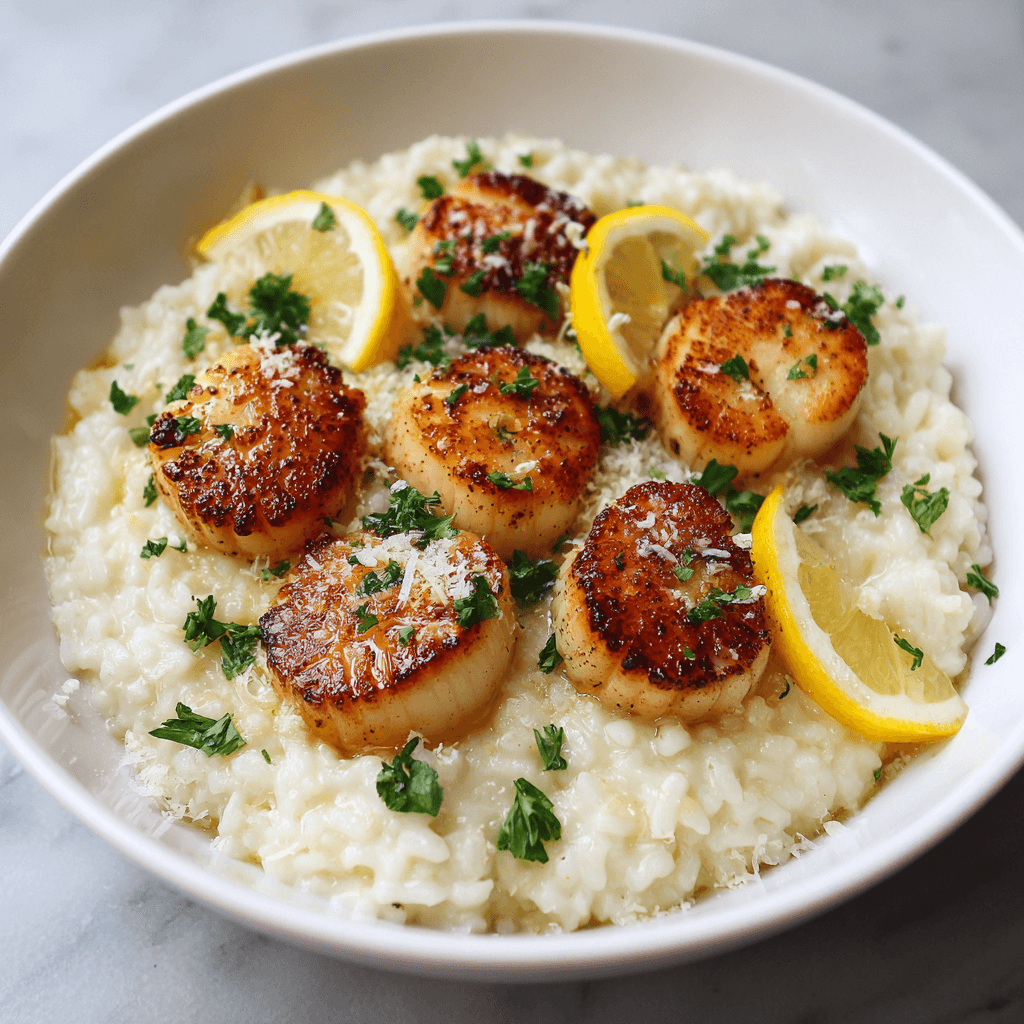
If you are looking to bring the “fine dining” experience into your own kitchen, few dishes achieve that as effortlessly as Lemon Butter Scallops on Parmesan Risotto. This is a masterpiece of textures: the golden-brown, caramelized crust of a perfectly seared scallop sitting atop a bed of creamy, velvet-smooth rice.
The beauty of this dish lies in the balance of richness and acidity. The Parmesan Risotto provides a salty, nutty, and comforting foundation.1 Meanwhile, the Lemon Butter Scallops act as the bright highlight, with the citrus cutting through the butter to keep the palate refreshed.
While risotto has a reputation for being high-maintenance, it is actually a meditative process of “low and slow” stirring that guarantees a luxurious result.2 Paired with scallops—which cook in under five minutes—this meal is the epitome of sophisticated, elegant, and deeply flavorful cooking.
Ingredients
For a dish this simple, the quality of the ingredients is paramount. Seek out “dry-packed” sea scallops for the best sear.
The Parmesan Risotto
- 1 cup Arborio or Carnaroli rice3
- 3–4 cups chicken or vegetable stock (kept warm on the stove)4
- 1/2 cup dry white wine (Pinot Grigio or Sauvignon Blanc)5
- 1 medium shallot, finely minced
- 2 cloves garlic, minced6
- 1/2 cup Parmesan cheese, freshly grated7
- 2 tbsp unsalted butter8
- 1 tbsp olive oil
- Salt and white pepper to taste
The Lemon Butter Scallops
- 1 lb large sea scallops (approx. 10–12)
- 2 tbsp unsalted butter9
- 1 tbsp high-smoke point oil (like grapeseed or avocado oil)
- 1/2 lemon, juiced and zested10
- 1 clove garlic, smashed
- Fresh parsley, finely chopped for garnish11
Instructions: The Secret to the Sear
1. Master the Risotto
- Sauté: In a wide saucepan, heat olive oil and 1 tbsp butter over medium heat. Add shallots and cook until translucent (about 3 minutes). Stir in the garlic for 30 seconds.
- Toast: Add the rice and stir for 2 minutes. You want the edges of the grains to look translucent while the center remains white. This “toasting” helps the rice hold its shape.
- Deglaze: Pour in the white wine. Stir constantly until the liquid is fully absorbed.
- The Slow Simmer: Add the warm stock one ladle at a time. Stir frequently. Wait until the liquid is almost entirely absorbed before adding the next ladle. This process takes about 18–22 minutes.
- Finish: Once the rice is al dente (tender with a slight bite) and the consistency is creamy, remove from heat. Stir in the remaining butter and the Parmesan cheese. Cover and set aside while you cook the scallops.
2. Perfect the Scallops
- Prep (Crucial): Pat the scallops completely dry with paper towels. Remove the small, tough side muscle if it’s still attached. Season with salt and pepper just before cooking.
- Sear: Heat oil in a heavy skillet (cast iron is best) over high heat until it just begins to smoke.
- The 2-Minute Rule: Place scallops in the pan, ensuring they don’t touch. Do not move them for 2 minutes. You are looking for a deep, golden-brown crust.
- Flip & Baste: Flip the scallops. Add the butter, smashed garlic, and lemon juice to the pan. Use a spoon to baste the scallops with the foaming lemon butter for 1 more minute.
- Remove: Take the scallops off the heat immediately to prevent them from becoming rubbery.
Flavor & Texture Notes
| Element | Texture | Flavor Profile |
| Scallops | Succulent & “Melt-in-your-mouth” | Sweet, Briny, Buttery |
| Risotto | Silky, Creamy, Al Dente | Savory, Nutty, Salty |
| Lemon Butter | Liquid Gold | Bright, Zesty, Aromatic |
Tips & Variations
Tip 1: The “Dry” Scallop Secret
Avoid “wet-packed” scallops, which are treated with preservatives that cause them to release water in the pan.12 You want “dry-packed” scallops; otherwise, they will steam instead of sear, and you won’t get that iconic golden crust.
Tip 2: Warm Stock is Mandatory
Never add cold stock to your risotto. Cold liquid shocks the grain and stops the cooking process, which results in a grain that is mushy on the outside but hard on the inside.
Peer Insight: If your risotto gets too thick while you are finishing the scallops, simply stir in one more splash of warm stock right before serving to restore that “flowy” consistency.
Variation: Asparagus & Pea Risotto
For a spring-inspired twist, stir in blanched asparagus tips and frozen peas during the last 5 minutes of the risotto’s cooking time. The green vegetables add a beautiful color and a fresh “snap” to the richness.
Serving & Presentation
- Plating: Spoon a generous circle of risotto into a shallow bowl. Place 3 scallops on top in a triangular pattern.
- Garnish: Drizzle the remaining lemon butter from the scallop pan over the top. Finish with a shower of fresh parsley and a micro-plane of lemon zest.
- Wine Pairing: Serve with the same dry white wine used in the risotto. A crisp Chardonnay or a Vermentino works beautifully.
FAQ
Q: Can I use regular long-grain rice for risotto?
A: No. Risotto requires short-grain rice like Arborio because it has a high starch content.13 This starch is what creates the creamy sauce as you stir; long-grain rice will remain separate and dry.
Q: How do I know when the scallops are done?
A: They should feel firm to the touch but still have a slight “spring.” If they feel hard, they are overcooked. If they look translucent in the center of the side, they are perfect.
Q: Can I make the risotto ahead of time?
A: Risotto is best served immediately. However, you can “par-cook” it by doing the first 10 minutes of stock-adding, then spreading it on a tray to cool. Finish the remaining 10 minutes just before dinner.