Follow Me On Social Media!

Crab & Shrimp Stuffed Salmon: The Elegant Seafood Dinner That’s Easier Than It Looks.

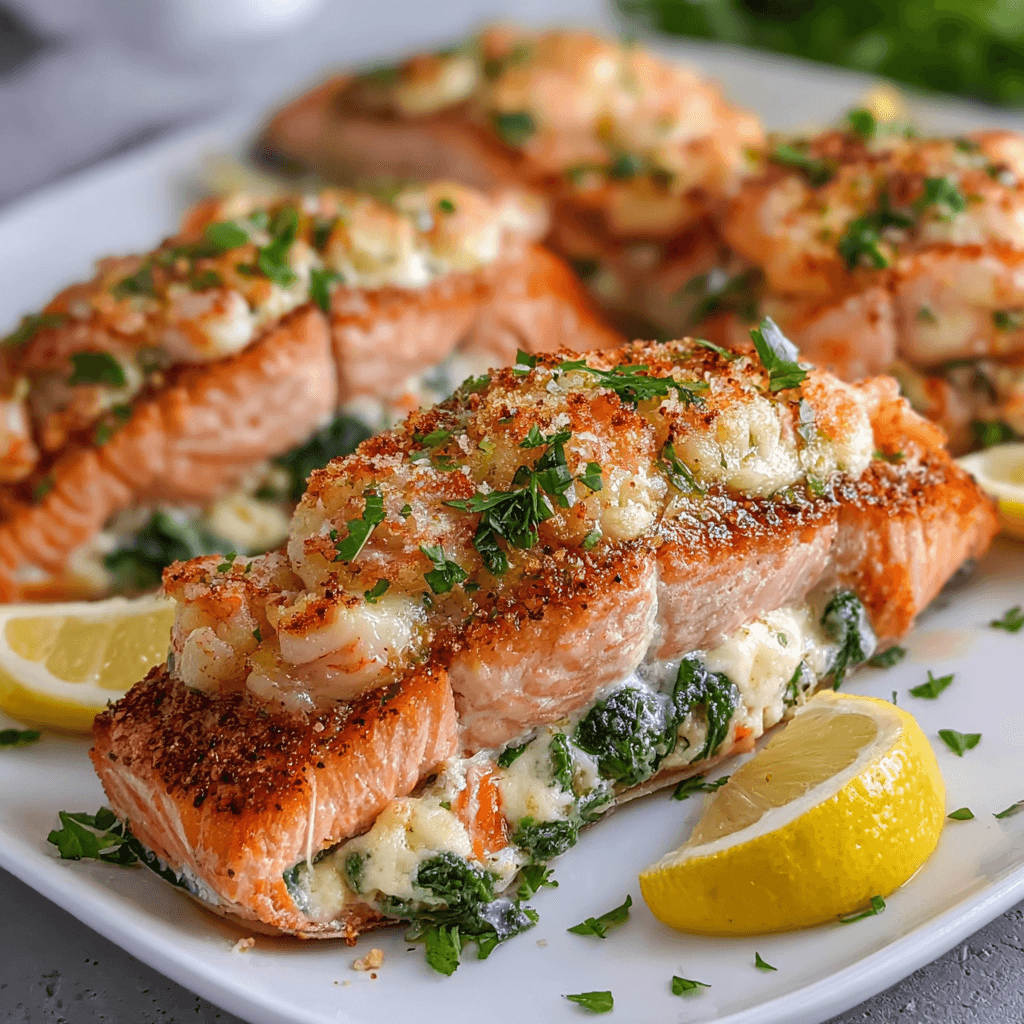
There’s a special category of recipes that look like they require culinary school training but actually come together with basic techniques and a little confidence. This crab and shrimp stuffed salmon belongs firmly in that category. The presentation is restaurant-worthy—thick salmon fillets butterflied and filled with a creamy seafood stuffing, baked until the fish flakes perfectly and the filling is golden on top. Yet the actual preparation is straightforward enough for a weeknight if you’re feeling ambitious, or perfect for those times when you want to impress without spending all day in the kitchen.
I developed this recipe after ordering something similar at a coastal restaurant and thinking “I could make that at home.” The combination of rich salmon with delicate crab and shrimp creates layers of seafood flavor without any one element overwhelming the others. The cream cheese-based filling binds everything together and adds richness, while breadcrumbs provide texture and help the stuffing hold its shape. A squeeze of lemon at the end brings everything into focus with bright acidity.
What makes this stuffed salmon special is how it transforms simple ingredients into something that feels luxurious. Salmon is already a special-occasion fish for many people, and stuffing it with more seafood takes it to another level entirely. The technique of butterflying the salmon creates a pocket that holds the stuffing securely while allowing the fish to cook evenly.
This seafood stuffed salmon works beautifully for date nights, dinner parties, holiday meals, or any time you want dinner to feel like an event. Pair it with simple sides and let the salmon be the star it deserves to be.
Ingredients
For the Stuffed Salmon:
- 4 salmon fillets (6-8 ounces each), skin removed, about 1.5 inches thick
- 8 ounces lump crab meat, picked over for shells
- 8 ounces small shrimp, peeled, deveined, and roughly chopped
- 4 ounces cream cheese, softened to room temperature
- 1/4 cup mayonnaise
- 1/2 cup panko breadcrumbs, divided
- 1/4 cup grated Parmesan cheese
- 2 tablespoons fresh parsley, finely chopped
- 1 tablespoon fresh dill, finely chopped (or 1 teaspoon dried)
- 2 cloves garlic, minced
- 1 tablespoon lemon juice
- 1 teaspoon Old Bay seasoning
- 1/2 teaspoon smoked paprika
- Salt and freshly ground black pepper to taste
For Topping & Finishing:
- 2 tablespoons melted butter
- 1/4 cup panko breadcrumbs
- 2 tablespoons fresh parsley, chopped
- Lemon wedges for serving
- Optional: hollandaise sauce or garlic butter for serving
Instructions
Start by preparing your salmon fillets, which is the only slightly tricky part of this recipe. Pat each fillet completely dry with paper towels—moisture prevents good searing and browning. Using a sharp knife, carefully cut each fillet horizontally almost all the way through, stopping about 1/2 inch from the opposite edge. Open the fillet like a book to create a pocket. The thicker your fillets, the easier this is to do without cutting all the way through.
Season the inside of each butterflied fillet with salt, pepper, and a light sprinkle of Old Bay seasoning. This ensures flavor throughout the fish, not just on the surface. Place the prepared fillets in a large baking dish or on a baking sheet lined with parchment paper, opened flat.
Preheat your oven to 375°F while you prepare the stuffing. In a medium bowl, combine the softened cream cheese and mayonnaise, mixing until smooth and creamy. The cream cheese should be soft enough to blend easily—if it’s too cold, microwave it for 10 seconds to soften.
Add the crab meat to the cream cheese mixture, being gentle so you don’t break up the lumps too much. Lump crab is prized for its texture, and you want to maintain those nice pieces. Fold in the chopped shrimp, 1/4 cup of the panko breadcrumbs, Parmesan cheese, parsley, dill, minced garlic, lemon juice, Old Bay, and smoked paprika. Mix gently until everything is evenly distributed. Taste the mixture and adjust seasoning—it should be well-seasoned since it will be stuffed inside the salmon.
Divide the seafood stuffing evenly among the four salmon fillets, mounding it in the center of each opened fillet. You’ll have roughly 1/2 to 3/4 cup of stuffing per fillet. Don’t overstuff—the filling should be generous but not spilling out. Fold the top half of each fillet back over the stuffing to close it, creating a stuffed packet. The salmon should mostly enclose the filling.
In a small bowl, mix the remaining 1/4 cup panko breadcrumbs with the melted butter until the breadcrumbs are evenly coated. This will create a golden, crispy topping. Sprinkle this mixture over the top of each stuffed salmon fillet, pressing gently to help it adhere.
Bake for 25-30 minutes, depending on the thickness of your fillets. The salmon should be opaque and flake easily with a fork, and an instant-read thermometer inserted into the thickest part should read 145°F. The stuffing should be hot throughout and the breadcrumb topping should be golden brown. If the topping isn’t as golden as you’d like but the salmon is cooked through, run the dish under the broiler for 1-2 minutes, watching carefully to prevent burning.
Let the salmon rest for 3-5 minutes before serving. This allows the juices to redistribute and makes the fish easier to transfer to plates without falling apart. Garnish with fresh parsley and serve with lemon wedges for squeezing over the top.
Flavor & Texture Notes
This crab and shrimp stuffed salmon delivers a luxurious seafood experience with multiple layers of flavor and texture. The salmon itself remains moist and flaky with that rich, almost buttery quality that makes salmon so popular. Proper cooking ensures the fish is tender and just barely cooked through, not dry or overdone.
The stuffing provides contrast in both flavor and texture. The crab meat is sweet and delicate with a firm, meaty texture that holds up well during baking. The chopped shrimp add additional seafood sweetness and a slight chewiness that complements the tender crab. The cream cheese and mayonnaise create a creamy binding that’s rich without being heavy, while the Parmesan adds a subtle nutty, salty note.
The panko breadcrumbs throughout the stuffing provide textural contrast, preventing it from being too soft or mushy. They absorb some of the moisture from the seafood and cream cheese while maintaining a pleasant bite. The breadcrumb topping adds another dimension—crispy and golden with concentrated butter flavor that contrasts beautifully with the tender fish and creamy filling.
Fresh herbs and lemon juice keep the dish from feeling heavy despite its richness. The dill provides a bright, slightly anise-like quality that pairs classically with seafood, while parsley adds freshness. The Old Bay seasoning brings that distinctive Mid-Atlantic seafood flavor—a blend of celery salt, bay leaf, and spices that enhances without overwhelming.
The overall experience is indulgent and satisfying, with each bite offering tender salmon, creamy stuffing, and crispy topping in varying proportions.
Tips & Variations
Salmon Selection: Choose thick fillets (at least 1.5 inches) that are fresh and firm. Thinner fillets are harder to butterfly and stuff successfully. Wild-caught salmon has better flavor but farmed salmon works fine and is more affordable. Look for center-cut pieces for the most uniform cooking.
Seafood Substitutions: Use all crab or all shrimp if you prefer. Lobster meat makes a luxurious upgrade. For a budget-friendly version, use imitation crab (which is actually pollock) mixed with real shrimp—it won’t be quite as refined but still tastes good.
Herb Variations: Fresh tarragon is wonderful with seafood and can replace or supplement the dill. Chives add a mild onion flavor. Basil creates a more Italian profile. Cilantro and lime instead of parsley and lemon creates a more Latin-inspired version.
Make It Lighter: Use light cream cheese and replace mayonnaise with Greek yogurt. The filling won’t be quite as rich but will still be creamy. You can also use less stuffing per fillet for a more subtle version.
Spice It Up: Add diced jalapeños or a pinch of cayenne to the stuffing for heat. Red pepper flakes sprinkled over the top before baking adds visible spice and flavor.
Without Butterflying: If you’re nervous about butterflying the salmon, you can make this as a topped salmon instead. Season the fillets, place them in a baking dish, and mound the stuffing on top of each fillet instead of inside. The presentation is different but still impressive, and the cooking method remains the same.
Storage & Make-Ahead
The stuffing can be made up to 24 hours ahead and stored in an airtight container in the refrigerator. This actually makes assembly easier since the cold stuffing is firmer and easier to handle. Bring it to room temperature for 20 minutes before stuffing the salmon so it doesn’t cool the fish too much during baking.
The salmon can be butterflied, stuffed, and assembled up to 4 hours before baking. Cover tightly with plastic wrap and refrigerate. Add the breadcrumb topping just before baking. If baking straight from the refrigerator, add 3-5 minutes to the cooking time.
Leftover cooked stuffed salmon keeps in the refrigerator for up to 2 days. Store in an airtight container and reheat gently in a 325°F oven for 10-12 minutes until warmed through. The microwave works but can make the salmon rubbery—if using it, heat on 50% power in short intervals.
This dish doesn’t freeze well after cooking due to the cream cheese in the stuffing, which can become grainy when thawed. However, you can freeze the uncooked, stuffed salmon for up to 1 month. Thaw overnight in the refrigerator before baking, then bake as directed.
Serving Suggestions
This crab and shrimp stuffed salmon is elegant enough to be the star of your plate, so keep sides simple and let the fish shine. Roasted asparagus or green beans provide color and a slight bitter note that balances the richness. Garlic mashed potatoes or rice pilaf make excellent bases for soaking up any juices.
A simple arugula salad with lemon vinaigrette adds freshness and cuts through the richness. Roasted baby potatoes with herbs are another excellent side that feels special without competing with the salmon.
For sauces, a drizzle of hollandaise creates an ultra-luxurious presentation, though the salmon is rich enough that it doesn’t strictly need sauce. Garlic butter or a simple lemon-butter sauce works beautifully. Some people prefer just a good squeeze of fresh lemon, which brightens all the flavors without adding heaviness.
Serve this on warmed plates to keep the salmon at optimal temperature. A sprinkle of flaky sea salt and fresh herbs right before serving adds visual appeal and a final hit of seasoning. Lemon wedges are essential—that bright citrus really makes the seafood flavors pop.
This dish pairs beautifully with crisp white wines like Chardonnay, Sauvignon Blanc, or Pinot Grigio. The richness can also stand up to a light red like Pinot Noir. For non-alcoholic options, sparkling water with lemon or a crisp iced tea complements the seafood nicely.
FAQ
How do I butterfly salmon without cutting all the way through? Use a sharp knife and work slowly. Keep your non-cutting hand flat on top of the fillet to steady it. Cut parallel to your cutting board, feeling for when you’re getting close to the opposite edge. If you do accidentally cut all the way through, don’t worry—you can still stuff the salmon and secure it with toothpicks or tie it with kitchen twine.
Can I use frozen seafood for the stuffing? Yes, but make sure to thaw it completely and pat it very dry. Frozen seafood releases more moisture during cooking, which can make the stuffing watery. Squeeze out excess moisture from thawed seafood before mixing into the filling. Fresh seafood provides better texture and flavor but frozen works in a pinch.
My salmon released a lot of white stuff while cooking. What is that? That white substance is albumin, a protein that coagulates when salmon cooks. It’s harmless and actually indicates fresh fish, but too much means the salmon cooked too quickly or at too high a temperature. Bring the fish to room temperature before baking and don’t exceed 375°F. You can also brine the salmon briefly in salt water (30 minutes) before cooking to minimize albumin.
How do I know when the salmon is done without a thermometer? The salmon should be opaque throughout and flake easily when gently pressed with a fork. The center should still be slightly translucent for perfectly cooked salmon—it will continue cooking slightly from residual heat. If you prefer your salmon more well-done, cook until completely opaque throughout. The stuffing should be hot to the touch.
Can I make this with salmon that still has skin on? You can, but it’s more difficult to butterfly and the skin doesn’t add much to this preparation. If using skin-on salmon, butterfly it so the skin is on the outside, then fold it over the stuffing. The skin will crisp slightly during baking, which some people enjoy, but it can also make the salmon harder to eat elegantly.
What if my stuffing is falling out during baking? Secure the salmon with toothpicks inserted at an angle through both layers of fish to hold it closed. You can also use kitchen twine to tie the salmon closed at intervals. Remove toothpicks or twine before serving. Alternatively, place the stuffed salmon seam-side down in the baking dish so gravity helps keep everything contained.
Creating restaurant-quality seafood at home is one of those cooking achievements that feels particularly satisfying. This crab and shrimp stuffed salmon proves that impressive doesn’t always mean complicated—it’s about good ingredients treated well and presented thoughtfully. The combination of three different types of seafood creates layers of flavor that feel luxurious and special, perfect for those times when you want dinner to be memorable. Whether it’s a celebration, a special date night, or just because you deserve something good, this stuffed salmon delivers the kind of meal that makes people feel valued and cared for. And isn’t that what the best cooking is really about?