Follow Me On Social Media!

Tiramisu Yule Log: A Holiday Twist on Classic Italian Dessert.


When I first thought about combining tiramisu with a traditional Yule log, I worried it might be one of those ideas that sounds better in theory than in practice. But after testing this recipe through three holiday seasons, I can confidently say this tiramisu yule log has become the dessert people request by name. It takes the coffee-soaked, mascarpone-rich flavors of tiramisu and presents them in the elegant, rolled form of a classic bûche de Noël.
The genius of this combination lies in how well the components work together. The light, espresso-infused sponge cake stays moist without becoming soggy, while the mascarpone filling provides that signature tiramisu creaminess. A dusting of cocoa powder creates the bark-like appearance of a traditional yule log, and the whole thing looks impressive enough for your fanciest holiday gathering.
What makes this tiramisu yule log particularly special is that it’s less intimidating than it appears. Yes, rolling a cake takes a bit of courage the first time, but the technique is straightforward once you understand the basics. The components can be prepared in stages, which means you’re not stuck in the kitchen for hours on the day you plan to serve it.
This dessert bridges the gap between Italian tradition and French holiday baking, creating something that feels both familiar and special. Whether you’re looking to shake up your holiday dessert lineup or simply love the idea of tiramisu in cake form, this recipe delivers on both presentation and flavor.
Ingredients
For the Coffee Sponge Cake:
- 4 large eggs, separated, at room temperature
- 3/4 cup granulated sugar, divided
- 1 teaspoon vanilla extract
- 3/4 cup all-purpose flour
- 2 tablespoons instant espresso powder
- 1/4 teaspoon salt
- Powdered sugar for rolling
For the Espresso Soak:
- 1/2 cup strong brewed espresso or coffee, cooled
- 2 tablespoons coffee liqueur (Kahlúa) or additional espresso
- 1 tablespoon granulated sugar
For the Mascarpone Filling:
- 8 ounces mascarpone cheese, at room temperature
- 1 cup heavy cream, cold
- 1/3 cup powdered sugar
- 1 teaspoon vanilla extract
- 2 tablespoons coffee liqueur (optional)
For Assembly:
- 2 tablespoons unsweetened cocoa powder
- Dark chocolate shavings (optional)
- Whole coffee beans for decoration (optional)
Instructions
Start by preparing your pan, which is crucial for success with rolled cakes. Line a 15×10-inch jelly roll pan with parchment paper, letting it extend slightly over the edges for easy removal. Lightly grease the parchment with butter or cooking spray. Preheat your oven to 350°F with the rack positioned in the center.
For the sponge cake, begin by separating your eggs while they’re cold, then let them come to room temperature for about 30 minutes. Room temperature eggs whip to greater volume. In a large bowl, beat the egg yolks with 1/2 cup of the sugar using an electric mixer on high speed for about 3 minutes, until the mixture becomes pale yellow and thick enough to form ribbons when you lift the beaters. Beat in the vanilla extract.
In a separate bowl, sift together the flour, espresso powder, and salt. Gently fold this dry mixture into the egg yolk mixture using a rubber spatula. The batter will be very thick at this point—don’t worry, that’s exactly right.
In a clean bowl with clean beaters (this is important—any trace of fat will prevent proper whipping), beat the egg whites on medium speed until foamy. Gradually add the remaining 1/4 cup sugar, one tablespoon at a time, increasing speed to high. Beat until the whites form stiff, glossy peaks that stand upright when you lift the beaters.
Fold about one-third of the egg whites into the espresso batter to lighten it, then gently fold in the remaining whites in two additions. The goal is to maintain as much air as possible while fully incorporating the whites. Use broad, sweeping motions and rotate the bowl as you fold.
Pour the batter into the prepared pan and spread it evenly into the corners with an offset spatula. The layer will be thin—that’s correct for a rolled cake. Bake for 12-15 minutes, until the cake springs back when lightly touched and the edges just begin to pull away from the pan.
While the cake bakes, lay out a clean kitchen towel and dust it generously with powdered sugar. As soon as the cake comes out of the oven, run a knife around the edges to loosen it. Immediately invert the hot cake onto the powdered sugar-dusted towel. Carefully peel off the parchment paper. Starting from a short end, roll the cake up in the towel while it’s still hot. This step is crucial—rolling while warm prevents cracking later. Let the rolled cake cool completely on a wire rack, about 30 minutes.
While the cake cools, prepare the espresso soak by combining the cooled espresso, coffee liqueur, and sugar. Stir until the sugar dissolves completely. Set aside.
For the mascarpone filling, make sure your mascarpone is at room temperature to prevent lumps. In a large bowl, beat the mascarpone with an electric mixer on medium speed for about 30 seconds just to loosen it. Add the powdered sugar, vanilla, and coffee liqueur if using. Beat on low speed until just combined and smooth.
In a separate bowl, beat the cold heavy cream until stiff peaks form. Gently fold the whipped cream into the mascarpone mixture in two or three additions. The filling should be light, fluffy, and spreadable. Refrigerate until ready to use, but not longer than 30 minutes or it may become too stiff.
When the cake has cooled completely, carefully unroll it on a clean work surface. The cake will want to maintain its rolled shape—this is perfect. Using a pastry brush, generously brush the espresso soak over the entire surface of the cake, allowing it to soak in for a minute.
Spread the mascarpone filling evenly over the cake, leaving a 1-inch border on the far short end. This border helps prevent filling from squeezing out when you roll. Using the towel to help you, roll the cake up from the short end closest to you, rolling away from yourself. Don’t worry if a few small cracks appear—they’ll be hidden by the cocoa powder.
Transfer the rolled cake to a serving platter seam-side down. If desired, cut a diagonal slice from one end and attach it to the side of the log with a bit of filling to create a “branch” effect. Cover the log with plastic wrap and refrigerate for at least 2 hours, or up to 24 hours. This rest time allows the flavors to meld and the cake to firm up for easier slicing.
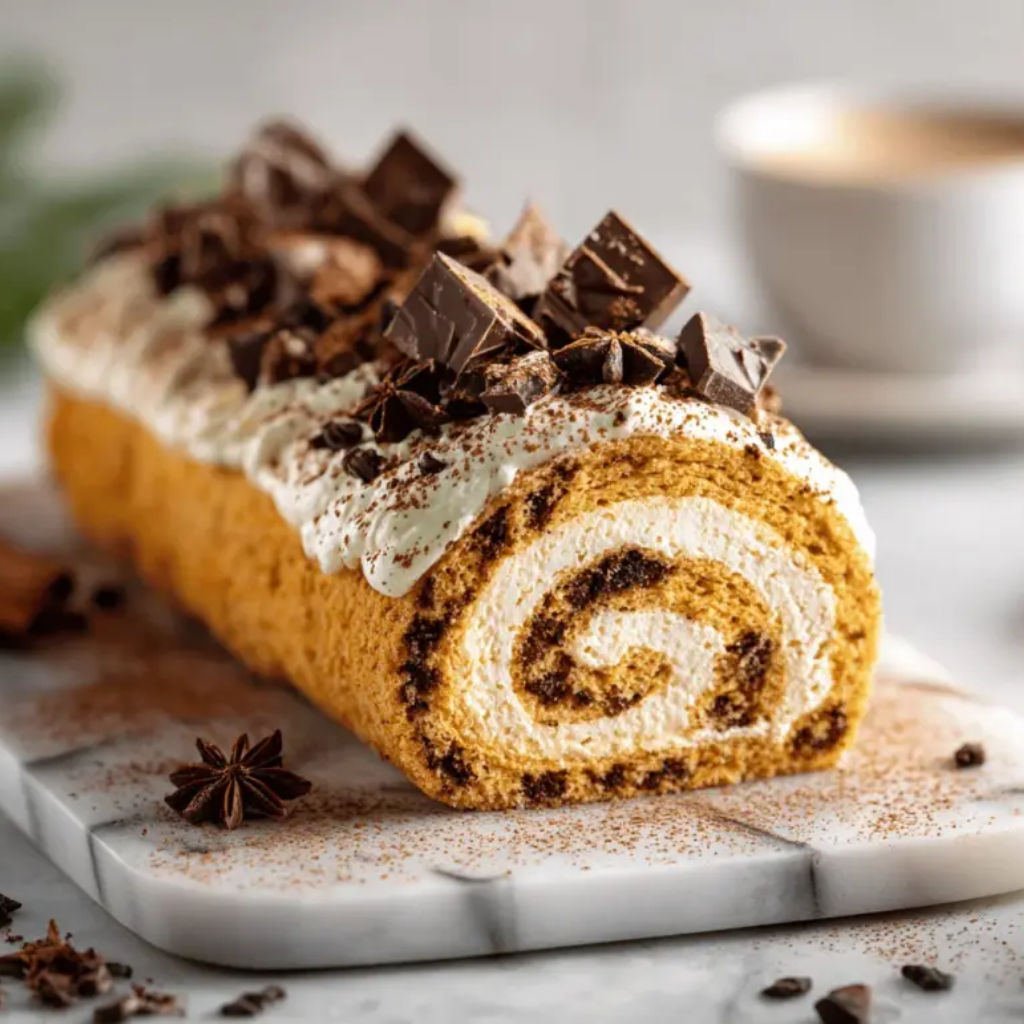
Just before serving, dust the entire log generously with cocoa powder using a fine-mesh sieve. For a more textured bark appearance, use a fork to create lines along the length of the log through the cocoa. Decorate with chocolate shavings and coffee beans if desired.
Flavor & Texture Notes
This tiramisu yule log delivers all the flavors you love about classic tiramisu in a format that’s easier to serve at a party. The coffee sponge cake is light and airy with a pronounced espresso flavor that isn’t bitter—just rich and aromatic. The espresso soak adds moisture without making the cake soggy, while intensifying the coffee notes that make tiramisu so recognizable.
The mascarpone filling strikes the perfect balance between rich and light. It’s creamy and slightly tangy from the mascarpone, with a subtle sweetness that doesn’t overpower the coffee flavors. The whipped cream folded into the mascarpone creates an almost mousse-like texture that melts on your tongue.
Each slice reveals a beautiful spiral of pale sponge and ivory filling, with the dark cocoa powder coating providing visual contrast. The texture is soft and yielding without being mushy—you get a tender cake that holds together well on the fork.
The cocoa powder dusting adds a subtle chocolate flavor and a slightly dry texture that contrasts nicely with the creamy filling. It also provides that characteristic tiramisu bitterness that balances the sweetness. The overall effect is elegant and surprisingly light for such a rich-looking dessert.
Tips & Variations
Rolling Without Cracking: The key to a crack-free roll is working with a warm cake. Roll it while it’s hot from the oven, let it cool completely while rolled, then unroll gently to fill. If small cracks do appear, don’t panic—the cocoa powder coating is forgiving and hides minor imperfections.
Make It Boozy: For a more adult version, increase the coffee liqueur in both the soak and the filling. You can also brush additional liqueur over the finished log before dusting with cocoa. Marsala wine, traditionally used in tiramisu, also works beautifully here.
Chocolate Variation: Add 2 tablespoons of cocoa powder to the cake batter along with the espresso powder for a chocolate-coffee flavor. You can also fold mini chocolate chips into the filling for added texture.
Alcohol-Free Version: Replace the coffee liqueur with additional espresso or strong coffee mixed with 1/2 teaspoon vanilla extract. The flavor will be slightly less complex but still excellent.
Stabilizing the Filling: If you’re making this in a warm kitchen or need it to hold up for several hours, add 1 teaspoon of unflavored gelatin bloomed in 1 tablespoon of water to the mascarpone before folding in the whipped cream. This helps prevent the filling from becoming too soft.
Size Adjustments: This recipe makes one standard-sized yule log that serves 8-10 people. For a larger gathering, make two logs rather than trying to double the recipe in one pan—rolled cakes are easier to manage at this size.
Storage & Make-Ahead
This tiramisu yule log is actually better when made a day ahead, which makes it perfect for holiday entertaining when you’re juggling multiple dishes. The resting time allows the espresso soak to fully penetrate the cake and the flavors to meld together beautifully.
The rolled and filled log can be wrapped tightly in plastic wrap and refrigerated for up to 2 days before serving. Wait to dust with cocoa powder until just before serving, as it can absorb moisture and lose its dry, powdery appearance if applied too far in advance.
The unfilled cake can be rolled and stored at room temperature for one day, or wrapped well and frozen for up to one month. Thaw frozen cake in the refrigerator overnight before unrolling and filling.
Once cut, the log keeps in the refrigerator for up to 3 days, though the texture is best within the first 48 hours. Cover any cut surfaces with plastic wrap to prevent drying. Tiramisu-based desserts don’t freeze well after assembly due to the dairy content, so plan to serve it within the refrigerated storage window.
Serving Suggestions
This dessert looks stunning as a centerpiece on your holiday table. Place it on a long rectangular platter or wooden board, and surround it with fresh evergreen sprigs, sugared cranberries, or small pine cones for a festive presentation. Dust with additional powdered sugar just before serving to create a snowy effect.
Slice with a sharp knife, wiping the blade clean between cuts to maintain neat slices. A serrated knife works particularly well for cutting through the rolled layers without compressing them. Serve slices on their side so the beautiful spiral is visible.
Tiramisu yule log pairs wonderfully with espresso or coffee, naturally, but also works well with dessert wines like Vin Santo or a sweet Marsala. For a non-alcoholic option, serve with hot chocolate or cappuccino.
Consider serving with a small dollop of whipped cream on the side, or a few fresh raspberries for a pop of color and a tart contrast to the rich dessert. A drizzle of chocolate sauce on the plate makes an elegant presentation for dinner parties.
FAQ
My cake cracked when I rolled it. Can I still use it? Minor cracks are normal and will be hidden by the cocoa powder coating. If you have significant cracking, you can patch it with some of the mascarpone filling before dusting with cocoa. The “bark” effect from the cocoa powder is very forgiving and hides a multitude of imperfections.
Can I use regular cream cheese instead of mascarpone? While mascarpone has a distinctive mild, slightly sweet flavor that’s traditional in tiramisu, cream cheese can work in a pinch. Use full-fat cream cheese and let it come to room temperature. The flavor will be tangier and less authentic, but still good. Consider adding an extra tablespoon of powdered sugar to offset the tanginess.
How far in advance should I make this? The sweet spot is making it the day before you plan to serve it. This gives the flavors time to develop without risking the cake becoming too soggy. You can make it up to 2 days ahead, but the texture is optimal at 12-24 hours.
What if I don’t have a jelly roll pan? A standard 13×9-inch pan can work, though your log will be shorter and thicker. Line it with parchment paper the same way and watch the baking time carefully—it may need a minute or two longer. The cake should spring back when touched.
Why did my mascarpone filling become grainy? This usually happens when cold mascarpone is beaten too vigorously or when it’s combined with very cold cream. Make sure your mascarpone is at room temperature and beat it gently. Fold in the whipped cream rather than beating it in. If it does become grainy, you can sometimes fix it by warming the mixture slightly over a double boiler while whisking constantly, then refrigerating until it firms up again.
There’s something magical about presenting a beautifully decorated yule log at your holiday table, especially when it captures the beloved flavors of tiramisu. This recipe gives you the best of both worlds—a stunning centerpiece dessert that tastes as good as it looks, with the added benefit of being make-ahead friendly. The combination of coffee-soaked sponge and creamy mascarpone filling creates a dessert that feels special without requiring pastry chef skills. Roll up your sleeves, trust the process, and get ready to add a new tradition to your holiday baking repertoire.