Follow Me On Social Media!

Easy Homemade Beef Stew Recipe – Hearty, Flavorful & Perfect for Any Day.

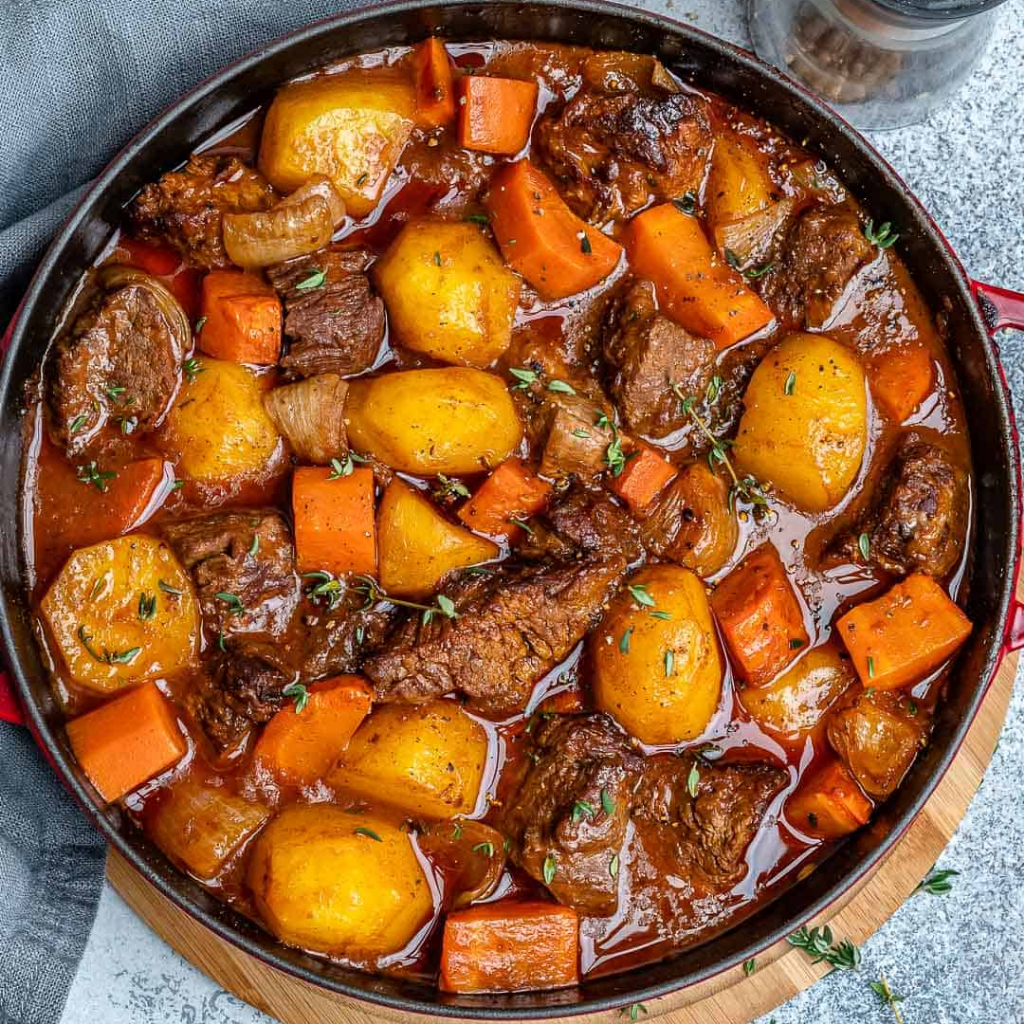
There’s something timeless about a pot of beef stew simmering on the stove. The gentle bubble of broth, the way the aroma fills the kitchen, and that first warm spoonful—it’s the kind of meal that feels like home.
This Easy Homemade Beef Stew takes a classic approach, but it’s designed to fit real life. No complicated steps, no special equipment—just good ingredients, a little patience, and a pot that does most of the work. Over the years, this has become one of my most dependable recipes. Whether it’s a chilly evening, a Sunday supper, or a make-ahead dinner for the week, this stew never disappoints.
The secret is in the layering: searing the beef for a deep base flavor, slowly simmering it until it’s tender, then adding vegetables at just the right moment so they stay intact but soak up all that rich broth. The result is a comforting, satisfying dish that tastes like it’s been simmering all day (even if it hasn’t).
Ingredients
For the Stew
- 2 lbs (900 g) beef stew meat, cut into 1½-inch chunks (chuck roast works best)
- 1½ tsp kosher salt
- ½ tsp black pepper
- 2 tbsp all-purpose flour
- 2 tbsp olive oil
- 1 medium onion, chopped
- 3 cloves garlic, minced
- 2 tbsp tomato paste
- 4 cups beef broth (low sodium recommended)
- 1 cup dry red wine (optional; can replace with more broth)
- 1 bay leaf
- 1 tsp dried thyme
- 3 large carrots, peeled and cut into 1-inch chunks
- 3 medium potatoes, peeled and cut into 1-inch cubes
- 2 celery stalks, sliced
- 1 cup frozen peas (optional, for color and sweetness)
- 1 tbsp chopped fresh parsley, for garnish
Instructions
Step 1: Season and Sear the Beef
Pat the beef dry with paper towels. Season with salt and pepper, then sprinkle with flour and toss to coat lightly.
Heat olive oil in a large heavy-bottomed pot or Dutch oven over medium-high heat. Add the beef in batches (don’t crowd the pan) and sear until browned on all sides, about 5–6 minutes per batch. Transfer browned beef to a plate and repeat with the remaining pieces. This step builds the deep, savory base of the stew.
Step 2: Build the Flavor Base
Lower the heat to medium. Add the chopped onion to the same pot and cook until softened, about 4 minutes, scraping up any browned bits from the bottom. Stir in the garlic and cook for another 30 seconds, just until fragrant. Add the tomato paste and cook, stirring, for 1 minute. This helps concentrate the flavor and gives the stew a rich color.
Step 3: Deglaze and Simmer
Pour in the red wine (if using), stirring and scraping the pot to loosen all the caramelized bits. Let it simmer for 2–3 minutes to reduce slightly. Add the beef broth, bay leaf, thyme, and the seared beef along with any juices that collected on the plate. Bring to a boil, then reduce the heat to low. Cover and simmer gently for 1 to 1½ hours, stirring occasionally, until the beef is starting to become tender.
Step 4: Add the Vegetables
Stir in the carrots, potatoes, and celery. Cover and continue simmering for another 30–40 minutes, until the vegetables and beef are tender and the broth has thickened slightly. If you’d like it a little thicker, you can simmer uncovered for the last 10 minutes or mash a few potato pieces into the broth.
Step 5: Finish and Serve
Remove the bay leaf. Stir in the peas (if using) during the last 5 minutes of cooking so they warm through but keep their bright color. Taste and adjust seasoning with salt and pepper. Sprinkle with chopped parsley just before serving for a fresh finish.
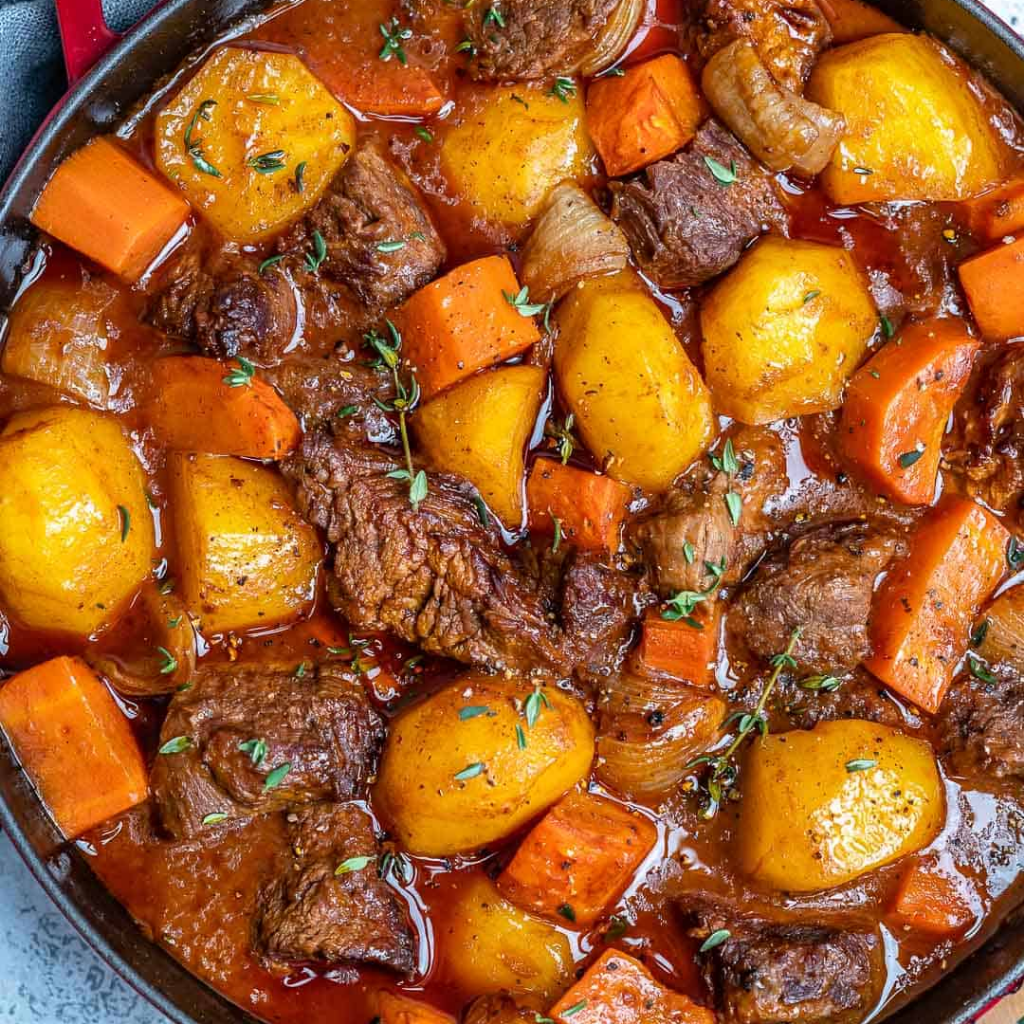
Flavor & Texture Notes
This stew is deeply savory with a rich, layered broth that tastes like it simmered all day. The beef becomes fork-tender, the potatoes soak up the broth while holding their shape, and the carrots bring a natural sweetness that balances the hearty flavors.
The tomato paste and wine add a subtle depth—not overwhelming, just enough to give the broth complexity. Every spoonful has a little bit of everything: tender meat, soft vegetables, and a broth that begs to be mopped up with a piece of bread.
Tips & Variations
- Beef Choice: Chuck roast is ideal—it has enough marbling to stay juicy and tender after a long simmer. Lean cuts can turn tough.
- Thickening Options: If you prefer a thicker stew, mix 1 tablespoon of flour or cornstarch with a bit of cold broth, stir it in near the end, and let it simmer a few more minutes.
- Vegetable Swaps: Parsnips, turnips, or sweet potatoes can replace some or all of the potatoes for a different flavor profile.
- No Wine? No problem. Just use extra broth. You can also add a teaspoon of balsamic vinegar for a touch of acidity.
- Slow Cooker Version: After searing the beef and deglazing, transfer everything to a slow cooker. Cook on Low for 7–8 hours or High for 4–5. Add peas at the end.
Storage & Make-Ahead
Beef stew actually improves with time.
- Fridge: Store in airtight containers for up to 4 days. Reheat gently on the stovetop or in the microwave.
- Freezer: Freeze cooled stew in portions for up to 3 months. Thaw overnight in the fridge before reheating.
- Make-Ahead: You can cook the stew a day in advance, chill it, and reheat when ready to serve. The flavors deepen overnight, making it even better.
Serving Suggestions
- With Bread: A warm loaf of crusty bread or buttered dinner rolls is perfect for soaking up the broth.
- Over Rice: Spoon the stew over white or brown rice for an extra-hearty meal.
- Mashed Potatoes: Ladle the stew over creamy mashed potatoes for ultimate comfort.
- Green Salad: A simple salad with a light vinaigrette balances the richness of the stew nicely.
FAQ
Can I make this stew without searing the beef?
You can, but searing builds a much deeper flavor. If you’re short on time, you can skip it, but the end result won’t be quite as rich.
How do I keep the vegetables from turning mushy?
Add them during the last 30–40 minutes of cooking instead of from the start. This keeps them tender but intact.
What can I use instead of wine?
Extra beef broth works perfectly. For a touch of brightness, add a teaspoon of vinegar or a splash of Worcestershire sauce.
Can I thicken the stew without flour?
Yes. You can mash some potatoes directly in the pot, or simmer the stew uncovered for a little longer to naturally reduce the liquid.
How do I reheat without drying out the beef?
Reheat gently over low heat, adding a splash of broth or water if needed. Avoid boiling—it can toughen the meat.
Conclusion
This Easy Homemade Beef Stew is the kind of recipe that turns simple ingredients into something special. A little time on the stove transforms beef, broth, and vegetables into a cozy, nourishing meal that feels like it’s been passed down through generations.
Whether you’re making it for family dinner, meal prep, or a weekend gathering, this stew is reliable, hearty, and endlessly comforting. Serve it with bread, share it with people you love, and let it warm up your kitchen on any day of the week.