Follow Me On Social Media!

Hearty Autumn Sausage Pasta with Roasted Brussels Sprouts and Butternut Squash.

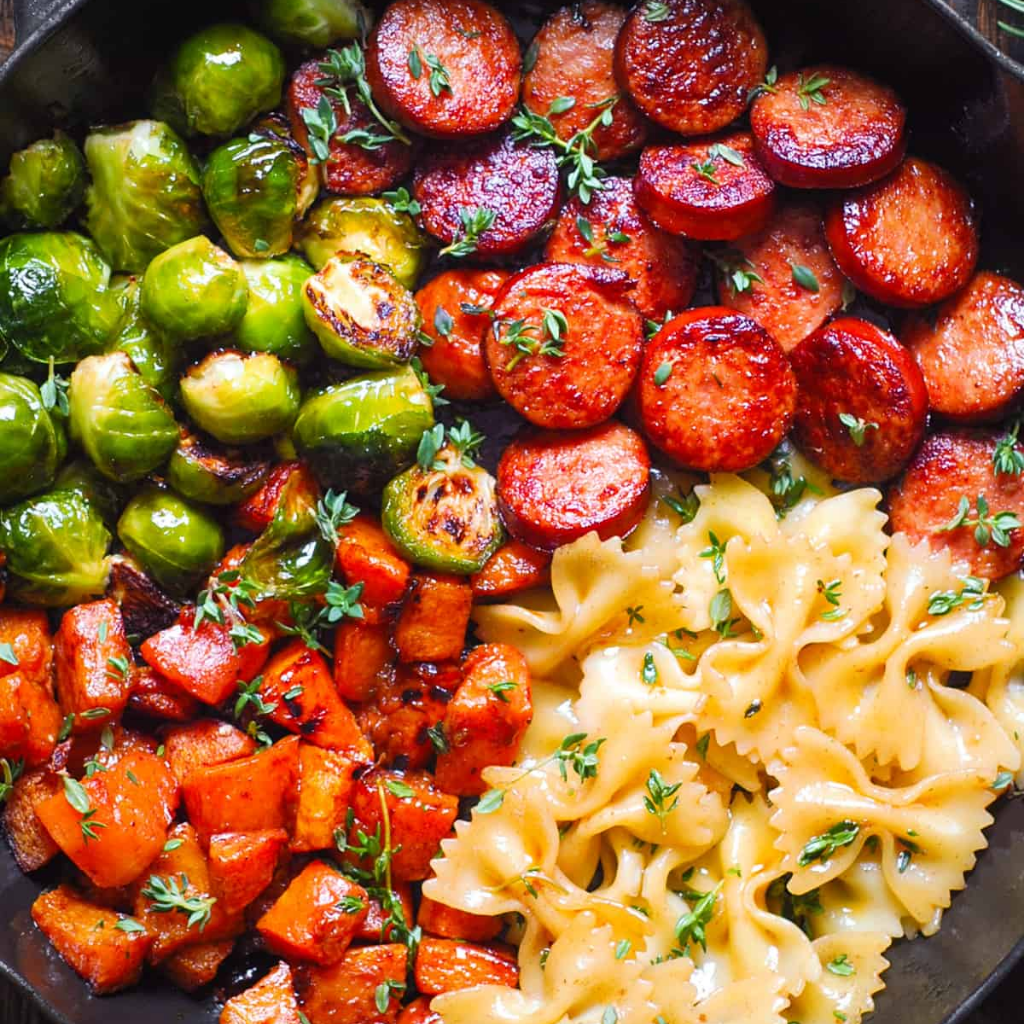
The first time I made this autumn sausage pasta, it was mid-October and I had just returned from the farmers market with a bag full of seasonal produce. I had butternut squash, Brussels sprouts, and no clear plan for dinner. What started as a “let’s use what we have” moment turned into a recipe I now make at least twice a month throughout fall and winter.
This one-pan pasta dinner combines savory Italian sausage, caramelized Brussels sprouts, sweet roasted butternut squash, and tender pasta into a satisfying meal that captures everything good about autumn cooking. The Brussels sprouts get crispy and nutty, the squash becomes tender and slightly sweet, and the sausage adds richness and depth that ties everything together. It’s the kind of dinner that makes your kitchen smell amazing and leaves everyone asking for seconds.
What makes this sausage and butternut squash pasta recipe particularly appealing is how it balances comfort food satisfaction with actual nutrition. You’re getting vegetables, protein, and carbs all in one dish, and the flavors work together so well that even people who claim they don’t like Brussels sprouts end up enjoying it. Plus, most of the work happens in the oven while you focus on other things, making it perfect for busy weeknights.
Ingredients
For the Pasta and Sausage:
- 1 pound pasta (penne, rigatoni, or orecchiette work best)
- 1 pound Italian sausage (sweet, mild, or spicy), casings removed
- 2 tablespoons olive oil, divided
- 4 cloves garlic, minced
- 1/2 teaspoon dried sage
- 1/4 teaspoon red pepper flakes (optional)
- Salt and black pepper to taste
For the Roasted Vegetables:
- 1 medium butternut squash (about 2 pounds), peeled and cut into 3/4-inch cubes
- 1 pound Brussels sprouts, trimmed and halved
- 3 tablespoons olive oil
- 1 teaspoon dried thyme
- 1/2 teaspoon garlic powder
- Salt and black pepper to taste
For Finishing:
- 1/2 cup pasta cooking water, reserved
- 1/2 cup grated Parmesan cheese, plus more for serving
- 2 tablespoons unsalted butter
- Fresh sage leaves for garnish (optional)
- Toasted pine nuts or pecans (optional)
Instructions
Preheat your oven to 425°F and position racks in the upper and lower thirds. This high temperature is key for getting proper caramelization on the vegetables. Line two large baking sheets with parchment paper or lightly oil them to prevent sticking.
Start with the vegetables since they take the longest. Cut your butternut squash into roughly 3/4-inch cubes, trying to keep them uniform so they cook evenly. Smaller pieces will burn before the centers cook, while larger pieces won’t get tender enough. Place the squash cubes on one prepared baking sheet.
Trim the ends off the Brussels sprouts and cut them in half lengthwise. If you have any particularly large ones, quarter them instead. Remove any loose or damaged outer leaves. Place the Brussels sprouts cut-side down on the second baking sheet – this positioning is important because the cut side will caramelize beautifully against the hot pan.
Drizzle the butternut squash with 2 tablespoons of olive oil, then sprinkle with the dried thyme, garlic powder, salt, and pepper. Toss everything together with your hands to ensure even coating. Spread the squash in a single layer with space between the pieces – overcrowding leads to steaming instead of roasting.
Drizzle the Brussels sprouts with the remaining tablespoon of olive oil and season with salt and pepper. Toss to coat, then arrange them cut-side down in a single layer.
Place both baking sheets in the oven. Put the Brussels sprouts on the top rack and the squash on the bottom. Roast for 25-30 minutes, checking at the 20-minute mark. The Brussels sprouts should be deeply golden brown and crispy on the cut sides, while the squash should be tender and caramelized at the edges. If one sheet is cooking faster than the other, rotate them halfway through.
While the vegetables roast, bring a large pot of salted water to a boil. The water should taste like the sea – this is your only chance to season the pasta itself. Add the pasta and cook according to package directions until al dente, usually about 8-10 minutes. Before draining, scoop out at least one cup of pasta cooking water and set it aside. This starchy water is liquid gold for bringing the sauce together.
While the pasta cooks, heat a large, deep skillet or Dutch oven over medium-high heat. Add 1 tablespoon of olive oil, then add the sausage. Break it up with a wooden spoon into bite-sized pieces. Let the sausage brown without stirring too much – you want good caramelization on the meat, which adds tons of flavor. Cook for 7-9 minutes until the sausage is browned and cooked through.
Reduce the heat to medium and add the minced garlic, dried sage, and red pepper flakes if using. Stir for about 30 seconds until fragrant. Be careful not to burn the garlic at this stage.
Once your vegetables are done roasting and your pasta is drained, it’s time to bring everything together. Add the drained pasta to the skillet with the sausage. Add the roasted butternut squash and Brussels sprouts. Toss everything together gently.
Pour in about 1/2 cup of the reserved pasta water and add the butter. The starchy pasta water combines with the butter to create a light sauce that coats everything. Toss continuously for about a minute until the butter melts and the sauce emulsifies slightly. If the mixture seems dry, add more pasta water a splash at a time.
Remove from heat and stir in the grated Parmesan cheese. The residual heat will melt it perfectly. Taste and adjust seasoning with salt and pepper as needed – remember that both the sausage and Parmesan are salty, so you may not need much additional salt.
Transfer to a serving bowl or individual plates. Garnish with fresh sage leaves if you have them, extra Parmesan, and toasted nuts if desired.
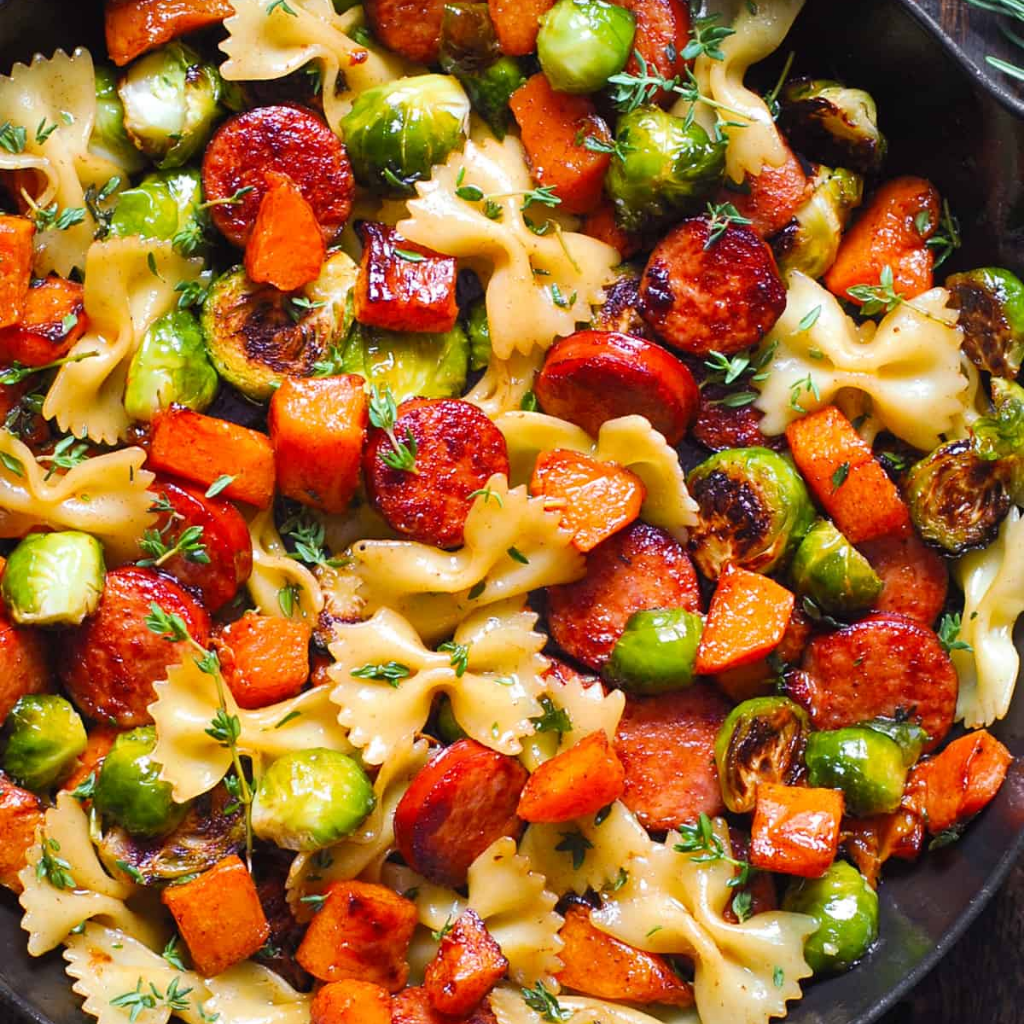
Flavor & Texture Notes
This autumn pasta delivers a complex interplay of flavors and textures that makes every bite interesting. The Italian sausage provides a savory, herby foundation with its fennel and garlic notes. Depending on whether you use sweet or spicy sausage, you’ll get either a mellow backdrop or a kick of heat that warms you from the inside.
The butternut squash becomes almost creamy when roasted properly, with a natural sweetness that contrasts beautifully with the savory sausage. The edges get slightly caramelized and concentrated in flavor, while the centers stay tender and almost buttery. This sweetness isn’t overwhelming – it’s subtle and earthy, more like sweet potato than candy.
Brussels sprouts transform completely in the oven. Their outer leaves become crispy and almost chip-like, with a nutty, roasted flavor that bears little resemblance to boiled Brussels sprouts. The centers stay tender with a slight bite. When cut side down, they develop a deep brown caramelization that adds a pleasant bitterness that balances the sweet squash.
The pasta acts as a neutral vehicle that soaks up all the flavors while providing satisfying substance. The pasta water and butter create a light coating that ties everything together without being heavy or cream-based. Parmesan adds sharp, salty, umami notes throughout.
Fresh sage, if you use it, contributes an earthy, slightly peppery aroma that’s quintessentially autumnal. The overall effect is hearty and warming without feeling heavy – you’ll be satisfied but not uncomfortably full.
Tips & Variations
Sausage choice significantly impacts the final flavor. Sweet Italian sausage with fennel is traditional and works beautifully here. Spicy Italian sausage adds heat that some people love, especially on cold evenings. You can also use chicken sausage for a lighter version, though it won’t have quite the same richness as pork sausage.
For a vegetarian version, substitute the sausage with white beans or chickpeas for protein. Add them toward the end just to heat through. You can boost the umami by adding a tablespoon of tomato paste with the garlic, or include some sun-dried tomatoes.
The pasta shape matters more than you might think. Short, sturdy shapes with ridges or hollows work best because they catch the vegetables and sausage. Penne, rigatoni, orecchiette, cavatappi, or shells are all excellent. Avoid long, thin pasta like spaghetti or linguine – they don’t work as well with chunky ingredients.
If butternut squash isn’t available or you find it tedious to peel and cut, try pre-cut squash from the grocery store. You can also substitute sweet potato, which has a similar texture and sweetness. Acorn squash works too, though it’s a bit drier.
Don’t like Brussels sprouts? Broccoli florets roast beautifully using the same method. Cauliflower is another good option, or try a combination of both. Kale works too if you add it raw at the end and let the residual heat wilt it.
For extra richness, add a splash of heavy cream along with the pasta water. This creates a more luxurious sauce, though the dish is quite satisfying without it. Some people like adding a squeeze of lemon juice at the end for brightness.
Toasted nuts add wonderful textural contrast. Pine nuts are traditional and luxurious, pecans add autumn flair, and walnuts provide earthy crunch. Toast them in a dry skillet for a few minutes until fragrant before sprinkling over the finished dish.
Storage & Make-Ahead
This pasta is definitely best fresh, but leftovers store reasonably well. Transfer cooled pasta to an airtight container and refrigerate for up to 3 days. The Brussels sprouts will lose some of their crispness, but the flavors actually meld together nicely overnight.
To reheat, add a splash of water, broth, or olive oil to prevent drying out. Microwave in one-minute intervals, stirring between each, until heated through. For better results, reheat in a skillet over medium heat with a bit of butter or olive oil, tossing frequently. You can also add a splash of chicken or vegetable broth to refresh the sauce.
For meal prep, you can roast the vegetables up to 2 days ahead and store them separately. Cook the sausage ahead as well. When ready to eat, boil fresh pasta and combine everything, which only takes about 15 minutes.
The dish doesn’t freeze particularly well because the pasta texture changes and the vegetables become mushy when thawed. If you must freeze it, undercook the pasta slightly before combining everything, and freeze in individual portions for up to 1 month. Thaw overnight in the refrigerator before reheating.
If you’re making this for a dinner party, you can prep all your ingredients ahead of time – cut the vegetables, crumble the sausage, measure everything out. Then the actual cooking comes together quickly and mostly hands-off.
Serving Suggestions
This autumn sausage pasta is substantial enough to serve as a complete meal on its own, but a few simple sides can round out the dinner nicely. A crisp green salad with a tangy vinaigrette cuts through the richness of the sausage and provides textural contrast. Arugula with lemon and olive oil is particularly nice.
Crusty bread is always welcome at an Italian-inspired meal. Use it to soak up any sauce left on your plate, or spread it with butter and garlic for garlic bread. A warm baguette or ciabatta works perfectly.
For wine pairing, a medium-bodied red like Chianti or Sangiovese complements the sausage beautifully. If you prefer white wine, choose something with good acidity like a Vermentino or unoaked Chardonnay. The wine’s acidity helps balance the richness of the dish.
This pasta works wonderfully for casual entertaining. Serve it family-style from a large, shallow bowl or platter, allowing guests to help themselves. The presentation is naturally beautiful with the golden squash, green Brussels sprouts, and browned sausage creating visual appeal.
For a complete autumn dinner party, start with a simple butternut squash soup or a fall salad with pears and walnuts. Follow with this pasta as the main course, and finish with a light dessert like poached pears or apple crisp.
The leftovers make excellent lunch the next day. Pack them in a microwave-safe container with a sprinkle of extra Parmesan on top.
FAQ
Can I use pre-cooked sausage? Yes, though fresh sausage that you brown yourself will have better flavor due to the caramelization. If using pre-cooked sausage, slice it and brown it briefly in the pan to warm it through and add some color before combining with the other ingredients.
My Brussels sprouts always taste bitter. What am I doing wrong? Bitterness often comes from undercooking or overcrowding the pan. Make sure your oven is hot enough (425°F) and that the Brussels sprouts are in a single layer with space between them. The caramelization that happens when they’re roasted properly transforms their flavor completely. Also, ensure you’re removing any damaged outer leaves, which can be extra bitter.
Do I have to peel the butternut squash? Yes, the skin is too tough to eat. Use a sturdy vegetable peeler or a sharp knife to remove it. If peeling squash is too difficult or time-consuming, buy pre-cut butternut squash cubes from the grocery store – they’re a real time-saver.
Can I make this with ground meat instead of sausage? Absolutely. Use ground pork, chicken, or turkey and add your own Italian seasonings – fennel seeds, dried oregano, garlic powder, and red pepper flakes will give you similar flavors to Italian sausage. Brown the meat the same way and season generously.
What if I don’t have fresh sage? Dried sage works perfectly fine in this recipe. You can also substitute with dried thyme, dried rosemary (use sparingly as it’s strong), or Italian seasoning. Fresh herbs are lovely but not essential – the dish will still be excellent with dried herbs.
This hearty autumn pasta has become one of those recipes I turn to again and again when the weather turns cool and I want something satisfying and seasonal. It brings together the best flavors of fall in a way that feels both comforting and special, without requiring advanced cooking skills or hours in the kitchen. Whether you’re cooking for family on a weeknight or serving friends on the weekend, this sausage pasta with Brussels sprouts and butternut squash delivers every time. Give it a try this autumn – it might just become your new seasonal favorite.