Follow Me On Social Media!

Ultimate Seafood Lasagna with Shrimp and Crab: Elegant Comfort Food at Its Best.

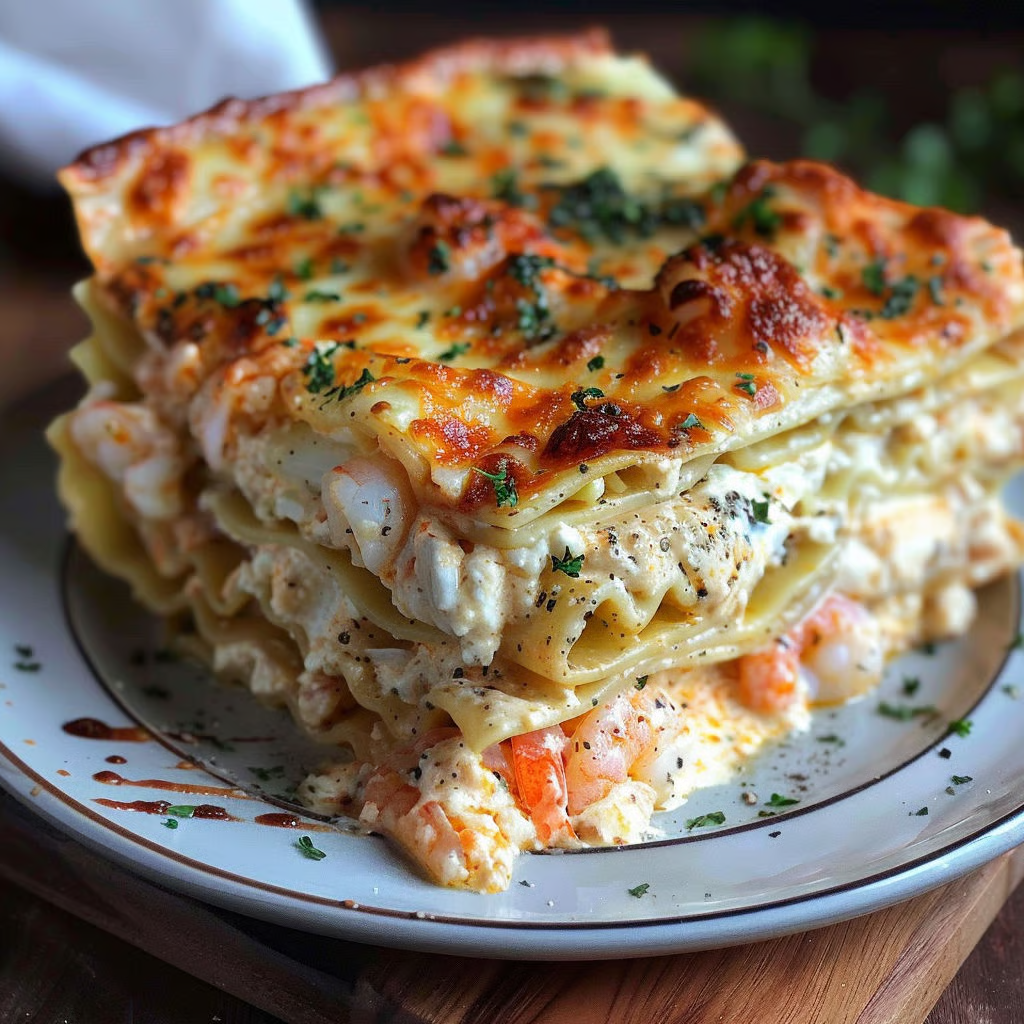
There’s something magical about transforming classic lasagna into something elegant enough for special occasions but still comforting enough for Sunday family dinner. This seafood lasagna with shrimp and crab was born from a desire to create something impressive for my anniversary dinner without spending the entire day in the kitchen. What started as an experiment with leftover crab from a summer cookout has become our most requested dish for celebrations.
This isn’t your typical red sauce lasagna—instead, it features layers of tender pasta, succulent shrimp and sweet crab meat, nestled in a rich, creamy white sauce that lets the seafood flavors shine. The combination of three cheeses creates the perfect melty, golden top, while fresh herbs and a touch of white wine add sophistication without overwhelming the delicate seafood.
What makes this lasagna particularly special is how it strikes the perfect balance between indulgent and refined. It feels fancy enough to serve to dinner guests, yet familiar enough that even seafood-hesitant family members find themselves going back for seconds. Plus, like all great lasagnas, it actually tastes better the next day, making it perfect for entertaining since you can prepare it entirely ahead of time.
Ingredients
For the Seafood:
- 1 pound large shrimp, peeled and deveined
- 1 pound lump crab meat, picked over for shells
- 2 tablespoons olive oil
- 3 cloves garlic, minced
- 1/4 cup dry white wine
- 2 tablespoons fresh lemon juice
- 1 teaspoon Old Bay seasoning
- Salt and white pepper to taste
For the White Sauce:
- 6 tablespoons unsalted butter
- 1/2 cup all-purpose flour
- 3 cups whole milk, warmed
- 1 cup heavy cream
- 1/2 cup dry white wine
- 1 teaspoon garlic powder
- 1/2 teaspoon nutmeg
- 1/2 teaspoon white pepper
- Salt to taste
For the Cheese Layer:
- 15 oz whole milk ricotta cheese
- 8 oz cream cheese, softened
- 1/2 cup grated Parmesan cheese
- 1 large egg
- 1/4 cup fresh chives, chopped
- 2 tablespoons fresh dill, chopped
- 1 tablespoon fresh parsley, chopped
- Salt and pepper to taste
For Assembly:
- 12 lasagna noodles, cooked al dente
- 2 cups shredded mozzarella cheese
- 1/2 cup grated Parmesan cheese
- 2 tablespoons fresh parsley for garnish
The quality of your seafood makes all the difference here. Look for dry-packed scallops if you want to add them, and make sure your crab meat is fresh lump crab, not the imitation kind. The texture and flavor difference is dramatic.
Instructions
Start by cooking your lasagna noodles according to package directions until they’re just al dente—they’ll continue cooking in the oven, so you don’t want them too soft at this stage. Drain and lay them flat on a clean kitchen towel to prevent sticking while you prepare the other components.
For the seafood, heat olive oil in a large skillet over medium-high heat. Add the shrimp and cook for 2-3 minutes per side until just pink and cooked through. Remove shrimp to a plate and set aside—don’t overcook them as they’ll finish cooking in the lasagna.
In the same skillet, reduce heat to medium and add minced garlic, cooking for about 30 seconds until fragrant. Add the white wine and lemon juice, letting it simmer for 2 minutes to cook off some of the alcohol. Gently fold in the crab meat and Old Bay seasoning, cooking just long enough to warm through, about 1-2 minutes. Season with salt and white pepper, then remove from heat and combine with the cooked shrimp.
Now for the white sauce, which is the heart of this lasagna. In a heavy-bottomed saucepan, melt the butter over medium heat. Whisk in the flour and cook for 2-3 minutes, stirring constantly, to create a light roux. This step eliminates the raw flour taste and creates the base for a smooth sauce.
Gradually whisk in the warmed milk, adding it slowly to prevent lumps. Once all the milk is incorporated, add the heavy cream and white wine. Bring the mixture to a gentle simmer, whisking constantly, and cook until it thickens enough to coat the back of a spoon, about 8-10 minutes.
Season the sauce with garlic powder, nutmeg, white pepper, and salt to taste. The sauce should be creamy and smooth—if it seems too thick, whisk in a little more milk. Remove from heat and set aside.
For the cheese mixture, combine the ricotta, softened cream cheese, Parmesan, and egg in a large bowl. Beat until smooth and creamy. Fold in the fresh chives, dill, and parsley, then season with salt and pepper. The herbs add freshness that balances the richness of the seafood and cheese.
Preheat your oven to 375°F and grease a 9×13-inch baking dish thoroughly. Now comes the fun part—assembly. Spread about 1/2 cup of the white sauce in the bottom of your prepared dish to prevent sticking.
Layer 4 lasagna noodles over the sauce, overlapping slightly if needed. Spread half of the ricotta mixture over the noodles, then top with half of the seafood mixture. Drizzle about 1 cup of white sauce over the seafood, then sprinkle with 1/3 of the mozzarella cheese.
Repeat the layering process: 4 more noodles, remaining ricotta mixture, remaining seafood, another cup of white sauce, and another 1/3 of the mozzarella. Top with the final 4 noodles, remaining white sauce, remaining mozzarella, and the additional Parmesan cheese.
Cover tightly with aluminum foil and bake for 35 minutes. Remove the foil and continue baking for 15-20 minutes until the top is golden brown and bubbly, and the edges are slightly crispy. The internal temperature should reach 165°F when measured with a thermometer.
Let the lasagna rest for at least 15 minutes before cutting—this allows the layers to set and makes serving much easier. Garnish with fresh parsley and serve while still warm.
Flavor & Texture Notes
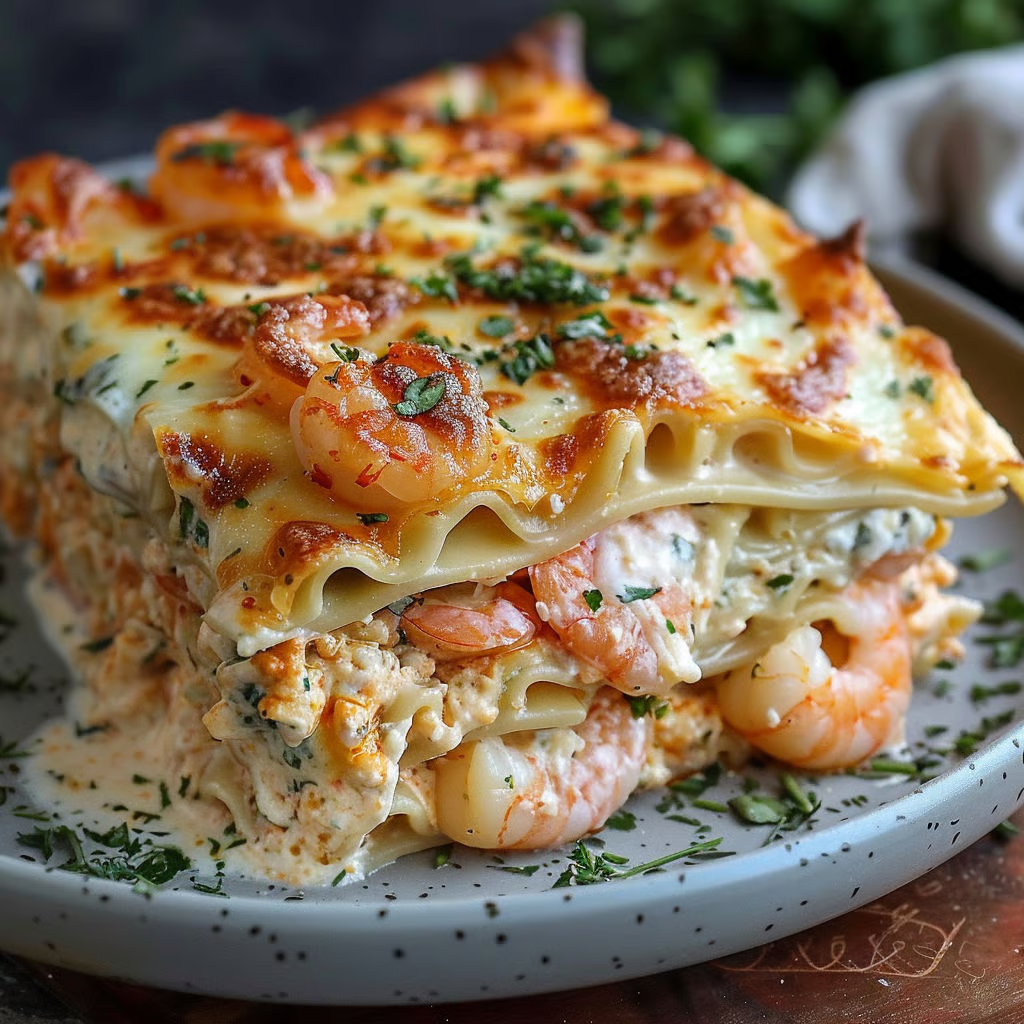
This seafood lasagna delivers layers of sophisticated flavor that build with each bite. The shrimp becomes perfectly tender and sweet, while the crab meat adds delicate brininess and that luxurious texture that makes every forkful feel special. The Old Bay seasoning provides just enough spice to enhance the seafood without overwhelming its natural flavors.
The white sauce is rich and creamy but not heavy, with the wine adding subtle acidity that brightens the whole dish. The nutmeg provides warmth and depth that complements the seafood beautifully, while the fresh herbs in the ricotta layer add brightness and color.
The texture is everything you want in great lasagna—tender pasta layers that hold their shape, creamy cheese that stretches slightly when served, and chunks of perfectly cooked seafood throughout. The top gets gloriously golden and slightly crispy while the interior stays moist and creamy.
Each layer brings something different to the table: the pasta provides structure, the white sauce adds richness, the herbed ricotta contributes tanginess, and the seafood delivers that sweet, oceanic flavor that makes this feel like a special occasion dish.
Tips & Variations
For extra flavor depth, add a few ounces of cooked scallops along with the shrimp and crab. Bay scallops work particularly well and add another texture to the mix.
If you want to make this ahead, assemble the entire lasagna but don’t bake it. Cover tightly and refrigerate for up to 24 hours, then add 15-20 minutes to the baking time since you’re starting with a cold dish.
For a lighter version, you can substitute half-and-half for the heavy cream in the white sauce, though it won’t be quite as rich. You can also use part-skim ricotta and mozzarella to reduce calories.
Lobster meat makes this even more luxurious for truly special occasions. Use about 8 ounces of cooked lobster meat and treat it the same way as the crab.
For those who like a little heat, add a pinch of red pepper flakes to the white sauce or mix some into the ricotta layer. The heat plays surprisingly well with the seafood.
If fresh herbs aren’t available, you can use dried herbs but reduce the quantities by half. The fresh herbs really do make a difference in brightness and flavor, though.
Storage & Make-Ahead
This lasagna is actually better the day after it’s made, as all the flavors have time to meld together. Store covered in the refrigerator for up to 4 days, and reheat individual portions in the microwave or the whole dish in a 350°F oven until heated through.
You can freeze this lasagna either before or after baking. If freezing unbaked, wrap tightly and freeze for up to 3 months. Thaw overnight in the refrigerator before baking, adding extra time as needed. If freezing after baking, cool completely first, then wrap and freeze for up to 2 months.
The white sauce can be made up to 2 days ahead and stored in the refrigerator. Just reheat gently and whisk until smooth before using. The seafood mixture should be made the day you plan to assemble for best texture and flavor.
Individual portions freeze beautifully and make great emergency fancy dinners. Wrap portions tightly and freeze for up to 2 months.
Serving Suggestions
This rich lasagna pairs beautifully with a simple arugula salad dressed with lemon vinaigrette. The peppery greens and bright acid help cut through the richness and cleanse the palate.
Serve with crusty garlic bread or focaccia for sopping up any extra sauce on the plate. The bread also helps balance the richness of the seafood and cheese.
For wine pairing, a crisp white wine like Sauvignon Blanc or Pinot Grigio complements the seafood without overwhelming it. A light Chardonnay also works well, especially one that’s not too oaky.
Roasted asparagus or broccolini make excellent side vegetables, adding color and freshness to the plate without competing with the seafood flavors.
For special occasions, start with a light seafood bisque or simple green salad, then serve the lasagna as the main course with minimal sides to let it be the star.
FAQ
Can I use frozen shrimp and crab for this recipe? Fresh is always best, but good quality frozen seafood works fine. Make sure to thaw it completely and pat it very dry before cooking. Frozen crab meat should be thawed and drained well, as excess moisture can make the lasagna watery.
My white sauce turned out lumpy. How can I fix it? Lumpy sauce usually results from adding cold milk to the roux too quickly. If it happens, remove from heat and whisk vigorously, or use an immersion blender to smooth it out. You can also strain it through a fine mesh sieve if needed.
The lasagna seems watery after baking. What went wrong? This usually happens when the seafood releases moisture during baking. Make sure to pat all seafood very dry before seasoning, and don’t skip the resting time after baking—it allows excess moisture to be reabsorbed and the layers to set properly.
Can I substitute the white wine in the sauce? You can replace the wine with additional chicken or seafood broth, but you’ll lose some of the depth and brightness that wine provides. If you prefer not to use alcohol, add a tablespoon of lemon juice to the broth for acidity.
How do I know when the lasagna is fully cooked? The top should be golden brown and bubbly, the edges should be slightly crispy, and when you insert a knife into the center, it should come out hot. The internal temperature should reach 165°F when measured with a thermometer.
This seafood lasagna with shrimp and crab proves that comfort food can be elegant without losing its soul. It takes the familiar pleasure of lasagna and elevates it with luxurious ingredients and sophisticated flavors, creating something that’s perfect for both family dinners and special celebrations. The combination of sweet seafood, creamy sauce, and melted cheese creates pure indulgence in every layer—exactly the kind of dish that turns a regular evening into something memorable.