Follow Me On Social Media!

Queso Steak Fajita Skillet: Tex-Mex Comfort Food That Feeds a Crowd.

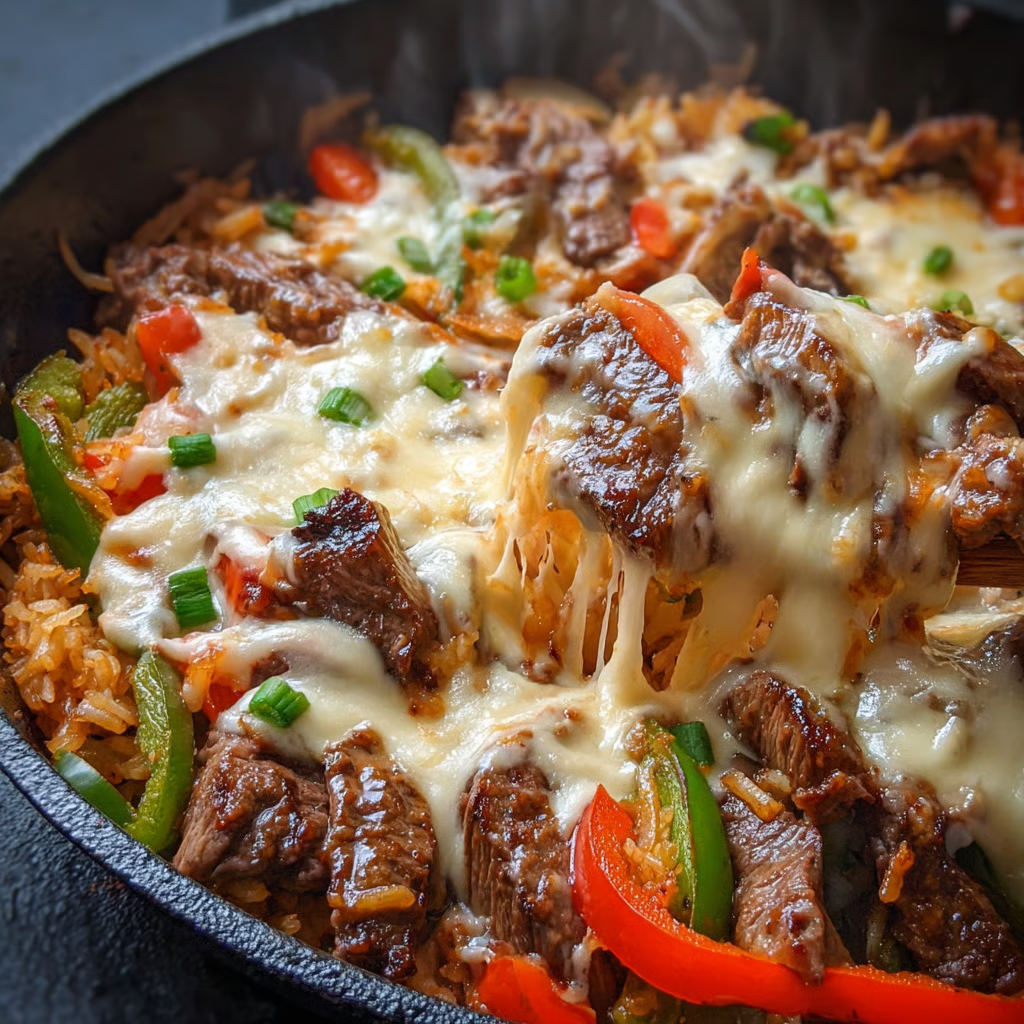
There’s something about the sizzle of a cast-iron skillet that makes dinner feel like an event. This queso steak fajita skillet was born during one of those hectic weeknights when I had a pound of flank steak, some bell peppers that needed using, and a serious craving for something cheesy and satisfying. Instead of making traditional fajitas that require everyone to assemble their own, I decided to throw everything into one pan and top it with a blanket of creamy queso that brings the whole dish together.
What started as a shortcut dinner has become one of our most requested meals. This skillet captures all the bold flavors of great fajitas—perfectly seasoned steak, caramelized peppers and onions, and plenty of spice—but adds that irresistible element of melted cheese that makes it feel more like comfort food than fast casual dining. It’s the kind of meal that works equally well for busy Tuesday nights and casual weekend entertaining.
The beauty of this recipe lies in its flexibility and visual impact. You can adjust the heat level, swap vegetables based on what you have available, and serve it straight from the skillet for maximum wow factor. Plus, everything cooks in one pan, which means less cleanup and more time to enjoy dinner with your family.
Ingredients
For the Steak:
- 1.5 pounds flank steak or skirt steak, sliced against the grain into thin strips
- 2 tablespoons olive oil, divided
- 2 teaspoons chili powder
- 1 teaspoon ground cumin
- 1 teaspoon smoked paprika
- 1 teaspoon garlic powder
- 1/2 teaspoon oregano
- 1/2 teaspoon salt
- 1/4 teaspoon black pepper
- 1/4 teaspoon cayenne pepper (adjust to taste)
For the Vegetables:
- 1 large yellow onion, sliced into strips
- 1 red bell pepper, sliced into strips
- 1 green bell pepper, sliced into strips
- 1 yellow bell pepper, sliced into strips (optional)
- 3 cloves garlic, minced
- 1 jalapeño pepper, seeded and diced
- 2 tablespoons lime juice
- Salt and pepper to taste
For the Queso:
- 2 tablespoons butter
- 2 tablespoons all-purpose flour
- 1 cup whole milk
- 8 oz sharp cheddar cheese, freshly grated
- 4 oz Monterey Jack cheese, grated
- 2 oz cream cheese, cubed
- 1/2 teaspoon garlic powder
- 1/2 teaspoon onion powder
- 1/4 teaspoon smoked paprika
- 1/4 teaspoon cumin
- Salt and white pepper to taste
- 2-3 tablespoons pickled jalapeño juice (optional, for tang)
For Serving:
- Warm flour tortillas
- Fresh cilantro, chopped
- Lime wedges
- Diced avocado or guacamole
- Sour cream
- Pickled jalapeños
The key to great fajita steak is cutting against the grain—this breaks up the muscle fibers and ensures tender bites even with less expensive cuts like flank steak.
Instructions
Start by slicing your steak against the grain into strips about 1/4-inch thick and 3-4 inches long. Pat the strips completely dry with paper towels—moisture is the enemy of good searing. In a large bowl, toss the steak strips with 1 tablespoon of olive oil and all the spice mixture until evenly coated. Let this sit at room temperature for 15-20 minutes while you prep the vegetables.
Heat a large cast-iron skillet or heavy-bottomed pan over medium-high heat. Add the seasoned steak in a single layer, working in batches if necessary to avoid crowding. Cook for 2-3 minutes per side until nicely browned and cooked to your preferred doneness. Flank steak is best when cooked to medium or medium-rare—overcooking will make it tough. Transfer the cooked steak to a plate and tent with foil to keep warm.
In the same pan, reduce heat to medium and add the remaining tablespoon of olive oil if needed. Add the sliced onions and cook for 3-4 minutes, stirring occasionally, until they start to soften and caramelize around the edges. The fond (brown bits) left from the steak will add incredible flavor to the vegetables.
Add all the bell pepper strips and cook for another 5-6 minutes, stirring occasionally, until the peppers are tender-crisp. They should still have some bite—you don’t want them completely soft and mushy.
Add the minced garlic and diced jalapeño, cooking for another minute until fragrant. Season the vegetable mixture with salt and pepper, then drizzle with lime juice and stir to combine.
While the vegetables finish cooking, make your queso. In a medium saucepan, melt the butter over medium heat. Whisk in the flour and cook for 1-2 minutes, stirring constantly, to create a light roux. This step eliminates any raw flour taste and helps thicken the sauce properly.
Gradually whisk in the milk, adding it slowly to prevent lumps. Bring to a gentle simmer and cook, whisking constantly, until the mixture thickens enough to coat the back of a spoon, about 3-5 minutes.
Remove the saucepan from heat and add the cheeses in handfuls, stirring until each addition melts completely before adding more. The cream cheese goes in last and helps create an extra-smooth texture. Season with garlic powder, onion powder, smoked paprika, cumin, salt, and white pepper. If you want extra tang and heat, add the pickled jalapeño juice a tablespoon at a time until it tastes right to you.
Return the cooked steak to the skillet with the vegetables and toss everything together. Pour the warm queso over the entire mixture, letting it pool around the edges and coat everything generously. If you want that restaurant-style presentation, you can also serve the queso on the side for dipping.
Garnish with fresh cilantro and serve immediately while the queso is still hot and melty. Set out warm tortillas and all the fixings so people can build their own fajitas, or just eat it straight from the skillet with chips.
Flavor & Texture Notes
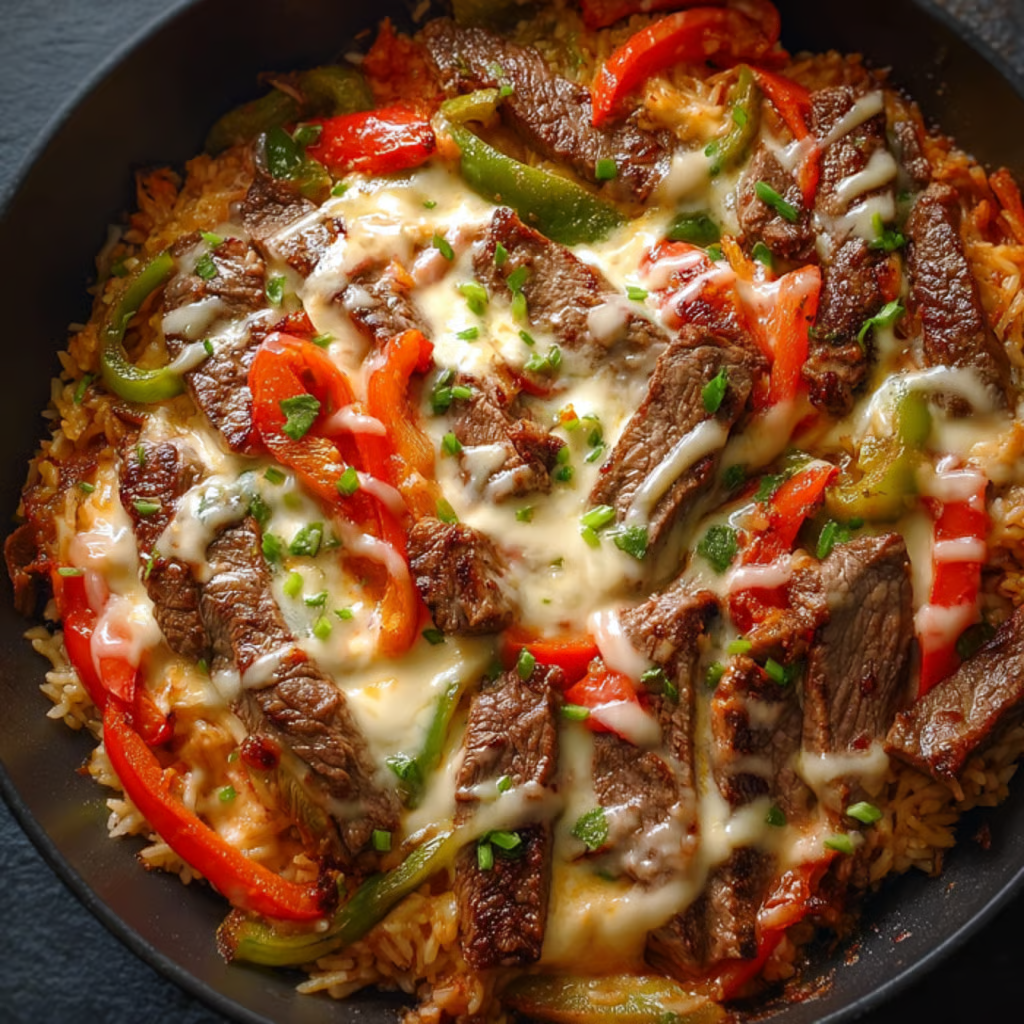
This skillet delivers layers of complex Tex-Mex flavors that build with every bite. The steak develops a beautiful caramelized crust from the spice rub and high-heat searing, while staying tender and juicy inside. Those warm spices—chili powder, cumin, and smoked paprika—create a rich, earthy base that’s enhanced by the slight char from the skillet.
The vegetables add sweetness and freshness that balances the richness of the cheese and meat. The onions become slightly caramelized and sweet, while the bell peppers maintain enough crispness to provide textural contrast. The jalapeños and lime juice brighten everything up and add just enough acid to cut through all that creamy cheese.
The queso itself is the star of the show—smooth and creamy with sharp cheddar providing tang and depth, while the Monterey Jack adds meltability and mild flavor. The cream cheese makes it extra rich and prevents the sauce from breaking or becoming grainy as it cools.
Every forkful gives you tender, seasoned steak, sweet caramelized vegetables, and that irresistible blanket of cheese that ties everything together into pure comfort food satisfaction.
Tips & Variations
For extra smoky flavor, add a teaspoon of chipotle powder to the steak seasoning, or throw in some diced chipotle peppers in adobo sauce with the vegetables.
If you prefer chicken, substitute 1.5 pounds of boneless chicken thighs cut into strips. The cooking method is identical, just make sure the chicken reaches 165°F internal temperature.
For a lighter version, use half the amount of queso and add some black beans and corn to bulk up the vegetables. The beans add protein and fiber while the corn brings sweetness.
Make it spicier by leaving seeds in the jalapeños, adding serrano peppers, or incorporating hot sauce into the queso. For milder heat, remove all pepper seeds and reduce the cayenne in the steak seasoning.
Mushroom lovers should add a cup of sliced mushrooms along with the bell peppers. They absorb all those great flavors and add meaty texture.
For meal prep, you can cook the steak and vegetables ahead of time and store them separately from the queso. Reheat gently and make fresh queso when ready to serve.
Storage & Make-Ahead
This skillet is best enjoyed fresh and hot, but leftovers keep well in the refrigerator for up to 3 days. Store the meat and vegetables separately from any leftover queso if possible, as the cheese sauce can get thick when cold.
To reheat, warm the steak and vegetables in a skillet over medium heat until heated through. Make fresh queso if you have time, or gently reheat the leftover sauce with a splash of milk to loosen it up.
You can prep all the vegetables and season the steak up to a day ahead. Store everything covered in the refrigerator until ready to cook. This makes dinner come together very quickly on busy nights.
The queso can be made a few hours ahead and kept warm in a slow cooker on the warm setting, stirring occasionally. Add milk as needed to maintain the right consistency.
Serving Suggestions
The traditional way to serve this is with warm flour tortillas so everyone can build their own fajitas. Provide bowls of fresh cilantro, diced avocado, sour cream, and lime wedges for customization.
For a low-carb option, serve over cauliflower rice or lettuce cups. The flavors are bold enough to stand on their own without tortillas.
This makes an excellent party dish—bring the whole skillet to the table with a basket of warm tortillas and let people serve themselves. The visual presentation is impressive and it stays warm in the cast iron.
Serve with Mexican rice and refried beans for a complete restaurant-style meal, or keep it simple with just tortilla chips for scooping up all that delicious queso.
For weekend brunch, top with a fried egg and serve with breakfast potatoes. The combination of runny egg yolk and melted cheese is absolutely incredible.
FAQ
What’s the best cut of steak for this recipe? Flank steak and skirt steak work best because they have great flavor and cook quickly. Both can be tough if overcooked, so aim for medium-rare to medium. Sirloin flap or even thinly sliced ribeye work too, but will be more expensive.
My queso turned out grainy. What went wrong? Grainy queso usually results from overheating the cheese or adding it too quickly to hot liquid. Make sure to remove the milk mixture from heat before adding cheese, and add it gradually while stirring constantly. Using freshly grated cheese instead of pre-shredded also helps.
Can I make this spicier without adding more peppers? Absolutely! Add hot sauce to the queso, increase the cayenne in the steak seasoning, or use pepper jack cheese instead of Monterey Jack. You can also add a pinch of chipotle powder for smoky heat.
The vegetables are cooking too fast and getting mushy. Help! Reduce your heat to medium or medium-low. Different stovetops run hot, so adjust accordingly. You want the vegetables to caramelize slowly rather than steam. Also, don’t overcrowd the pan—cook in batches if necessary.
Can I use pre-shredded cheese for the queso? Pre-shredded cheese contains anti-caking agents that can make queso less smooth, but it will still work in a pinch. For the best results, buy block cheese and grate it yourself—it melts much more smoothly and creates better texture.
This queso steak fajita skillet proves that some of the best meals happen when you take familiar flavors and present them in a new way. It has all the bold, satisfying tastes of great Tex-Mex food, but the one-pan approach makes it perfect for weeknight dinners or casual entertaining. The combination of perfectly seasoned steak, caramelized vegetables, and that blanket of creamy queso creates something that’s both comforting and exciting—exactly the kind of meal that brings people together around the dinner table.