Follow Me On Social Media!

Gochujang Brussels Sprouts: The Korean-Inspired Side Dish That Changes Everything.

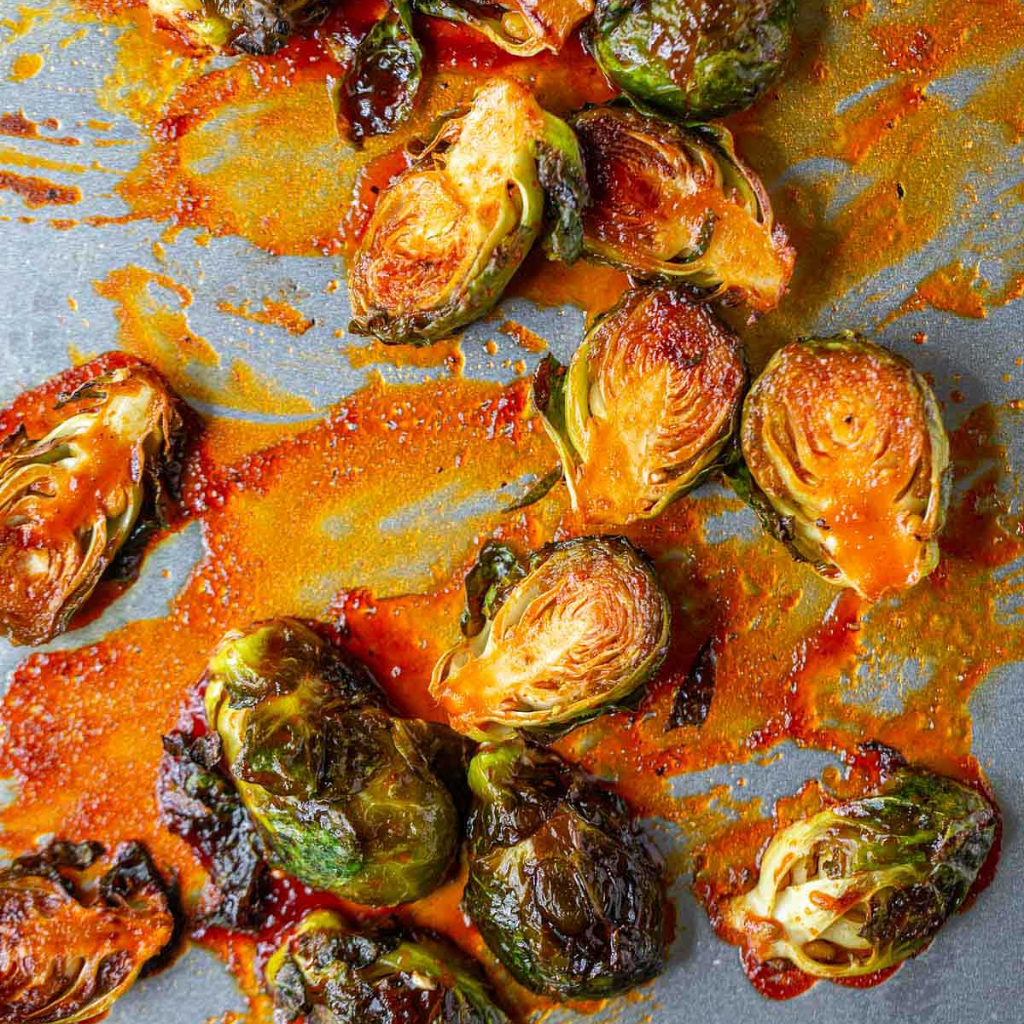
There’s something magical that happens when you combine the earthy bitterness of Brussels sprouts with the complex heat of gochujang. I discovered this combination completely by accident during a particularly uninspired weeknight dinner prep. I had a bag of Brussels sprouts that needed using and a nearly-empty container of gochujang sitting in my fridge door. What started as a “let’s see what happens” moment became one of my most requested side dishes.
This gochujang Brussels sprouts recipe transforms what many consider a polarizing vegetable into something genuinely crave-worthy. The Korean chili paste brings sweet, smoky, and umami-rich flavors that complement the sprouts’ natural nuttiness when properly cooked. Unlike heavy, bacon-laden preparations, this version feels fresh and vibrant while still being deeply satisfying.
The beauty of this dish lies in its simplicity and the way gochujang elevates humble ingredients. Whether you’re looking to add more vegetables to your rotation or want to impress guests with something unexpected, these Korean-spiced Brussels sprouts deliver every time. They work equally well as a weeknight side dish or as part of a more elaborate spread.
Ingredients
For the Brussels Sprouts:
- 2 pounds Brussels sprouts, trimmed and halved lengthwise
- 3 tablespoons neutral oil (vegetable or avocado oil)
- 1 teaspoon kosher salt
- 1/2 teaspoon black pepper
For the Gochujang Glaze:
- 3 tablespoons gochujang paste
- 2 tablespoons rice vinegar
- 2 tablespoons soy sauce
- 1 tablespoon honey
- 1 tablespoon sesame oil
- 3 cloves garlic, minced
- 1 teaspoon fresh ginger, grated
For Finishing:
- 2 green onions, thinly sliced
- 1 tablespoon toasted sesame seeds
- 1 lime, cut into wedges (optional)
Instructions
Start by preheating your oven to 425°F. This high temperature is crucial for achieving the caramelized edges that make Brussels sprouts irresistible. While the oven heats, prepare your sprouts by trimming the stem ends and removing any yellowed outer leaves. Cut each sprout in half lengthwise, which creates flat surfaces that will brown beautifully.
Place the halved Brussels sprouts on a large rimmed baking sheet. Drizzle with the neutral oil and season with salt and pepper. Toss everything together with your hands, making sure each piece is well-coated. Arrange the sprouts cut-side down in a single layer. This positioning is important because the flat surfaces will caramelize against the hot pan.
Roast the Brussels sprouts for 20-25 minutes, until the cut sides are golden brown and the leaves are crispy around the edges. The timing can vary depending on the size of your sprouts, so check after 20 minutes. You want them tender but still with some bite.
While the sprouts roast, prepare the gochujang glaze. In a small bowl, whisk together the gochujang, rice vinegar, soy sauce, honey, sesame oil, minced garlic, and grated ginger. The mixture should be smooth and glossy. If your gochujang seems particularly thick, add an extra splash of rice vinegar to loosen it.
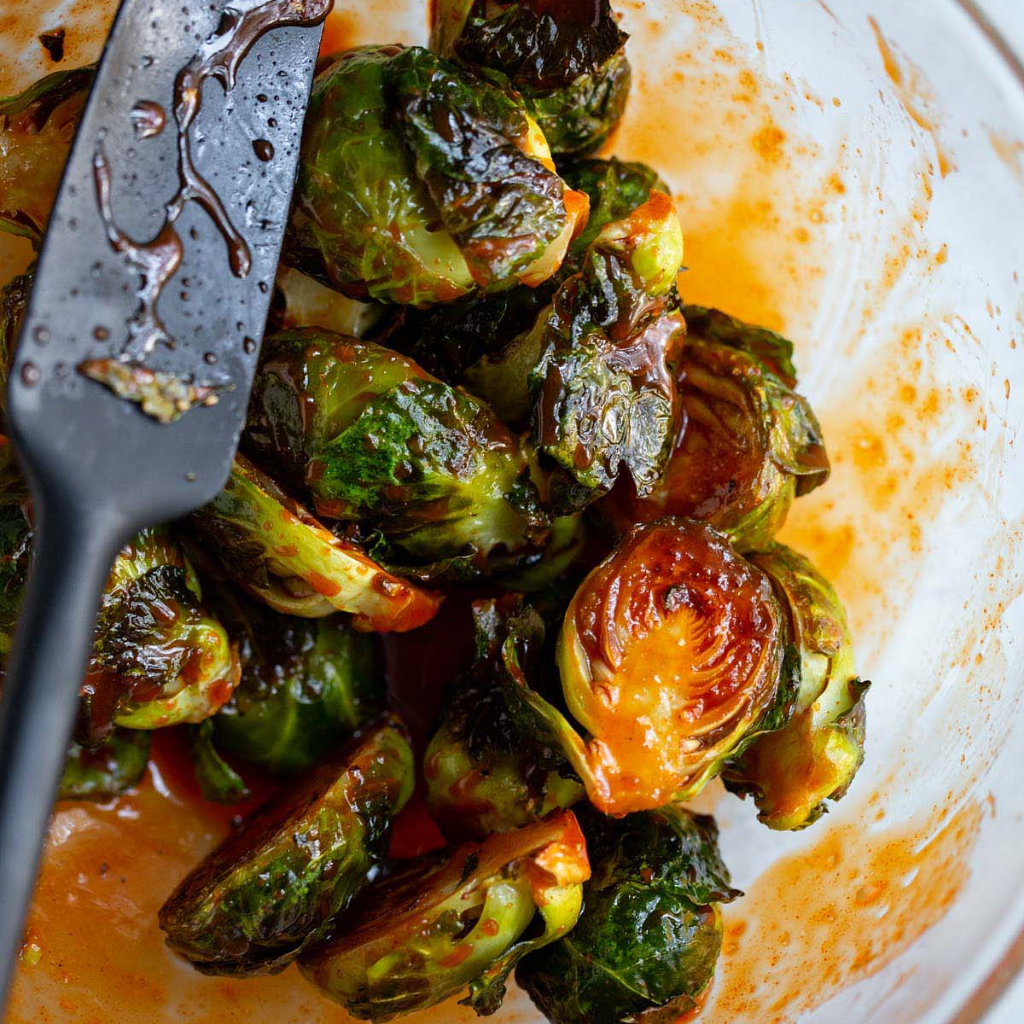
Once the Brussels sprouts are beautifully caramelized, remove them from the oven and immediately drizzle the gochujang glaze over them while they’re still hot. Use a spatula to toss and coat evenly. The residual heat from the pan and vegetables will help the glaze cling and slightly caramelize.
Transfer the glazed Brussels sprouts to a serving platter and garnish with sliced green onions and toasted sesame seeds. Serve immediately while they’re still warm and the glaze is glossy.
Flavor & Texture Notes
These gochujang Brussels sprouts offer a complex flavor profile that evolves as you eat them. The initial taste is sweet and savory from the honey and soy sauce, followed by the distinctive fermented depth of gochujang. The heat builds gradually, warming rather than burning, thanks to the balanced sweetness in the glaze.
Texturally, properly roasted Brussels sprouts should have crispy, caramelized exteriors that give way to tender, slightly sweet interiors. The outer leaves become almost chip-like in their crispness, while the dense core remains pleasantly firm. The glaze adds a glossy coating that intensifies all these textures without making anything soggy.
The sesame oil contributes a nutty richness that rounds out the sharper elements, while the rice vinegar provides just enough acidity to brighten the entire dish. Each bite should feel substantial and satisfying, with layers of flavor that make you want to reach for another forkful.
Tips & Variations
The key to outstanding Brussels sprouts lies in not overcrowding your pan. If you’re doubling the recipe, use two baking sheets rather than cramming everything onto one. Overcrowded vegetables steam instead of roast, preventing that crucial caramelization.
For those avoiding honey, maple syrup works beautifully as a substitute, adding a slightly different but equally pleasant sweetness. Agave nectar is another option, though it’s less flavorful than the other two.
If you can’t find gochujang, you can create a substitute by mixing 2 tablespoons sriracha with 1 tablespoon miso paste and 1 teaspoon brown sugar. While it won’t have the same fermented complexity, it provides similar sweet-heat balance.
For extra richness, try adding a tablespoon of butter to the glaze after removing the sprouts from the oven. Toss while everything is still hot to create an even more luxurious coating.
Vegetarians and vegans can easily adapt this recipe by ensuring their gochujang brand doesn’t contain fish sauce (most don’t, but it’s worth checking) and using maple syrup instead of honey.
For added texture contrast, consider topping the finished dish with chopped toasted almonds or peanuts. The crunch provides another layer of interest and complements the Korean flavors well.
Storage & Make-Ahead
These Brussels sprouts are best served immediately after preparation, while they’re still hot and the glaze maintains its glossy finish. However, leftovers keep well in the refrigerator for up to three days in an airtight container.
To reheat, spread the sprouts on a baking sheet and warm in a 375°F oven for 8-10 minutes. This method helps restore some of the original crispiness better than microwave reheating, which can make them soggy.
You can prepare the gochujang glaze up to a week ahead and store it in the refrigerator. The flavors actually improve with time as they meld together. Just whisk it smooth again before using, as the ingredients may separate during storage.
For partial make-ahead preparation, you can trim and halve the Brussels sprouts up to two days before cooking. Store them in a sealed container in the refrigerator, then proceed with the roasting when ready to serve.
Serving Suggestions
These Korean-spiced Brussels sprouts pair wonderfully with grilled meats, particularly pork tenderloin or Korean-style short ribs. The sweet-heat profile complements rich, savory proteins without overwhelming them.
For a vegetarian meal, serve alongside coconut rice and some quick-pickled vegetables for a fresh, balanced plate. The pickles provide acidic contrast that highlights the Brussels sprouts’ caramelized sweetness.
The dish also works excellently as part of a larger Asian-inspired spread. Consider pairing with miso-glazed eggplant, steamed dumplings, or simple grilled tofu for a varied and satisfying meal.
During holiday gatherings, these Brussels sprouts offer a refreshing alternative to traditional preparations. They’re particularly good alongside roasted turkey or ham, providing bright flavors that cut through richer dishes.
For casual entertaining, serve them as a substantial appetizer with small spoons or forks. The bold flavors make them conversation-worthy, and they disappear quickly at parties.
FAQ
Can I use frozen Brussels sprouts for this recipe? Fresh Brussels sprouts work best for this preparation because they hold their shape better and develop superior caramelization. Frozen sprouts contain more moisture, which can prevent proper browning and result in a soggy texture.
How spicy is this dish? The heat level is moderate and builds gradually. Gochujang provides warmth rather than intense fire, and the honey helps balance any sharpness. Most people who enjoy mild to moderate spice find it very approachable.
What if my gochujang seems too salty or intense? Gochujang brands can vary significantly in saltiness and heat. If yours seems particularly intense, reduce the amount to 2 tablespoons and add an extra teaspoon of honey to balance it. You can always add more to taste.
Can I grill these Brussels sprouts instead of roasting? Yes, but the technique requires adjustment. Thread halved sprouts onto skewers to prevent them from falling through the grates, and brush with the glaze during the last few minutes of grilling to prevent burning.
Why do my Brussels sprouts taste bitter? Bitterness usually indicates undercooking or poor-quality sprouts. Make sure to roast until the cut sides are deeply caramelized and the sprouts are tender throughout. Also, choose firm, bright green sprouts without yellowing leaves for the best flavor.
This gochujang Brussels sprouts recipe proves that simple ingredients can create extraordinary results when combined thoughtfully. The Korean flavors transform these humble vegetables into something special that works for everyday dinners and special occasions alike. Give them a try, and you might find yourself looking forward to Brussels sprouts in a way you never expected.