Follow Me On Social Media!

Baked Stuffed Salmon With Spinach & Feta: A Mediterranean-Inspired Weeknight Winner.

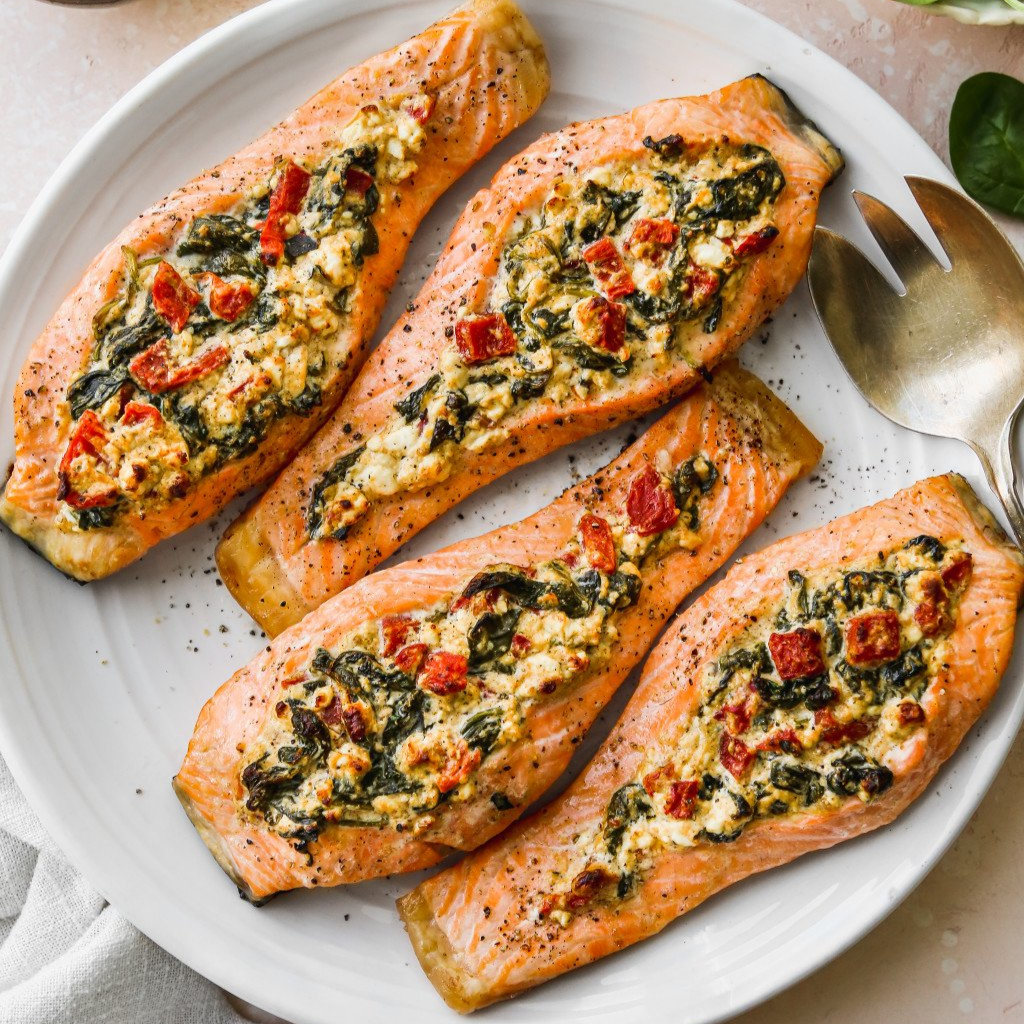
There’s something magical about cutting into a perfectly baked piece of salmon and discovering a vibrant green filling packed with creamy feta and tender spinach. This baked stuffed salmon recipe has become my go-to when I want something that looks impressive but doesn’t require hours in the kitchen. I first stumbled upon this combination during a particularly hectic week when I had leftover spinach wilting in my fridge and a block of feta that needed using. What started as a “let’s see what happens” experiment quickly became a family favorite.
The beauty of this dish lies in its simplicity and the way Mediterranean flavors transform ordinary salmon fillets into something restaurant-worthy. The creamy, salty feta pairs beautifully with the earthy spinach, while the salmon stays incredibly moist thanks to the stuffing that acts as both flavor enhancer and moisture barrier. Whether you’re cooking for a weeknight dinner or entertaining guests, this recipe delivers impressive results without the stress.
What makes this recipe particularly appealing is its versatility. You can prep the stuffed salmon ahead of time, making it perfect for busy schedules, and the ingredient list is refreshingly short. The cooking method is foolproof – even if you’re not confident with fish, the visual cues make it nearly impossible to overcook.
Ingredients
For the Salmon:
- 4 salmon fillets (6-8 oz each), skin removed
- 2 tablespoons olive oil
- 1 teaspoon salt
- 1/2 teaspoon black pepper
- 1/2 teaspoon garlic powder
- 1/4 teaspoon paprika
For the Spinach Feta Stuffing:
- 3 cups fresh spinach, roughly chopped
- 4 oz feta cheese, crumbled
- 2 cloves garlic, minced
- 1 tablespoon olive oil
- 1/4 cup sun-dried tomatoes, chopped (optional)
- 2 tablespoons fresh dill, chopped
- 1 tablespoon lemon juice
- 1/4 teaspoon red pepper flakes
- Salt and pepper to taste
For Serving:
- Lemon wedges
- Extra fresh dill for garnish
Instructions
Start by preheating your oven to 400°F (200°C). This temperature gives you the perfect balance of cooking the salmon through while keeping it tender and preventing the stuffing from drying out.
Create your spinach filling first, as this needs a few minutes to cool before stuffing the salmon. Heat one tablespoon of olive oil in a large skillet over medium heat. Add the minced garlic and cook for about 30 seconds until fragrant – be careful not to let it brown. Add the chopped spinach and cook just until wilted, about 2-3 minutes. The spinach should still be bright green and not completely broken down.
Remove the skillet from heat and stir in the crumbled feta, chopped sun-dried tomatoes if using, fresh dill, lemon juice, and red pepper flakes. Season with a pinch of salt and pepper, though go easy on the salt since feta is naturally salty. Mix everything together and set aside to cool slightly while you prepare the salmon.
Pat the salmon fillets completely dry with paper towels – this step is crucial for getting a nice exterior on the fish. Using a sharp knife, create a deep pocket in each fillet by cutting horizontally about three-quarters of the way through the thickest part of the fish. Be careful not to cut all the way through; you want to create a pocket that will hold the stuffing securely.
Season both the inside and outside of each salmon fillet with salt, pepper, garlic powder, and paprika. Rub the seasonings in gently to ensure even coverage.
Divide the spinach and feta mixture evenly among the four salmon fillets, stuffing each pocket generously. Don’t worry if some filling spills out – this actually creates nice crispy bits during baking. Secure each pocket with a toothpick if needed, though the weight of the stuffing usually keeps everything in place.
Heat the remaining two tablespoons of olive oil in an oven-safe skillet over medium-high heat. If you don’t have an oven-safe skillet, you can use a regular pan and transfer to a baking dish later. Once the oil shimmers, carefully place the stuffed salmon fillets in the pan, stuffing-side up. Sear for 2-3 minutes without moving them – this creates a beautiful golden crust on the bottom.
Transfer the skillet (or move the salmon to a baking dish) to the preheated oven. Bake for 12-15 minutes, depending on the thickness of your fillets. The salmon is done when it flakes easily with a fork and reaches an internal temperature of 145°F (63°C). The stuffing should be heated through and the feta slightly golden on top.
Let the salmon rest for 2-3 minutes before serving. This brief rest helps the juices redistribute and makes the fish easier to slice if you want to show off that beautiful stuffed interior.
Flavor & Texture Notes
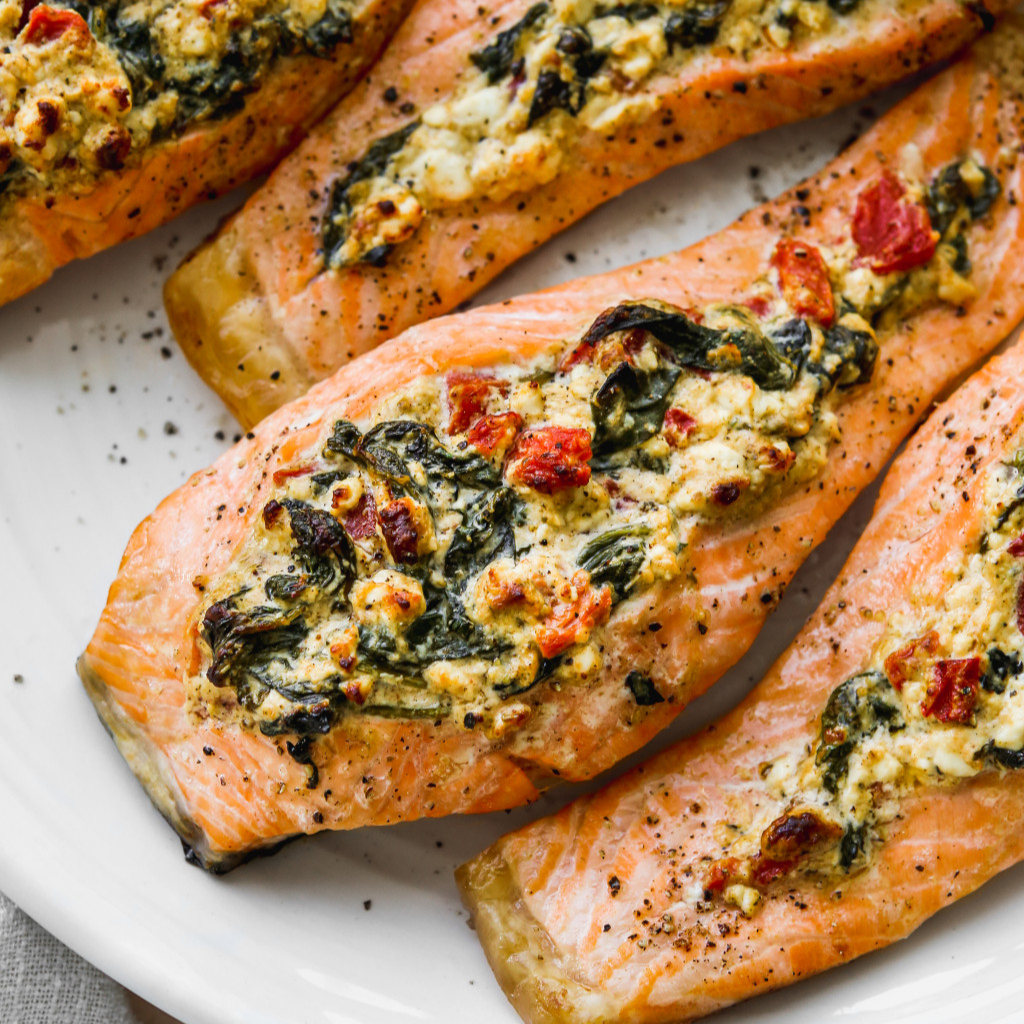
This baked stuffed salmon offers a symphony of Mediterranean flavors and textures that work together beautifully. The salmon itself remains incredibly moist and flaky, with a subtle char from the initial searing that adds depth to each bite. The spinach provides an earthy, slightly mineral note that grounds the dish, while the feta contributes bursts of creamy, tangy saltiness that brighten every forkful.
The texture contrast is particularly satisfying – the tender, buttery salmon gives way to the slightly wilted spinach, which still retains some of its structure, and the feta creates little pockets of creaminess throughout. If you include the sun-dried tomatoes, they add chewy, concentrated bursts of sweetness that complement the salty elements perfectly.
The fresh dill brings a bright, herbaceous quality that cuts through the richness of the fish and cheese, while the lemon juice adds just enough acidity to balance everything out. The red pepper flakes provide a gentle warmth rather than heat, rounding out the flavor profile without overwhelming the delicate fish.
When cooked properly, the exterior of the salmon develops a beautiful golden color with slightly crispy edges, while the interior remains perfectly flaky and moist. The stuffing stays cohesive but not dense, creating a filling that complements rather than competes with the salmon’s natural flavor.
Tips & Variations
For the best results, choose salmon fillets that are similar in size and thickness. This ensures even cooking and prevents some pieces from being overdone while others are still raw. If your fillets are particularly thin, reduce the cooking time by a few minutes and check for doneness earlier.
Don’t have fresh spinach? Frozen spinach works well too – just make sure to thaw it completely and squeeze out excess moisture before cooking. About 1 cup of frozen spinach equals the 3 cups of fresh called for in this recipe.
The sun-dried tomatoes are optional but highly recommended. They add a concentrated burst of flavor and beautiful color. If you’re not a fan, try substituting with roasted red peppers or capers for different flavor profiles.
For a dairy-free version, replace the feta with a plant-based alternative or simply omit it and add more herbs and seasonings. Nutritional yeast can provide a similar umami depth without the dairy.
Want to make this recipe more substantial? Add cooked quinoa or wild rice to the stuffing mixture. About 1/2 cup of cooked grains will make the filling heartier and turn this into a complete one-dish meal.
If you prefer a different herb profile, try substituting the dill with fresh basil, oregano, or parsley. Each brings its own personality to the dish while maintaining the Mediterranean theme.
For those who like a bit more heat, increase the red pepper flakes or add a pinch of cayenne pepper to the stuffing mixture.
Storage & Make-Ahead
This stuffed salmon is perfect for meal prep and can be assembled several hours ahead of cooking time. Prepare the stuffing and stuff the salmon fillets, then cover tightly with plastic wrap and refrigerate for up to 4 hours. This actually allows the flavors to meld together, often resulting in an even more flavorful final dish.
Leftover cooked salmon will keep in the refrigerator for up to 3 days. Reheat gently in a 300°F oven for about 10 minutes, or enjoy it cold flaked over salads or in grain bowls.
While you can freeze the stuffed raw salmon for up to 2 months, the texture of the spinach may change slightly upon thawing. If freezing, wrap each fillet individually in plastic wrap, then place in a freezer bag. Thaw completely in the refrigerator before cooking and add an extra 2-3 minutes to the cooking time.
The spinach and feta stuffing can be made up to 2 days ahead and stored separately in the refrigerator. This is particularly helpful when entertaining, as you can do most of the prep work in advance and simply stuff and cook the salmon when your guests arrive.
Serving Suggestions
This stuffed salmon pairs beautifully with simple sides that don’t compete with its Mediterranean flavors. Roasted asparagus, green beans, or Brussels sprouts all work wonderfully, as does a simple cucumber and tomato salad dressed with olive oil and lemon juice.
For a heartier meal, serve alongside lemon herb rice pilaf, roasted potatoes with rosemary, or a warm farro salad with fresh herbs. The key is to choose sides that complement rather than overwhelm the delicate balance of flavors in the salmon.
A crisp white wine like Sauvignon Blanc or Pinot Grigio pairs excellently with this dish, as does a light red like Pinot Noir if you prefer red wine. For non-alcoholic options, try sparkling water with lemon and herbs or a light cucumber mint agua fresca.
Consider presenting the salmon on a platter garnished with fresh dill sprigs, lemon wedges, and a drizzle of good olive oil. The visual presentation is nearly as important as the taste when it comes to making this dish feel special.
FAQ
Can I use salmon with the skin on? While you can use skin-on salmon, removing the skin makes it much easier to create the pocket for stuffing and ensures better seasoning penetration. If you prefer to keep the skin, score it lightly and be extra careful when cutting the pocket.
What’s the best way to tell when the salmon is done? The salmon is perfectly cooked when it flakes easily with a fork and reaches an internal temperature of 145°F. Visually, it should look opaque throughout with no translucent areas, and the stuffing should be heated through.
Can I make this recipe with other types of fish? Absolutely! Thick white fish fillets like halibut, cod, or sea bass work well with this stuffing method. Adjust cooking times based on the thickness of your fish – thinner fillets will cook faster.
My stuffing is falling out during cooking. How can I prevent this? Make sure your pocket isn’t cut too wide, and don’t overstuff the fillets. Toothpicks can help secure the opening, and placing the salmon stuffing-side up in the pan prevents spillage. A little spillage is normal and creates tasty crispy bits.
Can I substitute different cheeses for the feta? Yes! Goat cheese, ricotta, or even cream cheese work well. Each will create a slightly different flavor profile, but the cooking method remains the same. Goat cheese provides similar tanginess to feta, while ricotta creates a milder, creamier result.
This baked stuffed salmon with spinach and feta proves that elegant, flavorful meals don’t have to be complicated. The combination of Mediterranean ingredients creates something that feels both comforting and sophisticated, perfect for any occasion from casual family dinners to special celebrations. Once you master this basic technique, you’ll find yourself experimenting with different stuffing combinations and making this recipe your own. Give it a try – your kitchen will smell amazing, and your family will be asking for seconds.