Follow Me On Social Media!

Homemade Red Enchilada Sauce: The 15-Minute Game-Changer That Beats Every Store-Bought Version.

I used to be one of those people who grabbed canned enchilada sauce from the grocery store without a second thought. Then I made my first batch from scratch on a whim one Tuesday night, and everything changed. The depth of flavor, the way it coated the enchiladas without being gloppy, the rich red color that actually looked appetizing—I couldn’t believe something so simple could be so transformative.
This homemade red enchilada sauce takes about 15 minutes to make and uses ingredients you probably already have in your pantry. The secret lies in properly toasting the dried chiles and building layers of flavor through careful technique rather than exotic ingredients. Unlike many store-bought versions that taste flat and overly salty, this sauce has complex, smoky notes with just the right balance of heat and richness.
What makes this recipe special is its versatility and authenticity. It’s based on traditional Mexican techniques but streamlined for busy home cooks. You can adjust the heat level to your family’s preferences, make it completely from scratch without any preservatives or artificial flavors, and customize it with different chile combinations depending on what you can find locally.
Whether you’re making enchiladas, using it as a base for braised meats, or simply wanting to elevate your Mexican cooking game, this red enchilada sauce will become one of those recipes you return to again and again. Once you taste the difference homemade makes, those cans will stay on the grocery store shelf where they belong.
Ingredients
For the Chile Base:
- 6 dried guajillo chiles, stems and seeds removed
- 2 dried ancho chiles, stems and seeds removed
- 1 dried chipotle chile, stem removed (seeds optional for heat)
- 3 cups warm water or low-sodium chicken broth
For the Sauce:
- 2 tablespoons vegetable oil
- 1 medium onion, roughly chopped
- 4 cloves garlic, minced
- 1 teaspoon ground cumin
- 1/2 teaspoon dried oregano (preferably Mexican oregano)
- 1/4 teaspoon ground coriander
- 2 tablespoons tomato paste
- 1 teaspoon salt (more to taste)
- 1 tablespoon apple cider vinegar
- 1 teaspoon brown sugar or honey (optional)
Optional Additions:
- 1/4 teaspoon smoked paprika for extra smokiness
- 1 bay leaf for deeper flavor
- 1 small piece of Mexican chocolate for richness
Instructions
Begin by preparing the dried chiles, which form the backbone of this sauce. Remove the stems from all chiles and shake out most of the seeds—keeping some seeds from the chipotle will add heat, while guajillo and ancho seeds can add bitterness, so remove those completely. Tear the chiles into smaller pieces to help them rehydrate evenly.
Heat a large, dry skillet over medium heat and toast the chile pieces for 30-60 seconds per side until they become fragrant and slightly puffed. You’ll smell a wonderful, smoky aroma when they’re ready. Don’t let them burn or they’ll turn bitter—they should just warm through and become more pliable. This toasting step is crucial for developing the complex flavors that make homemade sauce superior to store-bought versions.
Transfer the toasted chiles to a bowl and cover with warm water or broth. Let them soak for 15-20 minutes until they’re completely soft and rehydrated. The liquid will turn a beautiful deep red color—this is the foundation of your sauce, so don’t discard it.
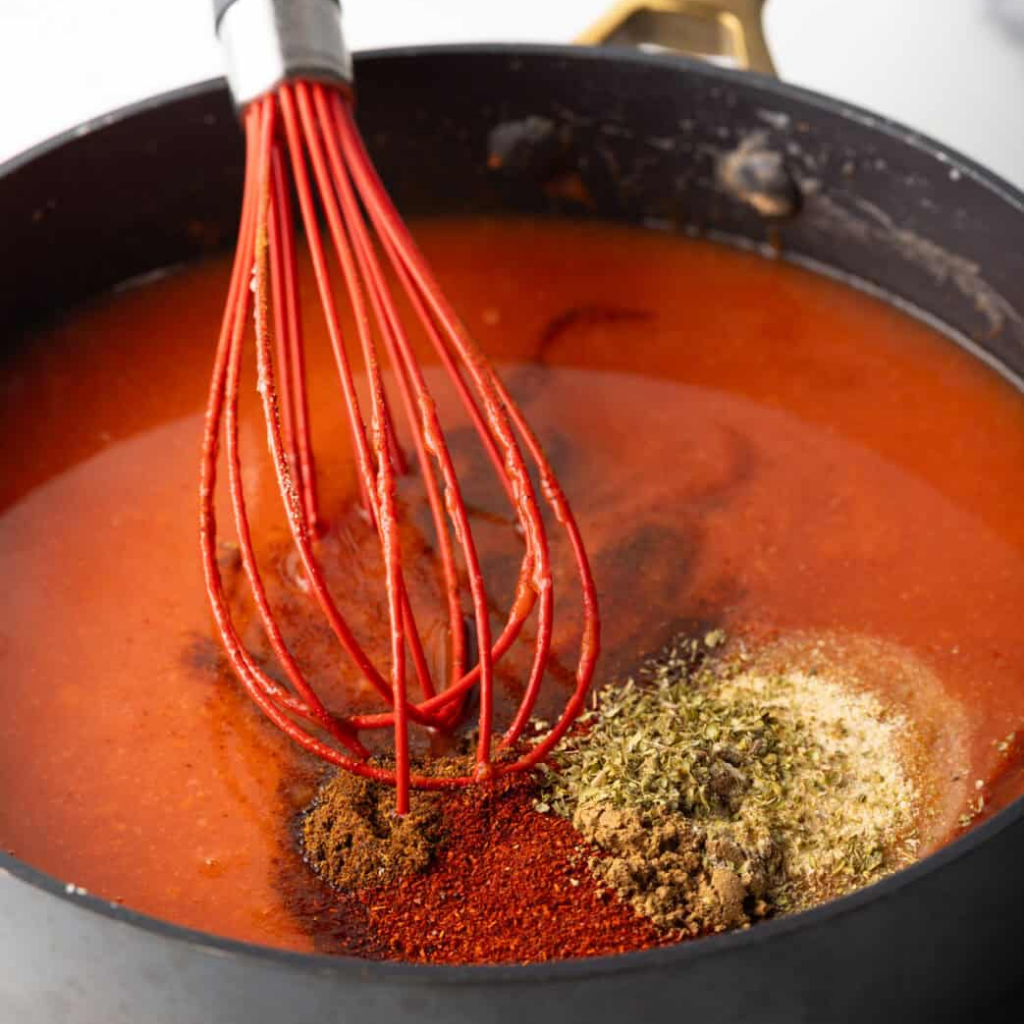
While the chiles soak, heat the oil in the same skillet over medium heat. Add the chopped onion and cook for 5-7 minutes until softened and lightly golden. The onion should be tender but not browned—you want sweetness, not caramelization. Add the minced garlic, cumin, oregano, and coriander, stirring constantly for about 30 seconds until the spices become fragrant.
Stir in the tomato paste and cook for another minute, letting it darken slightly and lose its raw taste. This step concentrates the tomato flavor and adds depth to the finished sauce. Remove the skillet from heat and set aside.
Once the chiles are fully softened, it’s time to blend everything together. Using a slotted spoon, transfer the chiles to a blender, reserving the soaking liquid. Add the onion mixture from the skillet and 1 cup of the chile soaking liquid. Blend on high speed for 60-90 seconds until completely smooth. The mixture should be the consistency of heavy cream.
Strain the sauce through a fine-mesh sieve back into the original skillet, pressing the solids with the back of a spoon to extract as much flavor as possible. This step removes any remaining bits of chile skin and creates the silky-smooth texture that makes enchilada sauce so appealing. Discard the solids left in the strainer.
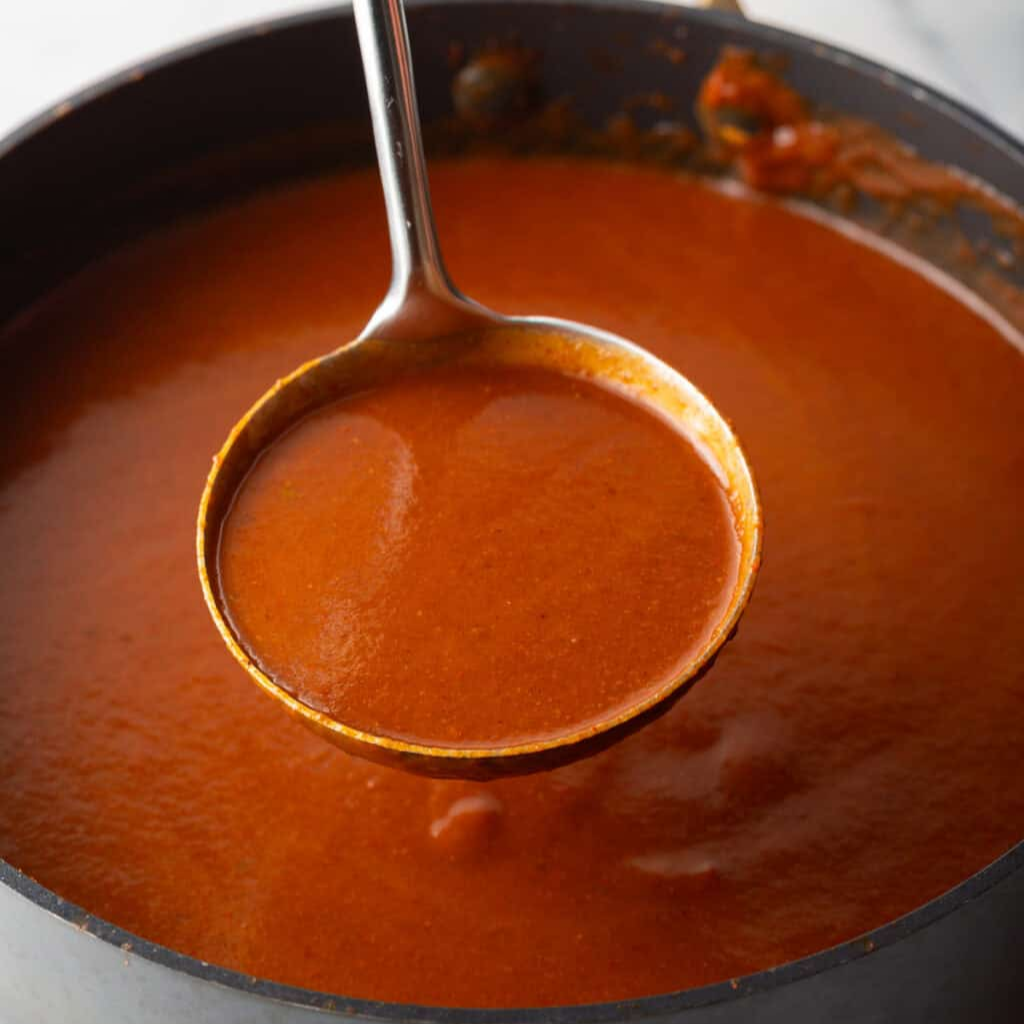
Place the strained sauce over medium-low heat and simmer gently for 10-15 minutes, stirring occasionally. The sauce will reduce and thicken slightly—it should coat the back of a spoon but still pour easily. If it becomes too thick, add more of the reserved chile soaking liquid. If it’s too thin, continue simmering until it reaches the right consistency.
Season with salt, starting with 1 teaspoon and adjusting to taste. Add the apple cider vinegar, which brightens all the flavors and adds a subtle tang. If the sauce tastes a bit harsh or overly earthy, add the brown sugar or honey to balance the flavors. Taste and adjust all seasonings—this is your chance to make it perfect for your palate.
Flavor & Texture Notes
This homemade red enchilada sauce offers layers of complex flavor that build with each taste. The guajillo chiles provide a mild, fruity heat with subtle smokiness, while the ancho chiles add sweetness and depth with notes of chocolate and raisin. The single chipotle chile contributes a distinctive smokiness without overwhelming the other flavors.
The sauce has a beautiful deep red color—more vibrant and appealing than most store-bought versions. Its texture is silky and smooth, coating enchiladas evenly without being gloppy or watery. When heated, it becomes glossy and rich, clinging to tortillas and fillings while still being fluid enough to distribute evenly.
The flavor profile is well-balanced, with enough heat to be interesting but not overwhelming. The cumin and oregano provide earthy, warm notes that complement the chiles’ natural flavors. The tomato paste adds umami depth, while the vinegar contributes a bright note that prevents the sauce from becoming too heavy.
Each spoonful delivers warmth and complexity—there’s an initial mild heat, followed by fruity sweetness from the chiles, then earthy spice notes that linger pleasantly. It’s the kind of sauce that makes everything it touches taste more authentic and satisfying.
Tips & Variations
Chile Substitutions: If you can’t find guajillo chiles, substitute with New Mexico red chiles or even dried California chiles. Ancho chiles can be replaced with mulato chiles for a slightly different flavor profile. For more heat, add another chipotle or include some árbol chiles, but use them sparingly as they’re quite spicy.
Consistency Control: The ideal enchilada sauce should coat a spoon but pour easily. If your sauce is too thick after cooking, thin it with additional chile soaking liquid or broth. If it’s too thin, continue simmering to reduce, or whisk in a small amount of masa harina or cornstarch slurry.
Flavor Variations: For a richer sauce, add a small piece of Mexican chocolate during the final simmering stage. A bay leaf added while simmering creates more depth—just remember to remove it before serving. Some cooks add a small amount of peanut butter for richness and body, though this isn’t traditional.
Make It Hotter: Increase the heat by including more chipotle chiles, adding cayenne pepper, or including some dried árbol chiles in the initial toasting. You can also leave more seeds in the chipotle chiles when preparing them.
Vegetarian/Vegan Option: Use vegetable broth instead of chicken broth for soaking the chiles, and make sure your brown sugar is vegan-friendly. The sauce is naturally gluten-free and works well in plant-based Mexican dishes.
Regional Variations: Different regions of Mexico have their own enchilada sauce preferences. For a New Mexico-style sauce, use all New Mexico red chiles. For a more complex sauce, try a combination that includes pasilla chiles for earthiness.
Storage & Make-Ahead
This red enchilada sauce is excellent for meal prep and actually improves in flavor after a day in the refrigerator. Store cooled sauce in an airtight container in the refrigerator for up to 1 week, or freeze for up to 6 months. The sauce may separate slightly during storage—just whisk it back together when reheating.
For freezing, portion the sauce into ice cube trays or small containers so you can thaw exactly what you need. Frozen sauce cubes work perfectly for quick weeknight enchiladas or for adding flavor to other dishes.
When reheating refrigerated sauce, warm it gently over low heat, stirring frequently. You may need to add a splash of broth or water to restore the proper consistency. Avoid high heat, which can cause the sauce to break or become grainy.
Make a double batch when you’re already going through the process—the extra effort is minimal, and you’ll have sauce ready for future Mexican meals. Having homemade enchilada sauce in your freezer makes weeknight enchiladas much more feasible.
Serving Suggestions
While enchiladas are the obvious use for this sauce, don’t limit yourself to that single application. This versatile red sauce works beautifully as a braising liquid for chicken or pork, creating rich, flavorful stews. It makes an excellent base for pozole or can be thinned slightly to create a soup broth.
Use it as a simmer sauce for eggs (huevos rancheros style), or as a topping for chilaquiles. It’s fantastic with grilled or roasted vegetables, and makes an interesting twist when used as a pizza sauce with Mexican toppings.
For enchiladas, warm the sauce before spooning over filled tortillas, then top with cheese and bake until bubbly. The sauce should generously coat the enchiladas without pooling excessively in the baking dish. Save some unheated sauce to drizzle over the finished dish for the best presentation.
Consider making enchilada casseroles where you layer the sauce with tortillas, fillings, and cheese lasagna-style. The sauce also works wonderfully in slow-cooker recipes, adding depth to braised meats or bean dishes.
FAQ
Do I really need to strain the sauce? Yes, straining creates the silky smooth texture that makes restaurant-quality enchilada sauce. While you can skip this step, you’ll have small pieces of chile skin that can be unpleasant to bite into. The straining process also helps ensure even flavor distribution throughout the sauce.
Can I use fresh chiles instead of dried? Dried chiles are essential for authentic enchilada sauce flavor. Fresh chiles have higher water content and different flavor compounds that won’t produce the same complex, concentrated taste. If you can’t find the specific dried chiles called for, substitute with other dried varieties rather than using fresh.
My sauce tastes bitter. What went wrong? Bitterness usually comes from burning the chiles during toasting or from leaving too many seeds in guajillo or ancho chiles. Make sure to toast chiles just until fragrant and puffed, not darkened. Remove seeds from guajillo and ancho chiles completely, though chipotle seeds can stay for heat.
How do I know if my chiles are still good? Dried chiles should be pliable, not brittle, and should have a rich color without white spots (which indicate mold). They should smell fruity and slightly smoky, not musty. Properly stored dried chiles last 1-2 years, though they’re best used within a year for optimal flavor.
Can I make this sauce in advance for a dinner party? Absolutely! This sauce actually tastes better the next day as the flavors meld. Make it up to 3 days in advance and store covered in the refrigerator. Reheat gently before using, adding a splash of broth if needed to restore consistency. This makes it perfect for entertaining since you can focus on assembling enchiladas rather than making sauce.
Making your own red enchilada sauce isn’t just about having control over ingredients—it’s about discovering how much better homemade can taste than anything from a can. The process is straightforward, the ingredients are accessible, and the results will transform your Mexican cooking. Once you experience the difference that properly toasted chiles and careful technique make, you’ll understand why this simple sauce has the power to elevate any dish it touches. Your enchiladas will never be the same, and that’s exactly the point.