Follow Me On Social Media!

One Pan Balsamic Steak and Veggies: The Complete Dinner That Cooks Itself.

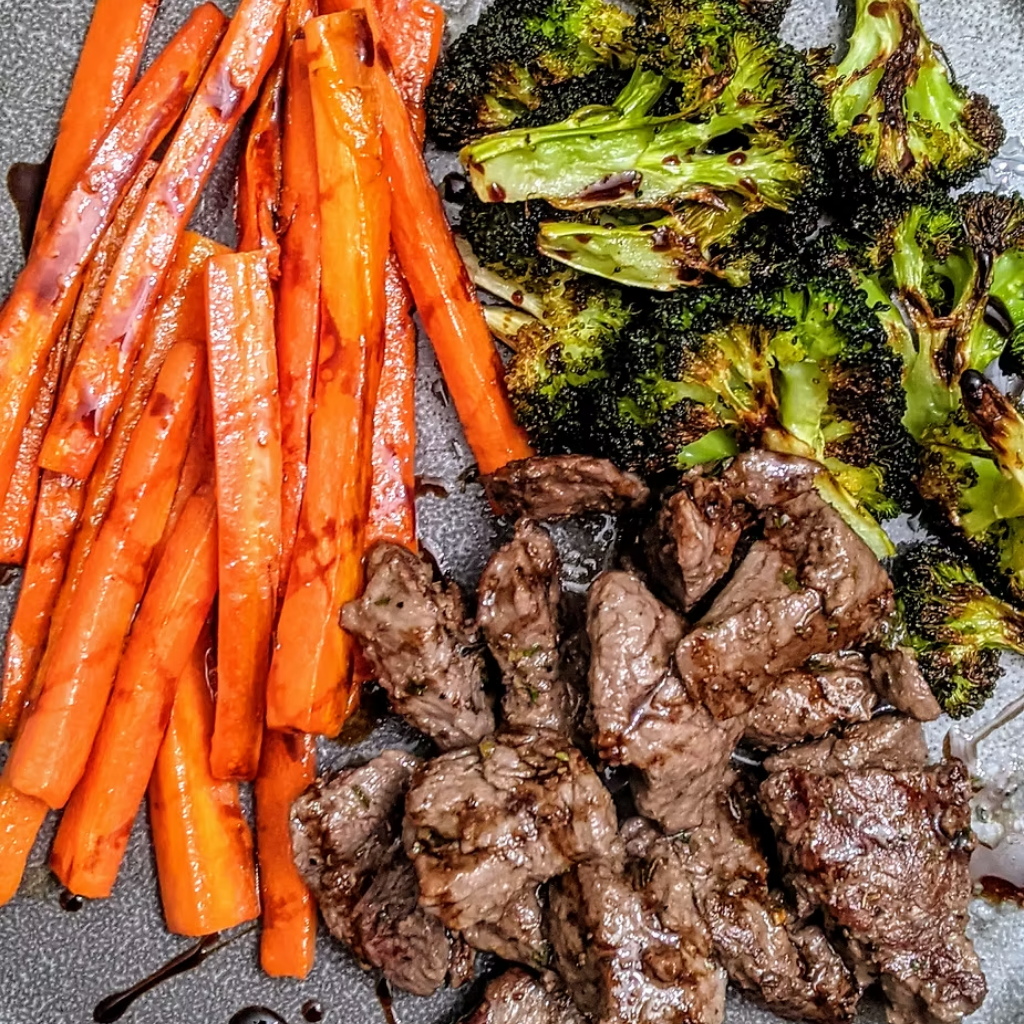
Sunday dinners used to stress me out. There was always so much to coordinate—timing the protein, getting the vegetables just right, making sure everything came together hot and ready at the same time. Then I discovered the magic of one pan meals, and this balsamic steak and vegetables recipe became my go-to solution for impressive dinners with minimal cleanup.
The beauty of this dish lies in its simplicity and timing. Everything cooks together in one large pan, allowing the flavors to meld while the balsamic reduction caramelizes around tender vegetables and perfectly seared steak. The vegetables get a head start in the oven, developing those golden edges that make even Brussels sprouts irresistible, while the steaks finish cooking in the same pan with all those concentrated flavors.
What sets this one pan balsamic steak apart from other sheet pan dinners is the technique of building layers of flavor. The vegetables roast first, concentrating their natural sugars, then the steaks are seared and added to the pan with a tangy balsamic glaze that reduces into a glossy sauce that coats everything. It’s the kind of meal that looks like you spent hours in the kitchen but actually gives you time to set the table and open a bottle of wine.
This recipe works whether you’re cooking for a special Sunday dinner with family or need an elegant but easy weeknight meal. The combination of protein and vegetables in one pan means you get a complete, balanced meal without juggling multiple pots and pans. Plus, the cleanup is refreshingly simple—just one pan to wash instead of an entire sink full of dishes.
Ingredients
For the Vegetables:
- 1 pound baby potatoes, halved (or quartered if large)
- 1 pound Brussels sprouts, trimmed and halved
- 2 medium carrots, peeled and cut into 2-inch pieces
- 1 large red onion, cut into wedges
- 3 tablespoons olive oil
- 1 teaspoon salt
- 1/2 teaspoon freshly ground black pepper
- 1 teaspoon dried thyme
For the Steak:
- 4 ribeye or strip steaks (6-8 ounces each), about 1-inch thick
- 2 tablespoons olive oil
- 1 teaspoon salt
- 1/2 teaspoon black pepper
- 2 teaspoons garlic powder
For the Balsamic Glaze:
- 1/3 cup balsamic vinegar
- 2 tablespoons honey
- 2 cloves garlic, minced
- 1 tablespoon fresh rosemary, chopped (or 1 teaspoon dried)
- 2 tablespoons butter
For Garnish:
- 2 tablespoons fresh parsley, chopped
- Flaky sea salt for finishing
Instructions
Preheat your oven to 425°F and position a rack in the upper third. You’ll need a large rimmed baking sheet or roasting pan—something big enough to hold all the vegetables and steaks without overcrowding. If everything is too cramped, the vegetables will steam instead of roast, and you’ll miss out on those caramelized edges that make this dish special.
Start by preparing all your vegetables since they need a head start in the oven. Halve the baby potatoes, cutting any large ones into quarters so all pieces are roughly the same size. Trim the Brussels sprouts and cut them in half lengthwise. Cut the carrots into chunky 2-inch pieces, and slice the red onion into thick wedges that will hold together during roasting.
Toss all the prepared vegetables with 3 tablespoons of olive oil, salt, pepper, and thyme in a large bowl until everything is well coated. Spread them in a single layer on your baking sheet, making sure pieces aren’t overlapping. The potatoes will take the longest to cook, so place them cut-side down for maximum contact with the hot pan. Roast for 20 minutes while you prepare the steaks.
Remove the steaks from the refrigerator to come to room temperature—this ensures even cooking. Pat them completely dry with paper towels, then rub with 2 tablespoons of olive oil and season generously on both sides with salt, pepper, and garlic powder. Let them sit while the vegetables get their head start in the oven.
While everything roasts, prepare the balsamic glaze by whisking together the balsamic vinegar, honey, minced garlic, and rosemary in a small bowl. This mixture will reduce into a glossy sauce that ties all the flavors together.
After the vegetables have roasted for 20 minutes, remove the pan from the oven. The vegetables should be starting to brown and the potatoes should be tender when pierced with a fork. Push the vegetables to one side of the pan to make room for the steaks.
Heat a large oven-safe skillet over medium-high heat. If your roasting pan is large enough and can go on the stovetop, you can use that directly. Sear the steaks for 2-3 minutes per side until they develop a golden brown crust. This step is crucial for flavor—don’t skip the searing even though everything finishes in the oven.
Transfer the seared steaks to the pan with the vegetables, nestling them among the roasted vegetables. Drizzle the balsamic mixture over everything, making sure to coat both the steaks and vegetables. Return the pan to the oven and roast for another 8-12 minutes, depending on your desired doneness. For medium-rare, aim for an internal temperature of 130°F.
Remove the pan from the oven and immediately dot the steaks with butter, letting it melt and mingle with the pan juices. Tent the entire pan loosely with foil and let rest for 5 minutes. This resting period allows the juices to redistribute and the balsamic glaze to thicken slightly.
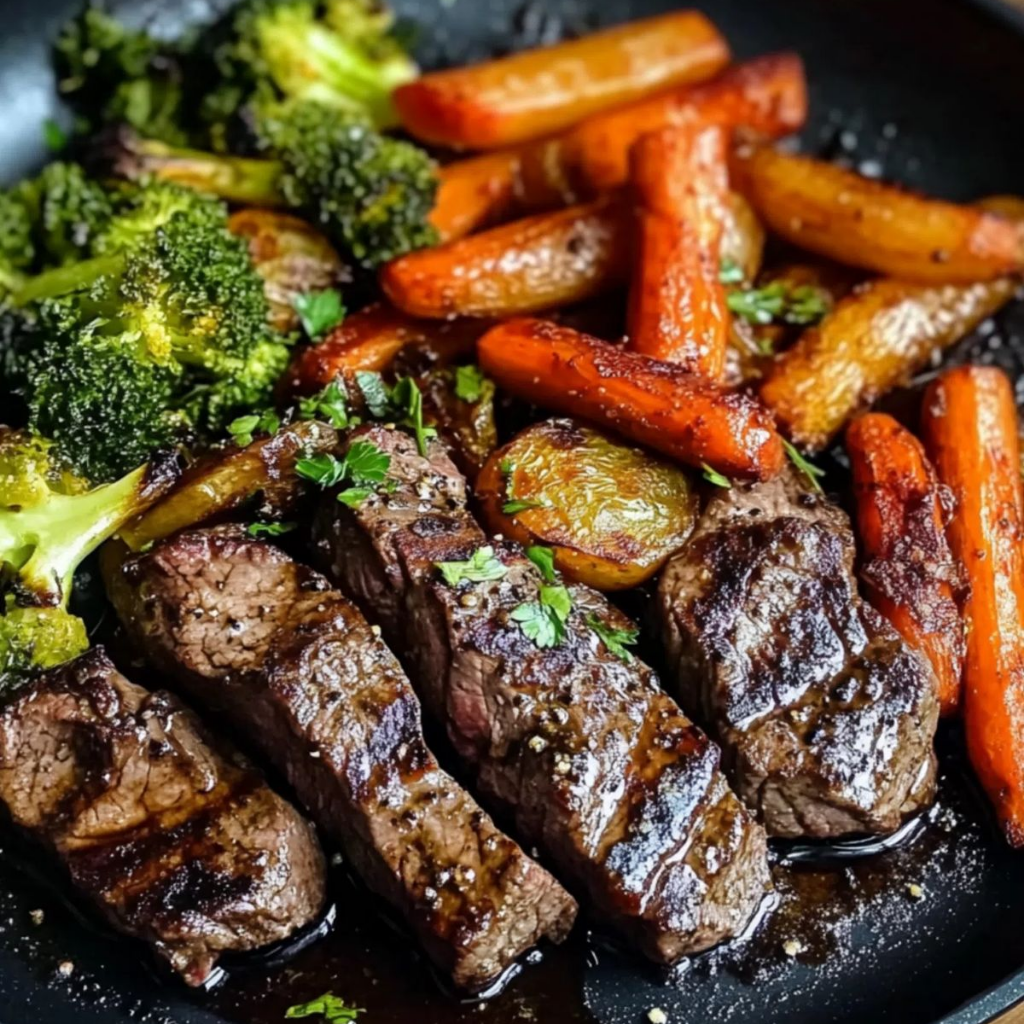
Before serving, sprinkle everything with fresh chopped parsley and a pinch of flaky sea salt. The contrast of textures and the bright green herbs make this dish as beautiful as it is delicious.
Flavor & Texture Notes
This one pan balsamic steak delivers on multiple levels of flavor and texture. The steaks emerge from the oven with a beautiful caramelized crust from the initial searing, while the interior remains tender and juicy. The balsamic glaze creates a slightly sweet and tangy coating that complements the rich, savory beef without overpowering it.
The vegetables transform during their time in the oven, developing deep, concentrated flavors. The Brussels sprouts lose any trace of bitterness and become nutty and sweet, with crispy outer leaves that almost taste like chips. The potatoes develop golden, crispy exteriors while staying fluffy inside, and they absorb the pan juices as they cook.
Carrots become tender and slightly caramelized, their natural sweetness enhanced by the roasting process. The red onion wedges soften and sweeten, adding a subtle sharpness that balances the richness of the meat. Everything gets coated in that glossy balsamic reduction, which adds brightness and ties all the flavors together.
The combination creates a harmonious blend where each component enhances the others. The vegetables pick up the savory flavors from the steak drippings, while the balsamic glaze adds a sophisticated touch that elevates simple roasted vegetables into something special.
Tips & Variations
Steak Selection: Ribeye and strip steaks work best for this recipe because they have enough marbling to stay tender during the oven cooking. Sirloin can work too, but watch the timing carefully as it can become tough if overcooked. For a more budget-friendly option, try thick-cut pork chops using the same technique.
Vegetable Swaps: This recipe is endlessly adaptable to seasonal vegetables. Try butternut squash, sweet potatoes, or parsnips in fall. Spring vegetables like asparagus or sugar snap peas can be added during the last 10 minutes of cooking. Summer vegetables like zucchini and bell peppers work beautifully too.
Doneness Levels: For rare steaks, aim for 120°F internal temperature; medium-rare is 130°F; medium is 140°F. Remember that the temperature will rise a few degrees during resting, so remove the steaks slightly before they reach your target temperature.
Glaze Variations: Try different vinegars for varying flavors—red wine vinegar creates a more robust taste, while white balsamic is milder. You can substitute maple syrup for honey, or add a tablespoon of Dijon mustard for extra complexity.
Make It Lighter: For a lower-fat version, use less olive oil on the vegetables and skip the butter finish. The balsamic glaze will still provide plenty of flavor. You can also use lean cuts like filet mignon, though you’ll need to watch the timing more carefully.
Herb Alternatives: Fresh thyme, oregano, or sage work beautifully in place of rosemary. Dried herbs can be substituted using about one-third the amount of fresh herbs called for in the recipe.
Storage & Make-Ahead
While this dish is best enjoyed immediately after cooking, leftovers keep well in the refrigerator for up to 3 days. Store the steak and vegetables together in an airtight container, and reheat gently in a 300°F oven for about 10 minutes to avoid overcooking the meat.
The vegetables can be prepped earlier in the day and stored covered at room temperature until ready to roast. You can even start roasting the vegetables up to an hour before you plan to serve, keeping them warm in a low oven until you’re ready to add the steaks.
The balsamic glaze can be made up to a week ahead and stored in the refrigerator. It will thicken as it cools, so you might need to warm it slightly before using or thin it with a tablespoon of water.
For meal prep, consider cooking extra vegetables and using leftover sliced steak in salads or sandwiches throughout the week. The roasted vegetables are excellent cold in grain bowls or reheated as side dishes for other meals.
Serving Suggestions
This complete meal needs very little additional accompaniment, but a simple green salad with lemon vinaigrette provides a fresh contrast to the rich, roasted flavors. Crusty bread for soaking up the pan juices is always welcome, and a glass of red wine complements the balsamic flavors beautifully.
For a more elaborate presentation, transfer everything to a large serving platter and drizzle any remaining pan juices over the top. The colorful vegetables and glossy steaks create a stunning centerpiece that’s perfect for entertaining.
Consider serving with a dollop of horseradish cream or chimichurri on the side for guests who want extra flavor. The herbs and acidity in these condiments pair wonderfully with both the steak and roasted vegetables.
For family-style serving, leave everything in the roasting pan and bring it directly to the table—it’s rustic, elegant, and saves on dishwashing. Provide steak knives and serving spoons, and let everyone help themselves.
FAQ
Can I use frozen vegetables for this recipe? Fresh vegetables work best because they roast more evenly and develop better caramelization. If using frozen vegetables, thaw them completely and pat dry before roasting. They may release more water, which can prevent proper browning, so increase the oven temperature to 450°F and extend the cooking time slightly.
How do I prevent my vegetables from burning while the steak cooks? If your vegetables are browning too quickly, cover that section of the pan with foil or move them to a cooler part of the pan. You can also lower the oven temperature to 400°F and extend the cooking time. Root vegetables like potatoes are fairly forgiving, but more delicate vegetables may need protection.
What if my steaks are different thicknesses? If working with steaks of varying thickness, sear the thicker ones first and give them a head start in the oven. Thinner steaks can be added a few minutes later. Use a meat thermometer to check doneness individually rather than relying on timing alone.
Can I make this recipe on the grill? Yes, but you’ll need a large cast iron pan or grill-safe roasting pan. Start the vegetables on the grill over medium heat, then add the steaks after they’ve had their head start. Cover the grill to create an oven-like environment and monitor temperatures carefully.
How do I know when the balsamic glaze is ready? The glaze should coat the back of a spoon and have a syrupy consistency. It will continue to thicken slightly as it cools, so don’t reduce it too much in the oven. If it becomes too thick, thin it with a tablespoon of warm water or additional balsamic vinegar.
Sometimes the best meals are the ones that practically cook themselves while you focus on the people you’re sharing them with. This one pan balsamic steak and vegetables recipe delivers restaurant-quality flavors with home-cooking ease, proving that impressive doesn’t have to mean complicated. The next time you want to create something special without spending your entire evening in the kitchen, remember this recipe—it might just become your new favorite way to make Sunday dinner feel effortless and elegant all at once.