Follow Me On Social Media!

Healthy Salmon Salad Recipe: Fresh, Protein-Packed, and Ready in 15 Minutes.


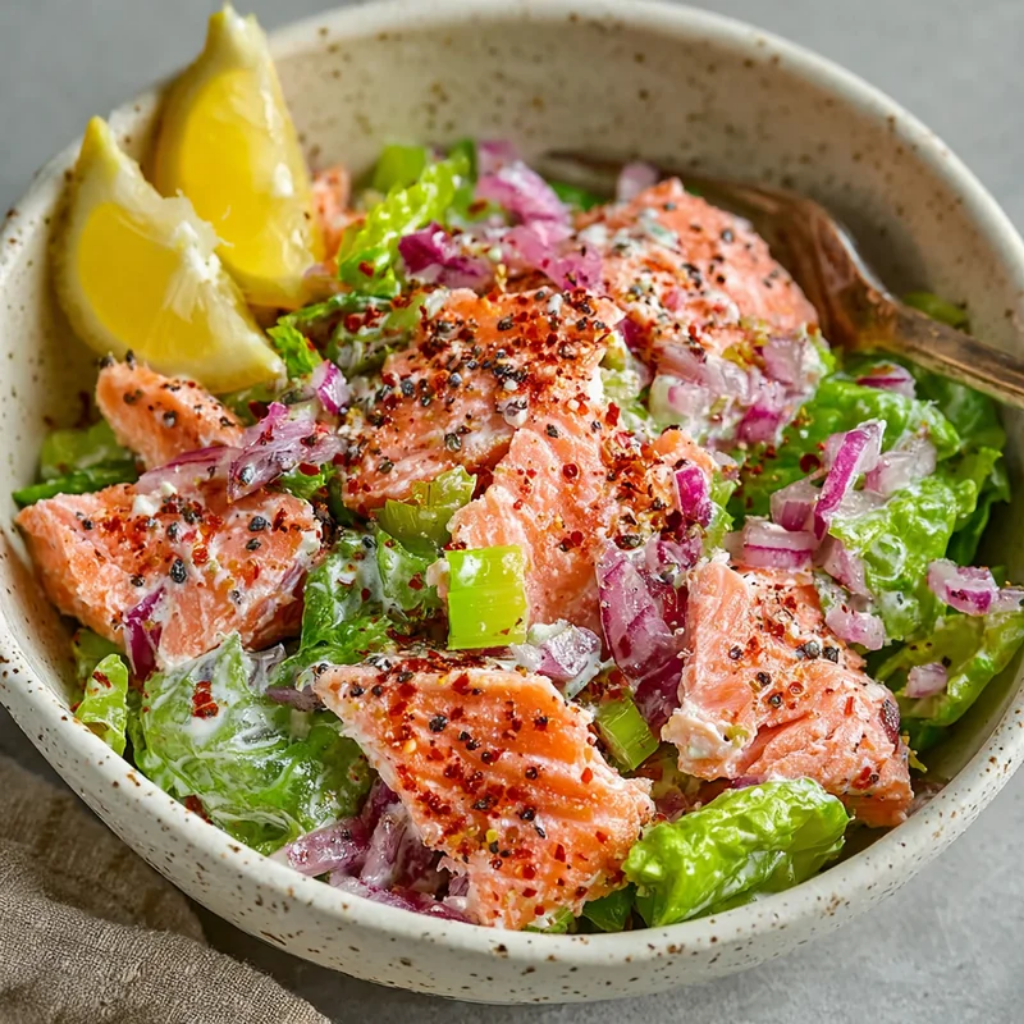
There’s something deeply satisfying about a salad that doesn’t leave you hunting through the kitchen for something more substantial an hour later. This healthy salmon salad achieves that rare balance—it’s light enough to feel energizing rather than heavy, but packed with enough protein and healthy fats to keep you satisfied for hours. The combination of flaky salmon, crisp vegetables, and a bright lemon dressing creates something that feels more like a complete meal than a typical side salad.
I developed this recipe during a particularly hectic period when I was traveling frequently for work. Hotel breakfast buffets and airport food had left me craving something fresh, clean, and nourishing. I needed meals that could be prepared quickly when I was home, travel well when packed for lunch, and provide steady energy without the afternoon crash that comes from heavier foods.
What makes this salmon salad special is the technique of gently poaching the fish, which keeps it incredibly moist and flaky, then combining it with vegetables that provide different textures and flavors in each bite. The dressing is bright and zesty without being overpowering, allowing the natural flavor of the salmon to shine through while tying all the components together.
This recipe works equally well for meal prep, quick weeknight dinners, or elegant lunch entertaining. The salmon can be cooked ahead of time and stored in the refrigerator, making assembly quick when you’re ready to eat. It’s also naturally gluten-free and dairy-free, making it suitable for various dietary needs without any special modifications.
Ingredients
For the Salmon:
- 1 pound salmon fillet, skin removed, cut into 4 portions
- 2 cups water
- 1/2 cup dry white wine (or additional water)
- 1 lemon, sliced into rounds
- 2 bay leaves
- 1 teaspoon salt
- 1/2 teaspoon black peppercorns
For the Salad:
- 6 cups mixed greens (arugula, spinach, and butter lettuce work well)
- 1 medium cucumber, diced
- 1 cup cherry tomatoes, halved
- 1/2 red onion, thinly sliced
- 1 ripe avocado, sliced
- 1/4 cup capers, drained
- 2 hard-boiled eggs, quartered (optional)
For the Lemon Herb Dressing:
- 1/4 cup fresh lemon juice
- 1/3 cup extra-virgin olive oil
- 1 tablespoon Dijon mustard
- 2 cloves garlic, minced
- 2 tablespoons fresh dill, chopped
- 1 tablespoon fresh parsley, chopped
- 1 teaspoon honey or maple syrup
- Salt and freshly ground black pepper to taste
Instructions
Begin by preparing the poaching liquid for the salmon. In a large, wide skillet or shallow saucepan, combine the water, white wine, lemon slices, bay leaves, salt, and peppercorns. Bring the mixture to a gentle simmer over medium heat—you want to see small bubbles breaking the surface, but not a rolling boil, which would make the salmon tough.
While the poaching liquid heats, check your salmon fillets for any remaining pin bones by running your fingers along the flesh. Remove any bones you find with tweezers or needle-nose pliers. Pat the salmon completely dry with paper towels and season lightly with salt and pepper.
Once the poaching liquid is simmering, carefully lower the salmon fillets into the liquid. The fish should be mostly submerged—if not, add a bit more hot water. Cover the pan and reduce the heat to maintain a very gentle simmer. Poach the salmon for 8-10 minutes, depending on thickness. The fish is done when it flakes easily with a fork and the internal temperature reaches 145°F.
Remove the salmon from the poaching liquid using a slotted spatula and transfer to a plate. Let it cool completely before breaking it into bite-sized flakes. Don’t worry if some pieces are larger than others—the varied sizes add visual interest and texture to the finished salad.
While the salmon cools, prepare your vegetables. Wash and dry the mixed greens thoroughly, then arrange them on a large platter or divide among individual plates. The greens should be completely dry so the dressing adheres properly rather than sliding off.
Dice the cucumber into small, uniform pieces for easy eating. Halve the cherry tomatoes—if they’re particularly large, quarter them instead. Slice the red onion as thinly as possible; if you find raw onion too sharp, you can soak the slices in cold water for 10 minutes, then pat them dry. Cut the avocado just before serving to prevent browning.
For the dressing, whisk together the lemon juice and Dijon mustard in a small bowl until combined. Slowly drizzle in the olive oil while whisking continuously to create an emulsion. Add the minced garlic, fresh herbs, and honey, then season with salt and pepper. Taste and adjust the balance—you might want more lemon juice for brightness or a pinch more salt to enhance all the flavors.
To assemble the salad, start with the bed of mixed greens. Distribute the cucumber, cherry tomatoes, and red onion evenly over the greens. Add the flaked salmon, trying to distribute it so each serving gets a good portion. Arrange the avocado slices on top and scatter the capers throughout. If using hard-boiled eggs, tuck the quarters around the salad.
Drizzle the dressing over the entire salad just before serving, or serve it on the side to let people add as much as they prefer. A light hand with the dressing is key—you want to enhance the ingredients without drowning them.
Flavor & Texture Notes
This salmon salad offers a symphony of textures and complementary flavors that keep each bite interesting. The poached salmon is incredibly tender and moist, almost buttery in texture, with a clean fish flavor that isn’t overpowering. The gentle cooking method preserves the salmon’s natural oils, making each flake rich and satisfying.
The mixed greens provide a fresh, slightly bitter foundation that balances the richness of the salmon. Cucumber adds a cool crunch that contrasts beautifully with the soft fish, while cherry tomatoes burst with sweet-tart juice that brightens every mouthful. The thin slices of red onion contribute a sharp bite that cuts through the richer elements.
Avocado brings creaminess and healthy fats that make the salad feel substantial and satisfying. The capers provide little pops of briny intensity that enhance the overall flavor without overwhelming it. Hard-boiled eggs, if included, add another layer of protein and a creamy texture that complements the salmon.
The lemon herb dressing ties everything together with bright acidity and fresh herb flavors. The Dijon mustard adds depth and helps emulsify the dressing, while the touch of honey rounds out any harsh edges. The overall effect is clean, fresh, and energizing—the kind of meal that makes you feel nourished rather than weighed down.
Tips & Variations
Salmon Cooking Alternatives: If you prefer not to poach, you can bake the salmon at 400°F for 12-15 minutes, or pan-sear it skin-side down for 4-5 minutes, then flip and cook for another 2-3 minutes. Leftover grilled salmon works beautifully in this salad too.
Make-Ahead Strategy: The salmon can be poached up to 2 days in advance and stored covered in the refrigerator. The dressing keeps for up to a week and actually improves as the flavors meld. Prepare all vegetables except the avocado ahead of time, then assemble just before serving.
Seasonal Variations: In spring, try adding asparagus spears or peas. Summer calls for corn kernels or sliced peaches. Fall vegetables like roasted butternut squash or pears work wonderfully, while winter citrus segments add brightness during colder months.
Protein Swaps: This salad framework works with other fish like arctic char, trout, or even canned high-quality salmon or tuna. For a vegetarian version, substitute marinated white beans or chickpeas for the salmon.
Texture Additions: Toasted nuts or seeds add wonderful crunch—try pine nuts, sliced almonds, or pumpkin seeds. Dried cranberries or chopped fresh herbs can add color and flavor variation.
Dressing Alternatives: A classic vinaigrette, green goddess dressing, or even a light tahini-based dressing would work well with these flavors. For a Mediterranean twist, try a lemon-oregano vinaigrette with a touch of red wine vinegar.
Storage & Make-Ahead
This salmon salad is excellent for meal prep when stored properly. Keep the cooked, flaked salmon separate from the vegetables and dressing until ready to serve. The salmon will stay fresh in the refrigerator for up to 3 days, while the dressing keeps for up to a week.
Prepare the vegetables except for the avocado up to a day in advance, storing them in separate containers to maintain their individual textures. The mixed greens should be washed, thoroughly dried, and stored in the refrigerator wrapped in paper towels inside a sealed container to keep them crisp.
For packed lunches, layer the ingredients strategically: put the dressing in the bottom of the container, followed by sturdier vegetables like cucumber and tomatoes, then the greens, and finally the salmon and avocado on top. This prevents the delicate ingredients from getting soggy.
If you’re making the salad for immediate consumption, it’s best to add the avocado and dressing just before serving to prevent browning and wilting. However, the assembled salad without dressing will hold well for about an hour at room temperature.
Serving Suggestions
This healthy salmon salad works beautifully as a standalone lunch or light dinner, but it also pairs well with various sides and accompaniments. Serve with crusty whole grain bread or crackers for those who want something more substantial. A simple soup like gazpacho or cucumber soup makes an elegant starter.
For entertaining, consider serving the salad family-style on a large platter, allowing guests to serve themselves. Provide the dressing in a small pitcher or squeeze bottle for easy drizzling. Small bowls of extra capers, herbs, or toasted nuts let people customize their portions.
The salad looks stunning when plated individually, with the salmon arranged artfully over the greens and the colorful vegetables distributed for visual appeal. A sprinkle of fresh herbs and a light drizzle of dressing create an elegant presentation suitable for dinner parties or special occasions.
Wine pairings include crisp whites like Sauvignon Blanc or Pinot Grigio, or even a light rosé. For non-alcoholic options, sparkling water with lemon or a fresh herb-infused water complement the clean, bright flavors perfectly.
FAQ
How do I know when the poached salmon is done? Properly poached salmon should flake easily when tested with a fork and appear opaque throughout. The internal temperature should reach 145°F. If you’re unsure, it’s better to slightly undercook than overcook, as the salmon will continue cooking slightly from residual heat after removal from the poaching liquid.
Can I use canned salmon instead of fresh? Yes, high-quality canned salmon works well for this recipe. Look for wild-caught salmon packed in water rather than oil, and drain it thoroughly before using. You’ll need about 12-14 ounces of canned salmon to replace 1 pound of fresh. Remove any skin and bones, then break the salmon into flakes.
Why is my avocado turning brown? Avocado browns due to oxidation when exposed to air. To prevent this, add the avocado just before serving, or toss the slices gently with a little lemon juice. If preparing ahead, press plastic wrap directly onto the surface of cut avocado to minimize air exposure.
How can I make this salad more filling? Add cooked quinoa, farro, or brown rice to make the salad more substantial. Roasted sweet potatoes, extra hard-boiled eggs, or a larger portion of salmon will also increase the protein and calorie content. Including nuts or seeds provides healthy fats and additional satisfaction.
Can I make the dressing without honey for a vegan version? Absolutely. Replace the honey with maple syrup, agave nectar, or simply omit the sweetener if you prefer a more tart dressing. You can also add a pinch of sugar if you need just a touch of sweetness to balance the lemon’s acidity.
Creating a satisfying salad that genuinely nourishes your body while pleasing your taste buds doesn’t have to be complicated. This healthy salmon salad proves that simple, high-quality ingredients prepared with care can result in something far more satisfying than the sum of its parts. Whether you’re looking for a reliable lunch option, a light dinner that won’t leave you sluggish, or an elegant dish to serve guests, this recipe delivers on all fronts. The beauty lies in its flexibility—make it your own with seasonal vegetables, different herbs, or whatever looks best at your local market.