Follow Me On Social Media!

Roasted Veggie and Chickpea Bowls with Tahini Dressing: The Plant-Based Power Bowl That Actually Fills You Up.

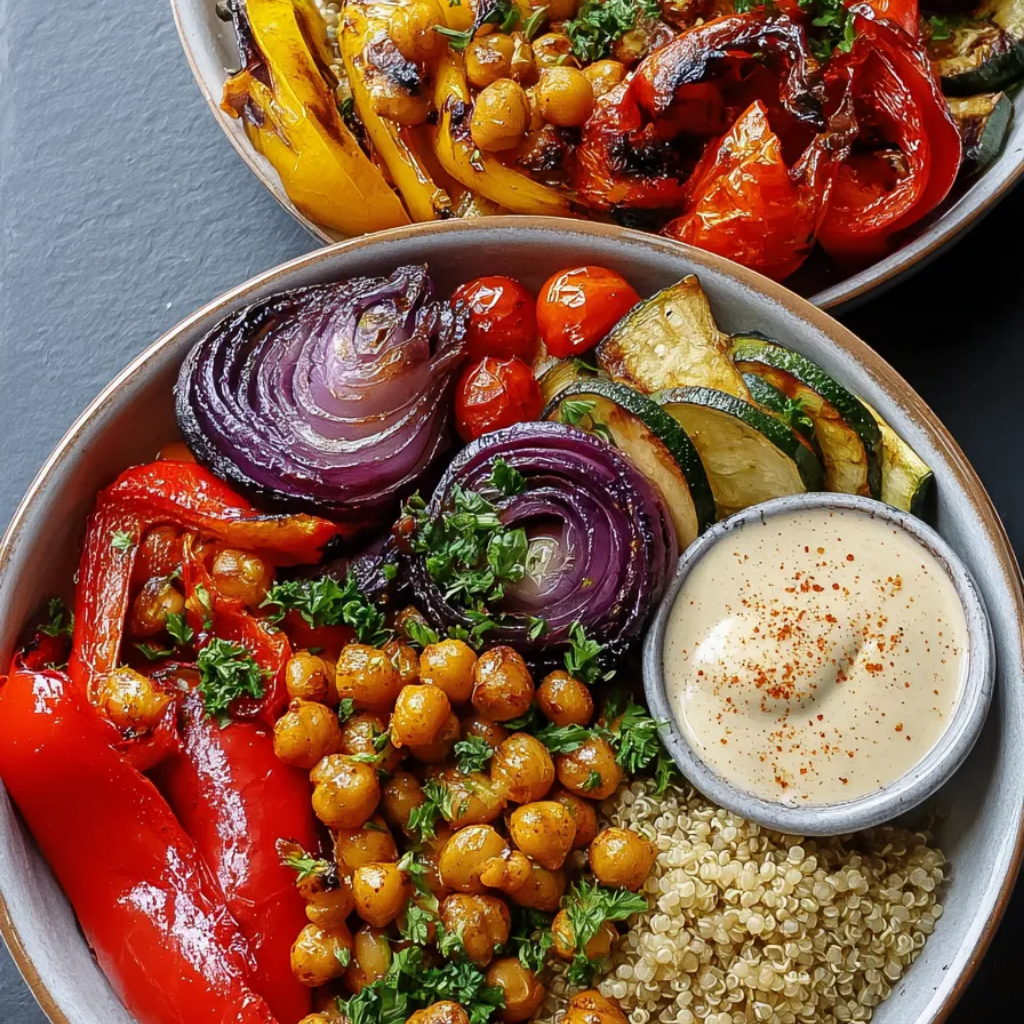
I used to think that eating more vegetables meant sacrificing satisfaction at dinner. Then I discovered the magic of properly roasted vegetables paired with protein-rich chickpeas and a creamy tahini dressing that ties everything together. This roasted veggie and chickpea bowl changed my entire perspective on plant-based meals—it’s hearty enough to keep you satisfied for hours, colorful enough to make your Instagram followers jealous, and simple enough to become a weekly staple.
The inspiration came from a particularly busy month when I was meal prepping like my life depended on it. I needed something that would roast happily in the oven while I tackled other tasks, taste great for several days, and provide real nutritional staying power. After countless experiments with different vegetable combinations and dressing ratios, this recipe emerged as the clear winner.
What sets these chickpea bowls apart is the roasting technique that caramelizes the vegetables to bring out their natural sweetness, while the chickpeas become golden and slightly crispy on the outside. The tahini dressing isn’t just an afterthought—it’s a creamy, nutty sauce that transforms simple roasted vegetables into something you’ll actually crave. The combination provides complete proteins, healthy fats, and enough fiber to keep you energized without that heavy, sluggish feeling that sometimes follows big meals.
This recipe is endlessly adaptable to whatever vegetables you have on hand, making it perfect for cleaning out your refrigerator or taking advantage of seasonal produce. Whether you’re committed to plant-based eating or just trying to incorporate more vegetables into your routine, these bowls deliver on both nutrition and flavor.
Ingredients
For the Roasted Vegetables:
- 2 medium sweet potatoes, peeled and cubed (about 1-inch pieces)
- 1 large red bell pepper, cut into strips
- 1 medium zucchini, sliced into half-moons
- 1 medium red onion, cut into wedges
- 8 ounces Brussels sprouts, halved and trimmed
- 1 can (15 ounces) chickpeas, drained, rinsed, and patted dry
- 3 tablespoons olive oil
- 1 teaspoon ground cumin
- 1 teaspoon smoked paprika
- 1/2 teaspoon garlic powder
- Salt and freshly ground black pepper to taste
For the Tahini Dressing:
- 1/4 cup tahini (sesame seed paste)
- 3 tablespoons fresh lemon juice
- 2 tablespoons warm water (more as needed)
- 1 clove garlic, minced
- 1 tablespoon maple syrup or honey
- 1/2 teaspoon ground cumin
- 1/4 teaspoon salt
- Pinch of cayenne pepper
For Serving:
- 4 cups mixed greens or baby spinach
- 1/4 cup pumpkin seeds or sunflower seeds
- 2 tablespoons fresh herbs (parsley, cilantro, or mint)
- Lemon wedges for serving
Instructions
Preheat your oven to 425°F and line two large baking sheets with parchment paper. The high heat is crucial for getting those caramelized edges that make roasted vegetables irresistible. If you crowd everything onto one pan, the vegetables will steam instead of roast, resulting in soggy rather than crispy results.
Prepare all your vegetables by cutting them into roughly uniform pieces. This ensures even cooking—you want everything to finish at the same time. Pat the chickpeas completely dry with paper towels, removing any loose skins that come off easily. This extra step helps them get crispy in the oven instead of staying soft and mushy.
In a large bowl, toss the sweet potatoes with 1 tablespoon of olive oil and a generous pinch of salt. Spread them on one of the prepared baking sheets, making sure they’re in a single layer with space between pieces. Sweet potatoes take the longest to cook, so they get a head start—roast them for 15 minutes before adding the other vegetables.
While the sweet potatoes roast, combine the bell pepper, zucchini, red onion, and Brussels sprouts in the same bowl you used for the sweet potatoes. Toss with 1 tablespoon of olive oil, half the cumin, half the smoked paprika, and season with salt and pepper. After the sweet potatoes have roasted for 15 minutes, spread these vegetables on the second baking sheet.
In a separate bowl, toss the dried chickpeas with the remaining tablespoon of olive oil, the rest of the cumin and smoked paprika, plus the garlic powder. Season well with salt and pepper. Add the seasoned chickpeas to the baking sheet with the sweet potatoes, which should have some color by now.
Return both baking sheets to the oven and roast for another 20-25 minutes, stirring everything once halfway through. The vegetables should be tender and golden brown in spots, while the chickpeas should be crispy on the outside. If some vegetables are browning faster than others, you can remove them individually as they finish.
While everything roasts, make the tahini dressing by whisking together the tahini, lemon juice, and warm water in a small bowl. The mixture will seize up and look grainy at first—this is normal. Keep whisking and gradually add more warm water, one tablespoon at a time, until the dressing becomes smooth and pourable. Whisk in the minced garlic, maple syrup, cumin, salt, and cayenne. The finished dressing should coat the back of a spoon but still pour easily. Taste and adjust the lemon juice, salt, or sweetener as needed.
Flavor & Texture Notes
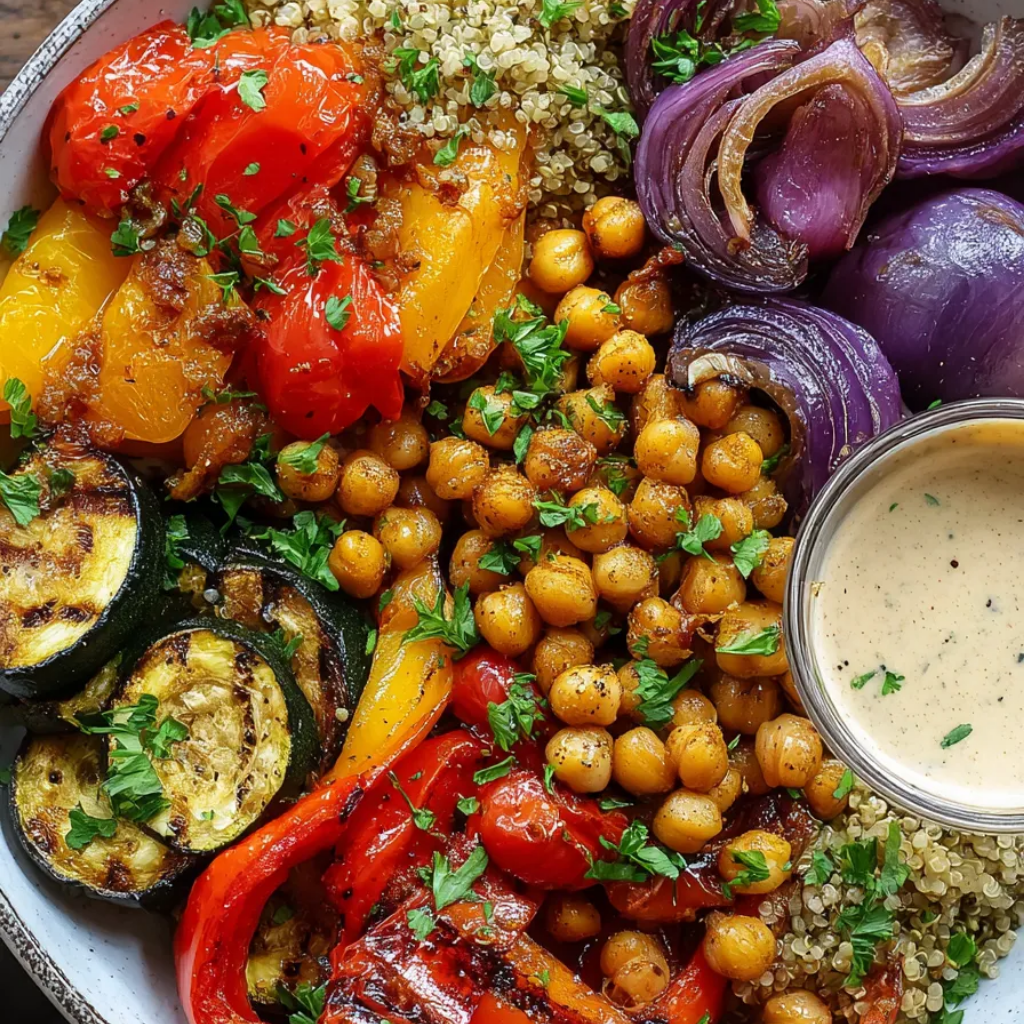
These roasted veggie bowls offer a satisfying contrast of textures and flavors that keeps each bite interesting. The sweet potatoes become creamy on the inside with caramelized edges that add a subtle sweetness. Brussels sprouts transform from potentially bitter vegetables into nutty, crispy gems with golden outer leaves that almost taste like chips.
The chickpeas develop a wonderful contrast between their crispy, seasoned exterior and their creamy interior. They provide substantial protein and a satisfying pop that makes the bowl feel complete rather than like a side dish. The bell peppers and zucchini retain some bite while developing sweet, roasted flavors that balance the earthier components.
The tahini dressing is the magic element that brings everything together. It’s rich and nutty without being heavy, with a subtle garlic flavor and bright acidity from the lemon juice. The maple syrup adds just enough sweetness to balance the tahini’s natural bitterness without making the dressing taste like dessert.
Fresh greens underneath provide a cool, crisp foundation that contrasts beautifully with the warm roasted vegetables. The pumpkin seeds add another textural element—a satisfying crunch that plays against the various textures of the roasted components.
Tips & Variations
Vegetable Swaps: This recipe is incredibly flexible. Cauliflower, broccoli, carrots, and butternut squash all roast beautifully using the same method. Root vegetables like parsnips or turnips work well too. Just remember that denser vegetables need longer cooking times, while delicate ones like asparagus or cherry tomatoes need less time.
Seasonal Adaptations: In summer, try zucchini, eggplant, and cherry tomatoes. Fall calls for butternut squash, delicata squash, and apples. Winter vegetables like cabbage, leeks, and carrots work wonderfully, while spring asparagus, snap peas, and radishes can be roasted quickly at the end.
Protein Boosters: Add hemp seeds, chopped walnuts, or crumbled feta cheese for extra protein and flavor. A soft-boiled egg on top transforms this from a side into a complete meal. For meat-eaters, leftover roasted chicken or turkey works beautifully.
Dressing Variations: If you don’t have tahini, try making the dressing with almond butter or cashew butter instead. For a completely different flavor profile, substitute the tahini dressing with a lemon vinaigrette or green goddess dressing made with herbs and avocado.
Spice Level: Adjust the heat by increasing the cayenne in the dressing or adding red pepper flakes to the vegetables before roasting. For a completely different flavor direction, try curry powder or garam masala instead of cumin and paprika.
Make It Heartier: Add cooked quinoa, brown rice, or farro to the bottom of each bowl before adding the vegetables. This creates an even more substantial meal and adds additional fiber and protein.
Storage & Make-Ahead
This recipe is a meal prep champion. The roasted vegetables and chickpeas keep well in the refrigerator for up to 4 days and can be eaten cold, at room temperature, or gently reheated. The tahini dressing actually improves after sitting for a day, as the flavors meld together.
Store the roasted components and dressing separately to maintain the best textures. The vegetables will stay crispier if they’re not sitting in dressing, and you can control how much sauce each serving gets. Keep the fresh greens separate as well—add them just before eating to maintain their crispness.
For efficient meal prep, roast a double batch of vegetables and chickpeas on Sunday, then assemble fresh bowls throughout the week. The dressing can be made up to a week in advance and stored in the refrigerator. If it thickens too much during storage, whisk in a tablespoon of warm water to restore its consistency.
The assembled bowls can be packed for lunch in containers, with the dressing stored separately to prevent soggy greens. Add the dressing just before eating for the best texture and freshest flavor.
Serving Suggestions
These bowls are substantial enough to serve as a complete meal, but they also work beautifully as part of a larger spread. Serve alongside hummus and pita bread for a Mediterranean-inspired feast, or pair with a simple soup for a more substantial dinner.
For entertaining, set up a build-your-own bowl station with the warm roasted vegetables, various greens, different toppings like seeds and herbs, and small bowls of the tahini dressing. Guests can customize their bowls to their preferences, and it takes the pressure off you as the host.
The bowls look beautiful in wide, shallow bowls that give you room to arrange the colorful vegetables artfully. A sprinkle of fresh herbs, a few pumpkin seeds, and a drizzle of the golden tahini dressing create an Instagram-worthy presentation that tastes even better than it looks.
Consider serving with warm flatbread or naan for scooping, and provide lemon wedges on the side for those who want extra brightness. A glass of crisp white wine or herbal tea complements the earthy, nutty flavors perfectly.
FAQ
How do I prevent my vegetables from getting mushy? Cut vegetables into uniform pieces and don’t overcrowd the baking sheets. Give vegetables space to breathe—if they’re touching too much, they’ll steam instead of roast. Also, make sure your oven is fully preheated before adding the vegetables, and resist the urge to stir them too frequently.
My tahini dressing is too thick/thin. How do I fix it? Tahini dressing consistency can be tricky because tahini varies between brands. If it’s too thick, whisk in warm water one tablespoon at a time until you reach your desired consistency. If it’s too thin, add more tahini gradually. The dressing should be pourable but substantial enough to coat the vegetables.
Can I make this recipe oil-free? Yes, though you’ll sacrifice some of the caramelization that makes roasted vegetables so appealing. Try roasting the vegetables on parchment paper with just seasonings, or use a small amount of vegetable broth to prevent sticking. The tahini dressing can be made with just tahini, lemon juice, water, and seasonings.
What’s the best way to reheat leftover bowls? The vegetables and chickpeas can be reheated in a 350°F oven for 5-10 minutes, or in a skillet over medium heat with a splash of water or broth. Avoid microwaving if possible, as it can make the vegetables soggy. Add fresh greens and dressing after reheating for the best texture.
Can I use canned chickpeas, or should I cook them from scratch? Canned chickpeas work perfectly for this recipe and save significant time. Just make sure to drain and rinse them well, then pat them completely dry before seasoning and roasting. If you prefer to cook chickpeas from scratch, use about 3/4 cup dried chickpeas, soaked and cooked until tender.
Building a satisfying plant-based meal doesn’t have to be complicated or time-consuming. These roasted veggie and chickpea bowls prove that simple techniques—good seasoning, proper roasting, and a flavorful sauce—can transform everyday ingredients into something you’ll genuinely look forward to eating. The best part is how adaptable this recipe is to your schedule, your taste preferences, and whatever happens to be in your refrigerator. Make it once, and you’ll understand why bowl meals have become such a popular way to eat well without a lot of fuss.