Follow Me On Social Media!

Homemade Artisan Garlic Knots Recipe – Crispy, Buttery, and Restaurant-Quality.

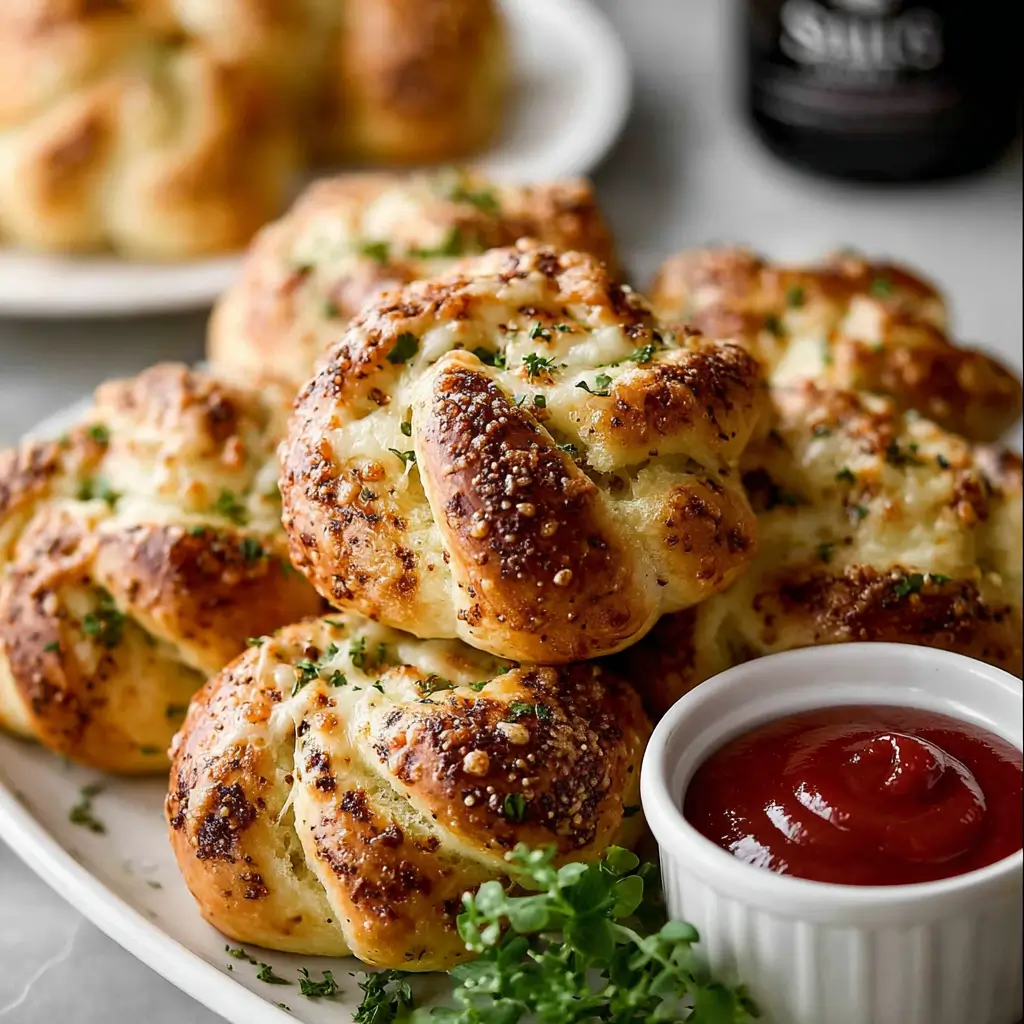
There’s something magical about pulling warm, golden garlic knots from your own oven. The first time I attempted these at home, I was convinced they’d never match the ones from my favorite Italian restaurant down the street. But after several kitchen experiments and a few burnt batches (we don’t talk about those), I discovered that creating bakery-quality artisan garlic knots at home isn’t just possible – it’s surprisingly straightforward.
These aren’t your typical frozen dinner rolls twisted into knots. We’re talking about genuine artisan-style garlic knots with a perfectly crispy exterior that gives way to soft, pillowy centers. The secret lies in a slow-rise dough that develops complex flavors overnight, combined with a three-stage garlic treatment that infuses every bite without overwhelming your palate.
What makes this recipe truly special is how it transforms simple pantry ingredients into something that tastes like it came from a high-end bakery. The dough recipe creates knots with incredible texture – crusty enough to hold their shape but tender enough to tear apart easily. And unlike many garlic knot recipes that rely heavily on garlic powder, we use fresh garlic in multiple forms to build layers of flavor that actually complement rather than mask the bread.
Ingredients
For the Artisan Dough:
- 3½ cups bread flour, plus extra for dusting
- 1¼ cups warm water (110°F)
- 2¼ teaspoons active dry yeast (1 packet)
- 2 tablespoons olive oil
- 1 tablespoon honey
- 2 teaspoons fine sea salt
- 1 teaspoon garlic powder
For the Garlic Butter Coating:
- 6 tablespoons unsalted butter
- 4 large garlic cloves, minced
- 2 tablespoons fresh parsley, finely chopped
- 1 teaspoon fresh oregano (or ½ teaspoon dried)
- ½ teaspoon kosher salt
- ¼ teaspoon red pepper flakes (optional)
- 2 tablespoons grated Parmesan cheese
For Finishing:
- Coarse sea salt for sprinkling
- Extra Parmesan for serving
Instructions
Start by creating your dough base, which requires patience but minimal active work. In a large mixing bowl, combine the warm water and honey, stirring until the honey dissolves completely. Sprinkle the yeast over the surface and let it sit for 5-8 minutes until it becomes foamy and fragrant. This step ensures your yeast is alive and ready to create those beautiful air pockets.
Add the olive oil to the yeast mixture, then gradually incorporate the bread flour, garlic powder, and salt. Mix with a wooden spoon until a shaggy dough forms – it won’t look smooth yet, and that’s perfectly normal. Turn the dough onto a lightly floured surface and knead for 8-10 minutes until it becomes smooth and elastic. The dough should spring back when poked gently.
Place your kneaded dough in a lightly oiled bowl, turning once to coat all sides. Cover with a damp kitchen towel and let it rise in a warm, draft-free spot for about 1½ hours, or until doubled in size. For even better flavor development, you can refrigerate this dough overnight after the initial rise, then bring it to room temperature before shaping.
While the dough completes its final rise, prepare your garlic butter mixture. Melt the butter in a small saucepan over medium-low heat, then add the minced garlic. Cook gently for 2-3 minutes until the garlic becomes fragrant but doesn’t brown. Remove from heat and stir in the parsley, oregano, salt, and red pepper flakes. Set aside to cool slightly.
Once your dough has doubled, punch it down gently and turn it onto a lightly floured surface. Divide the dough into 12 equal portions – a kitchen scale makes this much easier and ensures uniform knots. Roll each piece into a rope about 8 inches long, then tie into a simple overhand knot, tucking the ends under slightly.
Place the shaped knots on two parchment-lined baking sheets, spacing them about 2 inches apart. Cover with kitchen towels and let them rise again for 30-45 minutes until puffy and increased in size by about half.
Preheat your oven to 400°F during the last 15 minutes of rising time. Just before baking, brush each knot generously with the prepared garlic butter mixture, making sure to get some of the minced garlic pieces on top of each knot.
Bake for 18-22 minutes, rotating the pans halfway through, until the knots are golden brown and sound hollow when tapped on the bottom. Remove from the oven and immediately brush with any remaining garlic butter, then sprinkle with coarse sea salt and grated Parmesan while still warm.

Flavor & Texture Notes
These artisan garlic knots strike the perfect balance between rustic charm and refined taste. The exterior develops a beautiful golden crust with just enough chew to provide satisfying texture, while the interior remains incredibly soft and airy. Each bite delivers waves of garlic flavor – from the subtle background note in the dough to the more pronounced fresh garlic in the butter coating.
The slow-rise process creates complex, slightly tangy flavors reminiscent of sourdough, but without the lengthy starter maintenance. Fresh herbs add brightness that cuts through the richness of the butter, while the Parmesan contributes a sharp, nutty finish that elevates these beyond simple bread rolls.
The texture is what truly sets these apart from commercial versions. Instead of the dense, heavy feeling of mass-produced garlic knots, these have an almost ethereal lightness inside with enough structure to hold generous amounts of the garlic butter mixture without becoming soggy.
Tips & Variations
Temperature matters significantly when working with yeast dough. If your kitchen is particularly cold, create a warm environment by turning your oven to its lowest setting for just 2-3 minutes, then turning it off and placing your rising dough inside with the door slightly ajar.
For an even more artisan appearance, try shaping some knots differently – twist two ropes together before tying, or create figure-eight shapes instead of traditional knots. The variety adds visual interest when serving a crowd.
Herb variations work beautifully with this base recipe. Try substituting fresh rosemary and thyme for the oregano and parsley, or add fresh sage for a more sophisticated flavor profile. Just remember that woody herbs like rosemary should be chopped very finely.
If you prefer a vegan version, substitute the butter with high-quality olive oil and skip the Parmesan, or use nutritional yeast for a similar savory note. The results won’t be identical, but they’ll still be genuinely satisfying.
For those avoiding gluten, a cup-for-cup gluten-free flour blend can work, though you may need to add an extra tablespoon of liquid and expect a slightly different texture. The knots will be more tender and less chewy than the wheat version.
Make these ahead by freezing the shaped, unbaked knots on baking sheets, then transferring to freezer bags once solid. Bake directly from frozen, adding 5-8 extra minutes to the baking time.
Storage & Make-Ahead
Fresh artisan garlic knots are best enjoyed within a few hours of baking, but they store reasonably well for up to three days at room temperature in an airtight container. To refresh day-old knots, wrap them in slightly damp paper towels and microwave for 15-20 seconds, or reheat in a 300°F oven for 5-7 minutes.
The unbaked dough can be refrigerated for up to three days after the initial rise. Simply punch it down, wrap tightly in plastic, and refrigerate. Bring to room temperature before shaping, which usually takes about an hour.
For longer storage, these freeze beautifully either before or after baking. Unbaked shaped knots can be frozen for up to three months – just thaw, rise, and bake as directed. Already-baked knots freeze for up to one month and can be reheated directly from frozen in a 350°F oven for 8-10 minutes.
Serving Suggestions
These garlic knots shine alongside almost any Italian meal, but they’re substantial enough to serve as an appetizer with marinara sauce or pesto for dipping. The garlic butter coating makes them natural partners for tomato-based dishes – they’re particularly excellent for soaking up extra sauce from pasta bowls.
For entertaining, arrange warm knots in a basket lined with a clean kitchen towel, accompanied by small bowls of different dipping sauces. Herb-infused olive oil, balsamic reduction, or even a spicy arrabbiata sauce all complement the garlic flavors beautifully.
They also make exceptional sandwich bread when sliced horizontally. Try them with Italian meats and cheese for paninis, or use them as the base for garlic bread by slicing and toasting with additional herb butter.
Consider serving these at brunch alongside eggs and fresh fruit – the savory garlic notes provide a wonderful contrast to sweeter breakfast items.
FAQ
Can I use instant yeast instead of active dry yeast? Yes, you can substitute instant yeast using about 25% less than the recipe calls for active dry yeast. Mix it directly with the flour instead of proofing it first in water.
Why did my knots turn out dense instead of light and airy? Dense knots usually result from either dead yeast, insufficient rising time, or too much flour worked into the dough during kneading. Make sure your yeast foams properly during proofing and that your dough doubles in size during both rises.
Can I make the garlic butter ahead of time? Absolutely. The garlic butter mixture can be prepared up to two days ahead and refrigerated. Just let it come to room temperature before using, or gently warm it to make brushing easier.
How do I know when the knots are fully baked? Properly baked garlic knots should be golden brown on top and sound hollow when tapped on the bottom. An instant-read thermometer inserted into the center of a knot should read about 190°F.
What’s the best way to reheat leftover garlic knots? For best results, wrap leftover knots in foil and reheat in a 350°F oven for 8-10 minutes. This method helps restore some of the original texture better than microwaving alone.
The beauty of homemade artisan garlic knots lies not just in their superior taste, but in the satisfaction of creating something truly special from simple ingredients. Once you experience the difference that fresh dough and real garlic make, you’ll find it hard to settle for anything less. These knots prove that with a little patience and attention to technique, your home kitchen can produce results that rival any professional bakery.