Follow Me On Social Media!

Slow Cooker Beef Bourguignon Recipe: Classic French Comfort Food Made Simple.

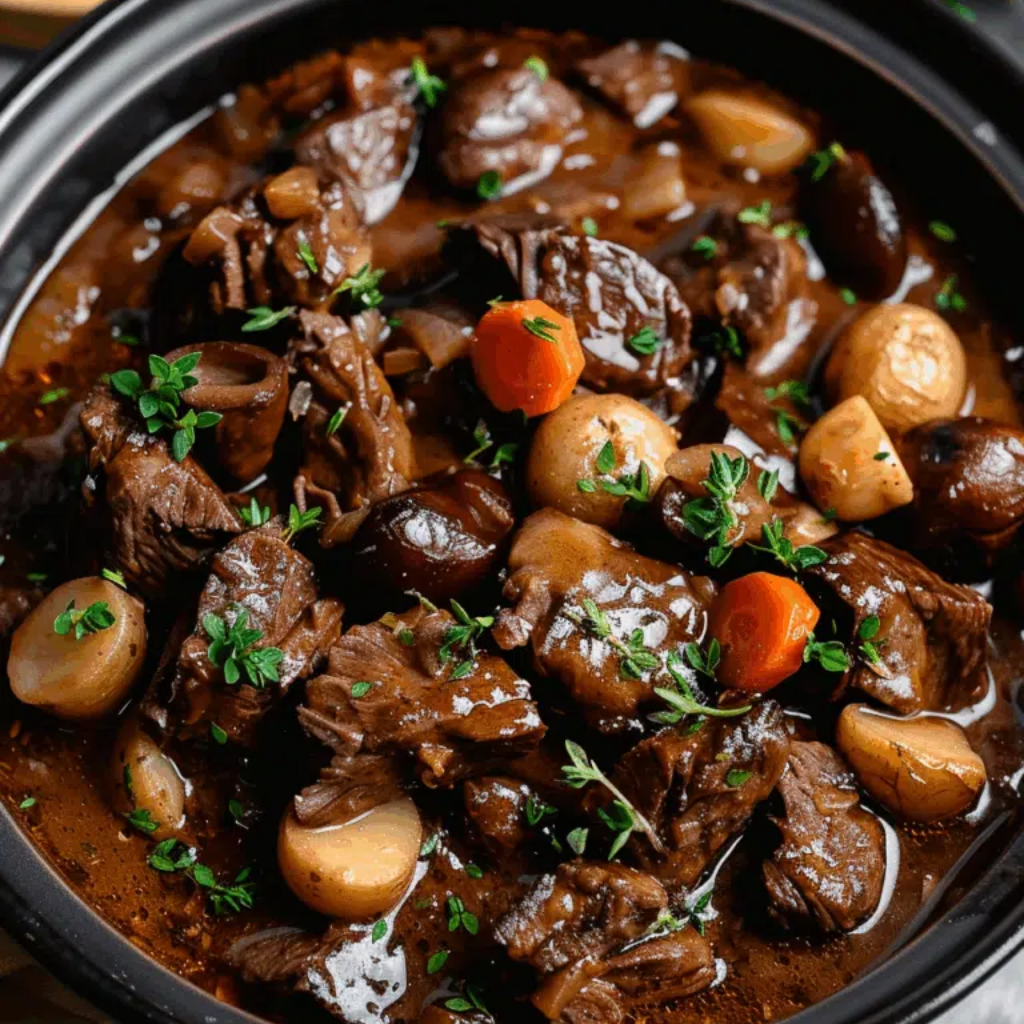
Beef bourguignon might sound intimidating with its fancy French name, but it’s really just a glorified beef stew that happens to be absolutely incredible. This slow cooker version takes all the complexity out of the traditional recipe while keeping every bit of the rich, wine-soaked flavor that makes this dish legendary. Instead of standing over a hot stove for hours, you can let your slow cooker do the work while you go about your day.
The original beef bourguignon comes from the Burgundy region of France, where resourceful cooks discovered that tough, inexpensive cuts of beef became incredibly tender when braised slowly in local red wine. What started as peasant food eventually found its way into fine French restaurants, thanks partly to Julia Child’s famous recipe that introduced American home cooks to this rustic masterpiece in the 1960s.
This slow cooker beef bourguignon recipe captures all those deep, complex flavors without requiring you to babysit a pot on the stove. The beef becomes fall-apart tender, the vegetables develop incredible sweetness, and the wine-enriched sauce transforms into something that coats your spoon like velvet. It’s the kind of meal that makes your house smell amazing and brings everyone to the dinner table without any coaxing.
The beauty of making beef bourguignon in a slow cooker lies in how the long, gentle cooking process allows all the flavors to meld together perfectly. The wine loses its harsh alcohol bite and becomes mellow and rich, while the beef literally falls apart at the touch of a fork. This isn’t just convenient cooking—it’s actually better than many stovetop versions because the consistent, low heat creates the ideal environment for breaking down tough connective tissues.
Ingredients
For the beef and marinade:
- 3 pounds beef chuck roast, cut into 2-inch cubes
- 2 cups red wine (Pinot Noir or Côtes du Rhône work well)
- 2 bay leaves
- 3 sprigs fresh thyme
- Salt and black pepper to taste
- 3 tablespoons all-purpose flour
For the vegetables and aromatics:
- 6 slices thick-cut bacon, chopped
- 1 large onion, diced
- 3 carrots, cut into 1-inch pieces
- 3 celery stalks, cut into 1-inch pieces
- 8 ounces baby bella mushrooms, halved
- 4 cloves garlic, minced
- 2 tablespoons tomato paste
- 1 cup beef broth
- 1 pound small potatoes, halved (optional)
- 1 package frozen pearl onions, thawed (optional but traditional)
For finishing:
- 2 tablespoons butter, softened
- 2 tablespoons flour (for thickening)
- Fresh parsley, chopped for garnish
- Extra fresh thyme for garnish
Choose your wine carefully—it doesn’t need to be expensive, but it should be something you’d actually drink. The wine’s flavor concentrates during cooking, so avoid anything too sweet or too harsh. A medium-bodied red wine works best, and you’ll want to have extra for serving alongside the finished dish.
Instructions
Start by cutting your beef chuck roast into generous 2-inch cubes, trimming away any large pieces of fat but leaving some marbling for flavor. Season the beef generously with salt and pepper, then toss with flour until all pieces are lightly coated. This flour coating helps thicken the sauce as it cooks and gives the beef a better texture.
If you have time, marinating the beef overnight in half the wine with bay leaves and thyme will add extra depth of flavor, but it’s not absolutely necessary if you’re short on time. The long cooking process will still develop plenty of rich taste.
Heat a large skillet over medium-high heat and cook the chopped bacon until crispy and the fat has rendered. Remove the bacon with a slotted spoon and set aside, leaving the fat in the pan. This bacon fat is liquid gold for browning the beef and adds incredible flavor to the entire dish.
Working in batches to avoid overcrowding, brown the beef cubes in the bacon fat, turning to get a good sear on multiple sides. Don’t worry about cooking them through—you just want a nice caramelized exterior that will add richness to the final sauce. Transfer the browned beef to your slow cooker.
In the same skillet, cook the diced onion, carrots, and celery until they start to soften, about 5-6 minutes. The vegetables will pick up all those browned bits from the bottom of the pan, which adds layers of flavor. Add the minced garlic and cook for another minute until fragrant.
Stir in the tomato paste and cook for about a minute to remove its raw taste. This concentrated tomato flavor adds depth and helps balance the richness of the wine and beef. Slowly pour in the wine, scraping up any browned bits from the bottom of the pan. Let it simmer for 2-3 minutes to cook off some of the alcohol.
Pour this entire mixture over the beef in your slow cooker. Add the beef broth, cooked bacon, bay leaves, and thyme sprigs. If you’re using potatoes and pearl onions, add them now. Give everything a gentle stir to combine, making sure the liquid covers most of the ingredients.
Cover and cook on low for 7-8 hours or high for 4-5 hours, until the beef is fork-tender and easily shreds. The exact timing depends on your slow cooker and how thick your beef pieces are, but you’ll know it’s done when the meat falls apart easily.
About 30 minutes before serving, prepare a simple beurre manié (butter-flour paste) by mixing the softened butter with 2 tablespoons of flour until smooth. Remove the bay leaves and thyme stems from the slow cooker, then stir in this mixture to thicken the sauce. Add the halved mushrooms during the last 30 minutes of cooking so they don’t become mushy.
Taste and adjust seasoning with salt and pepper as needed. The sauce should be rich and glossy, coating the back of a spoon without being too thick or too thin.

Flavor & Texture Notes
A well-made beef bourguignon offers an incredibly satisfying eating experience that’s both rustic and refined. The beef should be so tender it practically melts on your tongue, with deep, wine-rich flavors that have developed complexity through the long, slow cooking process. Each bite delivers layers of taste—the earthiness of mushrooms, the sweetness of caramelized vegetables, and the smoky richness from the bacon.
The sauce is perhaps the star of the dish, having transformed from separate ingredients into something cohesive and luxurious. It should have enough body to cling to the beef and vegetables without being heavy or gloopy. The wine contributes a subtle acidity that brightens all the other flavors while the beef broth adds savory depth.
The vegetables maintain some texture without being crunchy—carrots should be tender but not falling apart, while the mushrooms add an earthy, meaty quality that complements the beef beautifully. If you’ve included pearl onions, they should be sweet and tender, almost caramelized from the long cooking process.
The overall impression should be one of warmth and comfort, with each spoonful delivering rich, satisfying flavors that taste like they’ve been developing for hours—which, of course, they have. The dish should smell incredible, with aromas of wine, herbs, and slow-cooked beef that make everyone gather around the kitchen.
Tips & Variations
For the best flavor, don’t skip the browning step for the beef. While it adds a few extra minutes to your prep time, that caramelization creates depth of flavor that can’t be achieved any other way. If you’re really pressed for time, you can skip it, but your bourguignon won’t have quite the same richness.
If you don’t drink alcohol or prefer to avoid wine, you can substitute additional beef broth plus a tablespoon of red wine vinegar for acidity. Some grape juice mixed with beef broth can also work, though the flavor will be different from traditional bourguignon.
For a lower-carb version, skip the potatoes and serve over cauliflower mash or zucchini noodles instead. The rich sauce pairs beautifully with these alternatives and keeps all the comfort food satisfaction.
Mushroom lovers can experiment with different varieties—shiitake, cremini, or even dried porcini mushrooms (rehydrated) add interesting flavor variations. Wild mushrooms work particularly well if you can find them.
Consider adding root vegetables like parsnips or turnips for extra heartiness and flavor variety. These work especially well in fall and winter when you want something extra warming.
If your slow cooker tends to cook hot, check the dish after 6 hours on low to prevent overcooking. Every slow cooker is different, and you’ll learn your machine’s tendencies over time.
Storage & Make-Ahead
Beef bourguignon is one of those dishes that actually improves with time, making it perfect for meal prep or entertaining. The flavors continue to develop and meld together as it sits, often tasting even better the next day.
Store leftover bourguignon in the refrigerator for up to 4 days in airtight containers. The sauce may thicken as it cools, which is completely normal. When reheating, add a splash of beef broth or wine if needed to loosen the consistency.
This dish freezes beautifully for up to 3 months. Cool completely before freezing, and consider freezing in individual portions for easy weeknight meals. Thaw overnight in the refrigerator before reheating gently on the stovetop or in the microwave.
For make-ahead entertaining, you can prepare the entire dish up to 2 days in advance. Store it covered in the refrigerator and reheat gently before serving. The flavors will be even more developed, and you’ll have minimal work on the day you’re serving guests.
You can also prep all the ingredients the night before—cut the beef and vegetables, measure the seasonings, and have everything ready to throw in the slow cooker first thing in the morning.
Serving Suggestions
Traditional beef bourguignon is served over egg noodles, mashed potatoes, or crusty bread that can soak up every drop of that incredible sauce. Wide egg noodles are particularly good because their broad surface area holds the sauce well. Creamy mashed potatoes create a luxurious base that complements the rich flavors perfectly.
For a lighter option, serve over rice, quinoa, or even polenta. The neutral flavors of these grains let the bourguignon shine while providing satisfying substance to the meal. Cauliflower mash offers a low-carb alternative that still provides the creamy contrast that makes this dish so satisfying.
A simple green salad with vinaigrette helps cut through the richness of the dish and adds fresh contrast. Classic French sides like green beans almandine or roasted asparagus work beautifully alongside bourguignon.
Wine pairing is straightforward—serve the same type of red wine you used for cooking. A Pinot Noir, Côtes du Rhône, or even a Burgundy if you want to be traditional and splurge a little. The wine’s acidity helps cleanse the palate between bites of the rich stew.
For bread, choose something sturdy enough to handle the sauce—a crusty baguette, sourdough, or rustic country bread all work well. Warm the bread slightly before serving so it’s perfect for sopping up every last bit of sauce.
FAQ
Can I use a different cut of beef? Chuck roast is ideal because it has enough fat and connective tissue to become tender during long cooking. Beef stew meat, bottom round, or short ribs can also work, though cooking times may vary slightly. Avoid lean cuts like sirloin or tenderloin, which will become dry and tough in the slow cooker.
What if my sauce is too thin at the end? Mix 2 tablespoons of softened butter with 2 tablespoons of flour to make a beurre manié, then stir it into the hot stew during the last 30 minutes of cooking. Alternatively, you can remove some liquid and simmer it on the stovetop to reduce and concentrate it before stirring it back in.
Can I make this without a slow cooker? Absolutely. Use a heavy Dutch oven and cook in a 325°F oven for 2-3 hours, or simmer gently on the stovetop for the same amount of time. Just make sure to check periodically and add liquid if needed to prevent sticking.
Why do some recipes call for marinating the beef overnight? Marinating adds extra flavor depth and can help tenderize the meat slightly, but it’s not essential. The long, slow cooking process will develop plenty of flavor even without marinating. If you have time, it’s a nice extra step, but don’t stress if you don’t.
Can I add the mushrooms at the beginning? You can, but they may become quite soft and lose some of their texture. Adding them during the last 30-45 minutes of cooking keeps them tender but not mushy, with better overall texture in the finished dish.
This slow cooker beef bourguignon proves that you don’t need complicated techniques or constant attention to create something truly special. The magic happens while you’re living your life, and you’ll come home to a house that smells like a French country kitchen. It’s comfort food at its finest—rich, satisfying, and surprisingly elegant despite its humble preparation. Whether you’re cooking for a weeknight dinner or entertaining friends, this recipe delivers restaurant-quality results with home-cook convenience.