Follow Me On Social Media!

Classic French Onion Soup Recipe: The Ultimate Comfort Food for Cold Days.

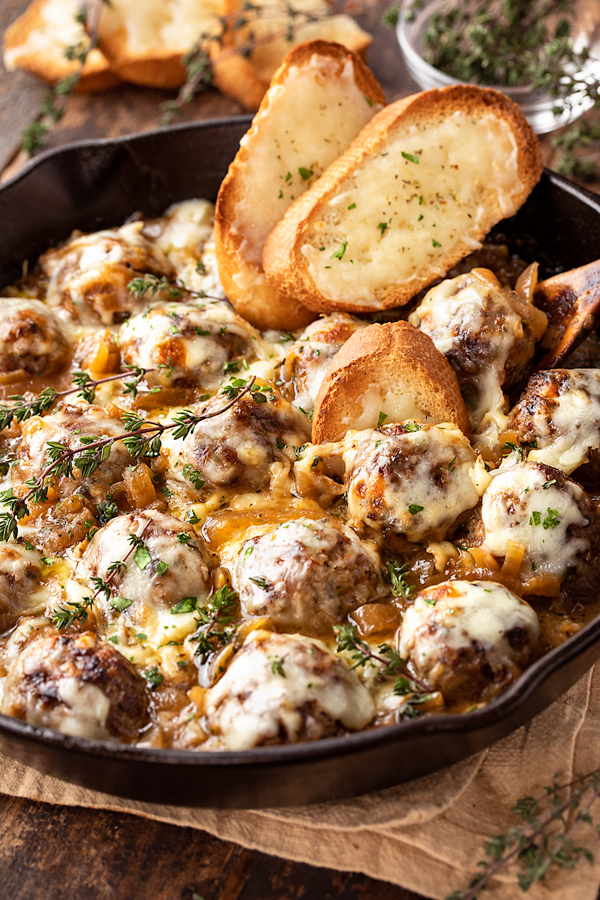
There’s something deeply satisfying about the first spoonful of properly made French onion soup. The rich, caramelized onion broth hits your palate with layers of savory sweetness, followed by that perfect moment when your spoon breaks through the golden, bubbling Gruyère cheese on top. This isn’t just soup—it’s a warm hug in a bowl that has been comforting people for centuries.
French onion soup originated in 18th-century France as a humble peasant dish, transforming simple, affordable onions into something truly special through patience and technique. The magic happens during the long, slow caramelization process, where ordinary yellow onions develop deep, complex flavors that form the foundation of this beloved soup. While many recipes promise shortcuts, the truth is that great French onion soup can’t be rushed. The time you invest in properly browning those onions will reward you with a soup that rivals any French bistro.
This homemade French onion soup recipe focuses on traditional techniques that build incredible depth of flavor. You’ll learn how to achieve that perfect balance between sweet caramelized onions and savory beef broth, topped with crusty bread and melted cheese that creates an irresistible contrast of textures. Whether you’re looking for the perfect winter comfort food or want to impress dinner guests with an elegant starter, this classic recipe delivers every time.
Ingredients
For the soup:
- 6 large yellow onions (about 3 pounds), thinly sliced
- 4 tablespoons unsalted butter
- 2 tablespoons olive oil
- 1 teaspoon salt
- 1/2 teaspoon black pepper
- 1 teaspoon sugar (optional, for enhanced caramelization)
- 1/2 cup dry white wine or dry sherry
- 8 cups high-quality beef broth
- 2 bay leaves
- 4-5 fresh thyme sprigs
- 1 tablespoon Worcestershire sauce
For the topping:
- 6-8 thick slices of French bread or baguette
- 2 cups freshly grated Gruyère cheese
- 1/2 cup grated Parmesan cheese
- 2 tablespoons fresh chives, finely chopped (for garnish)
The key to exceptional French onion soup lies in using the right onions. Yellow onions work best because they contain the perfect balance of sugars and sulfur compounds that create complex flavors when caramelized. Sweet onions like Vidalia can work but may result in an overly sweet soup, while red onions can add unwanted sharpness.
Instructions
Start by preparing your onions, which is admittedly the most time-consuming part but absolutely crucial for authentic flavor. Peel and slice your onions into thin, uniform half-moons, roughly 1/4-inch thick. Consistent sizing ensures even cooking and prevents some pieces from burning while others remain undercooked.
Heat the butter and olive oil in a large, heavy-bottomed pot or Dutch oven over medium heat. The combination of butter and oil prevents the butter from burning during the long cooking process while adding rich flavor. Add the sliced onions along with salt and pepper, stirring to coat everything evenly.
Now comes the patience part: cook the onions for 45-60 minutes, stirring occasionally, until they become deep golden brown and jammy in texture. During the first 15 minutes, the onions will release their moisture and seem quite wet. Don’t worry—this is normal. As they continue cooking, the moisture will evaporate and the natural sugars will begin to caramelize.
If your onions start browning too quickly or sticking to the bottom of the pot, lower the heat slightly. You want steady, gentle caramelization, not aggressive browning that could create bitter flavors. Some recipes suggest adding sugar to speed up the process, which you can do, but properly caramelized onions develop their own natural sweetness when given enough time.
Once your onions reach that beautiful deep amber color and have a sweet, jammy consistency, deglaze the pot with white wine or sherry. Scrape up any browned bits from the bottom—these add incredible flavor to your soup. Let the wine simmer for 2-3 minutes to cook off the alcohol.
Add the beef broth, bay leaves, and thyme sprigs to the pot. Bring the mixture to a boil, then reduce heat and simmer uncovered for 20-25 minutes. This allows the flavors to meld and the broth to concentrate slightly. Taste and adjust seasoning with salt, pepper, and Worcestershire sauce.
While the soup simmers, prepare your bread. Slice your French bread or baguette into thick rounds, about 3/4-inch thick. Toast them in a 400°F oven for 8-10 minutes until golden and crispy on both sides. These croutons need to be sturdy enough to float on top of the soup without completely dissolving.
Remove the bay leaves and thyme stems from the soup. Ladle the hot soup into oven-safe bowls or crocks, filling them about 3/4 full. Float one or two pieces of toasted bread on top of each serving, then generously sprinkle with grated Gruyère and a bit of Parmesan cheese.
Place the bowls on a baking sheet and broil for 3-5 minutes, watching carefully, until the cheese is melted, golden, and bubbling around the edges. The cheese should form a beautiful golden crust that contrasts perfectly with the rich, dark broth underneath.
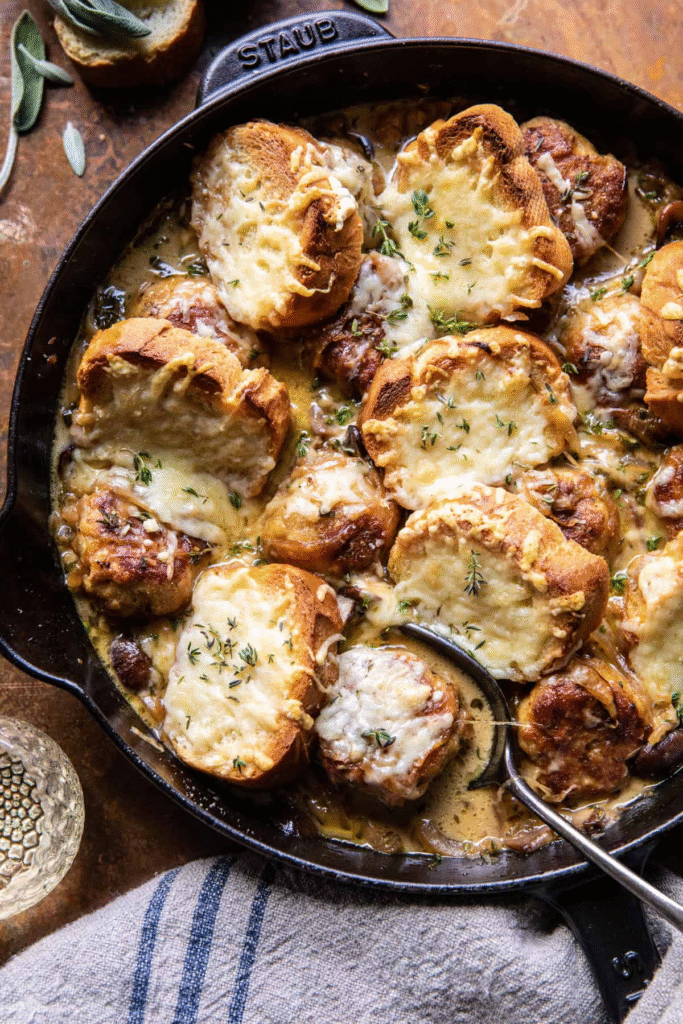
Flavor & Texture Notes
A properly executed French onion soup offers a symphony of flavors and textures that make each spoonful interesting. The broth should taste deeply savory with layers of sweetness from the caramelized onions, balanced by the richness of the beef stock. You’ll notice how the long cooking process transforms sharp, pungent raw onions into something mellow and almost jam-like in texture.
The cheese topping provides a creamy, nutty contrast that becomes stretchy and golden when broiled. Gruyère is traditional because of its excellent melting properties and complex, slightly sweet flavor that complements the onions beautifully. The toasted bread adds textural interest—it should be sturdy enough to provide some bite while still absorbing the flavorful broth.
When you break through that golden cheese crust with your spoon, the aromatic steam that rises carries all those concentrated flavors. The soup should feel substantial without being heavy, warming you from the inside out. Each bowl should taste rich and satisfying, with enough body from the concentrated onions and broth to feel like a complete meal rather than just a starter.
Tips & Variations
For vegetarian French onion soup, substitute vegetable broth for beef broth and add a splash of soy sauce or mushroom broth for umami depth. You can also sauté some mushrooms with the onions to add meaty flavor without using meat-based broth.
If you don’t have Gruyère cheese, Swiss cheese makes a decent substitute, though the flavor will be milder. Aged cheddar or a mix of mozzarella and Parmesan can work in a pinch, but avoid pre-shredded cheese when possible—freshly grated cheese melts much better and has superior flavor.
To save time on busy weeknights, you can caramelize onions in large batches and freeze them in portions. Properly caramelized onions freeze beautifully for up to three months, cutting your active cooking time significantly when you want to make soup.
For a deeper flavor, try using a combination of yellow and red onions, or add a few shallots to the mix. Some cooks like to add a splash of brandy or cognac along with the wine for extra richness.
If you’re serving this as a main course, consider adding some protein. Thinly sliced beef or leftover roast beef can be added to the soup during the last few minutes of cooking. This transforms it from an appetizer into a hearty dinner.
Storage & Make-Ahead
French onion soup keeps well in the refrigerator for 3-4 days and actually improves in flavor as it sits. Store the soup base separately from the bread and cheese toppings for best results. When reheating, warm the soup gently on the stovetop, then top with fresh bread and cheese before broiling.
The soup base freezes beautifully for up to 3 months. Cool completely before freezing, and consider freezing in individual portions for easy weeknight meals. Thaw overnight in the refrigerator, then reheat and top as usual.
You can caramelize the onions up to two days ahead and store them covered in the refrigerator. This actually makes weeknight soup preparation much more manageable, as the time-consuming step is already done.
For make-ahead entertaining, prepare the entire soup except for the final cheese topping. Keep it warm in a slow cooker or reheat gently before serving. Top individual bowls and broil just before serving for the best presentation.
Serving Suggestions
French onion soup works beautifully as an elegant starter for dinner parties or as a satisfying lunch paired with a simple green salad. The rich, warming qualities make it perfect for cold weather meals and holiday entertaining.
Serve alongside crusty bread for dipping, though honestly, the bread on top usually provides enough starch. A crisp white wine like Chablis or a light red wine such as Pinot Noir pairs wonderfully with the rich, cheesy flavors.
For a complete French bistro experience, follow the soup with classic dishes like coq au vin, beef bourguignon, or a simple roasted chicken with herbs. The soup’s richness makes it ideal before lighter main courses that won’t compete with its bold flavors.
Consider serving in traditional French onion soup crocks if you have them—they’re designed specifically for this dish and can go straight from stovetop to oven to table. If using regular bowls, make sure they’re oven-safe before broiling the cheese topping.
FAQ
How do I know when my onions are properly caramelized? Properly caramelized onions should be deep golden brown, almost amber in color, with a jammy, soft texture. They should taste sweet with no sharp bite remaining. This process typically takes 45-60 minutes of patient cooking. If they’re still pale yellow or have any crunch, they need more time.
Can I use chicken broth instead of beef broth? While beef broth provides the most traditional flavor, chicken broth can work if that’s what you have available. The soup will be lighter in color and flavor, but still delicious. For vegetarian versions, use vegetable broth and add some soy sauce or mushroom broth for extra depth.
Why is my cheese not browning properly under the broiler? Make sure you’re using freshly grated cheese rather than pre-shredded, as it melts and browns much better. Also, ensure your oven rack is positioned close enough to the broiler element—usually 4-6 inches away. If your bowls are very deep, the cheese may be too far from the heat source.
Can I make this soup in a slow cooker? While you can’t achieve proper caramelization in a slow cooker, you can finish the soup there. Caramelize your onions on the stovetop first, then transfer to the slow cooker with broth and seasonings. Cook on low for 4-6 hours. You’ll still need to use the oven or broiler for the final cheese topping.
What’s the best way to slice onions to prevent excessive crying? Chill your onions in the refrigerator for 30 minutes before cutting, use a very sharp knife, and cut near an open window or under a vent hood. Some people find that keeping a slice of bread in their mouth while cutting helps absorb the irritating compounds.
French onion soup represents the best of